A LAW OF AVERAGES
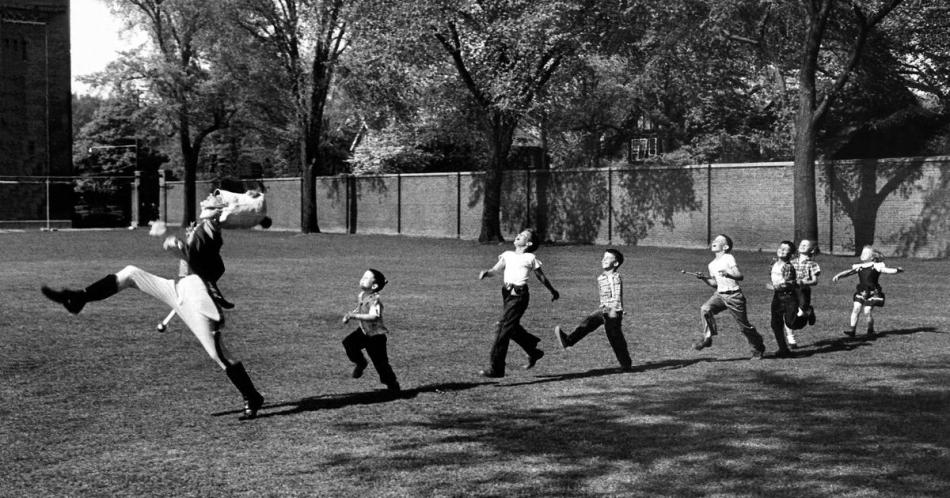
Alfred Eisenstaedt demonstrated the value of being in the moment, often with the simplest possible gear.
By MICHAEL PERKINS
IN RECENTLY RE-WATCHING A BBC DOCUMENTARY on the legendary Associated Press and Life magazine photographer Alfred Eisenstaedt, I was struck by how, over his lifetime, he moved steadily toward simpler and simpler equipment, beginning with the bulky plates of early 20th century press cameras and moving on to the sleek and light Leica that helped him created many of his most iconic images. Simply put, as he shot more and more, he carried less and less.
This was a deliberate choice.
“Eisie”, as he was known to peers and subjects alike, chose cameras that worked within the law of averages, gear that, on balance, delivered most of what he wanted most of the time. This eliminated unneeded change-outs of over-specialized kit, adding to the reaction time he needed to capture so many evanescent images of our time. He didn’t specifically disdain formal studio work, nor did he pooh-pooh the use of artificial lighting, and yet he shot almost always in the moment, where the action was happening, and under the conditions prevalent in that moment. That meant using a generally serviceable camera that could perform well virtually everywhere versus packing a crap-ton of extras that might or might not be needed. As a result, his work was divinely human, imbued with empathy, wisdom, and a whimsical sense of humor.
We often get drawn off the mark, in thinking that a given piece of equipment should always be on hand “just in case”, rather than honing our eye and our soul, which is where all the good pictures come from anyway. Purveyors of optical toys can be quite seductive in persuading us otherwise, getting us gear-focused, hungering for the next technical breakthrough, the magic lens or gizmo that will, finally, make us a better photographer. It’s a little like saying that you’d drive nails better with a more expensive hammer. But the spell is strong and it often leads to many people with many closets crammed with many devices, which may or may not yield better results than solid, basic gear.
Eisenstaedt showed time and again that the ability to read conditions in the field, to anticipate, to solidly compose, to know the value of a changing event, can succeed without a shooter having to shovel cash into the constant accumulation of stuff. If a camera does your bidding consistently and eloquently, it is a “good” camera. If your essential needs truly change, those needs will point like a neon arrow to whether you need a technical upgrade. But the best shooters prove in every age that when, as drag race drivers say, you simply “run what you brung” the pictures will most very often find you.
 thenormaleye
Leave a comment