HOLDOVERS
By MICHAEL PERKINS
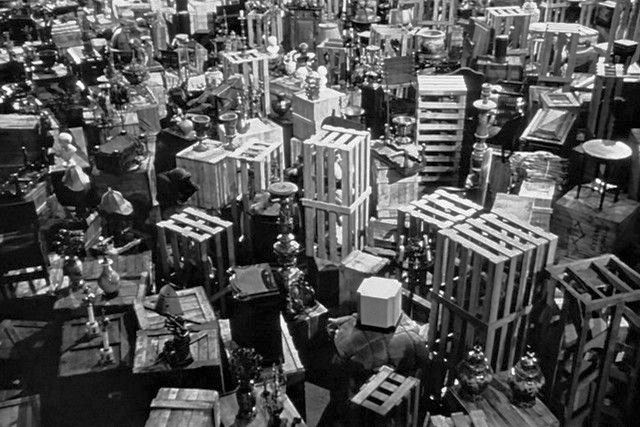
THE ARMY OF LABORERS, reporters and lookers-on that sift through a millionaire’s lifelong horde of loot at the finish of Orson Welles’ Citizen Kane share several emotions, among them amazement, curiosity, and. flat-out bewilderment at the sheer acreage of stuff acquired in the name of mere desire. What is this junk? Who would want it, or, more to the point of it, so damned much of it? One of the workers charged with cataloguing it all makes note of yet another Venus de Milo statue found in the obscenely vast field of material debris, while another remarks that $25,000 is “a lot of money to pay for a dame without a head”. In the end, all of Kane’s accumulated wealth amounts to little more than booty, transferred from place to place until it becomes merely a massive mess left behind for others to clean up. And, as film lovers will recall, his most valued possession, buried in mountains of clutter, accidentally goes to the furnace, up the chimney in a curling billow of black smoke.
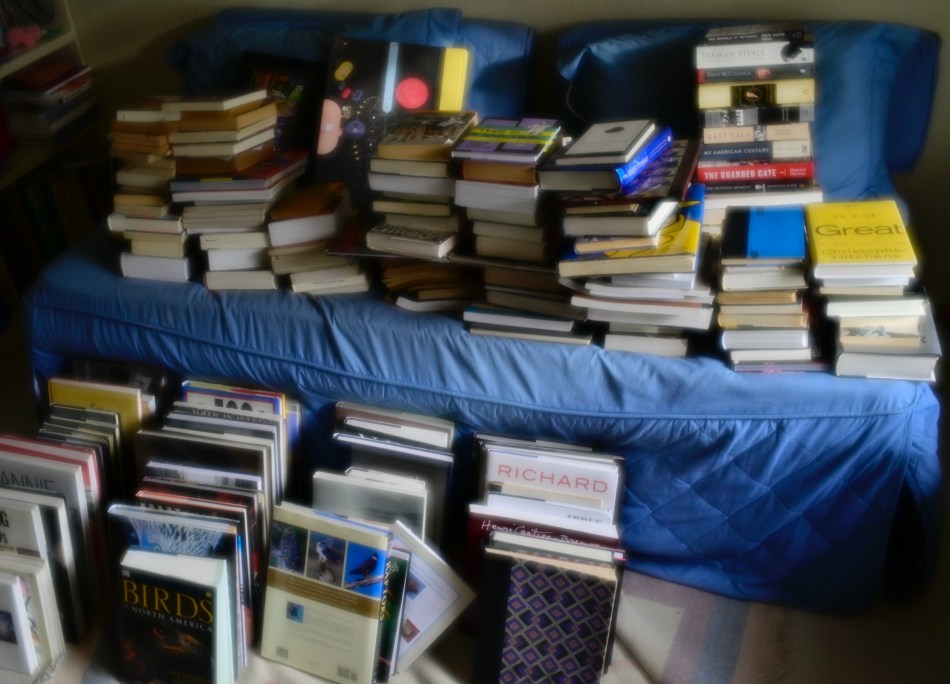
That same feeling of bewilderment will hit anyone who clears a house before moving out of it, sparking the nagging question, why did I keep this? In some cases, we actually know why, but in many others, the mystery lingers unanswered. And as I look, here, at the books from a life defined by the love of books, I know the story behind many of them. Why I bought them, what I gleaned from them, what made me drag them from house to house over a lifetime. But, then there is the other pile, the “Venuses” that won’t make the jump to the next home. Those aren’t shown here because, frankly, it’s a bit embarrassing to (a) ponder just how bloody many of them there are and (b) to confront the fact that books cling to me like barnacles to a ship.
No one quite understands the process, but it’s safe to say that, as a narrative, my life “story” is always in dire need of an editor. And so, for a photographer, another set of choices emerges, as a home of twenty years is de-constructed, piece by piece, and there is a strong urge to, as with Kane’s minions, catalogue at least the process if not the meaning of it all. To look upon the weird temporary still-lifes that are springing up all over the house and wonder if there are any Rosebud sleds lurking in the depths. Or should it all just go to the furnace?
 thenormaleye
Leave a comment