THE PHANTOM MENACE
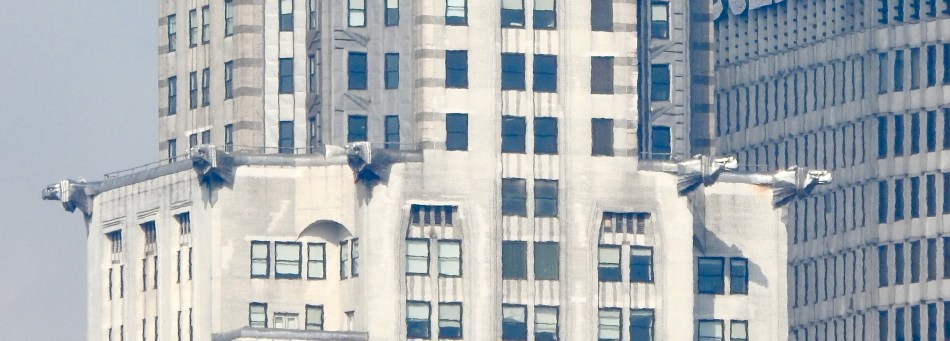
Eagles with the jitters: jagged lines and poor definition from “heat shimmer”.
By MICHAEL PERKINS
CATCHING THE PERFECT GLIMPSE OF A SKYSCRAPER is more luck than craft, and, in a city like New York (okay, there is no city like New York), you have a million different vantage points from which to view a sliver or slice of buildings that are too generally immense to be captured in their entirety. You pick your time and your battle.
One of the short cuts to the perfect view of these titans is, of course, a telephoto lens. I mean, what could be easier? Zoom, focus, shoot. Except that, with very long lenses, even the most sophisticated ones, things happen to light that are very different from how illumination works at close quarters. One problem for zoomers is the dreaded “heat shimmer”, the thermal layers that occur in between camera and far-away subject, warping straight lines and turning fine detail into mush. Sharpness in zoom shots can suffer because heat waves, which can vary widely depending on prevailing weather conditions, are bending the light and confusing your camera’s auto-focus system. The tight shot of the eagle gargoyles at the 61st floor of the Chrysler building, seen up top here, is a good example. They resemble a charcoal sketch more than they do a photograph. This image was shot from about a 1/4 mile away on the banks of an inlet bay near Greenpoint, Brooklyn, looking across at the Manhattan skyline. It was taken on a Nikon Coolpix P900, one of the brand’s so-called “superzooms”, allowing me to crank out to about 2000mm.
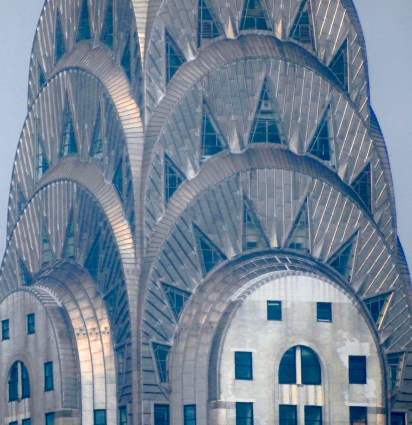
Still an imperfect shot, but snapped at the same focal length with somewhat straighter results. Wha?
And yet, consider the other shot, also of the upper floors of the Chrysler, and also shot at 2000mm just minutes away from the gargoyle image. Lines are generally solid and straight, even though shot from just about the same distance. Here’s where we get to the key word “variable”. Everything I shot in this batch was in the early morning, and so the sun was actively burning off a light overcast, which, I assume, made for shifting air temperatures in nearly everything I photographed. The P900’s small sensor, which is what happens when your put too many glass elements in a compact lens, pretty much shoots contrast to hell at long distances, as you can see in both shots, and responds to anything other than direct light with zooms that are, to be kind, soft. Still, being mindful of heat shimmer as a real factor in your telephoto work can sometimes result in pictures that, while far from perfect, are technically acceptable. The phantom menace can’t be eradicated, but it can be tamed.
 thenormaleye
Leave a comment