MIRROR, MIRROR

By MICHAEL PERKINS
MUCH OF COLOR PHOTOGRAPHY IS DEPENDENT ON THE SPECIFIC SURFACES captured in its field of vision. We don’t just record light in a frame; we also record the particular properties of that light as it plays on a given subject. The dynamics of contract, reflection, texture and the way a surface sends light back to our eyes all weigh in the results. In broad terms, we can just simplify this to high light/normal light/low light, but in fact the results are far more nuanced.
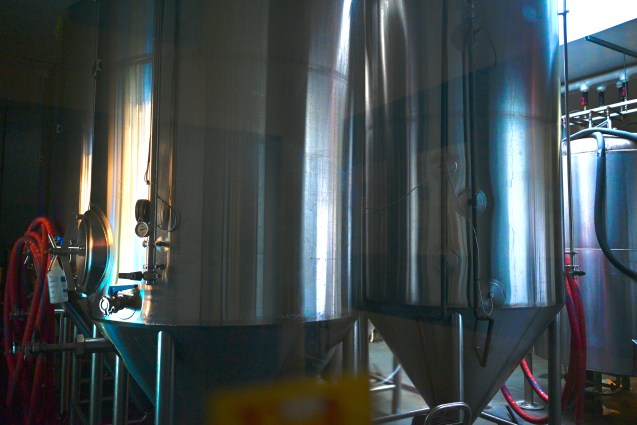
In the two shots shown here for comparison, the metal distillery tanks at a microbrewery bear the distinctive stamp of the kind of light they are reflecting back to the camera. One is taken with natural sunlight pouring through the room’s skylight, while the other is lit completely by ceiling fluorescents after nightfall. Both were taken on the same white balance setting, i.e., “natural light auto”, making the two exposures at least neutral in how the camera processed what it saw. But what a contrast in the color registration of the two.
The daylight shot shows highlights in the steel of the tanks that runs to pale redness in some patches, while the night shot reads very dark blue with hints of green here and there. The results are certainly no big surprise to those who take multiple exposures of the same surface, say, a mountain lake, under changing light conditions. The dominant hues are dictated by how the surface of what you’re shooting decides to bounce back light. It’s not merely the difference between “light” and “dark” but, specifically, between the changes in tonal registration creates by the surfaces themselves. If these tanks were made of cardboard, for example, their light-bouncing properties would be drastically different than those seen here. Why does this matter? Well, it goes to the intended result. You have some control over how you visualize a scene with a camera, but Nature often has the final say. Understand light better, and you shoot smarter. And perhaps smile more at the end.
 thenormaleye
Leave a comment