A GRAIN OF TRUTH
By MICHAEL PERKINS
TEXTURE IS ONE OF THE MOST VARIABLE FACTORS in photography, in that its importance in an image goes all over the map given the situation. While exposure and composition, even focus, are key considerations in the making of nearly every picture, texture can jump to the front of the line and become the crucial element in the making of a photograph, moving from merely part of the story to its central point.
In photographing, for example, Da Vinci’s Last Supper, you’re creating a narrative not only on the figures in the fresco or of the painter’s technique; you’re also making a document of the current physical condition of the work, commenting, in effect, on its state of deterioration, the befores and afters of any restoration efforts, even the grain and grit of the surface itself, since, over the centuries, the art, and what it was created on, are now inextricably linked; two halves of a whole.
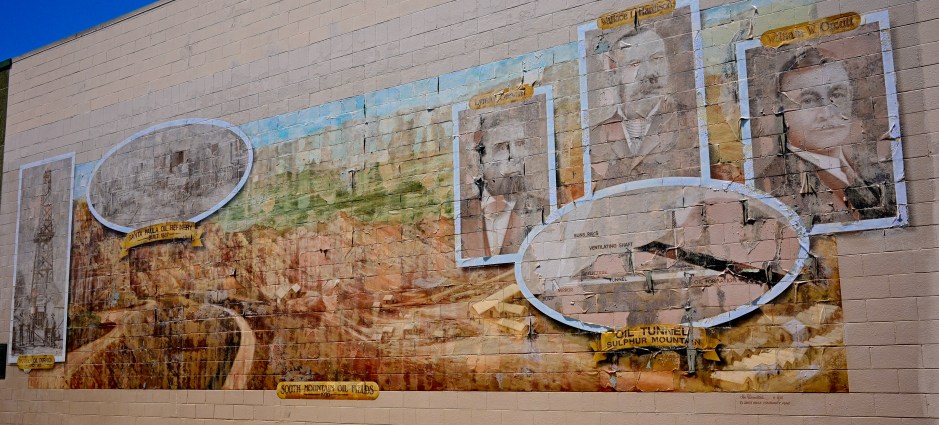
Murals in particular can only be complete documents when the aging or weathering factors on surfaces can become part of the story. This memorial to the central west coast’s oil industry (top) seen on the side of a building in Santa Paula, California, can, years after it was created, no longer merely be a painting or an homage.
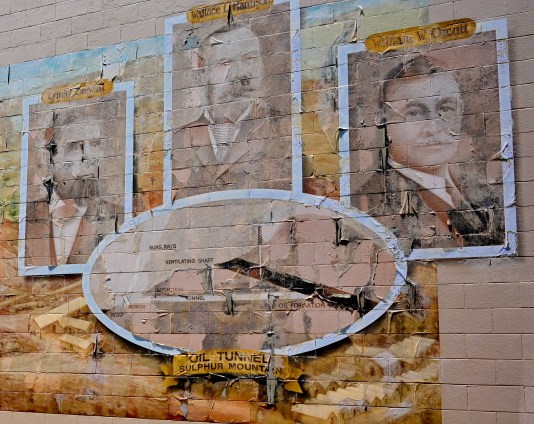
In a very real way, the wall has become part of the painting, an expression of the toll of years since the town’s glory days. This elevates texture to the status of a key factor in the relating of the area’s history. As seen in the detail, just above, the peeling and cracking of the work is a story in itself, an unstated what happened? that forms in the mind of the visitor. as in the Last Supper or other venerable works, the ravages of time root an event or an era in fixed historical position. We are aware that we are looking at a relic, still visible in this world; a souvenir of other, vanished worlds.
In photographs, the final effect ranges from casual to formal, from mere reportage to historical commentary. We bring intent to a scene when we capture it in a box, adding accents along the way to underscore what we feel about it. Come to think on it, that is about as close to a working definition of texture as you can get.
 thenormaleye
Leave a comment