GOING-AWAY PRESENTS
By MICHAEL PERKINS
YOU MAY REMEMBER THE BRIEF 70’s-ERA FLING MANY OF US HAD with the wooden cases that were originally designed to carry the metal type used in composing newspapers and magazines. We stored them vertically on walls and stuck cute little knickknacks in the compartments, re-purposing something that once had been so universal as to be invisible to most of us into something we paid fresh attention to, now that it was charmingly obsolete.
Photography, being at least part reportage, is uniquely equipped to take note when everyday items become rare curiosities. You can take measure of this process poring through the tons of articles listing the common objects from earlier generations that later generations can no longer identify, like Rolodexes or rotary phones. Antique stores, which are mostly resale forums for other people’s old junk, are replete with things that were once essential and are now peripheral. Sometimes, the shocking distance between eras can produce good grist for images.
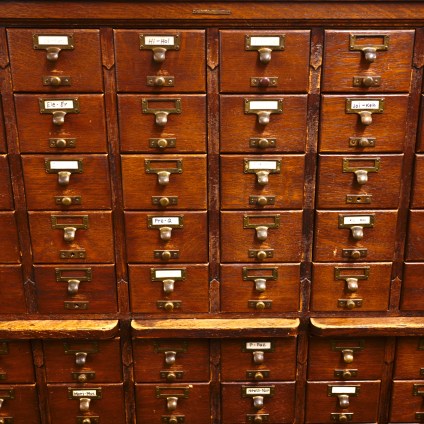
When the everyday becomes the vanished, like this old library card catalog, we are removed enough from them to note individual elements of them, like materials, design, patterns….all the practical aspects that their inventors had to balance to make the things. You realize that there were once several support industries just for these catalogs. Someone had to make the file cards. Cabinet makers were engaged; there were special varnishes to seal the wood, metal rods to anchor the cards in place, brassworks to make the pull handles. There were people who could sit you down and spend an evening just discussing the finer points of this catalog company versus another. Expertise was gained. Factories were engaged; people hired.
Can a photograph of an obsolete library tool evoke any or all of this? Depends. There are no guarantees that either a snapshot or a deliberately composed picture can or will do the job. But, at the very least, our understanding of earlier versions of ourselves begins with a physical document of what those people lived with, and around. And that narrative is always a potential treasure.
 thenormaleye
Leave a comment