THE WONDER OF THE WALKABOUT
By MICHAEL PERKINS
I AM ASTOUNDED BY PHOTOGRAPHERS WHO UNERRINGLY APPREHEND the essentials of the ideal framing for a composition. And, believe me, they are out there; artists whose eye immediately fixes on the ideal way to launch a narrative in a static shot. The legendary Henri Cartier-Bresson was one. He reputedly kept his camera hanging around his chest until the very instant he was ready to make a shot, whereupon he lifted his Leica to his eye, and snap, one flawlessly framed image after another. The photo editor’s dreaded wax pencil never defaced his images in search of crop lines or a way to trim away fat to make HCB’s pictures communicate more effectively. There was no “fat”. The editor was already looking upon perfection.
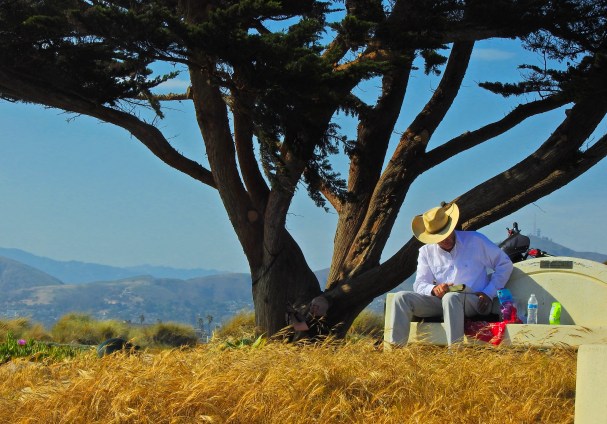
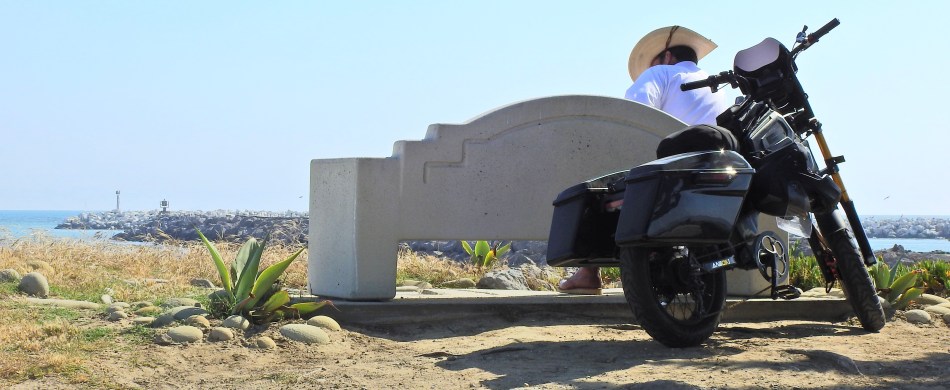
For me, composition is more typically trial and error, and so my favorite subjects are things that will more or less remain in place long enough for me to literally walk around them in search of their “good side”. or the angle that best serves the visual story I’m after. Street photography offers up some opportunities for such focused study, but, in that real-time environment, the stories are often morphing too quickly, and one has to trust to instinct to nail that one second of eloquence, since a follow-up or re-take may not present itself. But, when I can, I try to be slow, deliberate. To do things with purpose and on purpose.
Digital, and the luxury of nearly endless numbers of exposures with immediate feedback, has been a life saver for me in a way that film, God bless its little analog heart, never was. This instantaneous concept-to-result cycle has saved many an image for me, since I am granted the ability to make a lot of wrong pictures very quickly, thus arriving at the right picture with more efficiency. The gentleman seen here in two frames was very accommodating in ignoring me, allowing me to squeeze off perhaps fifteen shots as I walked from his rear left side to his rear right side. Along the way, the scenery and props rose and fell as focal points, subtly changing the message of the photographs. Were I expert enough to follow Cartier-Bresson’s example, the image just just above might have been my goal, but, as I dwell among mere mortals in Photo-Land, I find myself by getting lost a bit. I go on walkabout.
 thenormaleye
Leave a comment