WE HERE DEDICATE….
By MICHAEL PERKINS
PHOTOGRAPHERS HAVE THEIR HANDS FULL, in the first third of the twenty-first century, documenting the vanishing details of the urban architecture of the 20th. Change is a constant and the elusive quality of “progress” is often equated with, to put it simply, knocking down the old to make room for the new. One very good reason to preserve all that visual detail is to show what we intended with older structures beyond their mere physical presence.
The so-called golden age of skyscrapers was fueled by the egos and aspirations of titans in government and business, with both forces incorporating expressions of ideals into the detail and design of their pet architectural projects. These places weren’t merely open to the public; they were dedicated to them, or at least to their loftier goals, with entrances, lobbies and outward ornamentation embodying beliefs, invoking virtues like trust, industry, fidelity, labor, integrity, or honesty in inscriptions, reliefs, and arches, as if such qualities were not only those of the building’s founders, but things eagerly to be wished for all who entered these common spaces.
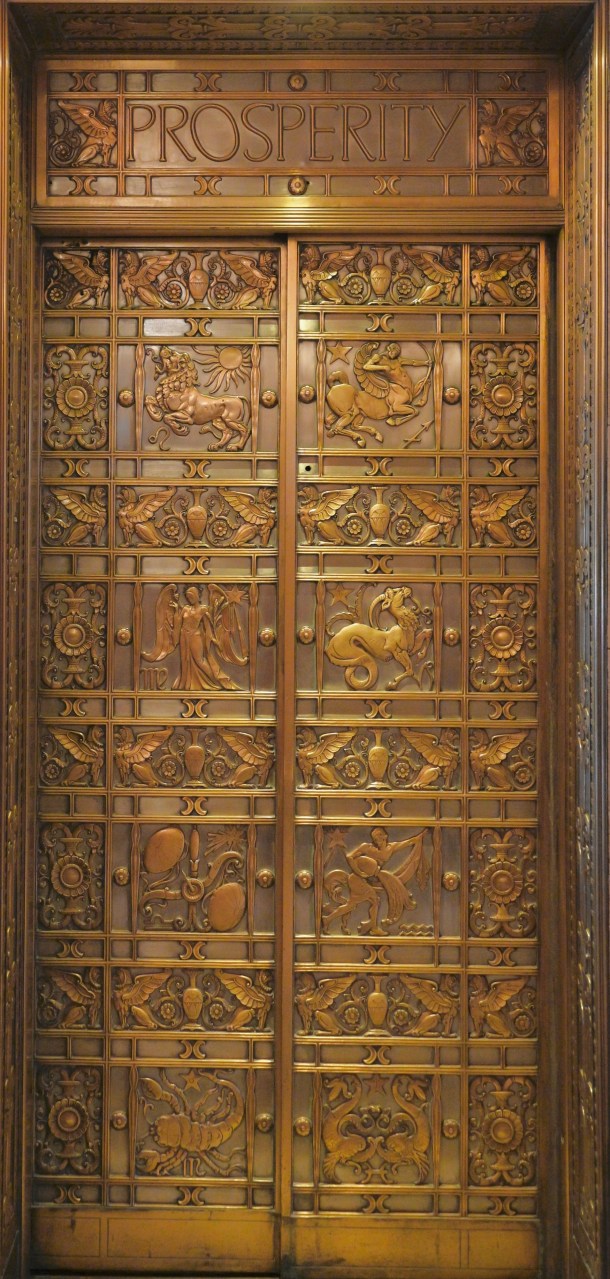
Elevator cab door, Leveque Tower, Columbus, Ohio
This elevator cab door, named “Prosperity” can be seen in Columbus, Ohio’s Leveque Tower (opened in 1927 as the American Insurance Union Citadel). It’s one of a group of three (the others are named “Health” and “Happiness”) that remain in the building’s lobby, and, like many interior and exterior designs of the time, also incorporate the signs and symbols of the zodiac. Photographing features like this is like summoning the past, not merely in its physical aspect, but also in its stated aims within its era; to instruct, to inspire, to act as a pledge of civic betterment. In an age of brutalist architecture characterized by bland or blunt concrete boxes, such sentiments seem beyond quaint; imbuing bank buildings or post offices with all that aspirational sloganeering feels over the top, corny. Better reason still to snap these signposts from a previous time before they are swept away. They are more than buildings, or, at least, they were intended to be.
 thenormaleye
Leave a comment