LIGHT BENDERS FROM HECK
By MICHAEL PERKINS
ONE OF THE TOUGHEST THINGS TO LEARN IN PHOTOGRAPHY is just how many popularly held beliefs you have to unlearn in order to grow your work. This means trusting fewer “obvious truths” and being open to ideas that seem counterintuitive. One such area has to do with lenses and how they render sharpness.
Many of us learned, early on, that each lens has its own “sweet spot” of focus, and that, on average, it tends to be two f-stops slower (smaller) than the lens’ widest aperture, so that a lens with a maximum aperture of f/2 might have its best, biggest patch of sharpness at about f/5.6. This generally accurate tidbit might easily tempt one to take the idea to its “logical extension”; that is, to assume that, if the aperture is closed down even further, there will be an even greater increase in sharpness. However, as intuitive as that belief is, it’s just not borne out by the raw physics, or by how light actually behaves.
Disclaimer: what follows here is a ridiculously simplified explanation, and I sincerely urge the reader to do much, much more sophisticated research on the subject. It can easily fill up several blackboards and make one feel as if one’s head were stuffed full of cotton, but it’s worth reviewing the full science of it. That said….
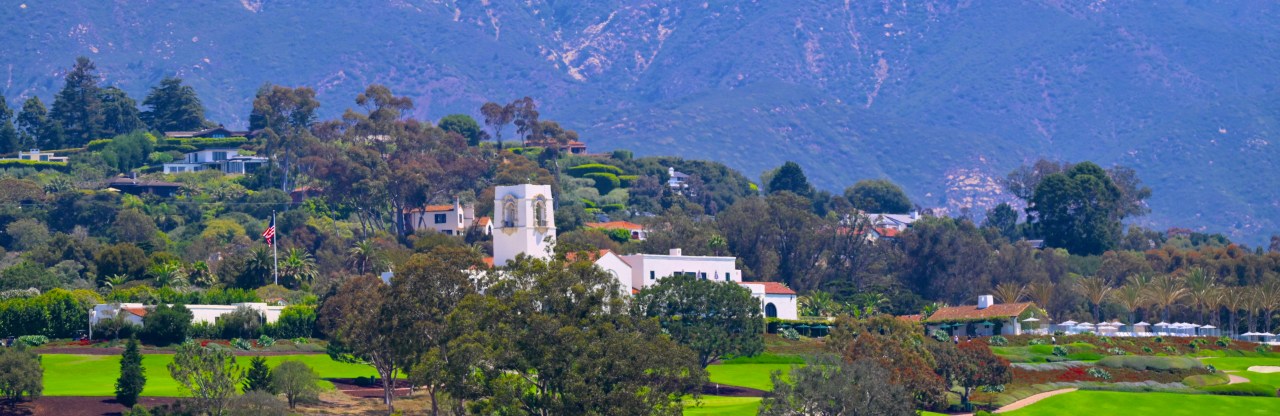
If you feel that, since your lens is much sharper and has a better depth of field at f/5.6 than f/2, then you may assume that a really small aperture like, say f/22, will be super-sharp end to end. However, that’s not the way it works. Light rays flow through a large aperture more or less in a straight line, traveling parallel to each other. This favors sharpness. However, once the diaphragm is tightened down further to f/22, the light rays have to crowd together to make it through a very narrow slit, which bends the rays and sends them cascading over top of one another, and that generally leads to poorer focus and loss of detail. Think of your lens’ sweet spot as a Martha Stewart “good thing” and f/22 as Too Much Of A Good Thing. That means that my 50mm’s f/5.6 sweet spot can deliver a shot like the one seen here better than could be had by stopping all the way down.
Of course, it goes without saying that your experience could be different in one particular or another, and I again emphasize that a kid assistant working with Bill Nye the Science Guy could probably have explained the whole phenomenon with greater skill, but the general idea is that lenses perform the function of focus in very different ways depending on what is asked of them. Mastering their potential means mastering your own observations and conclusions, and that means putting in the hours. The best lens in the world can’t eliminate your learning curve. That takes time.
 thenormaleye
Leave a comment