THE FUTURE’S SO BRIGHT…

By MICHAEL PERKINS
PHOTOGRAPHIC TOOLS HAVE FINITE LIVES; they are introduced largely to solve a problem or improve results, and, as they age, can eventually create different problems which, in turn, have to be solved by succeeding technology. Gear thus has a birth, a life and a death, moving from something we need desperately to commonplace practice to antiquity and obsolescence.
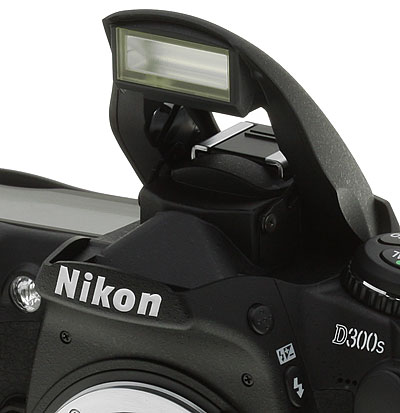
One such tool that, in the year 2025, is heading for the scrapheap of history is the loved/hated electronic pop-up flash, which, at this writing, is fast disappearing from new cameras at almost every level of expertise. Once seen as an ingenious miniaturization of the bulky electronic flashes of earlier eras, pop-ups are being deliberately designed out of incoming models, as fundamental rules of how we amplify or disperse auxiliary light in an image have shifted dramatically. Truth be told, the humble pop-up was always the Rodney Dangerfield of flash, in that it “never got no respect” from serious pros, who either mounted more responsive, more controllable units on camera flash shoes or used the pop-up merely as a trigger for off-camera slaves. Pop-ups were never capable of throwing light very far (ten feet was a reach) and, without the means to pivot or customize their angles, they mostly blew super-hot light directly into faces, blowing out detail and obliterating even those shadows the shooter actually liked. This linked them forever to a kind of snapshot. or “light it at any cost” mentality, mostly among amateurs.
And then there was the fact that pop-ups, being in part a mechanical feature, were more prone to failure or breakage than nearly any other component on the camera. The digital age pounded another nail into the pop-up’s coffin as well, making sensors more responsive to a wider dynamic range, lessening the number of shots that would even benefit from spot flash. Finally, as even cell-phone cameras create a balanced exposure through so-called “computational” calculation, flash pictures themselves, except in professional studio situations, are obviated more and more by better camera brains. And, finally, there is the consideration of the sheer space and electronic real estate taken up by a pop-up, space that could be better allocated, as Fstoppers magazine has remarked, “for better screens, faster processors, or improved connectivity.”
Photography has always been about the better mousetrap, and, after more than half a century as a standard feature on cameras the world over, the pop-up flash is just about ready for its final close-up. Some would say it’s the end of an era, but making pictures isn’t about isolated sectors of time, more like a continuous river of upward improvement. Tools are tools until they are impediments, and then, they are gone in a flash.
 thenormaleye
Leave a comment