Fotofatigue
BY MICHAEL PERKINS
IN ENGAGING REAMS OF PHOTOGRAPHIC IMAGES AT A SINGLE SITTING, the human eye can react like any other over-used muscle in the body. It grows weary, numbed by the sheer volume of information that is often viewed like a shuffling deck of cards rather than absorbed at a leisurely pace. It’s almost as if, having taken these trillions of pictures, we have to pay visual lip service to them by at least trying to view them all. But that method merely wears the mind down, resulting in what I call fotofatigue. We all know, logically, that less actually can be more, but when it comes to looking at images, we act counterintuitively, flooding and dulling our ability to perceive anything deeply.
One thing that can worsen this problem is for us to, like the guitarist in This Is Spinal Tap, crank everything….every effect, every technique, every everything, up to 11. I’m all for taking one’s vision or gear to the limit, just not all the bloody time. Take a specialized lens like a fisheye, which is so ultra-wide that it can render everything it sees in a rigidly circumscribed bubble of deliberate distortion. It is designed for a specific effect, but, like any other specialized look it should not be used in every shooting situation. What starts out as a novelty becomes, in repetition, a “signature” look, and then a crutch.
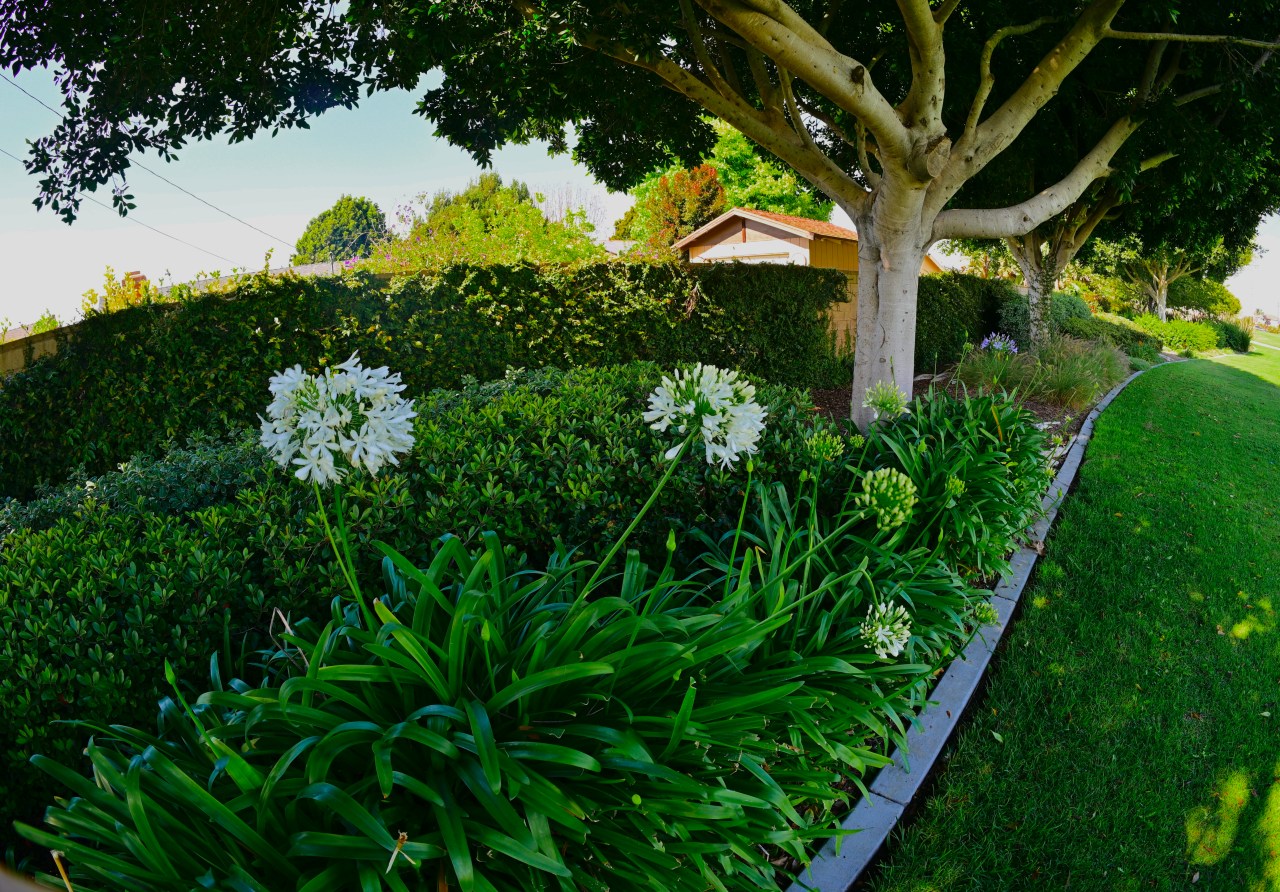
The shot shown here, shot with an 11mm fisheye renders plenty of realistic detail and depth of field but does not careen fully into circular-for-circular’s sake. It uses some of the flexibility inherent in the lens, but stops well short of turning the garden into the cover art for a psychedelic rock band from 1967. Shredding away on our artistic guitars at 11 is exhilarating, but I believe that the best photographs benefit from at least some degree of restraint, choosing to engage the eye for a more contemplative view rather than merely stab it with the sharp stick of shock. Photographs that merely hit at the speed of ZAP! POW! eventually wear out the viewer, and are easily dismissed and forgotten. Mona Lisa’s smile, small and slight, need not be stretched to engulf the entire lower half of her face just to grab our attention. Her mystery comes as much from what is concealed as what is revealed. Good images should always strive for that.
 thenormaleye
Leave a comment