cONFRONTATIONS
By MICHAEL PERKINS
Photography is the simplest thing in the world, but it is incredibly complicated to make it work–Martin Parr
THOSE SHOOTERS THAT WE DUB “STREET PHOTOGRAPHERS” all share a secret; that what most of us casually regard as “reality” is nothing but the top surface on a layered cake, a topography that we drill down into, in order to reveal the profound beneath the obvious. England’s Martin Parr, who passed at the end of 2025, began his career doing straight documentary work, and gradually evolved a whimsical, even gentle mastery of street work that showed everyday people, bearing their social masks, even as it revealed the biases and beliefs that underlie them. In the hands of other photographers, his approach might have been considered rude, even intrusive, but, being British, Parr practiced, instead, a kind of lower-case “C” confrontational style.
Parr, born in 1952, first aspired to be a documentary photographer as early as age thirteen, influenced by the work of the the U.K.’s Royal Photographic Society. Laboring with hit-or-miss grades in school, he found a true home at a local polytechnical academy, joining the ranks of local reporters on any and every kind of news assignment. His first truly personal approach to photographing people came as a result of his move from a city to a rural environment, where he studied the regional rituals and habits of working-class locals in an effort to to develop an eye for the humorous reality beneath their public selves, publishing Bad Weather, the first of what would eventually total over sixty collections of images, in 1981. As he moved from journalism’s then-dominant medium of black-and-white to color, he began to frame his work at a much nearer distance (using a macro lens), creating portraits that in many cases were little wider than head shots.
The range of hues and contrasts in his color shots became even more startlingly invasive as well, as he usually employed a full flash or flash ring at very close quarters. The results were revealing, if seldom flattering. “The fundamental thing I’m exploring, constantly, is the difference between the mythology of the place and the reality of it. Remember, I make serious photographs disguised as entertainment. That’s part of my mantra. I make the pictures acceptable to find the audience, but, deep down, there is actually a lot going on that’s not sharply written in your face. If you want to read it you can read it.”
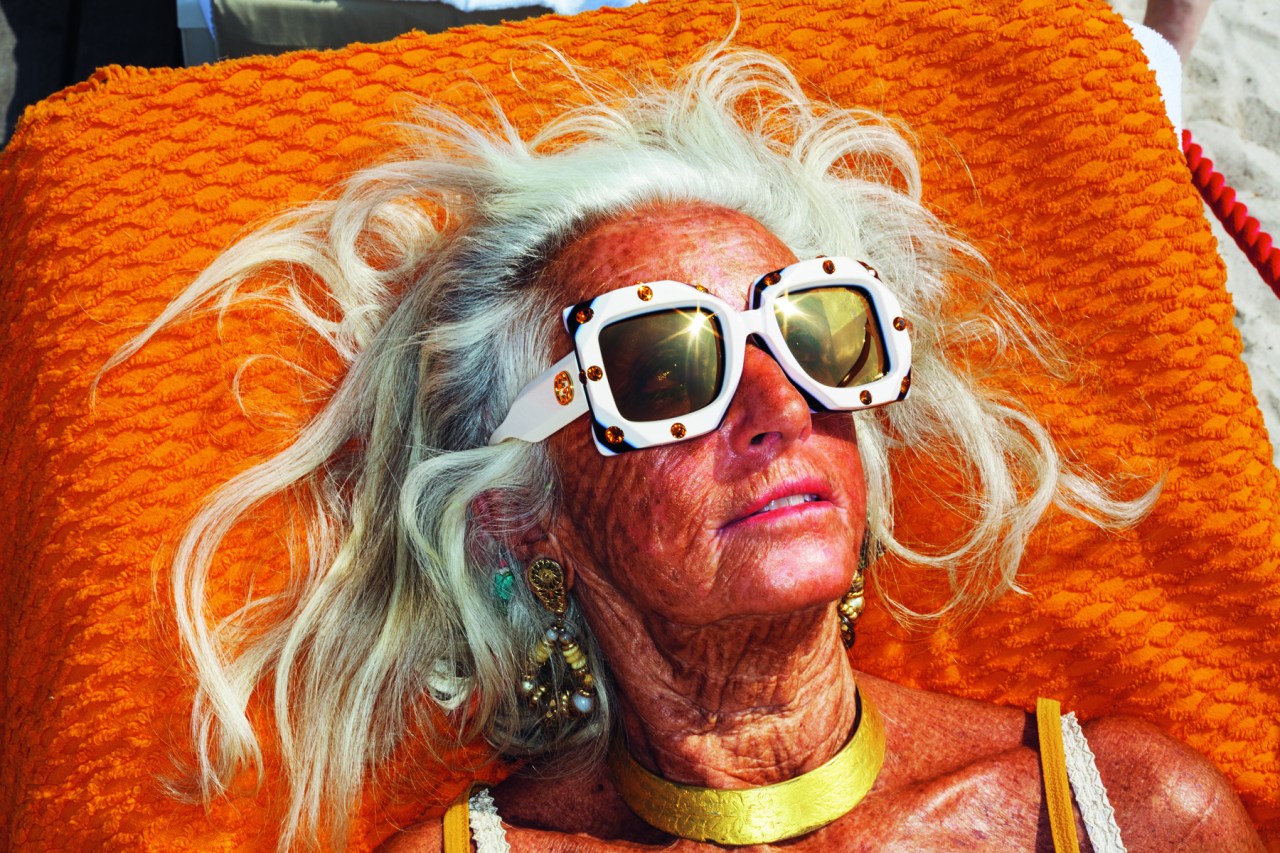
Parr’s pictures were technically of the faces that his subjects presented to the world, that is, the way they believed they were best seen. His genius lay in recording that curated version of “the truth” while showing the persons beneath the mask, not in a predatory or mean sense, like a Diane Arbus might work, but in a kind of knowing smirk, as if to say, “aren’t we all very silly, after all?”.
Martin Parr’s influence extended to his stints as a lecturer, a documentarian for television, and a university professor, with his images evolving from studies of consumerism and the rising British middle class, as well as studies of global tourism and a half dozen other projects, all done with the effect of stripping away society’s outer veneer to provide a glimpse of the actual motivations that lurked below. “Unless it hurts, unless there’s some vulnerability there, I don’t think you’re going to get good photographs”, he once remarked, adding, “I see things going on before my eyes, and I photograph them as they are, without trying to change them.I don’t warn people beforehand. That’s why I’m a chronicler. I speak about us, and I speak about myself.”
 thenormaleye
Leave a comment