IT’S NOT THE SHOES
By MICHAEL PERKINS
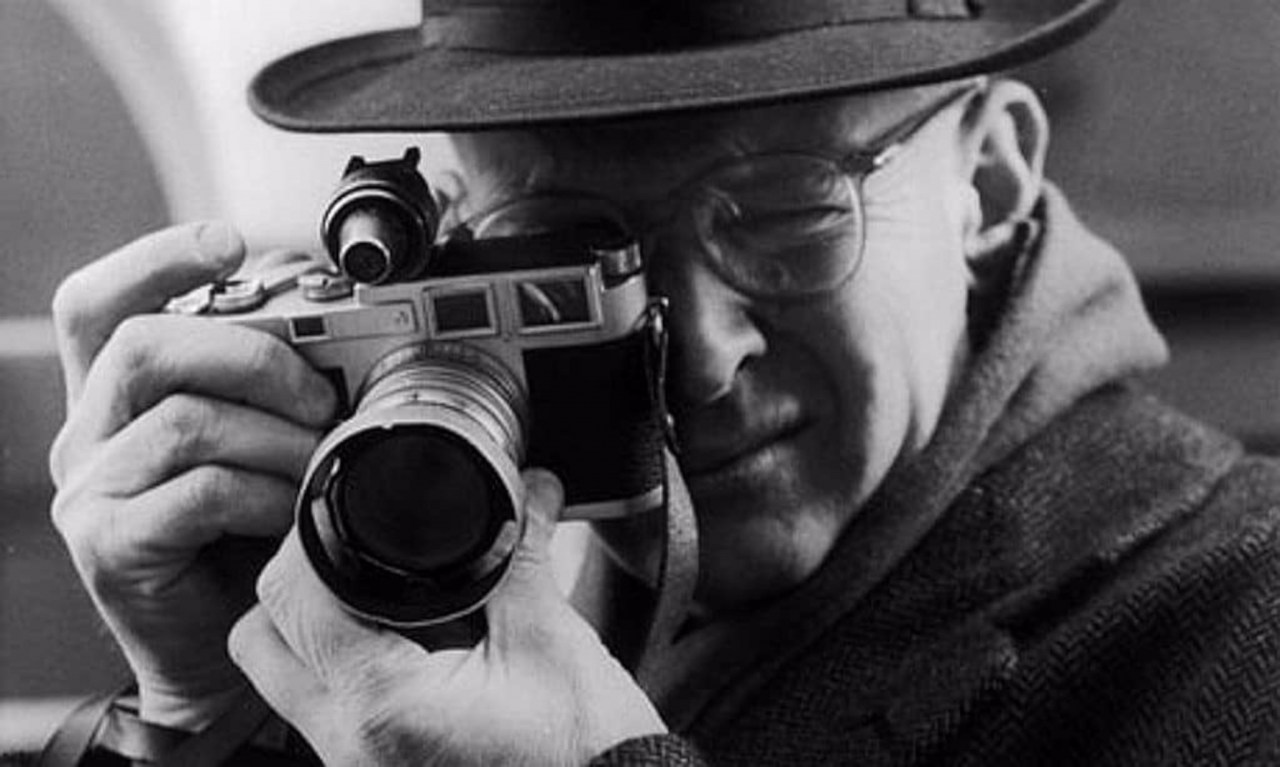
I WAS RECENTLY READING AN ARTICLE that centered not so much on the unique talent of legendary photographer Henri Cartier-Bresson as on the succession of early 35mm Leica’s that were his go-to tools. In the writer’s defense, I believe he was at least trying to make the case that HCB’s kit merely facilitated his own wonderful vision, assisting but not making his greatest images. However, a reader that already regards certain cameras with the zeal of a cult worshiper could easily come away with the opposite view, that those Leicas were, themselves, a determinative force in how his pictures came out. And that’s unfortunate.
People who sell consumer goods tap into the human habit of crediting things for what might be achieved by intelligent use of those things. Eat this breakfast cereal and break the four-minute mile. Ride around your neighborhood on the tires that won the Indy 500. The pitch even works in reverse psychology, as in Spike Lee’s brilliant ’80’s ads for Nike, in which he kept asking various basketball superstars, “it’s the shoes, isn’t it?” The payoff was, of course, a knowing wink to the consumer, i.e., “well, no, it’s not really the shoes, hee hee, but, P.S., Jordan wears ’em, so…” And, for shooters, the equivalent pitch: buy this camera/lens/attachment/app and become a great photographer. It’s an easy approach for advertisers, because it appeals to our own bias about what creates excellence, which, in many cases, the advertisers have “taught” us to believe in the first place.
Cartier-Bresson, whose sense of composition was said to be so keen that he was known to merely raise the camera to his eye and click in one unbroken motion, developed that economical sense of execution on his own, irrespective of what gear he was using. He employed the simplest, most streamlined approach to making pictures that he could, and, as a matter of historic accident, the early Leica’s, themselves very no-frills affairs, gave him all the machine he needed to get the job done, and nothing more. Other manufacturers could likely have served the same elemental function for him, but, as fate would have it, Leica got there first, and so became an inextricable part of his legend, a lazy kind of “oh, that’s how he did it” explanation for a genius that simply cannot be explained.
One wonders how long the camera industry could thrive if manufacturers could not (a) make us discontented with what we already have, and (b) convince us that the next toy we buy will make us a Cartier-Bresson. But the real “camera” in photography is the one positioned behind our eyes. Knowing where to hit the nail-head is more important than merely buying a premium hammer. It really, honestly, swear to God, is not the shoes.
 thenormaleye
Leave a comment