IT COULD ONLY EVER BE THUS
By MICHAEL PERKINS
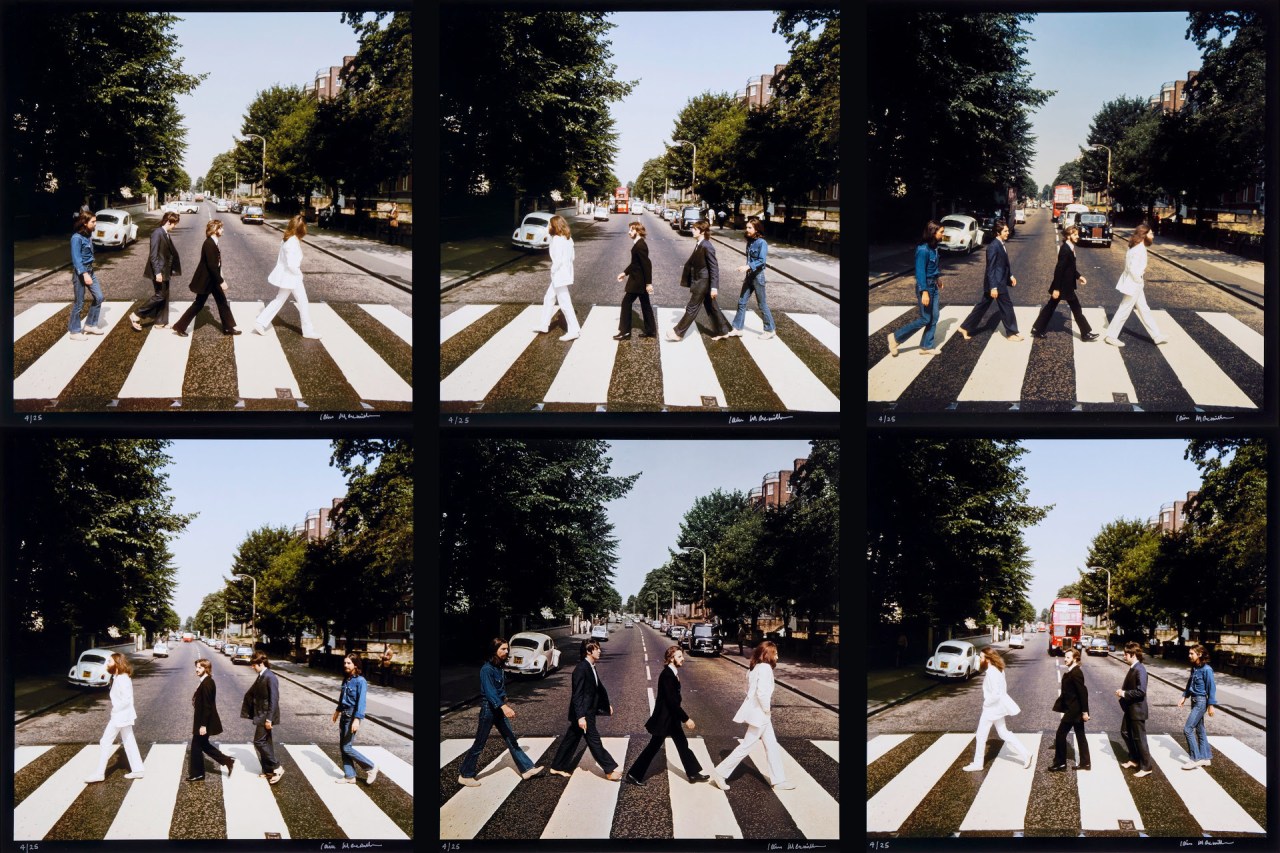
COMPARED TO THE INTRICATE ASSEMBLY OF THE COVER SHOT FOR THE SGT. PEPPER ALBUM just two years prior, the creation of the cover for 1969’s Abbey Road, the Beatles’ final studio album, was a relative snap (excuse the expression).
Whereas Pepper’s “people we like” montage of life-sized celebrity cut-outs took days of prop arrangement and a true jigsaw process of addition and subtraction, the task for photographer Iain Macmillan on Abbey was relatively simple. Find a suitable location, engage a cop to briefly block traffic, and parade the Fab Four back and forth in what would become the most iconic procession in pop music history. Macmillan, a friend of both John Lennon and Yoko One, arrived at the site with a rough idea of the object of the shoot, as Paul McCartney had already worked up some pencil sketches of how the group wanted to be arranged in the “zebra” crosswalk. Iain needed only to clear the intersection and climb a borrowed ladder to get the correct angle and framing for all four Beatles.
And since I can hear you all asking out there in the blogosphere, Macmillan’s weapon of choice for the assignment was a Hasselblad fronted by a 50mm lens. He shot at f/22 and 1/500th second, given that it was a clear August day with plenty of sunlight to spare. The entire shoot totaled no more than six frames, with McCartney selecting the fifth shot in the sequence, reportedly because it showed the group walking away from the Abbey Road studios, a kind of subtle farewell to the site of their best work over the previous decade. It also came closest, among the frames, to give the impression that they were all in the same general step rhythm (make of that what you will). What the final choice shows most clearly, though, given the global familiarity of the final product, is the way in which a simple editorial call can take a shot that’s merely one in a generally similar batch of images, and make it not only acceptable but inevitable, as if to say, of course, that’s the only one which would have worked.
In examining the options that might have been in the making of a classic photograph, we see the true value of editorial judgement, of learning how to pluck the classic shot from a clutch of okay alternatives. Assuming that McCartney was, indeed, the final arbiter of which of Macmillan’s photos was to be “the keeper”, one wonders what George or Ringo, accomplished photographers in their own right, might have chosen. But Fate went the way She went. Inside many of our most casual bursts of frames might lurk an “inevitable”, a picture that cries “it could only ever be thus”. Our judgements after the snap are often the equal of everything that went before it. It’s a long and winding road (again, sorry).
 thenormaleye
Leave a comment