20 x 50=31
By MICHAEL PERKINS
I AM STILL RETRENCHING AND REFRESHING AFTER A FIRST YEAR IN CALIFORNIA which saw me using full auto to a far greater degree than is normal for me. In this honeymoon phase, sensory overload was the word of the day, with new places and experiences cascading with such speed that I found myself shooting reactively, hoping, in many cases, that some of the snaps I took in haste would later be re-done with a finer degree of control. My prescription for this feeling that the process was doing me, instead of the reverse, was to retreat into fully manual work for at least my non-wildlife stuff. This meant re-acquainting myself with the lens that served as the foundation for most of my earliest writings in THE NORMAL EYE some fourteen years ago, a 50mm f/2.
There is something to be said for taking full responsibility for your shots and for using what serves many as “the only lens I need”, regardless of the setting or situation. The more stringent rules of engagement, from framing to exposure calculation to focus, actually work to free a photographer, in that he always knows what to expect of the lens, both in its limitations and its ease and simplicity of operation. The so-called “nifty fifty” is cited by many shooters as not only their go-to, but their entire kit. And for this year, I wanted to investigate some of he best third-party 50’s from the late analog era, 1975-1985 mostly.
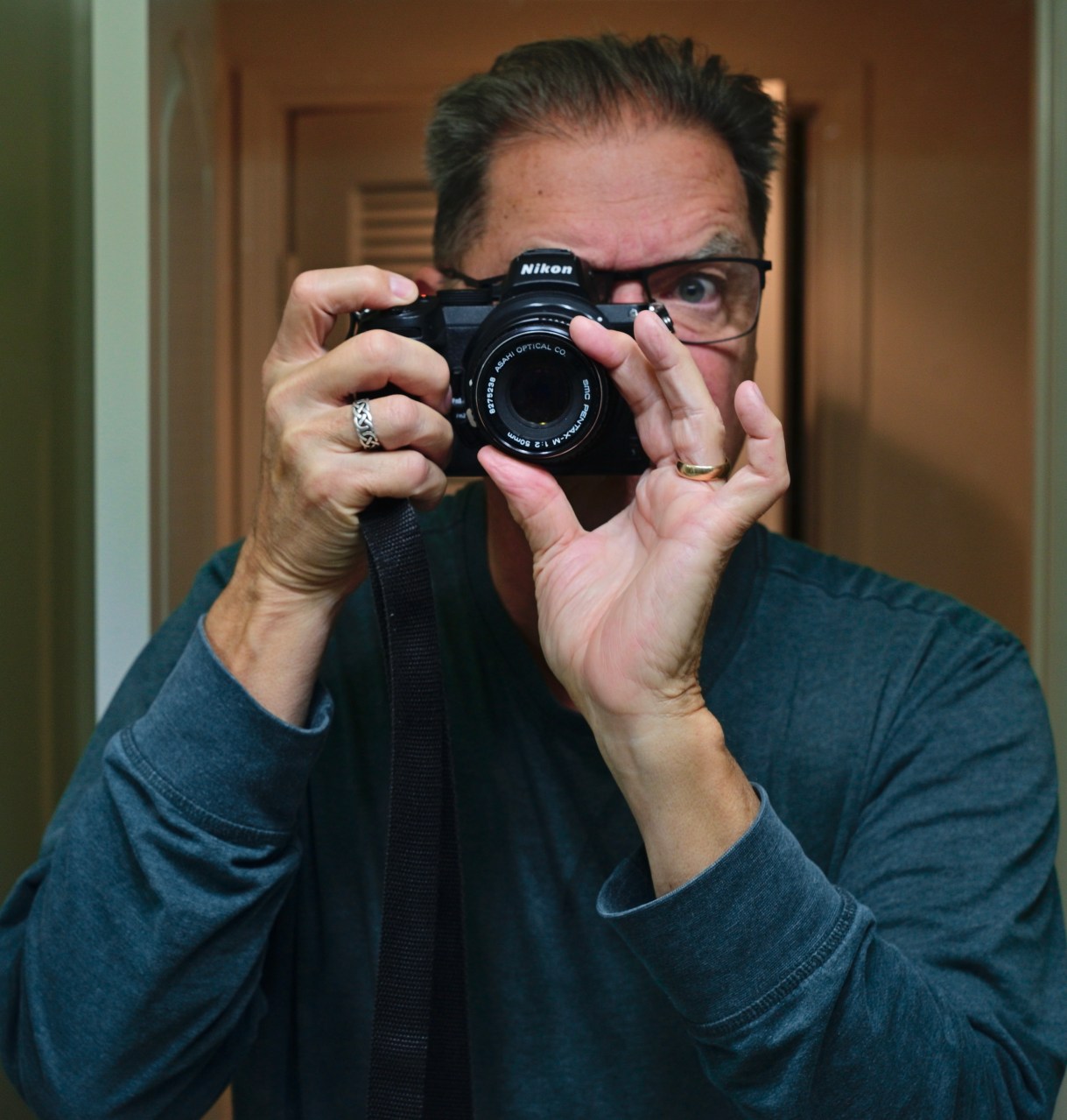
A Pentax-M 50mm f/2, built from 1975-1982, adapted for use on a Nikon Z5 body for under $40.
For years, I had stayed on Team Nikon, using an f/1.8 50 manufactured in the late seventies. It was my sole companion for an entire year, comprising much of the work I collected into a book bearing this blog’s name. This year, I had a light-bulb moment and robbed the 50 off the front of my old Minolta SRT-100, truly shooting for free. More recently, after borrowing an old Leica Summicron f/2 from a buddy and driving it around the neighborhood, I became curious about which other 50mm primes from the period would nearly perform as well for less cash, like a lot less. 50’s of every brand were produced in the millions in the late 20th century, being the default kit lens for many models, and are, therefore, the very definition of cheap thrills. Enter the Pentax-M Asahi f/2 seen here (similar to the lenses used by the Beatles on their first cameras, way back in 1964), which I harvested off the internet for 20 dollars American.
And so, with renewed vigor, I’ve decided to shoot everything, not for a year, but at least for the 31 says of December 2025, with just this puppy. It is sharp and light, even with the $15 dumb adaptor that allows it to be mounted to my Nikon Z5. The lens does not share information with the body, but that’s what I am for, supposedly. Let me be honest; I love many auto features. I sometimes even love when my camera anticipates what I need, even when I don’t know what that is. But sometimes you have to go back to basics and remind yourself how to directly make a picture, armed only with your own native cunning and $20 worth of glass.
ENTROPY FOR SMARTIES
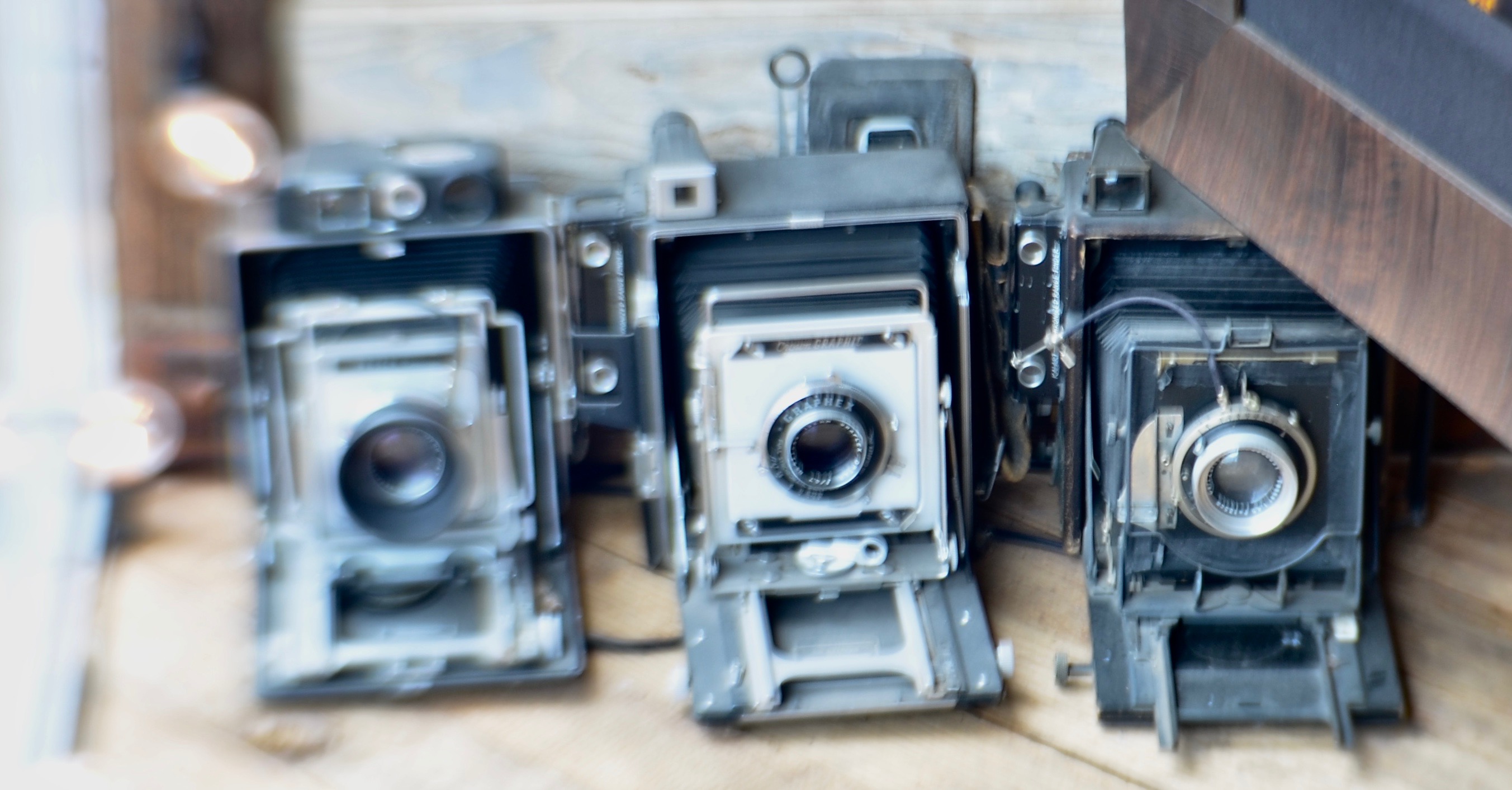
Having “too much camera” for the job is worse than not having enough.
By MICHAEL PERKINS
SEVEN YEARS AGO, THE NORMAL EYE BEGAN ITS BLOGGY INFANCY based on a very simple idea, one which I hoped might help its content outlast the comings and goings of trends or fashions. That idea was (is) that this photography thing is a journey, not a destination, that we are always on the way to something, be it personal development or increased technical mastery or both. Indeed, our welcome page specifically refers to the “journey from taking to making”, a trek which is designed to reveal something new about ourselves at every turn in the road. This small-town newspaper, then is never so much about the “how to” side of photography as it is about the “why do we do it?” side.
On a personal level, the blog was also a by-product of a yearlong stretch during which I used a 50mm prime lens exclusively, forcing myself to shoot anything and everything with a single optic in an effort to increase my own mindfulness. I needed something that would slow me down so I could anticipate, plan, even pre-imagine shots, rather than effortlessly clicking them off in mega-batches. I also stuck an additional pebble in my shoe by shooting only on manual, again with the idea that streamlining my lens choices and functions would allow me to take greater conscious control of whatever I set out to capture.
This is not just the photographic equivalent of setting off into the wilderness with just a hunting knife and some beef jerky to win some bar bet about your ability to live off the land. It’s not a stunt or a dare. It’s about learning to emphasize your own vision rather than relying on equipment to hand-deliver you technically acceptable but emotionally empty images. Using a single lens for everything still gives you just as many creative choices as you’ll find lugging around half a dozen different optics and gizmos, so what we’re talking about here is speeding up your reaction time (no fumbling to change out gear, hence fewer shots missed), teaching you a personally consistent way of imagining/framing a shot, and getting to the point where your bond with your camera is so instinctual, you’ll devote a much higher percentage of your day to seeing instead of calculating. Prime lenses, which have only one focal length, are also called “normal” lenses, and that word intrigued me. What, in terms of how we first learned to use our senses, could be more “normal” than seeing with a full and profound sense, versus just having things pass by our eyes largely unnoticed? Thus, as I worked to get everything out of my “normal” 50mm, I was also trying to re-normalize my own vision, taking it off the auto-mode settings imposed by cameras that have conditioned us to choose convenience over honesty.
I restate this little epistle from time to time because it continues to inform everything I try to do as a photographer. And because there will come times when you have, due to bad luck or fate or stupidity, limited options for getting the picture. Equipment will fail: cameras will be sucked up by a swamp or tumble over a cliff: batteries will die. And when that happens, even though your technical choices have become more narrow, your ability to make the picture you want will not. Your “normalized” eye will empower you to produce results with any camera, any lens, in any situation. And that’s what the journey is all about. Call it Entropy For Smarties.
In the next installment, I hope to illustrate how I’m trying to call on this flexibility to help me deal with an approaching shooting situation that I know will be more restrictive, gear-wise, than I’d like. I have to keep reminding myself that making images is only partly about the gear. The trick is to make it as small a part as possible.
 thenormaleye