DRIBS & DRABS
By MICHAEL PERKINS
PHOTOGRAPHIC COMPOSITION IS A CONSTANT YIN-YANG OF ADDITION AND SUBTRACTION, an ongoing argument over what, indeed, is essential for the narrative of an image. Sometimes, as in the case of a vast, sprawling vista, wide and inclusive is the best choice. Under other circumstances, huge chunks of that same vista can be sliced away to amplify the importance of some smaller thing happening in the larger panorama. Most of us do this either-oring almost without thinking, often trusting our first instinct on what should be included or excluded in a particular case. And sometimes, the answer to the question “how much info is enough?” comes to us later, upon repeated reviews of pictures we thought were, well, perfect.
I love shooting huge subjects as wide as I can, but, upon review, I find that they speak more persuasively if I judiciously remove areas that, on first look, can seem essential. But essential for what? In trying to tell a story, you can either immerse yourself in rich detail or try to suggest more by showing less, or, more precisely, in telling as much story with the simplest visual cues you can.
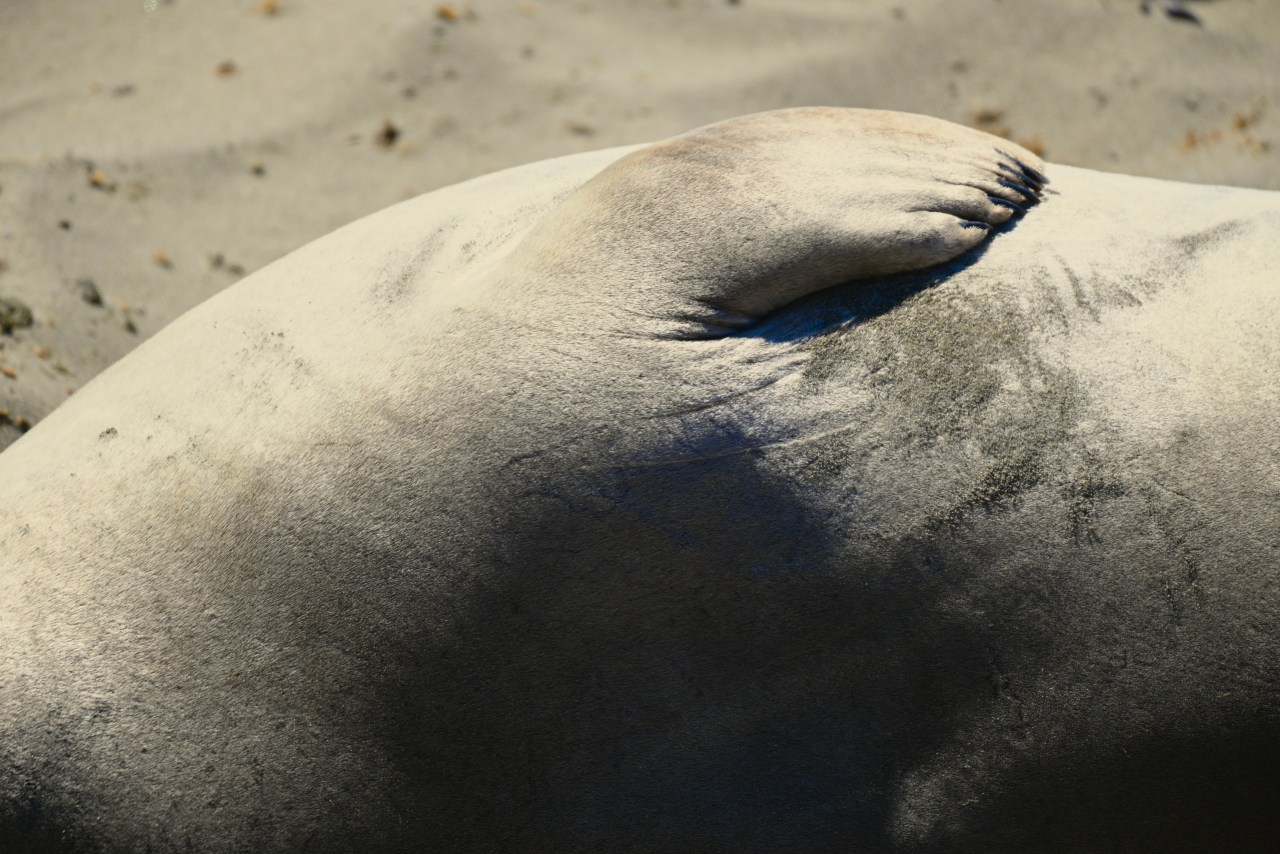
The shot you see here was taken on a beach in San Simeon, California. It is a protected refuge for baby elephant seals, who crawl on the sand and help themself to the healing combo of sunshine and sleep. They crowd the sands by the hundreds, much to the delight of passerby who often travel hundreds of miles just to watch the oversized infants chill out. I have plenty of pictures of this scene that take in the entire beach, focus on a sea of whiskery, sandy snouts, or show the seals in the context of the surrounding coastline.
But here, I just wanted a tight shot of one seal’s limp flipper, no more, no less. It’s an exercise in seeing if I can suggest all that bigger stuff I just mentioned in something close at hand. In fact, the shot you see here is a crop of a crop of a crop, as I kept paring away any dribs and drabs that could compromise the one, single thought that I wanted to convey. It’s also a reminder (one that I need on a regular basis) that the best stories are often the simplest. Sometimes, they happen in a vast forest. And sometimes they are seen in the veins of a single leaf.
HEATED DISPUTE
By MICHAEL PERKINS
ONE OF THE KEY CHALLENGES IN SHOOTING WITH TELEPHOTO LENSES (and there are many) is in executing a stable shot. Simply stated, at the upper range of a lens’ magnification, there is an exponential increase in camera shake, with the usual remedies being either a more solid grip by the shooter or the use of a tripod, depending on the prevailing conditions. However, another problem, one that is much harder to either anticipate or control, can render images soft or blurry, despite the shooter’s best preparation, and that is the dread disease known as heat shimmer.
A long zoom means focusing over great distances, all of which might be experiencing the release of heat at the same time, blurring detail, and making straight lines look like they were drawn by a drunk monkey armed with a half-melted crayon. The result is a marked degradation in the image, especially at zoom ranges above around 300mm. Mind you, unstable air is just one of several challenges that plague telephoto shots. There is the loss of light as you zoom in, the size and efficiency of the camera’s sensor, even inconsistent color rendering. The raw truth is that heat shimmer is next to impossible to plan for, and, once in your master image, impossible to remove. The only real question is, in a particular picture, is whether you can live with it.
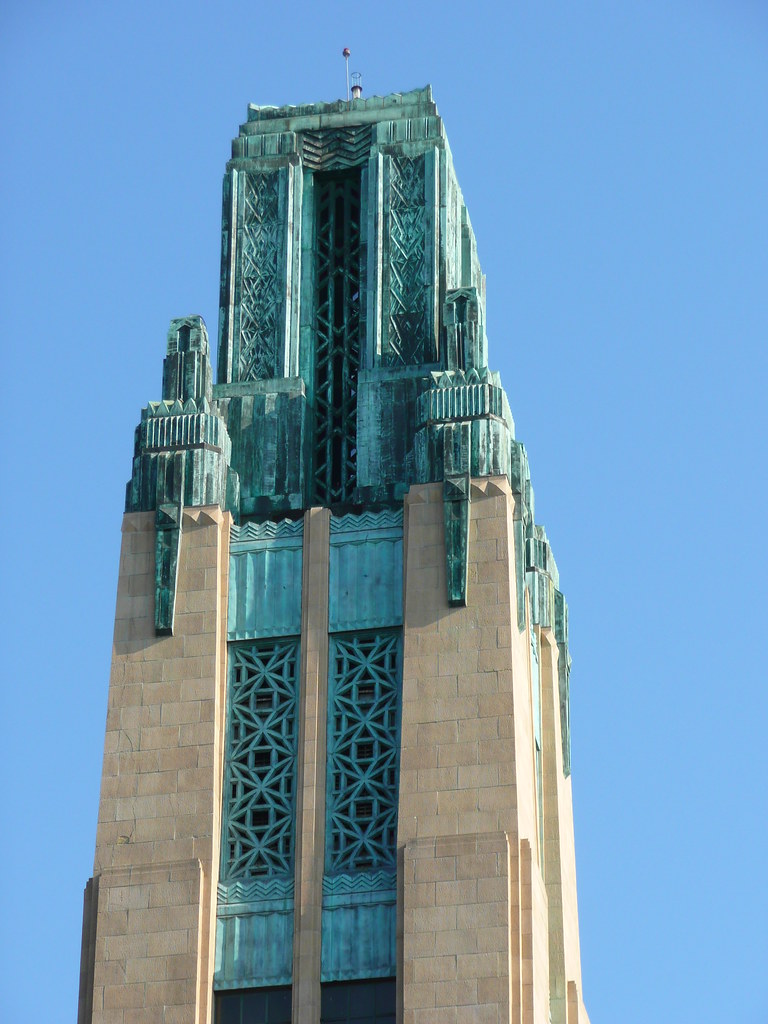
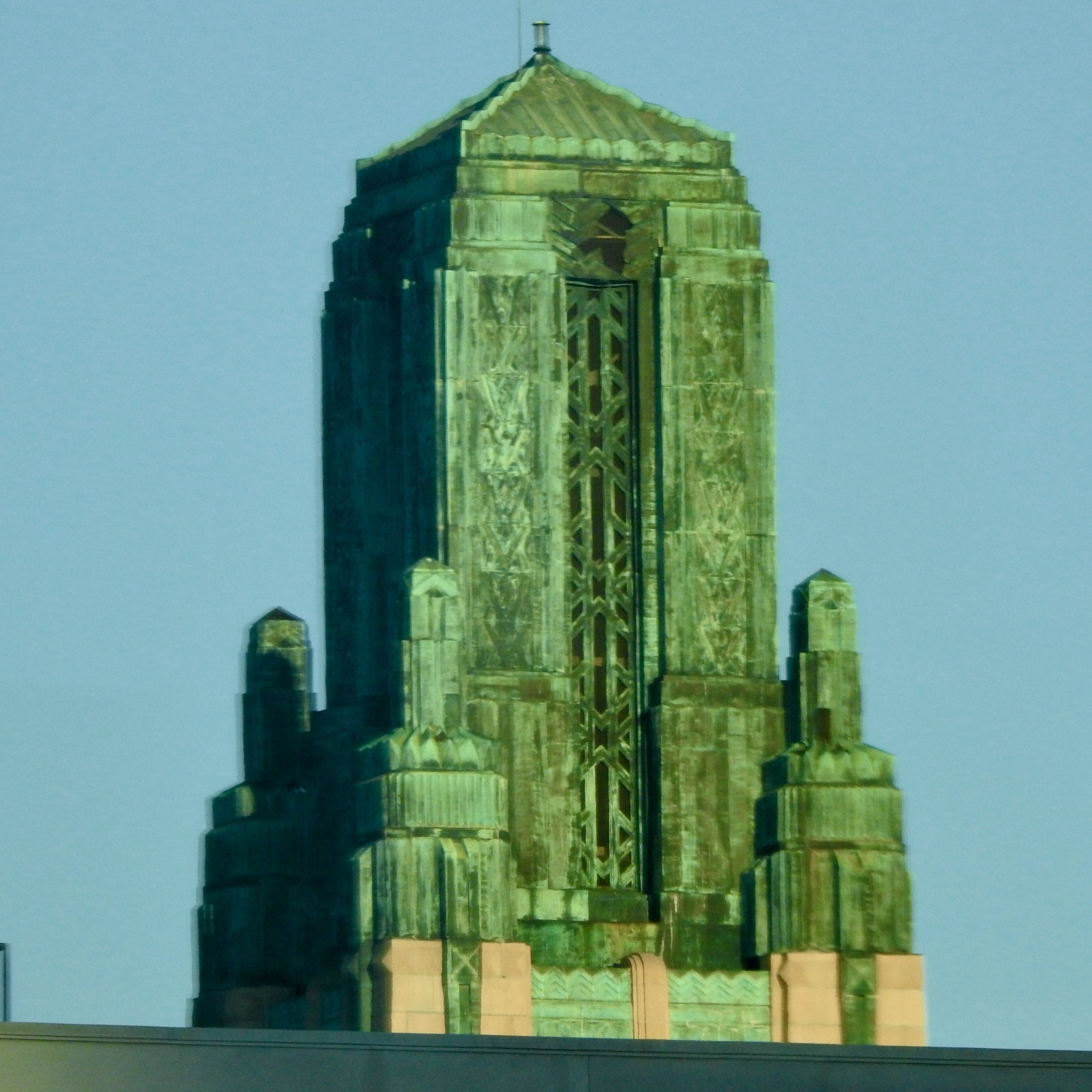
The topmost shot of the copper-topped tower of the iconic Bullock’s department store building on Wilshire Boulevard in mid-town Los Angeles, which I shot with a Nikon Coolpix P900 “superzoom” at around 650mm, shows this crummification effect at its worst. To be sure, decades of air pollution and weather have reduced the sharper edges of the tower appreciably since the 1930’s, but, as you can see from the stock image just above, I have paid the price for zooming across several hot rooftops and reflective surfaces that are all adding to the already compromised sharpness. It’s always hard to get the top of the Bullock’s building from street level, and so I used the occasion of an upper-floor hotel window to go for broke, and “broke” is pretty much what I got. And, yes, we could also argue that I should have shelled out three or four thousand dollars for a dedicated zoom with better optics, but as I have foolishly chosen food and clothing over a third mortage for a lens of such nature, we’ll stick a pin in that discussion.
The clearest cause of the overall softness of my shot lies in the heat shimmer factor, which may or may not have been better or worse had I waited for another time of day. Sadly, despite all our craft and cleverness, fate still packs plenty of uncertainty into the process of making images, and this time around, it bit me squarely in the rear quarters. But it’s like they say: if you can’t take the heat, get out of the hotel window…..
 thenormaleye