DUST WITHIN DUST
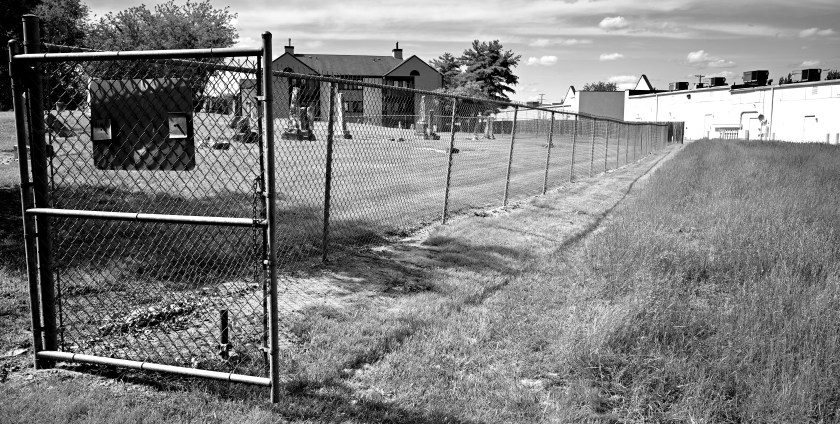
Sandwiched between a strip mall and an apartment complex in Ohio, an 18th-century graveyard..
By MICHAEL PERKINS
CEMETERIES USUALLY PROVIDE VISUAL CUES GALORE for both passersby and photographer, with hefty monuments, iron gates, placid, leafy grounds, and flower-crowned epitaphs. Most final resting places also stir in a big dollop of dignity, of august respect, a way of marking the importance of those interred below. A send-off befitting the lives they lived.
But not always.
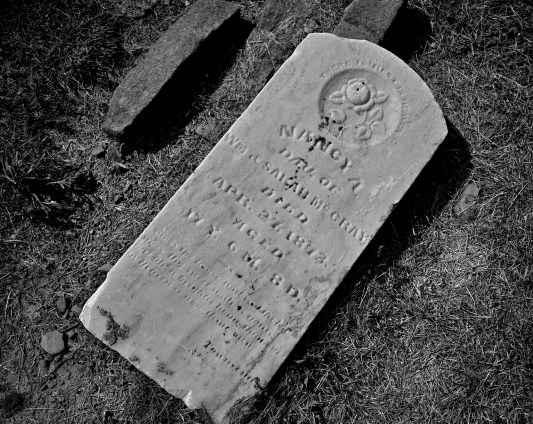
A place of neglect instead of respect.
Grave sites, and the gravitas they receive from us, vary wildly from town to town. You might be laid to rest beneath the uniform, manicured fields of Arlington, or, as in this forgotten patch behind a strip mall in Reynoldsburg, Ohio, you might be in a random gathering of crumbling headstones hemmed in by an ugly cyclone fence, overgrown with weeds, lacking even the simplest legend on the origins of souls gone so long ago that half the data on their markers has been effaced by time. The graves here date back to the earliest days of the republic, with even a few occupants from the revolutionary era. However, to drivers whizzing by the front of the shopping strip on state route 256, they may as well be on the moon, the only hint of the site’s existence being a small post-mounted sign reading “Historical 1819 Seceder Cemetery, Behind Shops.”
In speaking to several people who live in the immediate area, I found that the fact that there was an historic cemetery moldering in neglect just yards away from where the locals drop off their dry cleaning or shop for snacks was a complete surprise. The living and the dead tend to be more side-by-side in smaller towns, and, in fact, several other, more lovingly maintained graveyards are scattered throughout Reynoldsburg. But so many things slip between the cracks of history. Time not only heals, allowing pain to be endured; it also erases, allowing loss to go unheeded, or completely forgotten. For guys with cameras, both legacies of the departed impart their own poignant pain.
 thenormaleye