ALL AT SEA
By MICHAEL PERKINS
MY RECENT RE-LOCATION TO CALIFORNIA has, in just over a year, already informed my photographic work, especially since I live largely near the Pacific coast. As just one example, my entire attitude toward landscape work has been re-jiggered, mostly due to the fact that I have near daily access to the ocean, which, as either subject or backdrop, seems ever new to me. I was never a “landscape guy” in any committed sense, my passion being concentrated either on street scenes or abstract patterns, which, in architecture, also centered me in cities. Being newly entranced by an area of photography that I always thought of as auxiliary rather than essential, then, requires me to be a lot more deliberate in choosing projects or compositions. It’s easy to get to the beach; it’s harder to get the beach, if you like.
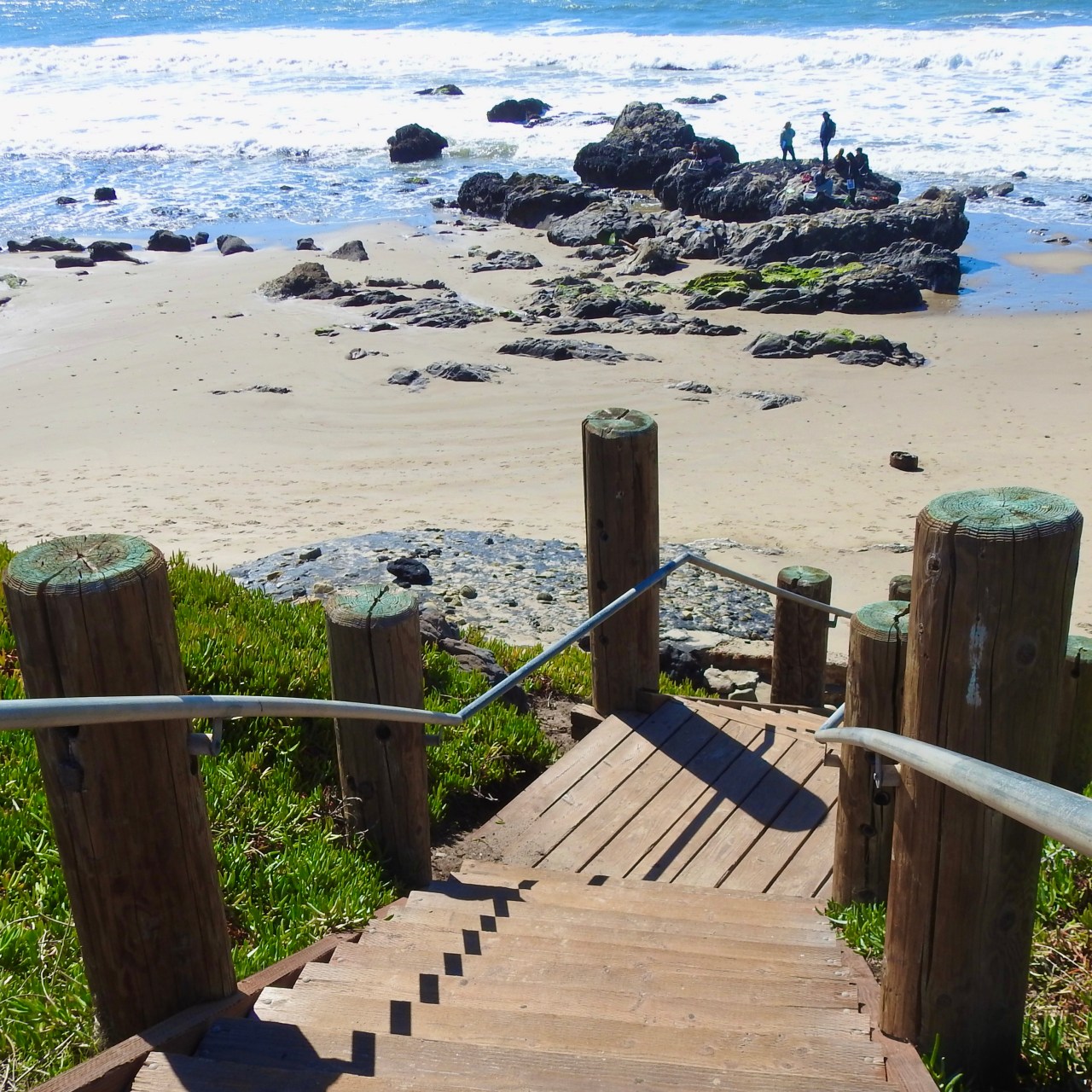
You can see the effort here. What you can’t see is actual planning toward that effort.
One thing I learned pretty fast, and that is that I need to become more of a technician when it comes to even exposures that include say, the brighter surfaces in the sea. It takes a mortifying amount of practice to program either me or my camera (or both) to get balanced shots. The scene shown here is a great example of what I must absolutely not do, and that’s to trust my camera to either full auto modes or a semi-auto setting like Aperture Priority. I simply come away with too many blowouts on the waves, which, as we all know, are unfixable in post. You cannot recover detail that you didn’t capture in the first place. Underexposures can sometimes be mined for additional information, but a whiteout is a whiteout, and, in fact, you can make the entire frame worse by going overboard to fix an unfixable situation.
Shooting this image on full manual and adjusting the histogram for better balance throughout would obviously have prevented some of the damage, but, in a rapidly shifting scene (something that is a constant with “active” landscapes like water) I have ofttimes succumbed to the ease and speed of auto shooting, usually to my regret. And so, as I evolve fully into Beachcomber Boy, I need to re-school myself on all the lessons I have not had to draw upon for most of my recent work. As stupid as it sounds, there is no substitute for actually knowing what you’re doing.
FROM DAMN TO DARN
By MICHAEL PERKINS
OVER THE MANY YEARS THAT I HAVE BEEN SHOOTING PRIMARILY ON FULL MANUAL, there have been plenty of chances for me to embarrass myself utterly by mis-reading various settings on the fly. I stay with manual mostly out of the comfort that many decades of doing it afford me, and partly because even semi-or-fully-automatic shooting modes can occasionally stab me in the back anyway. That said, every once in a while, I totally mis-read the road and wind up with an exposure like this:
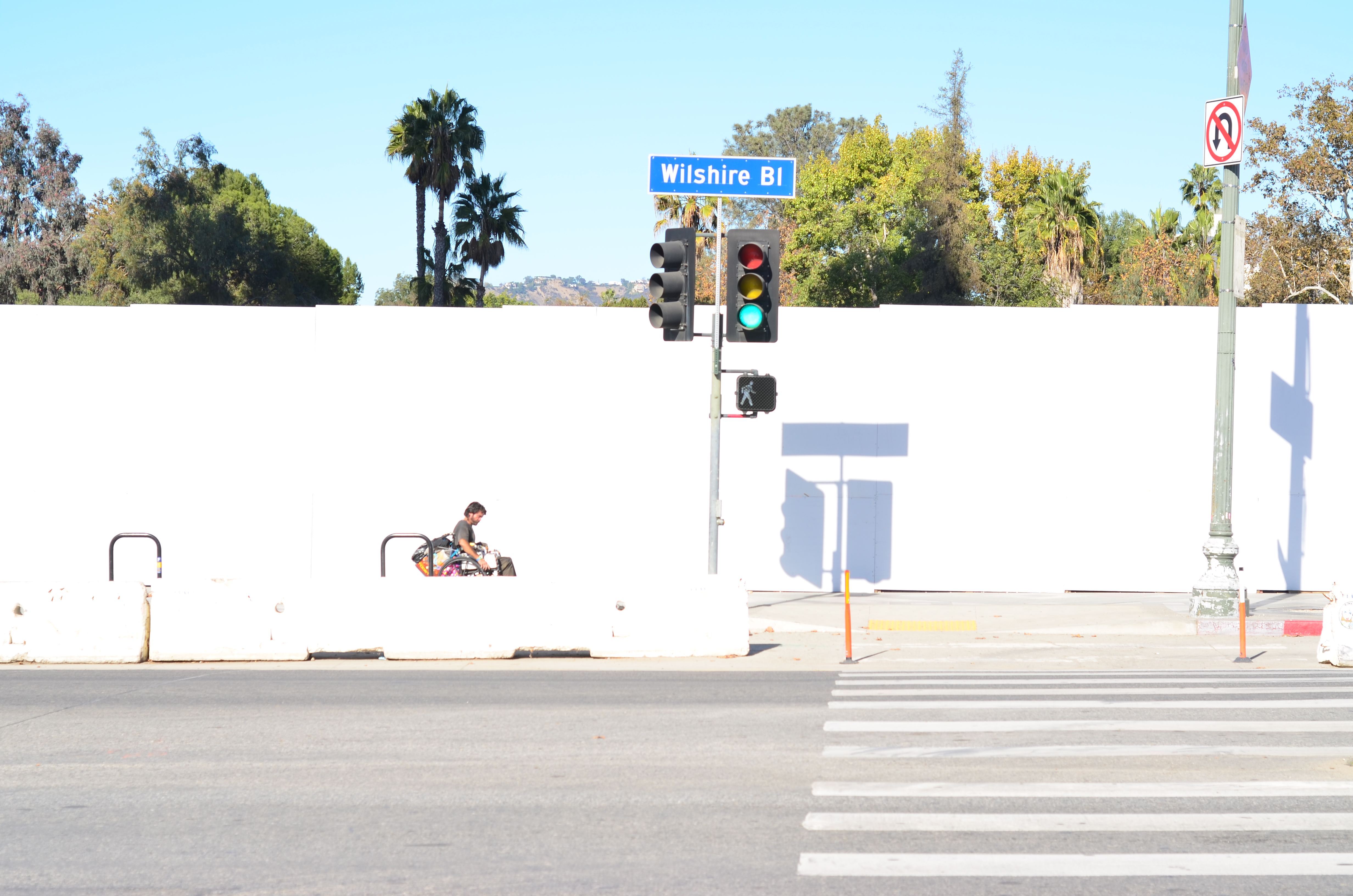
Lemme ‘splain, Lucy: I was in a hurry to get the man in the lower left corner before he could cross further right. I wanted him to appear small against the immense white wall that was both a literal and symbolic barrier cutting him off from parts of the street and cutting us off from the rest of the available view. Unfortunately, just a few seconds prior, I had shot something much darker and left the settings the same, meaning that a white wall became a By-God-We’re-Not-Playing-Around-Here-Freaking-WHIIIIIITE-WALLLLLLLL. This is what photographers and race car drivers alike call A Blowout.
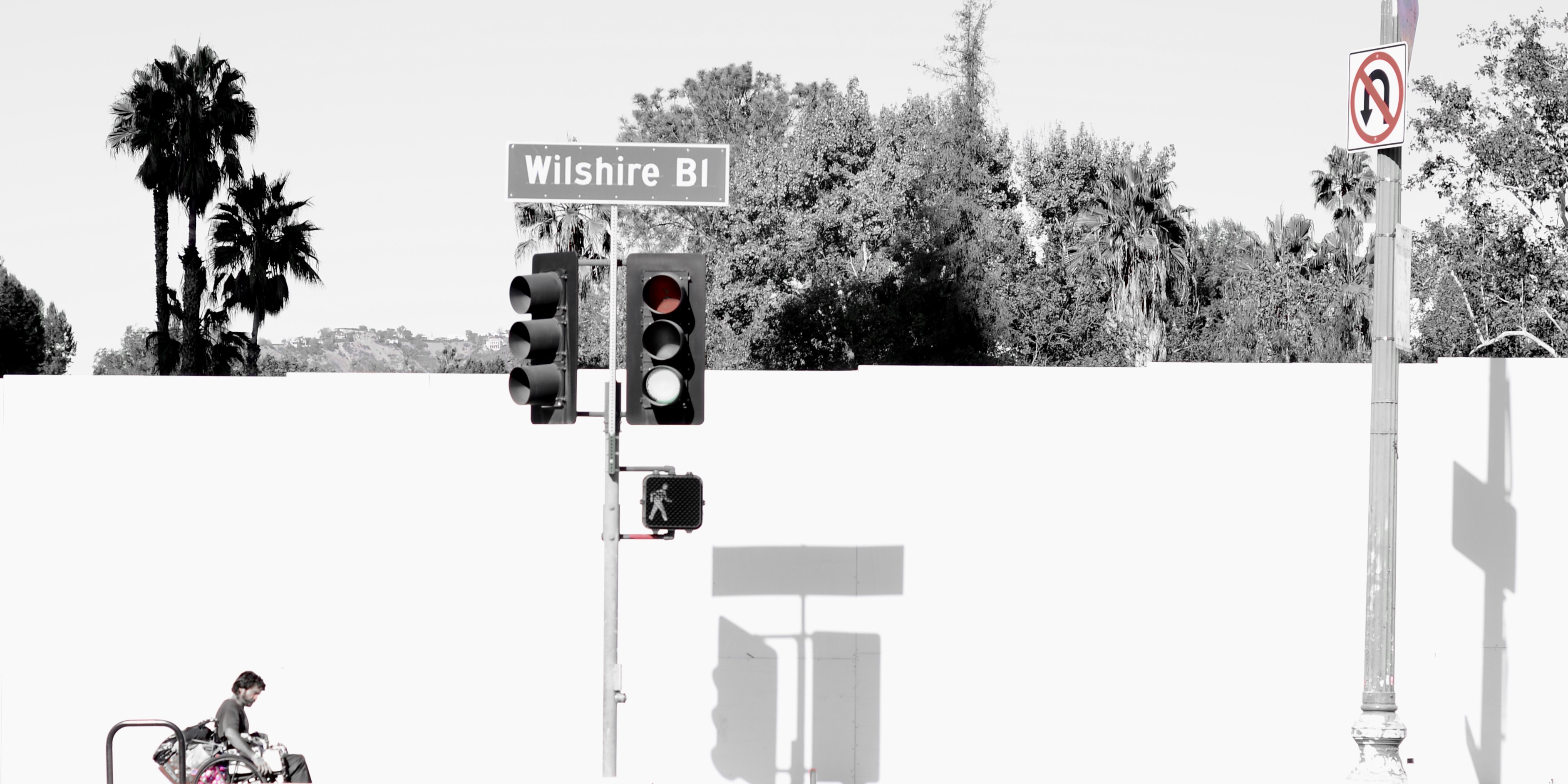
Then, since I had already obliterated a lot of detail and contrast with the master shot, I wondered if I should just go whole hog and remove more of both, including desaturating everything except the man’s skin tones and part of a traffic sign. In other words, start with a flawed picture and then exaggerate the flaws until it looks, you know, intentional. Did I succeed? Depends on when you ask me.
Don’t get me wrong. I’m all about saving face when I blow a picture, and I’m certainly not above applying a few tweaks to make my flub look like a win. But here I think I’m just telling myself what I want to hear. This isn’t an avant-garde or edgy commentary on our times. It’s just a blown picture. But at least I can tell myself (and you, dear reader) that I can still tell the difference.
 thenormaleye