FOR WHICH IT STANDS
By MICHAEL PERKINS
PHOTOGRAPHY, SINCE IT TRAFFICS IN FROZEN MOMENTS OF TIME, is, of necessity, in the business of symbols.
We have scant, stolen instants in which to try to simplify complicated ideas, to improvise a visual shorthand for concepts that the philosophers fill bookshelves explaining, or attempting to. And symbols are the key instruments in that shorthand, as we mean for this to stand for this, or for that to imply that, and so on. The tricky thing about symbols, however, is that they convey different things to different people. They are fluid, mutable. Personal.
So who owns the symbols of unity? Of freedom? Of defiance? Dedication? Memory? Pride?
Patriotism?
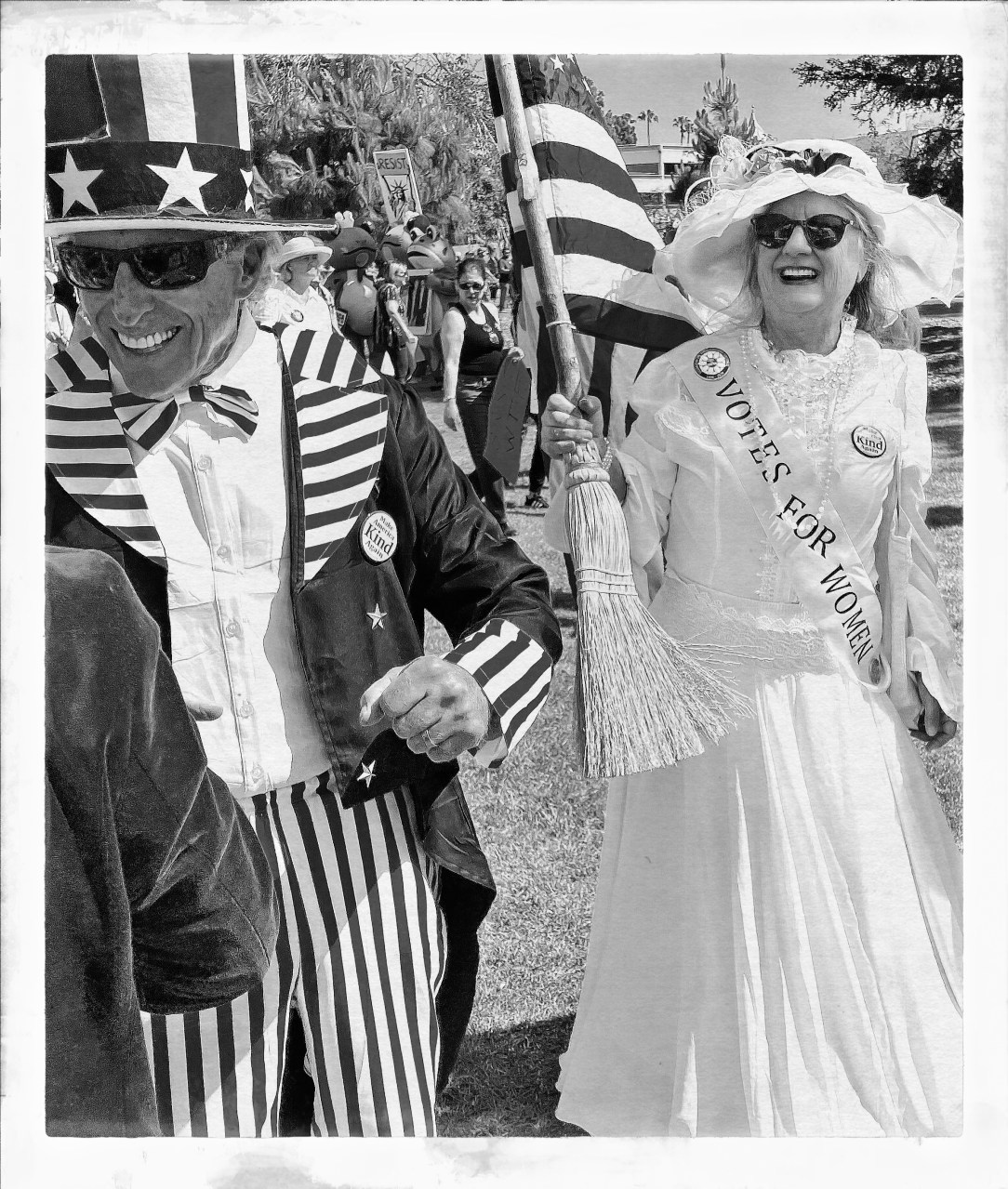
As America counts down the final weeks to the 250th anniversary of its founding, we can easily forget that flags, decals, banners or badges are not pure in their power, nor are they universal in their meaning. There are too many of us that have lived too many different kinds of lives for any one set of symbols to say the same things to all of us. And so, in an era of almost unparalleled division, it’s only natural that we disagree also over who “owns” this things. If I wear the Stars and Stripes on the seat of my jeans, am I celebrating my freedom to do so, or disrespecting the rigid ritual of Old Glory aloft on a flagpole? History is layered, and symbols can be tweaked, exploited, or shanghaied to serve the programs of many people with many aims. Photographs of the various ways we decide to celebrate something like a flag can explore nearly infinite interpretations, and therefore the visual subject cannot be exhausted. Every depiction of a widely-used symbol merely underscores how non-common, how very personal it is.
Maybe the best way to show respect for a symbol is to acknowledge all the ways it has been used; as tribute, as memorial, as rallying cry, as bludgeon, as emblem of hope, or badge of error. To photograph people who are “rallying round” a flag, or any other talisman, is to document all these uses and imply many more. Pictures thus become more than mere documents, but evolve instead into a kind of testimony.
 thenormaleye