THE FUTURE’S SO BRIGHT…

By MICHAEL PERKINS
PHOTOGRAPHIC TOOLS HAVE FINITE LIVES; they are introduced largely to solve a problem or improve results, and, as they age, can eventually create different problems which, in turn, have to be solved by succeeding technology. Gear thus has a birth, a life and a death, moving from something we need desperately to commonplace practice to antiquity and obsolescence.
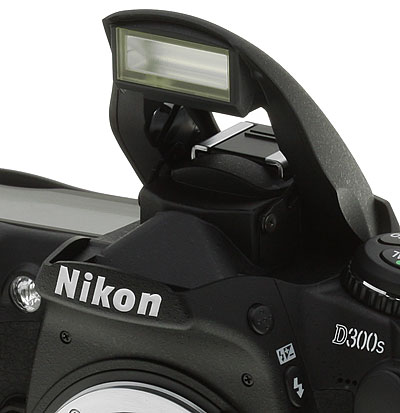
One such tool that, in the year 2025, is heading for the scrapheap of history is the loved/hated electronic pop-up flash, which, at this writing, is fast disappearing from new cameras at almost every level of expertise. Once seen as an ingenious miniaturization of the bulky electronic flashes of earlier eras, pop-ups are being deliberately designed out of incoming models, as fundamental rules of how we amplify or disperse auxiliary light in an image have shifted dramatically. Truth be told, the humble pop-up was always the Rodney Dangerfield of flash, in that it “never got no respect” from serious pros, who either mounted more responsive, more controllable units on camera flash shoes or used the pop-up merely as a trigger for off-camera slaves. Pop-ups were never capable of throwing light very far (ten feet was a reach) and, without the means to pivot or customize their angles, they mostly blew super-hot light directly into faces, blowing out detail and obliterating even those shadows the shooter actually liked. This linked them forever to a kind of snapshot. or “light it at any cost” mentality, mostly among amateurs.
And then there was the fact that pop-ups, being in part a mechanical feature, were more prone to failure or breakage than nearly any other component on the camera. The digital age pounded another nail into the pop-up’s coffin as well, making sensors more responsive to a wider dynamic range, lessening the number of shots that would even benefit from spot flash. Finally, as even cell-phone cameras create a balanced exposure through so-called “computational” calculation, flash pictures themselves, except in professional studio situations, are obviated more and more by better camera brains. And, finally, there is the consideration of the sheer space and electronic real estate taken up by a pop-up, space that could be better allocated, as Fstoppers magazine has remarked, “for better screens, faster processors, or improved connectivity.”
Photography has always been about the better mousetrap, and, after more than half a century as a standard feature on cameras the world over, the pop-up flash is just about ready for its final close-up. Some would say it’s the end of an era, but making pictures isn’t about isolated sectors of time, more like a continuous river of upward improvement. Tools are tools until they are impediments, and then, they are gone in a flash.
YOUR FLASH AIN’T NOTHIN’ BUT TRASH

Learning to make the maximum use of light means you can leave your flash off more often. 1/60 f/5.6, ISO 100, 18mm.
By MICHAEL PERKINS
PHOTOGRAPHY HAS NEVER SUCCESSFULLY ADDRESSED ITS BIGGEST, AND MOST LONG-STANDING WEAKNESS, that of providing natural illumination in all shooting situations. Worse, it has generated tons of tweaks and workarounds to compensate for this weakness, instead of solving the central problem. As a result, we have limped our way through nearly two centuries of devices and processes designed to create momentary fake lighting…the lame legacy of flash.
Instead of finding recording media that absorbs and spreads light adequately, from salt paper prints to roll film to pixels, we have invented one torchy crutch after another, each adding expense, bulk and even greater uncertainty to our results. The ignition of aluminum powder may have given way to pop-ups with red-eye protection, but the essential error in our thinking persists. We don’t need better flash: we need cameras good enough for there to be no flash.
Flash is like a bratty kid in a restaurant. He won’t sit up straight, spits his chewed broccoli back into his napkin, splashes water on everyone, talks with his mouth full, and eats his dessert first. And his mother dresses him funny. And yet we can’t rub this punk out, no matter how we try.
Testify: a recent B&H Photo catalogue boasts eight pages of flash equipment, most of it aftermarket gear designed to muffle, bounce,, amplify, soften or re-direct flashes that are too harsh, too faint, too in-line with the “optical axis”, or otherwise inefficient. Many manufacturers of DSLRs practically admit that their on-camera units are too limited for custom lighting, selling you their costly, brand-related off-camera units, cables, transmitters and widgets. Ca-ching. Photographically speaking, this is like telling you that the house on which you just took a 30-year mortgage is really a dump, but the place down the street is divine.
It was decades before film was fast enough to be used in more than a few specific situations, so flash. It’s still too expensive for most people to get lenses that are speedy enough to keep from blasting bleachingly hard light in people’s faces, so flash. And, sadly, many of us still believe that popping that little beast up in a 50,000-seat concert hall will magically help us counter the 300,000 square feet of darkness between us and the stage, so…flash.
Digital image sensors might eventually evolve sufficiently for different parts of them to register light individually, eliminating the need for extra bursts of artificial light, and our own best practices in the use of natural light can all but eliminate the need to pop up the pop-up. But we are farther away than we should be from a flashless world. It’s not that we don’t all know that the way we currently use it is idiotic. But for now, we have to keep promising that bratty kid that if he takes just one more bite of spinach, we’ll get him ice cream. Jeez.
 thenormaleye