YES, CHEF!
By MICHAEL PERKINS
Photographers are often instinctual artists, like the cooks in your family who have never cracked a cookbook in their lives but who know, deep in their gut, that, in their hands, a pinch of this or a dash of that results in culinary perfection. They perform without a net with a mastery that seems magical. Other photographers are like chefs, building recipes through exacting amounts, precise steps, and critical timings. Both kinds of shooters “cook” their way to miracles with their own individual approach to the kitchen, and both create amazing delicacies.
When I am in my “chef” mode, I love to play with the many “recipes” touted online by various photographers, endless customized lists of pre-sets that can be dialed into your camera’s brain ahead of the shutter snap, many stored in modes that can be summoned with a click of the function wheel, allowing the shooter to change his/her mind in an instant, as well as giving him/her a whole series of comparative variants on a scene in a way which was, well, impossible in the pre-digital world.
The ergonomics of my camera allow me to dial up as many as five different customized modes (beyond built-ins like, say, Aperture Priority) without taking my eye away from the EVF, guaranteeing me almost the same exact composition across multiple shots, each taken with their own exposure, metering and white balance ingredients. This gives me true choice in a real-time environment, which is perhaps the greatest luxury in shooting with today’s cameras.
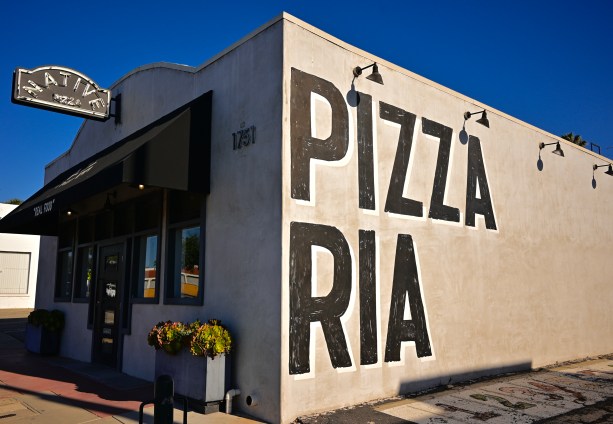
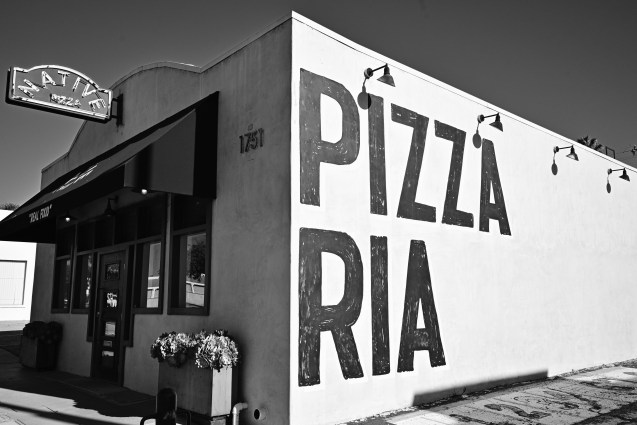
The top image seen here of an architecturally stark pizza joint in Ventura, California is the product of a faux-Kodachrome recipe stored on my Nikon Z5’s “U2” mode, while the second shot is a decent re-creation of the old Kodak Tri-X monochrome film (tweaked to simulate the use of a red filter) and shot with a recipe I had stored on “U1”. Both shots have their points, and whether the image works better in color or mono is a battle for another day, but the point is that, with today’s gear, no one has to calculate these looks from scratch while they’re trying to shoot. Nor do they have to wonder whether a scene would look better with a certain look. They can just dial it up, do it, compare, judge, and shoot again, all while the light is right and the subject is still there in front of you. Somewhere my 12-year-old self, armed with a $5 plastic box camera equipped with one shutter speed and a single aperture, is popping champagne corks.
 thenormaleye