TRAVELS WITH MY NVr-WZ
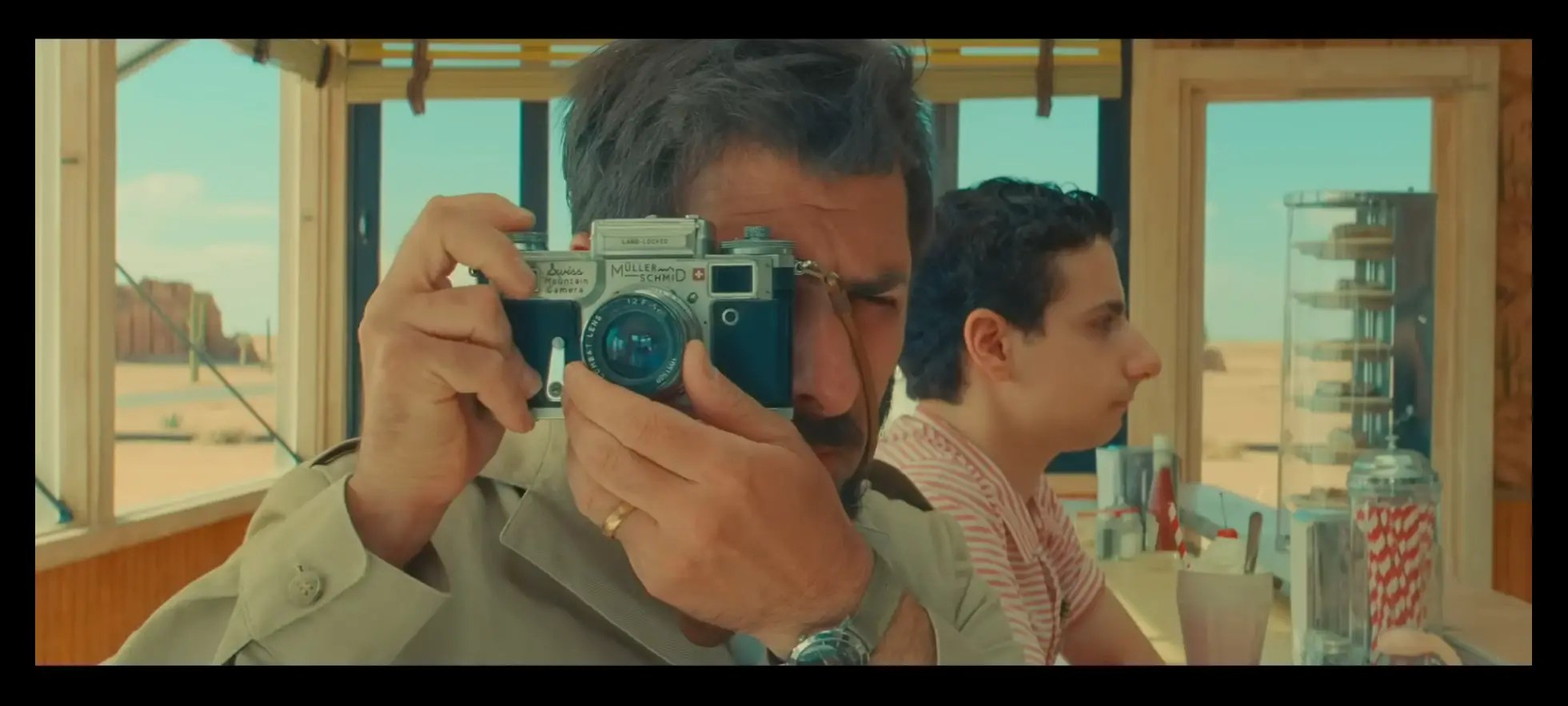
What the discriminating fictional snapper relies on in the American desert of 1955; Jason Schwartman’s fictional “Muller-Schmid Swiss Mountain Camera” in Wes Anderson’s “Asteroid City”
BY MICHAEL PERKINS
PROP DESIGNERS FOR MOVIES have to walk a bit of a tightrope when creating on-screen objects, dodging copyright laws (unless product placement is truly the goal), redefining the physical properties of things (think planes that could never actually fly) or even crafting plausible gizmos that cannot exist in the real world (think phasers). Combine all these skills with the recent craze for burying hidden in-jokes or “Easter eggs” in movies to reward multiple viewings by the nerdiverse, and you have the special world of fun fakery, a world where, on occasion, the coolest cameras reside, all bearing the NVr-WZ (never was) trademark.
Fictional cameras in film set my inner geek’s heart a-racing, and, judging by a general search of the interweb, I am not alone. A recent entry is the camera that is sported by Jason Schwartzman’s character Augie Steenbeck in the new Wes Anderson hallucination Asteroid City. In the frame above, Augie, said to earn his bread covering various world crises, sports a “Muller-Schmid Swiss Mountain Camera”, which, of course, never existed in any world outside Anderson’s unique 1955 desert-y destination for science dreams and Cold War nightmares. The deliberate fakiness of the device has sent camera lovers into a game of Clue as to its design origins. And, as with everything else debated on-line by camera lovers, well, let’s just say the results are inconclusive.
The labelings on the camera are the biggest part of the fun, with the optic being labeled as a “combat lens” (so…can it not be used to snap, say, family events in peacetime?), and the overall model being referred to as a “Swiss Mountain” camera, as if there may be additional variants for Italian or Greek or Tibetan mountains elsewhere in the product line. And then there is the brand name itself, “Muller-Schmid”, which may or may not be a reference to Joey Schmidt-Muller, a surrealist painter who pioneered a style called New Objectivity in the 1930’s and who invented a term for his work called “traumatic realism”. In fact, Anderson may just have pulled the two names out of thin air, although I doubt it.
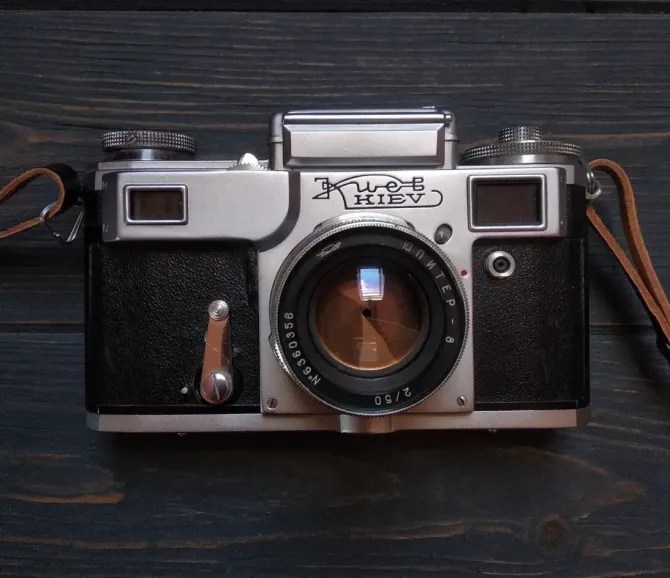
Was the Soviet Kiev 4M the inspiration for Augie Steenbeck’s imaginary kit?
A lot of online detective work, however, has focused on the general layout of features on the camera, with most fans insisting that it must be based on a Contax III rangefinder (introduced in the 1930’s), while another large camp is certain that it’s actually more like the cheap Soviet-era knockoff of the Contax, the Kiev 4M (seen just above). Does it matter? Welllll, either a great deal or not at all, depending on your perspective. What does seem consistent is Wes Anderson’s talent for sending cues to our collective subconscious, our inherited warehouse of cultural impressions, and tossing all that data like salad to create new worlds that are alien and familiar at the same time, worlds where a vintage NVr-WZ is the perfect camera for the task at hand.
DOING WHATEVER I F/2
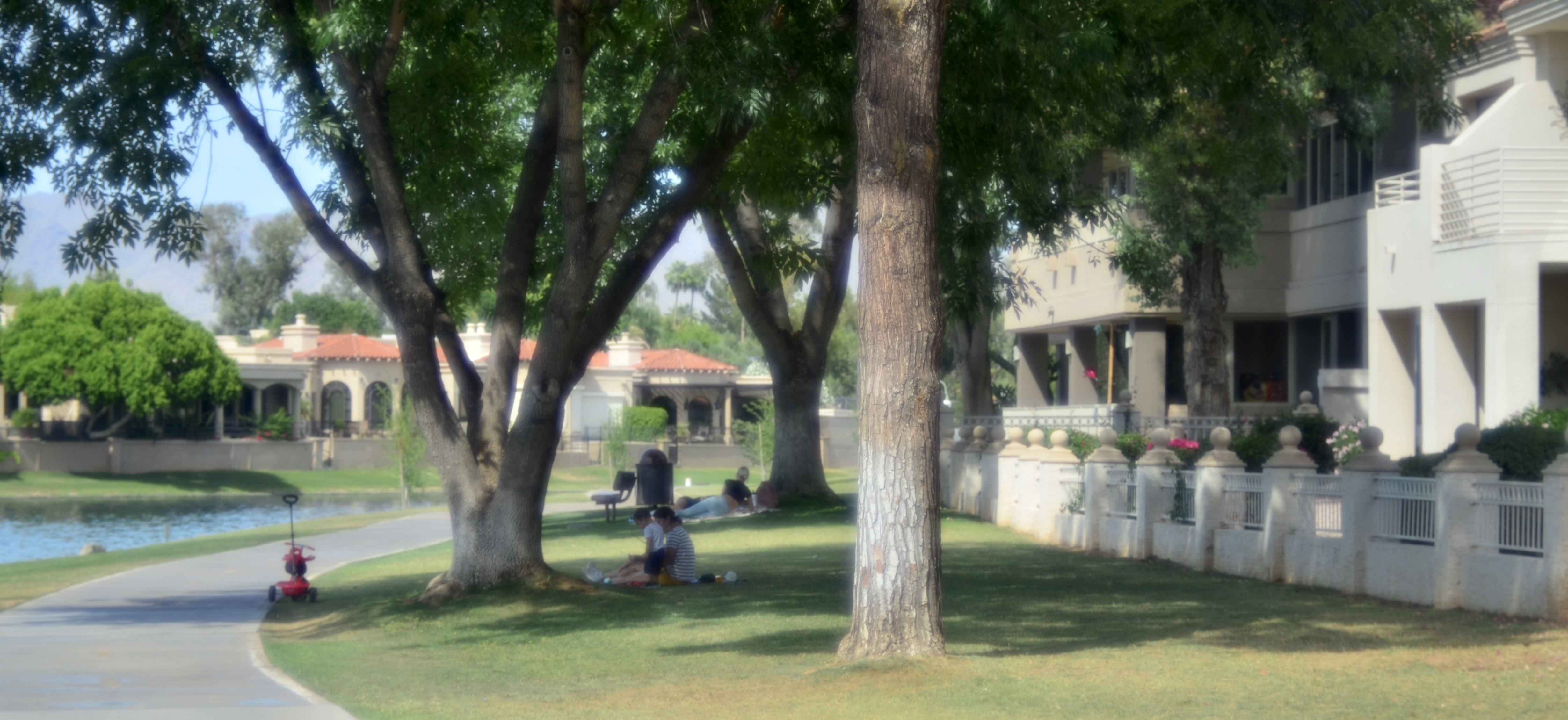
Shot with a Soviet-era Helios-44 58mm manual lens at 1/2000 sec., open to f/2.
By MICHAEL PERKINS
THOSE WHO HAVE SIGNED ONTO THIS SHIP OVER THE LONG HAUL may recall that the germ idea for The Normal Eye was a year that I once spent shooting with nothing but a manual 50mm f/1.8 prime lens, forcing myself to explore all the benefits and limits of a single piece of glass in every conceivable shooting situation. I didn’t intend the year as any kind of stunt, but as a test of my own ability to re-sensitize or “normalize” my vision (primes are often called “normal” lenses for their similar field of view to the human eye) and a disciplinary experiment in which I alone was responsible for any and all results….kind of a mind-over-matter challenge. The year showed me that nearly any lens has properties which might not be readily apparent until you spend some extended play time with them.
Wait, did he just say play? But we’re photographers. This is serious business.
Well, as to that, all I can offer is Fred Rogers’ old line about children and how their play is their “work”, not a break from it. And I’ll pretty much stand by Mr. Rogers’ results. Thing is, learning absolutely every intimate detail about a lens’ performance is time-consuming, which makes it a perfect exercise for these thumb-twiddling times. Hey, during this time-out, we’ve done all the sensitive photo essays on our feelings of isolation, community, dread, etc., etc. Well and good. But this protracted behind-walls penance is also a great opportunity to bring out the equipment that we’ve either under-loved or flat-out given up on over the years. The non-favorites that we shot a little with, weren’t really thrilled with, or consigned to some dusty regret bin. Yeah, those lenses. We bought them to achieve this, but all we got was that. Yeah, those.
Forcing a brief romance with a forgotten lens is easier when there is so much time to futz away that we can afford the luxury of mistakes. After all, you’ve already taken 300 pictures of your study and your back room with the gear that you’re most comfortable with. So call those your “keepers”. Now, you can grant yourself the freedom to shoot the “losers”, the pictures that don’t matter, except for what they can teach you. Snap on a forgotten optic and enjoy the latitude of just being… bad. Hey, delete all the defects, if it bugs you that much. But shoot, and shoot, and shoot, and get past whatever barriers exist between you and those lenses, because they can be overcome, and you may be surprised to find that they really had more potential than you ever imagined.
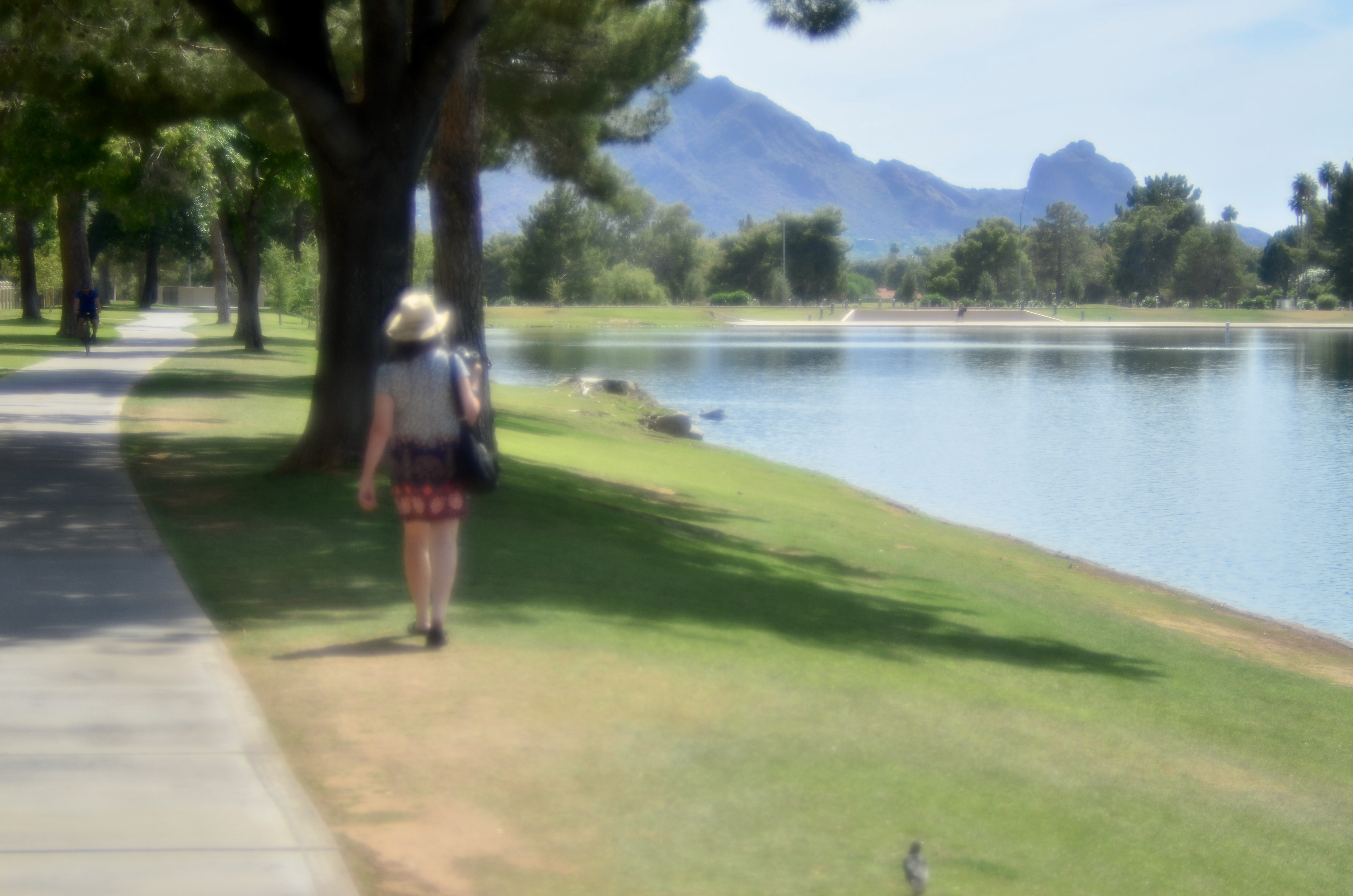
This had to be shot a little faster, around 1/2500 sec.
The images seen here are the result of a solid week spent with a real oddball of a lens, my Helios-44 58mm f/2. These Soviet-era lenses were originally attached to Zenit cameras, some of the best knock-offs of legit European cameras that rubles could buy. The camera bodies were actually inferior to the lenses, but there were millions of each produced during the Cold War, so they are cheaper than Nancy Sinatra lip gloss. I bought mine for under $40 just to get the swirly bokeh it produces on floral work, but I discovered that, in shooting landscapes at the same f/2, I got defined focus layered with a film of dreamy glow, the kind of effect modern-day art lenses are charging hundreds to deliver. Thus most of this work week was spent trying to nail manual focus on the thing at great distances, which is a little easier to suss out with the help of one of the zillions of free depth-of-focus phone apps available. So now, in one optic, I have a bokeh beast, a decent portrait lens (at smaller apertures) and a special-effect landscape lens. The Helios won’t fetch me beer or grill me a burger, but as the Brits say, it’s Early Days. Gimme another week and it might actually feel, you know, normal.
 thenormaleye