UM, THANKS, I GUESS
By MICHAEL PERKINS
PHOTOGRAPHERS WHO ARE EVEN MINIMALLY HONEST WITH THEMSELVES learn early on how to own their mistakes, to admit that sadly, such-and-such a picture just did not work out. Even if they are slow in learning this, they will no doubt be forced to answer the question “what happened here?” from other photographers. This acts as a double-strength multiplier for humility. Good photos speak softly in praise of their creators. Bad photos wear loud colors and walk around with a bulls-eye on their behinds.
The one chance a shooter has to pass off a poor shot is if the result, however comprised in his own estimation, actually manages to “speak” to someone else. All it takes to break us out of a sell-pitying sulk is for someone, anyone to ask, “oh, how did you do that?”, allowing us to glibly remark along the lines of “oh, you see what I was up to, did you?” or “yes, that’s what I was going for all along..” In such cases, it’s forgivable to just take the win, rather than answer the viewer with “are you nuts? This pictures stinks!”
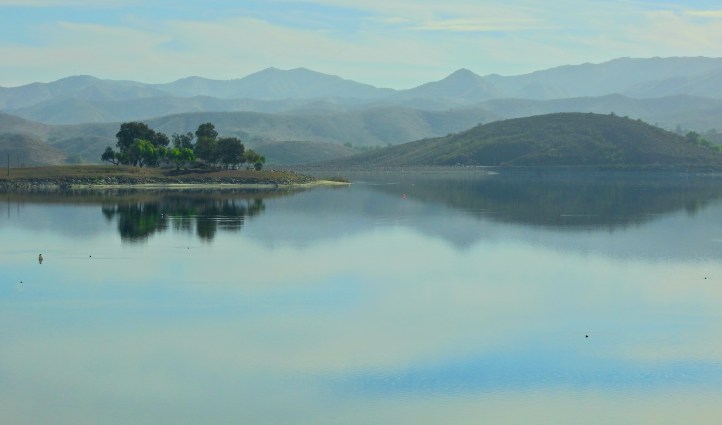
Sunrise Over Bard Lake, Simi Valley, near Thousand Oak, California, 2/3/25
I recently had positive reaction to such a shot, a picture that I had already rejected as close, but no cigar, a landscape that you see here. It was the result of an early dawn enveloped in bright hazy glare combined with a superzoom, needed for the bird walk I was starting, but which, due to its tiny sensor, was guaranteed to render details mushier the farther in I cranked on my subject. And so you see a very soft, muted rendering of all the tones, resolving into a look that photogs have come to term “painterly”, which is French for “not as sharp as I’d hoped for”. Still, several people had given me oohs and aahs on it, so it was very tough to tell them they didn’t know what they were talking about. The scene is, after all, very dreamy, and might still have been on the mushy side even with a more sophisticated camera. The aggravating thing for me is when a picture works for everybody else but me. Makes me wonder how many art museums are brimful of works their creators regard as flawed. I’m sure the math on such a study would be surprising.
In the meantime, thanks, I reply, adding, as a post script, you oughta see what happens when I actually know what I’m doing. The P.S., of course, is silent. And it damned well is going to stay that way.
OF CLEAN SHOTS AND DIRTY BIRDS
By MICHAEL PERKINS
“WELL, THAT’S A DAY I’LL NEVER GET BACK” goes the cliche about irretrievably wasted time, muttered after many a dud movie, inert concert or (say it with me), a particularly frustrating photo shoot. Many days we greet the dawn overflowing with hope at the day’s golden prospects, only to slink back home under cover of nightfall with nothing to show for our efforts but sore feet. Such is the camera life.
One of my own key wastes of picture-making time consists of the hours spent trying to do workarounds, that is, outsmarting a camera that is too limited to give me what I want without a ton of in-the-field cheats and fixes. My chief offender over the last five years is the compact super-zoom that I use for casual birdwatching. I lovingly call this camera “The Great Compromiser”, since it only makes acceptable images if the moon is in the right phase, the wind is coming from the northeast, and if I start the day by sacrificing small animals on a stone altar to appease the bloody thing. We’re talking balky.
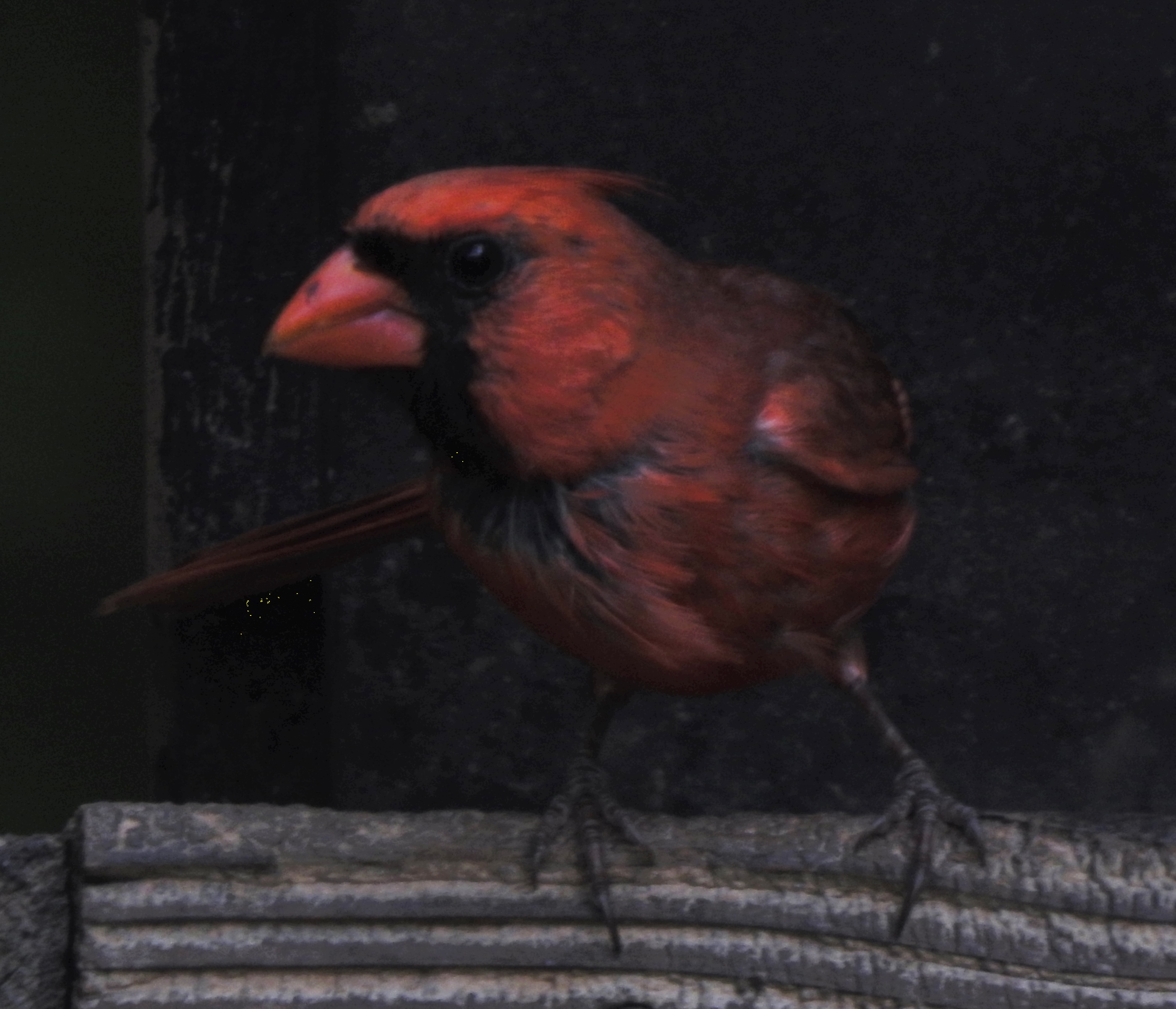
Out of the murk rises a small miracle. Or not.
The Compromiser achieved its convenient size and insane levels of magnification by writing all its images to a small, small sensor. That means that direct, plentiful sunlight is the only way to get acceptable results, proof of which can only be evaluated in playback, since the EVF is dim and utterly unreliable as a predictor of success. Add to that a maddeningly slow response rate after burst shoots, menus that only Satan himself could admire, and the surety that even a mild boost in ISO will generate more noise than a midnight Kid Rock show, and you begin to get the idea. I saved lots of money by not purchasing a dedicated prime zoom lens and I pay for it daily in the agony of using my “bargain” in the real world. Live and learn.
But just as any camera can deliver shots that are technically, well, caca, an occasionally “wrong” picture somehow works in spite of its shortcomings, and that’s where we find the above image, which gave me a dirty bird instead of a clean shot. The picture’s very imperfections gave me a look that I certainly would not have sought on purpose, but which is strangely endearing, even though nine out of ten other shooters might justifiably consign it to the Phantom Zone.
And so we soldier on, learning to love our red-headed (red-feathered?) stepchildren even as we see them as something that we never, ever want to do again. Love-hate is a term that seems to have been coined specifically to describe how the artist evaluates his art. Get away from me. Come here, I need you. I’ve never despised anyone like I despise you. Kiss me.
Repeat as necessary.
THROUGH THE SIDE DOOR
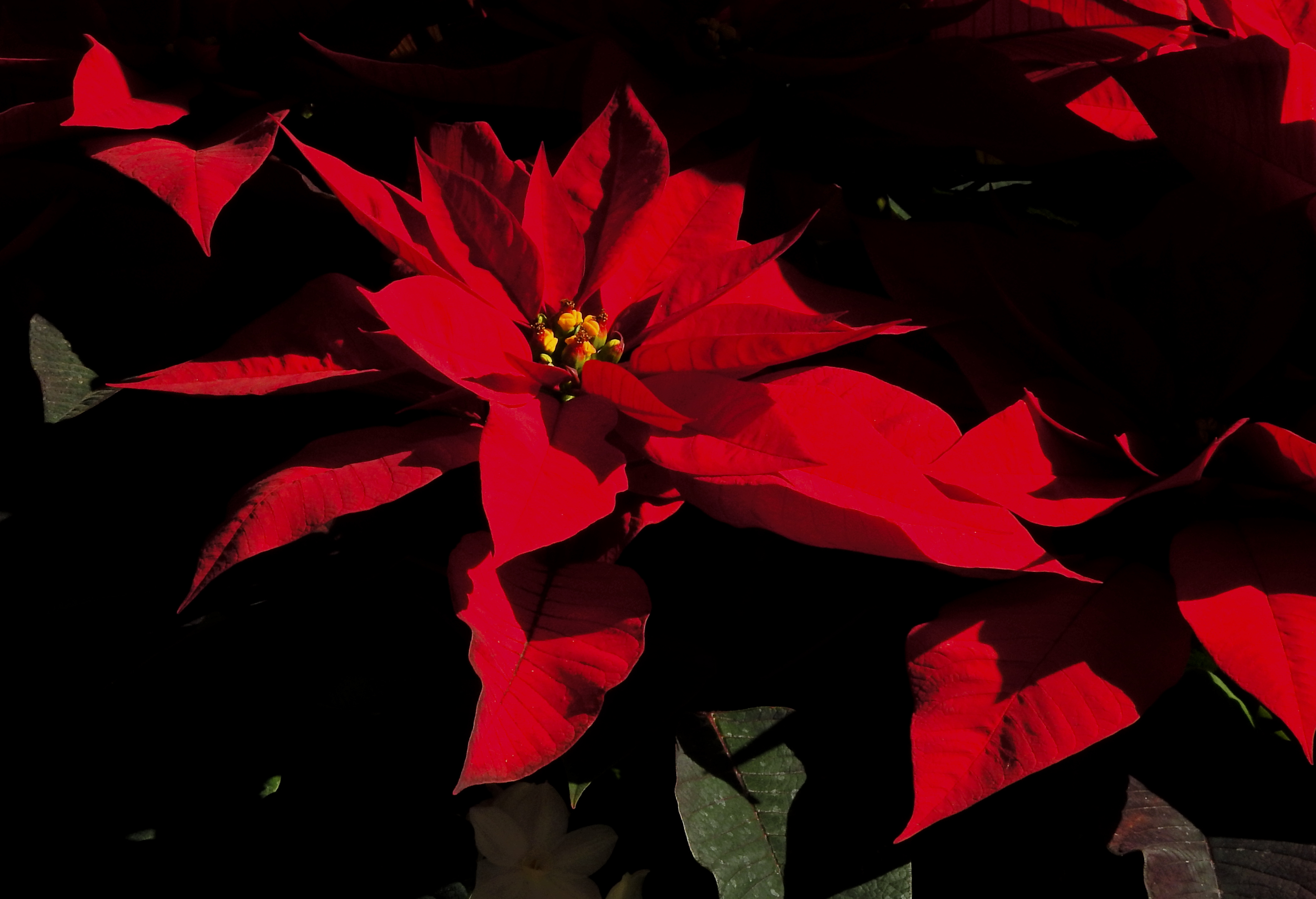
Scarlet Starburst, 2020. f/8, 1/500 sec., ISO 100, 22.3mm.
By MICHAEL PERKINS (author of the new image collection FIAT LUX, available through NormalEye Press)
ACROSS HISTORY, HALF OF THE WRITING ABOUT PHOTOGRAPHY seems to be about the ongoing debate over which is more crucial, equipment or ingenuity. Some fervently believe that better gear inevitably leads to better pictures, while others point to the fact that million-dollar images often emerge from modest machinery, when backed by a trained eye. I have been shooting for too long to favor extreme, either/or arguments, as my experience makes a good case for both viewpoints. There have been times when a particular level of technical tool has saved my bacon, but there have also been many instances in which the camera, by itself, would have merely got in my way without my resorting to improvised workarounds designed to compensate for its shortcomings.
One of the things I do to boost color and maximize contrast is to deliberately under-expose. It’s the cheapest and easiest way to dramatically change the game at a moment’s notice, a nostalgic nod to the days of Kodachrome and other early color films that would often be too slow for effective captures unless you were really spry with your field calculations. Thing is, what others regarded in some shots as “too dark” would, to me, be moody, romantic, even mysterious. What others called “balanced” light I often considered mediocre, and so, as I have travelled through time, I have retained my affection for the chiaroscuro look. It simplifies compositions and jacks the richness of hues. Thing is, I have to be mindful of what camera I’m using at the time, and how it can or can’t readily render the look I want.
Case in point: the Nikon Coolpix P900, which took the shot you see here. This is a so-called “superzoom” camera designed to extend one’s telephoto reach to a ridiculous extreme, and was purchased primarily for birdwatching. Its zoom amounts to something like 83x magnification, and, while it can deliver surprisingly sharp detail at insane distances, it hampers the camera’s performance in other ways. Since so much light is lost when they are extended fully, the manufacturers of superzooms “cap” their minimum aperture at around f/8. Want to shoot at f/11 or higher? Use a different camera.
Or.
The fun thing about exposure is that there are several ways to get there, and so, if you can’t stop your iris down far enough to suit yourself, you can always ramp up your shutter speed, which is what I’ve done here. In a typical shot, the poinsettia would have been backed by more leaves, the edge of a pot, foil wrapping and other clutter, but at the P900’s smallest aperture, f/8, and a shutter speed of 1/500 in early morning light, the red leaves become the exclusive star. Early direct light in Phoenix, Arizona would also have generated a complete blowout of any texture or detail in the structure of the leaves, and, while much of them remain hot in this shot, some vein detail is suggested here, especially when the edge of a leaf falls off into blackness. The result is a genuine fake of 64 ASA Kodachrome, achieved largely by accident in my youth, now purposely chosen in my….dotage.
Whatever equipment you use, you may find it necessary to try to occasionally outwit the thing, to, if you like, enter through the side door, if only to keep the thing from giving you the picture it assumes you want. Don’t buy into the manufacturers’ hype. Between a photographer and a camera, only one of them can think. Hint: it isn’t the camera.
 thenormaleye