PRODUCTION FOR (RE) USE
By MICHAEL PERKINS
PHOTOGRAPHERS TOGGLE BETWEEN TWO APPROACHES TO SUBJECTS, two very distinctive ways of justifying something’s place in a picture. The first, which almost exclusively defined the first age of the young art, was largely about documentation, creating the first visual chronicle of human experience. This surge of reportage resulted in a huge spike in tourism and travel in the 1800’s, immortalized in the billions of post cards and stereo views that “covered” the entire world. We mapped the globe to give everyone their first look at what was going on in the lives of everyone else, with magic lantern presentations and illustrated lectures on the pyramids, the Parthenon, a real, live Indian elephant. We catalogued.
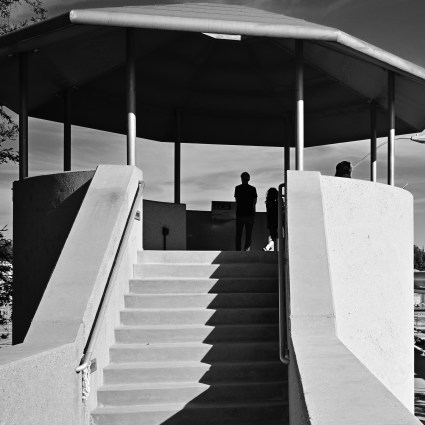
The other approach to subject matter is far more abstract and interpretive. We mechanically capture an object in the same way, but we gentle massage composition, light and lenses to suggest all of the things that it might be, not merely what it is in nature. In this kind of picture-making, we ask the viewer to suspend their instinctual judgement of what they’re looking at and share in the shooter’s idea of all the things that it suggests. In such a situation, to know what a subject actually was designed to be, or do, is actually rather, well, dull, compared to what the mind, freeing itself, will allow it to become. If I were to open up a discussion, for example, on what the true use of the structure shown in the above frame was, just given what’s shown in the image, I’d likely open up a pretty rangy chat, whereas, if I were to photograph the same thing in the context of its intended purpose, it would serve as a document, but not as a point of departure.
Both approaches to material, either the prosaic and the poetic, can make for compelling photographs. As is usually the case, the photog sets the terms of engagement, and decides what kind of conversation he wants to start.
*********
( Note: THE NORMAL EYE is an archive of every article posted on this blog over its first twelve years. To search for posts from any month or year clear back to 2012, just scroll to the very bottom of any page and click on “Post Timeline”. )
 thenormaleye
Leave a comment