SLOW THE F(stop) DOWN
By MICHAEL PERKINS
EVER SINCE PHOTOGRAPHY SPLIT INTO TWO VERY DISTINCT CAMPS, the pro-digital and the pro-film, I have been constantly evaluating the claims and, indeed, the motivations of both factions. At one time, I must admit that, even though I myself was weaned on film, the analog-forever crowd struck me as a little superior, as if the choice of that medium alone put their work on a higher plane. And, of course, the digital gang could also be guilty of being dismissive of any tech before 2,000 as retrograde and primitive. Both sides had their extremely loud champions, and both were guilty of short-sided priggishness as regarded the other.
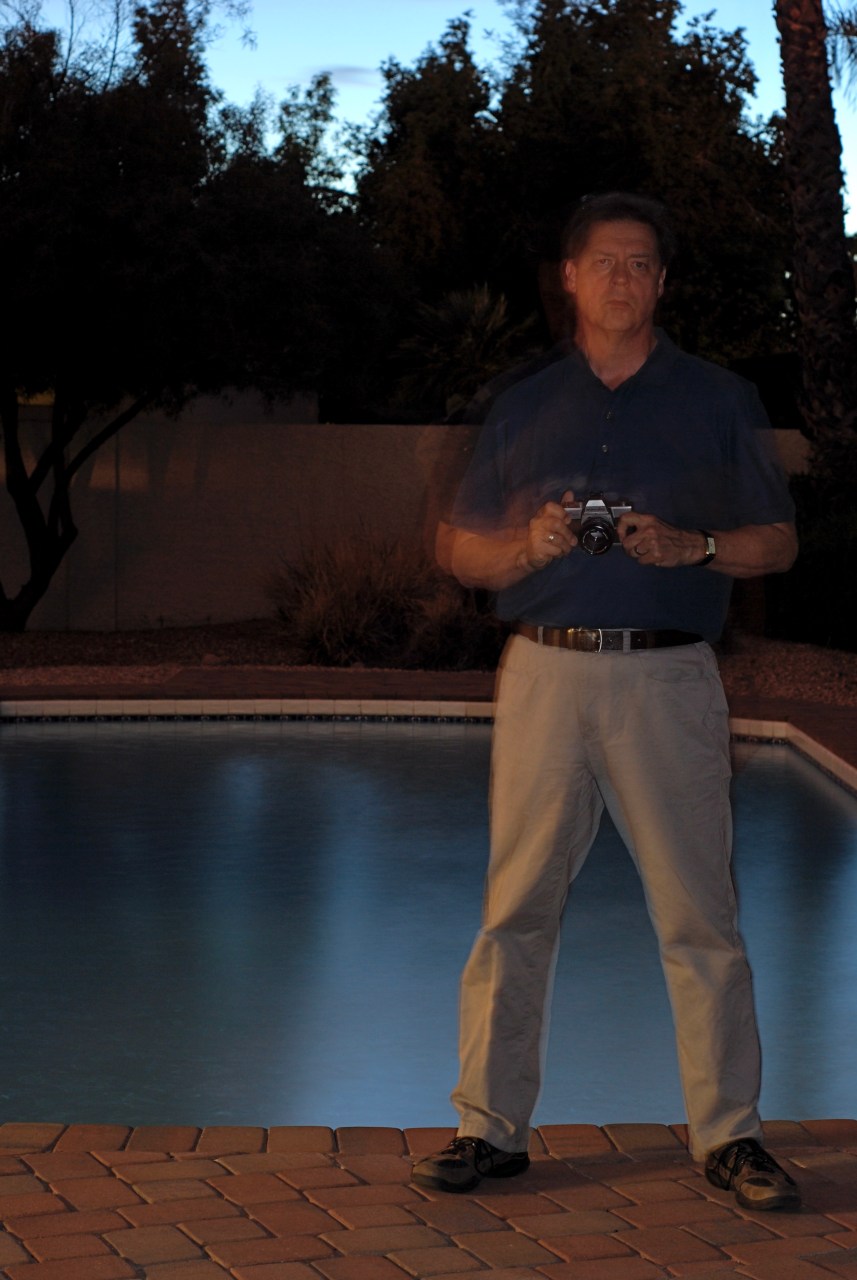
Only one way to get this shot under these conditions, and that’s to slow down for a :30 exposure.
Over time, as predominantly digital as I am, I have grown fond of many of the the film folks’ return to nearly all-manual calculation of their shots. In short, in a digital world, where immediate gratification and a blizzard of volume define many people’s shooting regimens, the filmies have very purposefully opted for shooting in a manner that demands that they slow the f down. The deliberation required to shoot film forces the discipline of patience upon the shooter, retarding his pace to the point where certain qualitative questions become, as they were in the analog era, clearly visible. For example, in a medium where you are working with a limited number of opportunities (exposures), you can easily find yourself asking, Do I need this picture? and the corollary Is this the time/are these the conditions for taking it? In a world of restricted choices and the slower pace required to execute a shot precisely, it’s not unreasonable to feel a greater sense of intentionality, which is required for compelling images in any medium.
Of course, you can impose this discipline on yourself in a digital medium, although it takes much more concentration and practice to learn/unlearn all the habits associated with quick results. Slowing down to the point where you can clearly see where the spaces between the points of a technique lie, and how they link to each other for a good result, adds to one’s understanding, creating a more distinct difference between decision and habit, or craft and art. Speed is indeed seductive, but, as in many other aspects of life, it’s a short cut, and, as we all know, some short cuts lead to blind alleys.
 thenormaleye
Leave a comment