ALL OR NEARLY ALL
By MICHAEL PERKINS
A COMMON MISTAKE AMONG CAMERA-TOTING NEWBIE BIRDWATCHERS (a very distinct subset among photographers at large) is to regard their outings as either Successes or Failures, as if they were hunting for deer, or trying to land a ten-pound bass. That is, either I ‘came back with something’, or the morning was a waste of time. Of course, it’s disappointing when either no birds show, or the ones that do show can’t be persuaded to jump into your camera. I have even heard some photogs say that, unless they actually managed to capture an image of a particular breed or species, it doesn’t, for them, really exist. Such people are bound not only to be horribly bad birders; they are also likely to be failed photographers.
To be out in the world in search of a particular thing is to deliberately narrow your concept of what’s “worth shooting”, and it’s counter-productive to why you should be out in the first place; to develop and exercise your eye. Certainly, there will be days when the winged ones seem to be deliberately thwarting you, but who said that they must be the only thing you train your camera on while you’re out anyway? In short, if the birds ain’t happening, what else is? If you’re not trying to answer that question, then your shooting experience will be pass/fail, completely binary. It’s as if you went to a state fair and said you were only going to shoot the hot dog stands. Using that logic, a quartet of naked aerialists juggling flaming chainsaws might pass by you while you held out for a shot of a wiener on a stick. Short-sighted?
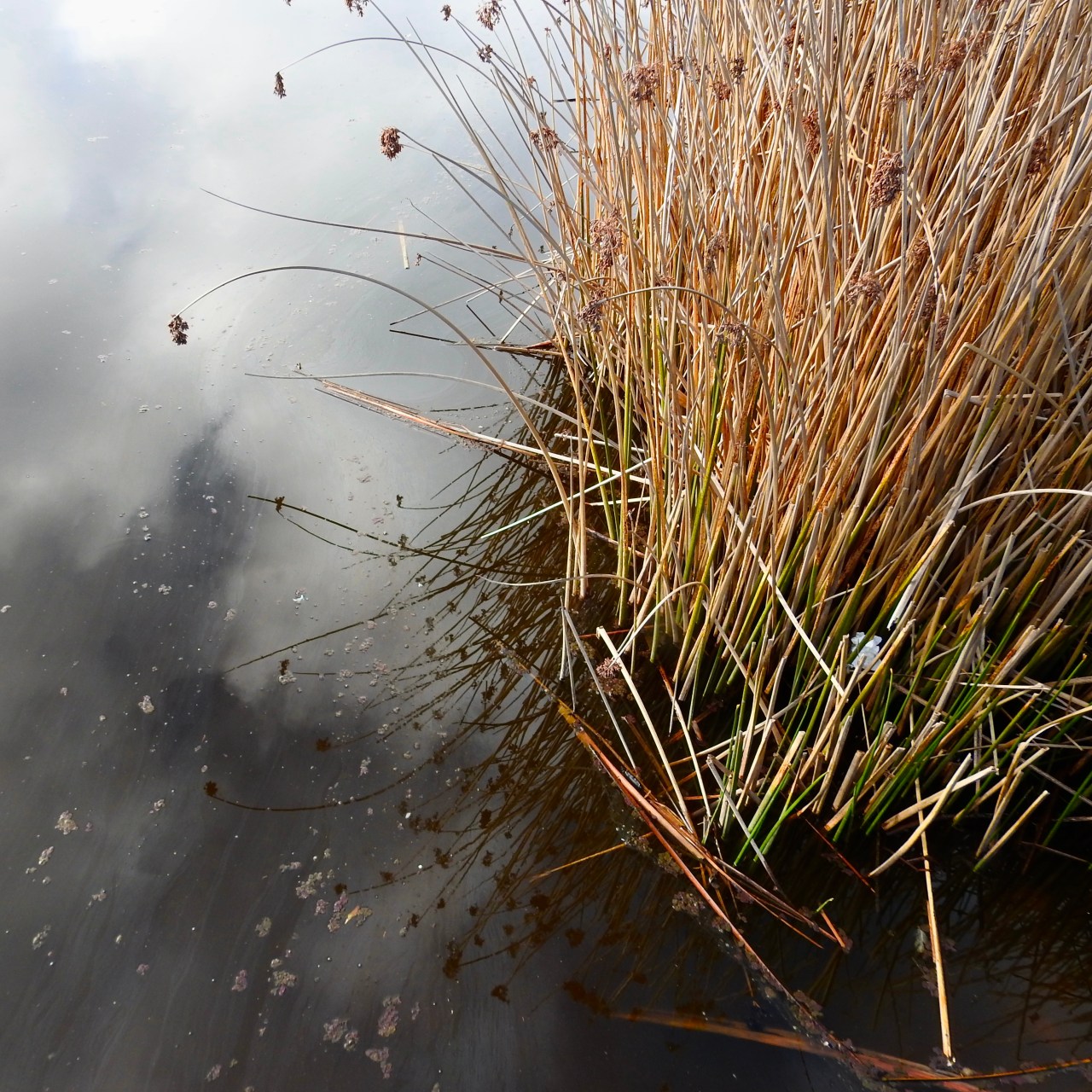
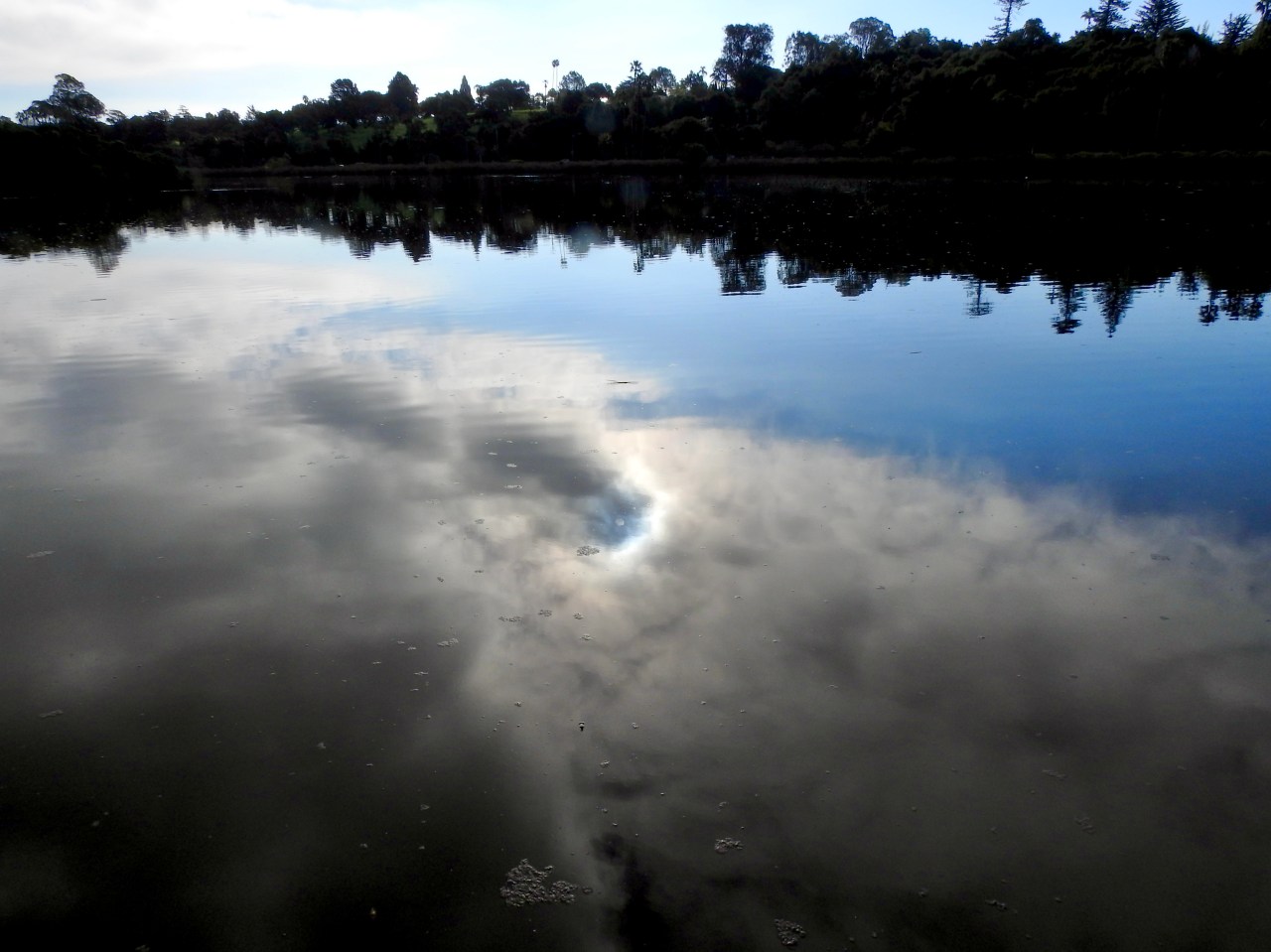
Some of the things that redeem many of my birding outings have nothing to do with what I couldn’t find and everything to do with what else was available in the moment. Birdwatching is really about observation, and so, being already in that state of mind, why wouldn’t you also be equally fascinated with whatever else comes to hand? Yesterday I shot over 100 frames, most of them failed attempts at capturing winged subjects that were just having none of it. As birding is usually communal, this left me with a lot of time to fill, since the others in my pack were having better luck or were simply more skilled. As they scored on the feathered column of their scorecards, I shot environmental impressions of a pond we were scouting. It wasn’t what I came for, but I was glad I didn’t write off the entire morning as a “miss”. Photographers obviously stumble upon many naturally amazing scenes that are, if you will, “ready-to-eat”, but remaining open to the less obvious is even more important than a quick win. That’s where your growth comes from. A bird in the hand….
IT’S RIGHT ON THE WAY
By MICHAEL PERKINS
I WON’T SAY THAT I’M EXACTLY GRATEFUL for my meager skills as a birdwatcher, but I will state that, in my specific case, being mediocre at it has been a boon to my photography. To be more precise, my inability to spot as many varieties of winged wonders as my birding companions often results in my mind wandering while others about me are transfixed, as the photographer in me swiftly moving from “what birds are to shoot?” to “what else is there to shoot?”
Fact is, when the rest of the pack is following the various melodic “whoots” and wheets” of whatever is hiding in the foliage, I frequently answer with the call of the adult Dull-Witted Geezer, a song that sounds like “WHERE? WHERE?” as I rotate my head madly from side to side. Here’s the deal: when I can’t see what everyone else can see, my attention flags, at which time I’m glad that most of the outings are half birdwatch and half nature walk. Because, let’s face it, many birders come home from a walk with bupkis to show for their efforts, while a nice little saunter through the woods always yields something. And all photographers want to go home with something. Anything.
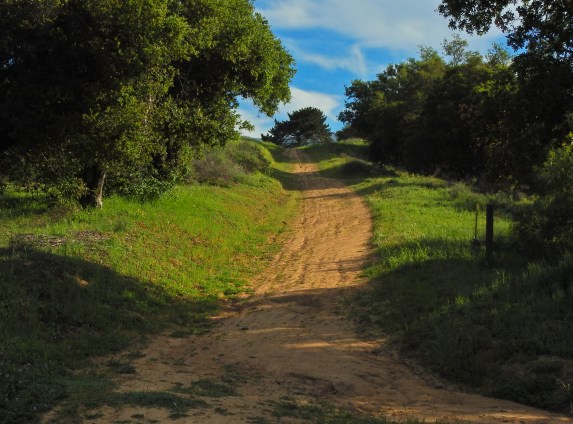
This bright little path rising up through a small wood spoke to me one recent morning when the birds were basically giving me the middle feather. Despite my plaintive “where? where?” cries, no mercy was shown me, and so, when all others were riveted to the ground, binocs trained on some divine sight, I turned about 180 degrees the other way and found a golden moment. The very best thing about being out with birders is that, given their very deliberate (spelled “obsessive”) pacing, I can click away to my heart’s content without worrying that they will have moved on, or, God forbid, are tapping their feet waiting for me to catch up. No, I can shoot everything I care to, go out for coffee, return my morning emails, blink off for a quick nap, and they will very likely still be standing in the same spot when I return. Come to think on it, I wish I could have had this bunch with me on all those vacations when my kids kept asking me, “are you still taking pictures?”
Now, I have my own path.
atureAs you can see.
HURT TIL IT SMILES
By MICHAEL PERKINS
WILDLIFE HAS BEEN SUCH A SMALL SUBSET of my overall photographic work over a lifetime that it holds a very special challenge for me. In shooting nearly everything else, I have landed at what might be termed a plateau of competence, an ability, through repetition and practice, to predictably deliver a decent result in a variety of disciplines. However, immersing myself in nature subjects places me so far outside my comfort zone, so far from any smug illusions of mastery, that it involves real risk. Ironically, more than ever before, that is where I am deliberately placing myself. Art doesn’t always thrive in the danger zone, but, on the other hand, doing what you’ve always done means you’ll always get what you’ve always gotten.
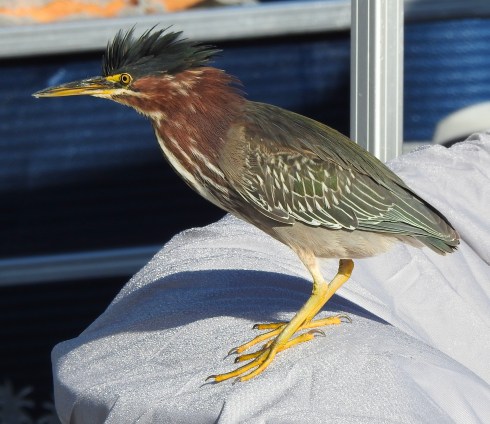
Green heron perched on a boat. Best to take the freebie and relax, but….(see next)
Bird work is a subset inside a subset, occupying a larger portion of my nature output in recent years, and offering equal portions of satisfaction and frustration. Birds are unlike other subjects for portrait work because they don’t care what I want and aren’t here to make me a success at it. They exist in their own sphere and under their own impulses and needs, and whether I can focus fast enough to catch them on the wing, or compose well enough to properly showcase them is of no importance to them. I am, by habit, caught up in what I want to achieve or capture, or, technically, succeed at. To properly photograph a bird, you have to shift every normal emphasis of style and approach. You can’t go out with a given quota or “yield” in mind, as conditions shift so quickly, so consistently that, on many days, you’re fortunate to have even a single usable shot to show for your effort. But that’s not really a negative. In fact, quite the opposite.
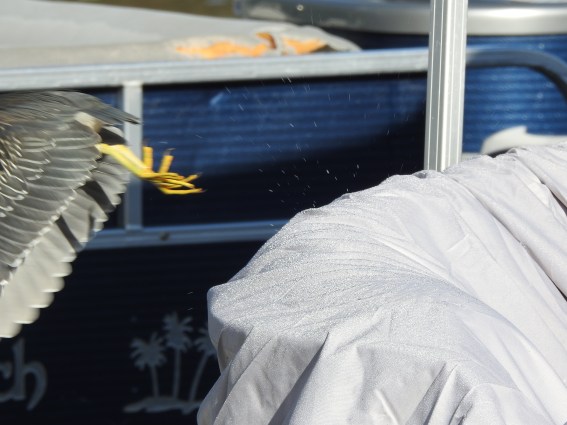
…Mr. Heron decides he’s out of here, and you’re too slow, boyo. In otherwords, a typical day.
To, as portrait photographers used to term it, “watch the birdie”, you have to develop a different kind of watching than for any other form of photography. You have to slow down. You have to listen as well as see. And you need to silence the part of your ego that instinctively thinks of the photograph as a trophy, as one more scalp on your belt. It sounds very New Age-y to say that you need to “let the picture take you”, but that is, at least, an approximation of what you’re aspiring to. Finally, given the sheer number of blown shots you must walk past on the way to the keepers, you need to be all right with failure, or at least be able to find a new definition of “success”. Art is not something that’s logged on a scorecard; it’s peeling away all the wrong versions of something until the right version is revealed. You hurt ’til you smile. Nature work is its own separate discipline, in that it’s defined by how well you manage yourself, rather than whether you tame the subject.
IT’S ALSO ABOUT THE JOURNEY
By MICHAEL PERKINS
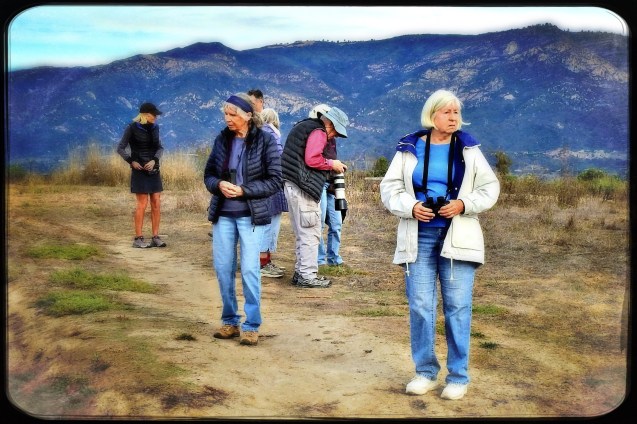
WE TALK A LOT IN THE PAGES OF THIS LITTLE GAZETTE about the difference between process and product, of the things that happen both in our intentions for a photograph and what we hope will be the final rendition. Both steps have their appeal, but I imagine that we spend most of our time thinking primarily about the destination of a picture; the journey to that point, not so much.
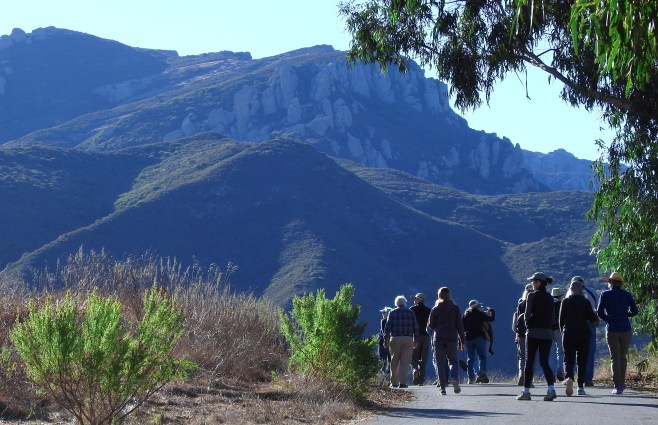
For me, birdwatching, which comprises an ever-larger part of my photographic output, is balanced almost perfectly between product and process, between how are we going to find what we’re looking for? and what will be do when we find it? Many birders are also shutterbugs, and so their “product” calculation is, in part, based on the physical mechanics of mastering their gear and settings….which is where I mostly find myself. That means I have to put more work into the “process” part of the equation; that is, not merely taking pictures of birds, but also trying to capture the anticipation and intensity of the people who are seeking them.
I often forget to, in a way, turn the camera around to see the watchers as well as the watched. It really should just half of a balanced approach, but it can actually slip my mind. The entire chronicle of the trip would, of course, include the personalities of the search party as well as whatever quarry we locate. Because, even on days of no birds (of which there are many), you are still spending quality time with quality people on a great walk. And that’s worth a click or two anytime. Product. Process. Both can generate compelling images.
A TERN FOR THE BETTER
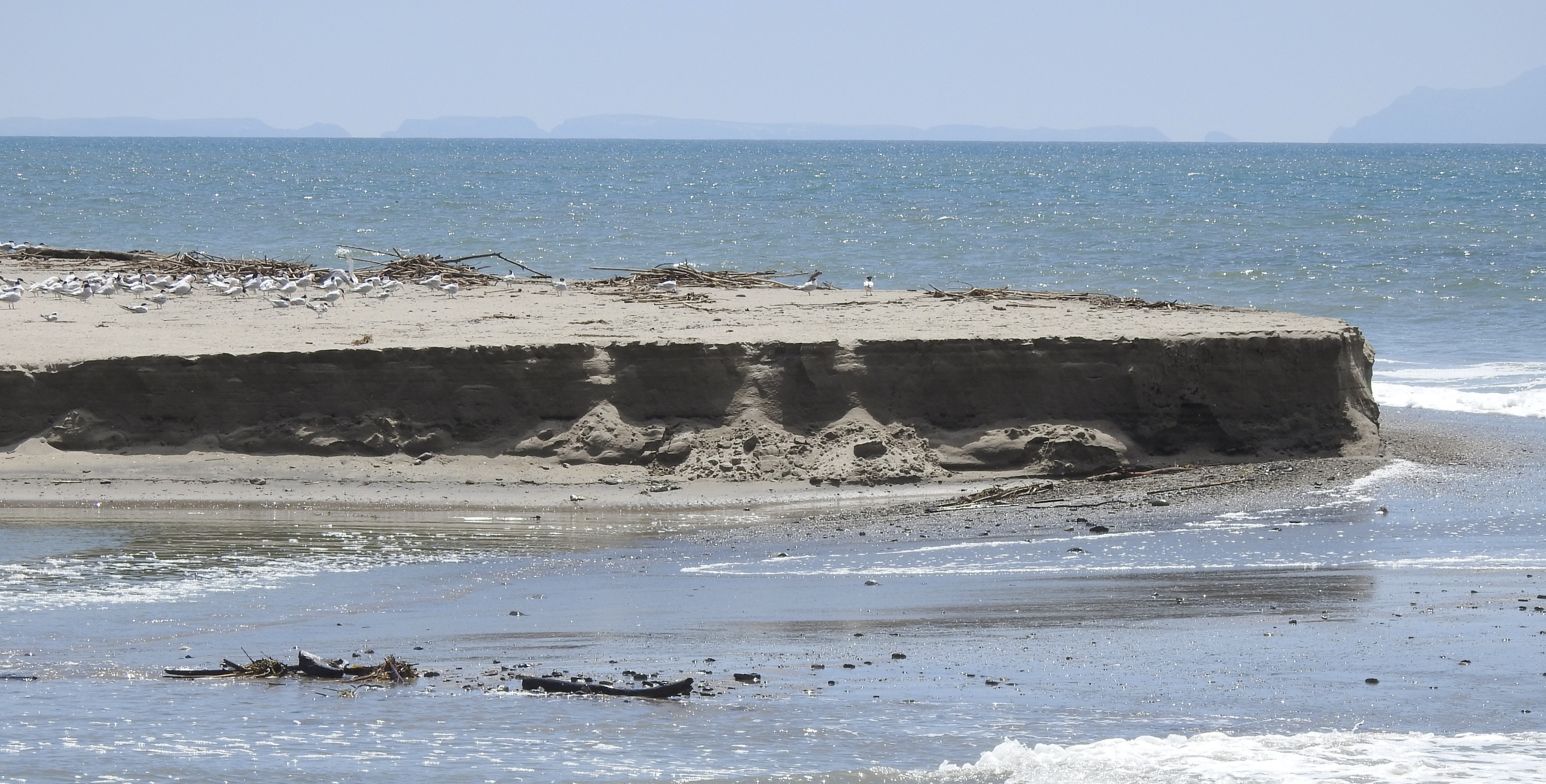
1:45pm, August 24, 2023
By MICHAEL PERKINS
BIRDWATCHING AND PHOTOGRAPHY FORM A PERFECT NATURAL SYMBIOSIS, the kind of interlocking of passions that’s been a particularly satisfying bond between my wife Marian and me. The simple division of labor involved (she spots ’em, I snap ’em) allows us both to approach the task from our respective strengths, overlapping in a shared purpose that teaches both of us about looking and waiting. Often, events out in the wild unfold slowly, almost imperceptibly so. And then there are days when change comes in like a sudden surge of surf.
1:47 pm, August 24, 2023
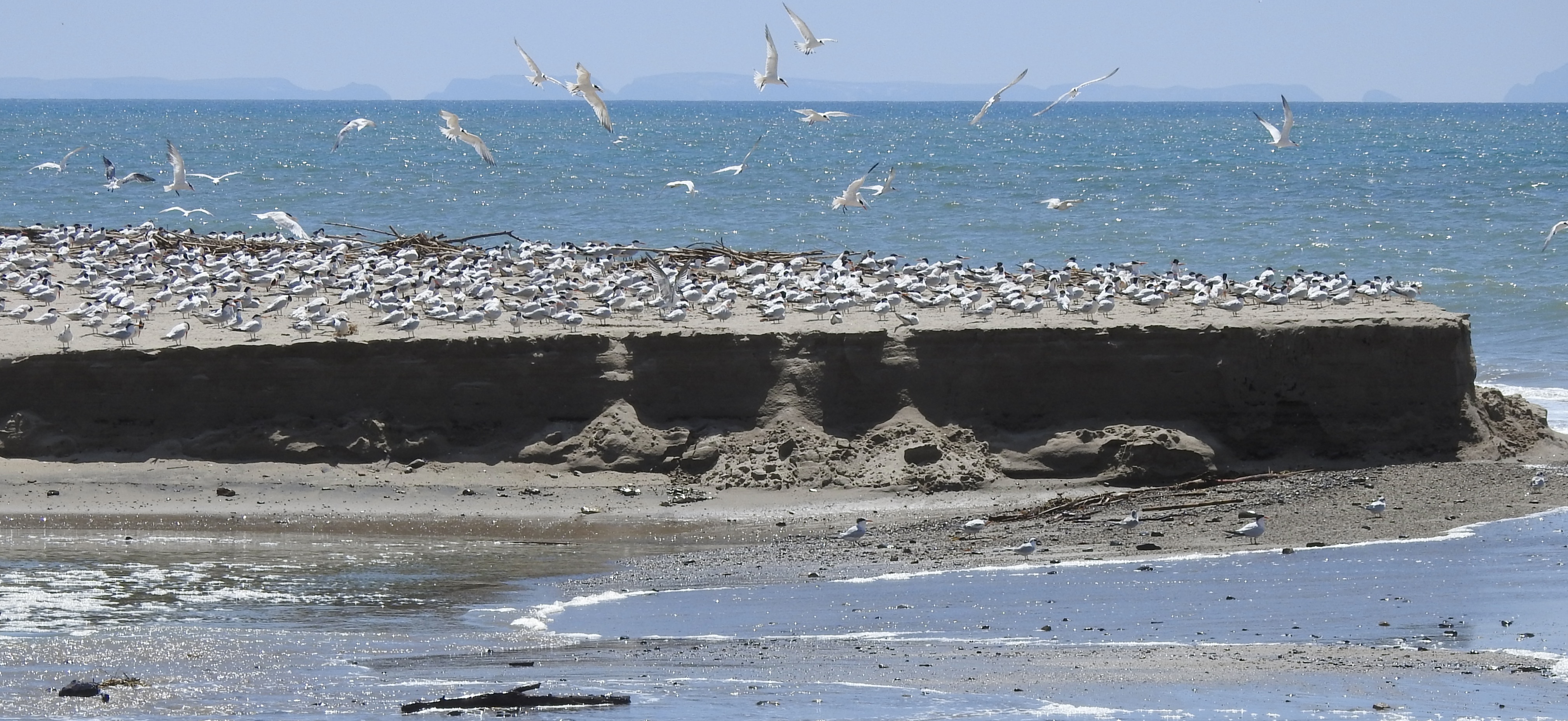
These images come from a recent walk along the stretch of oceanfront near the confluence of the Pacific Ocean and the Santa Clara River, which meet in an estuary just downwind from the busier beaches of the Channel Islands National Park in Ventura, California. It requires about a quarter of a mile’s walk away from the madding crowd, but local birders know the payoffs are real. Our first glimpse of the enormous rock shelf situated right next to the tidal line (top) showed it stark and empty, but, just two minutes later, a massive flock of terns was holding a reunion from end to end of the crag (above). Even in a static picture, the transition was/is stunning.
Much of birdwatching is an exercise in patience, with many days of hiking and neck-craning yielding next to nothing aside from a decent walk. Thankfully, there are also days when Nature comes bounding into view with a suddenness that takes your breath away. You see the rhythms of the world, cycles that are rooted in millennia of repetition, drumbeats of life that predate you and will continue after you as if you were never here. The humility forced on one when faced with the inexorable ebb and flow of Life on the planet eventually informs everything else you do, and certainly shapes your observational skills. It’s a forced cooldown, as well as the greatest display of existence asserting itself, striving to compete, to adapt, to thrive, skills which would be well emulated by anyone aspiring to art.
VITAL SIGNS
By MICHAEL PERKINS
ANYONE LUCKY ENOUGH TO TAP INTO THE NATURAL PAIRING BETWEEN PHOTOGRAPHY and birdwatching will be humbled by observing the raw courage of winged creatures to survive despite humanity’s best efforts to the contrary. Even in rural settings, one cannot help but be struck by the numbing crush of obstacles mankind has left for the natural world to stumble over; how our habitat is so tilted in our own heedless favor that nature must live, not with us, but in spite of us.
Within cities, the horror is even greater, as our life crowds out any and everything that does not directly redound to our needs. In such tableaux, it is incumbent on the photographer to become a journalist, a chronicler of what needs to happen if we are to carry on sharing the planet with, well, anything. And, as an amateur birdwatcher, I am reminded by what bad earth citizens we have always been when my eye is drawn to what, to my mind, is one of the most elegant and misunderstood birds in our nature: the starling.
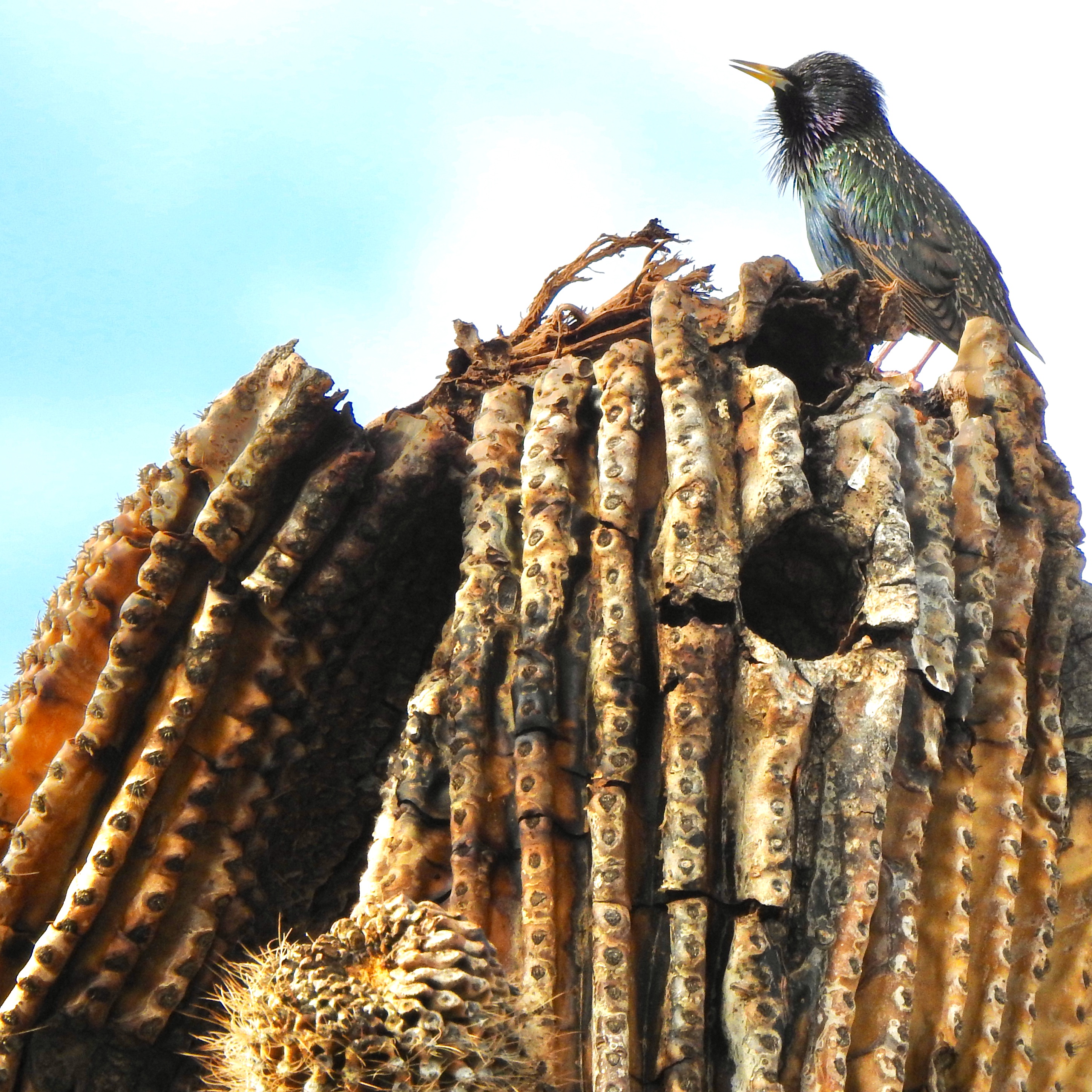
Introduced forcibly to North America in 1890 by a fanatical Shakespeare aficionado from Britain, who believed that his new home should feature literally every species of bird mentioned in the Bard’s works, the first stateside starlings originally numbered only about one hundred birds in all. Predictably, those have since become millions, earning not praise for the bird’s adaptability and intelligence, but scorn from those who regard them as invasive pests or worse. These gorgeous creatures, whose plumage, in the changing light of the full day, literally contains the rainbow, have made the best of their fate over the centuries, much like any other erstwhile immigrant. Sadly, they are often hunted and hated as if they themselves had decided to invade our shores just for the fun of it. And so it goes with scores of other creature; untold species of animals, plants and birds have been forcibly introduced onto the continent by the most predatory pests ever unleashed on the planet; humans.
Starlings are plentiful nearly everywhere, but the intense sunlight of the American southwest can highlight their hues in spectacular fashion, something I never would have slowed down to notice were it not for the birding buddies my wife has generously shared with me. My initial interest was boosted in intensity during Lockdown, mainly because being outside was one of the only essentially safe ways to pass the time, speeding up my bird learning curve a bit (although I am still barely able to hobble along in the “beginner” division). It has produced a kind of evangelism in me, and I can never again see a bird without wondering to what extent my fellow humans have complicated or compromised its existence. If we can muster shame about anything, it should be our hideous habit, going back over our entire history as a species, of fouling our own nests.
WINGING IT
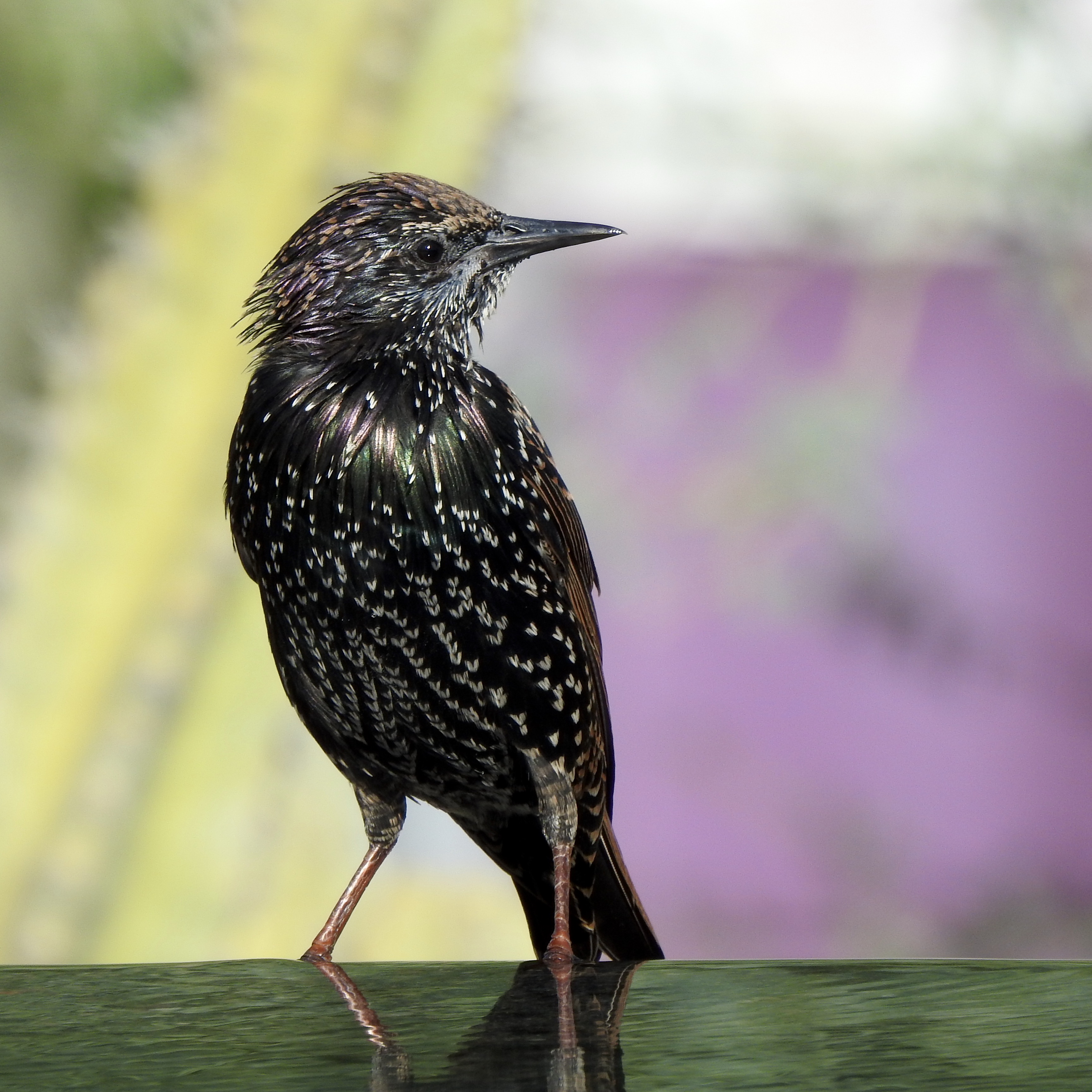
Superstarling, 2020.
By MICHAEL PERKINS
I AM A PHOTOGRAPHER WHO MAKES PICTURES OF BIRDS, but I cannot rightly be called a bird photographer. This is not cute double-talk: there is a mile of difference between a generalist, who occasionally shoots a lot of specific things every once in a while, and a dedicated artist who shoots those same things almost exclusively. One person is a dabbler who occasionally makes a few cookies from a mix. The other is a master chef. That said, then, what follows is both a love letter to the chefs and bit of a starter’s guide for the dabblers.
The fact is that, in more recently coordinating my shoots with birders who really know a budgie from a boomerang ( I assume there is one), I am in the field trying my luck to a far greater degree than I ever have been before. Essentially, this means speeding up my learning curve by taking a whole bunch of bad pictures in a shorter space of time. The bad pictures have to be a part of any serious new shooting discipline, and so I am at least getting them out of the way in a few years’ time instead of a few decades. Deliberately throwing yourself into a decidedly uncomfortable place (.i.e., not knowing what you’re doing) is good from several standpoints. First, it’s humbling, and a photographer without humility has stopped learning and has slid into mere habit. Second of all, uncertainty slows you down, meaning that there is both contemplation and planning in every shot. You might still get stinkeroo pictures, but at least you know why they happened.
A big part of the uncertainty in shooting birds is that you are either using your familiar equipment in unfamiliar ways, or using unfamiliar equipment, meaning you’re actually on two parallel learning tracks, one for figuring out what to shoot and the other determining how you’re going to do it. Your knowledge of composition, autofocus, and exposure rate will all be called into question and re-combined in ways that may seem strange. Warning: if you do need to re-tool, there will be a strong urge to go full tilt boogie and break the bank on state-of-the-art lenses. This could entail several thousands of dollars, and, since you will still have to go through the all-my-pictures-came-out-lousy phase, it will make you angry, and then it will make you quit. Do what you did during the first phase of your photographic career. Buy the simplest, easiest-to-use gear that gets the job done and work it to death until you actually outgrow everything it can do, and then upgrade to the bazillion-MM howitzers.
But let’s get back to humility, which will serve you better than all the gear in the world. In bird photography, you’re working with subjects that are more uncooperative than the grouchiest portrait subject you’ve ever faced. You must be okay with it when Plans A, B, C, and D go awry. You may not be shooting fast, but you must shoot with a fluid state of mind. And then there is patience: if waiting for a traffic light to change gets on your last nerve, you might want to stick to still life. Wildlife don’t care if you’re having a day, and part of the fun is sweating out an entire outing and coming home empty. So, yeah, there’s that.
And even though we’re primarily talking here about shooting birds, the same concept applies in any fresh area of photography, anytime you become, in effect a fledgling, allowing yourself to be kicked out of the nest of your accumulated comforts. Because, in making yourself do something so very different in its approach, asking something undiscovered within yourself, all of your other photographic instincts will widen as well. Sure, “winging it” can look like desperate flapping. But sometimes it can look like soaring.
(Michael Perkins’ new collection of images, Fiat Lux: Illuminations In Available Light, is available through NormalEye Books.)
 thenormaleye