DAYCARE CASUAL
By MICHAEL PERKINS
ONE OF THE THINGS THAT DISTINGUISHES THE VIBE in small towns is the variable definition of what constitutes “public space”. Where do people actually gather? Where are social interactions transacted? What is the familiar hang, the “everyone goes there?” Photographers who find themselves even temporarily out of their own neighborhood elements are constantly searching for the answer to the “where it’s at” question in the places they’re cruising through.
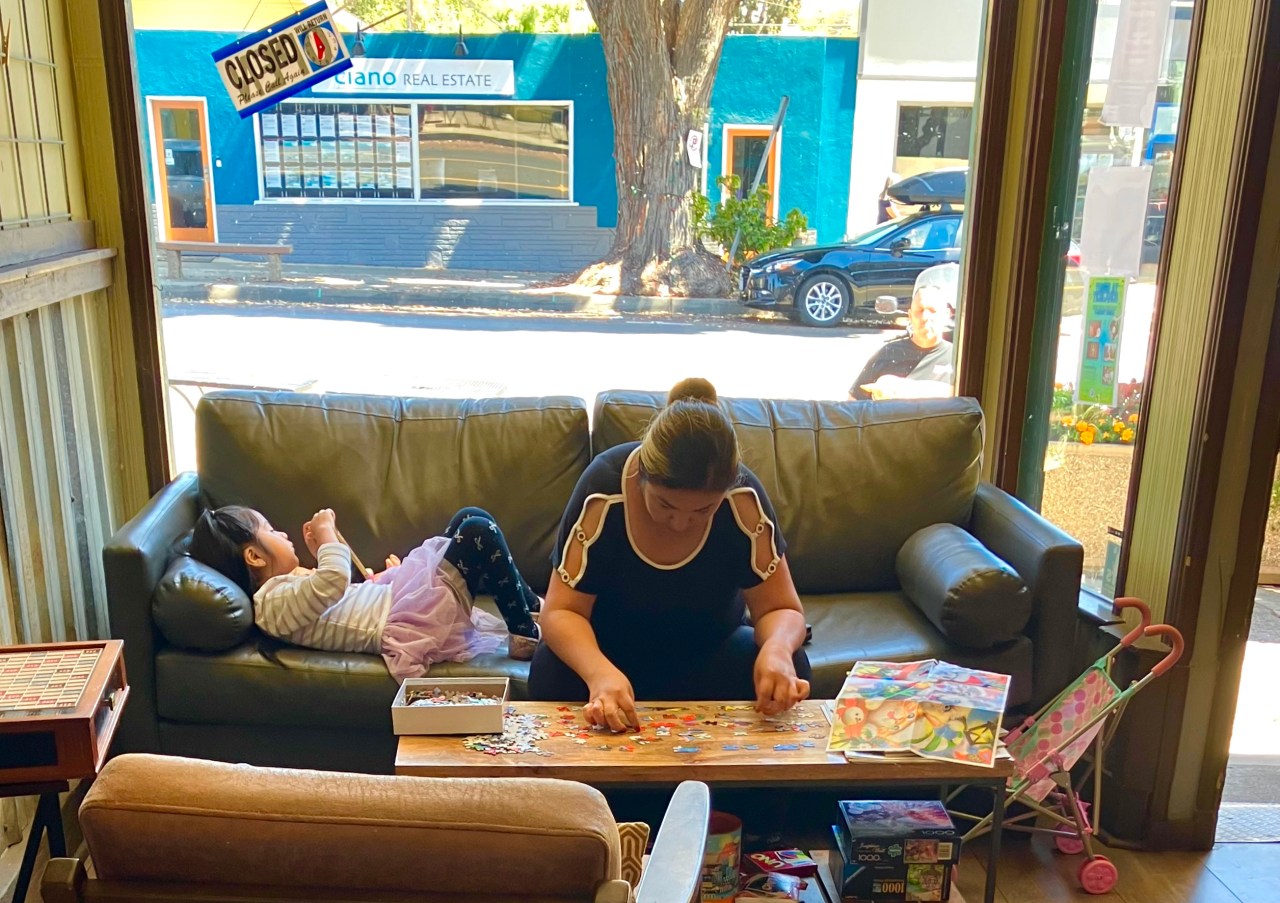
I’ve never seen a puzzle and game play space inside a Starbucks, or, for that matter, inside the average courthouse, city hall or bar. But inside a coffee house in the small coastal town of Morro Bay, California, it’s obvious that whole families, kids and dads and moms, are frequent players, stopping by for a cappuccino or espresso, a bun or croissant, and….a few chill moments with a jigsaw puzzle. The coolest part about encountering this mother-and-child team in the joint was how unremarkable they seemed. The local feel for this cafe was more than “everyone is welcome”. It was all the way to “whatever you need”. And then some.
No other customers in the shoppe seemed to acknowledge this micro daycare center activity; it was obviously just part of the daily rhythm, what made the town the town. I was only about eight feet away from the pair when I snapped this, a single-frame go-for-broke frame. I was so afraid of either making them feel as if they had to pose, or, worse, feel violated by my presence. But there was just so much life, real life, in the scene. I’m glad I had my shot.
TRANSMISSION
By MICHAEL PERKINS
MY MOTHER’S PASSING, JUST A LITTLE OVER A WEEK AGO AT THIS WRITING, has understandably released a tornado of feeling, not all of it tragic. More specifically, the portion that is purely sad is actually quite compact; intense, certainly, and at times devastating, but by no means the dominant current in my head. Gratitude occupies the space within my heart far too greatly to yield much real estate to mere sorrow.
Looking over the many images of Mother for use in the usual tributes, I find myself wishing that someone, somewhere, had taken far more pictures of just the two of us together. That unique transmission of energy, hope, and love between parent and child is a rare quality, and is, in photographs, as visually elusive as heat lightning. Candids from birthdays, Christmases and graduations hint at it; few fully capture the entire miracle.
But, this morning, as I was once again bemoaning how few of those grownup-kid transmissions I possessed to comfort me in her absence, I saw that exact energy in a shot I had made of strangers, a single frame among hundreds in a sequence that I had glanced at once and filed away under For Future Consideration. Suddenly that “future” was upon me, as I rediscovered the image you see here.
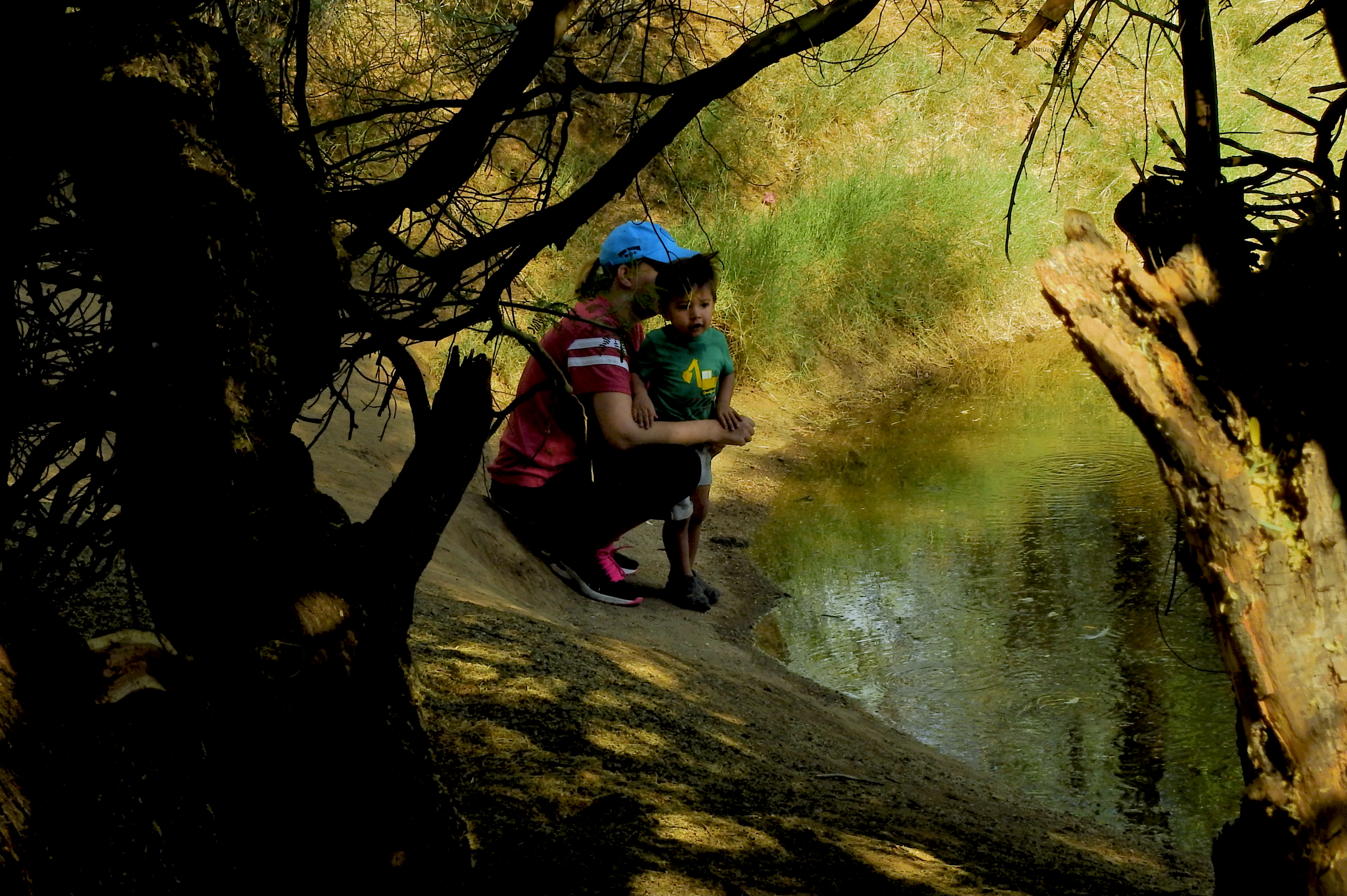
Like many photos, it’s as evocative for what it doesn’t show as what it does. I can’t tell if this is merely a tender moment, or one in which the small boy is excited, bewildered, tired or just clingy. And nothing of the mother’s face can be seen at all. In some ways, the picture is unfinished, a rehearsal for something more eloquent promised for a few moments later. However, there is the feeling that these two people are, for this one instant, totally sufficient to each other. Their connection is wonderfully profound. They are of each other, and the rest of the world is, at least for now, irrelevant. Looking at it through the filter of my recent loss, the image is no longer invisible to the current me. It’s now an essential possession, something magical that I was luckier than I knew just to witness.
For a moment, looking at the picture, I forgot about reality, and experienced the feeling that I’d love to show it to Mother. But, in her wisdom and her love, it’s nothing, really, that she hasn’t seen before, nothing she and I haven’t lived before. And that’s enough for now.
INSIDE EYE OF AN OUTSIDER
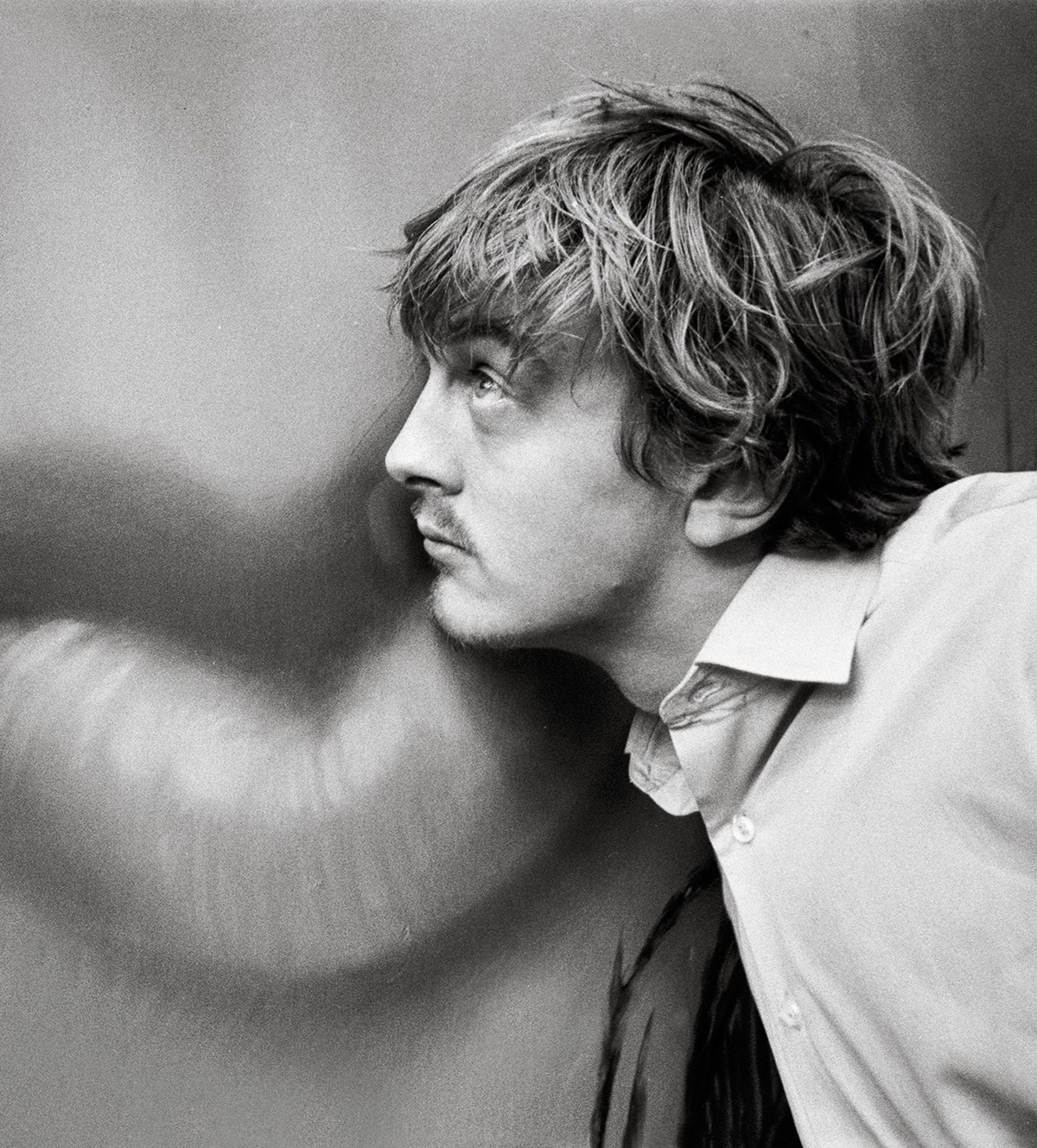
Picture of an actor playing a picture-maker taken by a picture-making actor: Dennis Hopper’s candid portrait of “Blow-Up” star Devid Hemmings, 1968.
By MICHAEL PERKINS
DENNIS HOPPER’S FILM CAREER STANDS TODAY as one of the iconic cautionary tales about what happens when one’s talent enters into a death struggle with one’s demons. He was the contemporary of another troubled actor, James Dean, but instead of smashing himself to pieces in a car crash all at once, like his friend, he was destined to unravel slowly, over decades, like a hideless baseball wobbling over the rear fence, caroming from suspension to firing, from screw-up to royal screw-up. Every time the candle of Hopper’s undeniable gifts began to truly glow brightly, he’d get too close to it and burn his eyebrows off.
Today, Hopper’s long stretch as an actor, writer and director has largely been boiled down, in the public memory, to his creative energies on the era-defining Easy Rider, with many of his other near misses blurring into the haze of the unique amnesia that is showbiz’ permanent dream state. However, since his passing in 2010, it is his other output, the 18,000 images he made as an amateur photographer between 1961 and 1968, that have burnished his legend, making his informal snaps of life among the famous and anonymous of Los Angeles in the ’60’s the stuff of coffee table books and gallery shows. Gifted with a Nikon on his birthday in 1961, Hopper trained it constantly on the people he worked with, as well as those he would, sadly, never work with. The result is a portfolio that is as essential as Tarantino’s Once Upon A Time In Hollywood in its depiction of the dreams, excesses and delusions among the showmakers and the stars they spawned in that vanished decade.
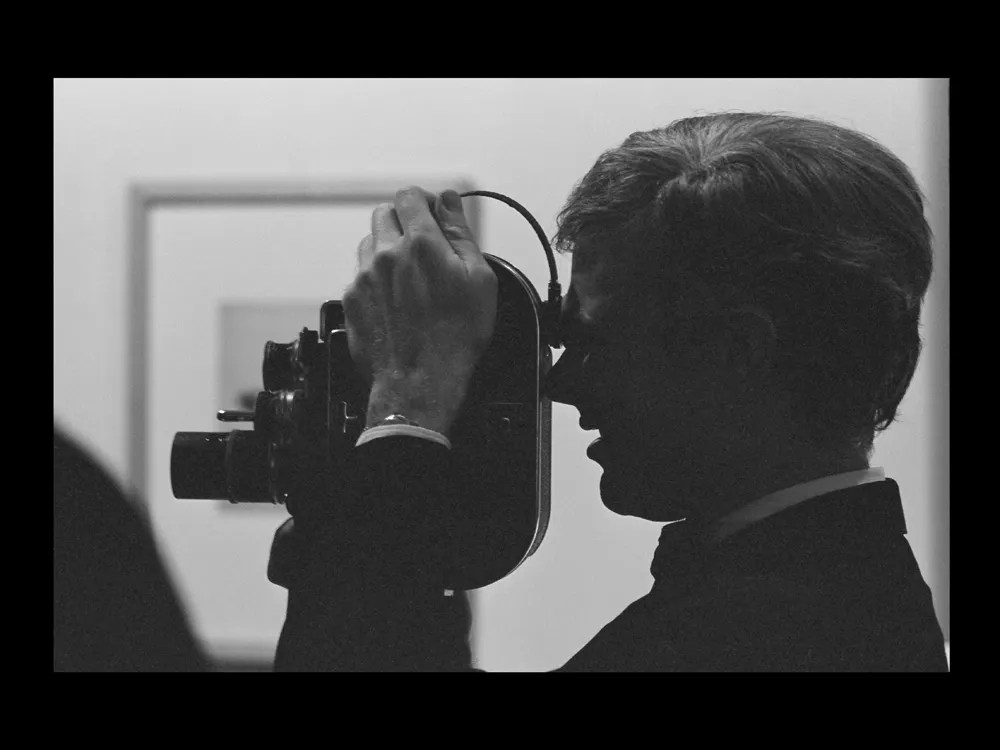
Hopper’s 1962 portrait of fellow cineaste Andy Warhol.
During his life, various collections of Hopper’s work, including In Dreams and Photographs 1961-1967 were published in book form, and a comprehensive showing at Los Angeles’ Museum of Contemporary Art accelerated interest among people who were only passingly familiar with his acting work. In the years since his death, his images have increasingly served as a time capsule for a Hollywood that was sandwiched between the end of the old studio system and the invasion of a younger generation of actors/directors that would include the Scorceses and Spielbergs of a new era. Hopper found a different kind of voice outside the world of movies, but one of his quotes about his first career seemed to portend the power of his second: “I was very shy, and it was a lot easier for me to communicate if I had a camera between me and people.”
MYSTERIES SOLVED AND UNSOLVED
By MICHAEL PERKINS
STREET PHOTOGRAPHY IS OCCASIONALLY DISPARAGED as some kind of intrusion, the visual equivalent of picking someone’s pocket or peeping through their bedroom window. And while some shooters certainly invade, even steal, privacy from people, there are many more gentler practitioners, artists compelled by curiosity rather than predation. I think the difference between these two approaches shows in the work. At least I hope it does.
The photographic street scene is greatly altered in this Year Of The Great Hibernation. Making pictures of people is severely hampered when there are, literally, fewer full faces in view. Our choice to purposely avoid personal contact cuts that crop down yet again. And without faces, the street is only, well, the street. Faces provide photographers with that divine mix of solved and unsolved mystery. It is, after all, our inability to absolutely plumb the inner thoughts of others with our puny cameras that make our little acts of emotional eavesdropping so addictive.
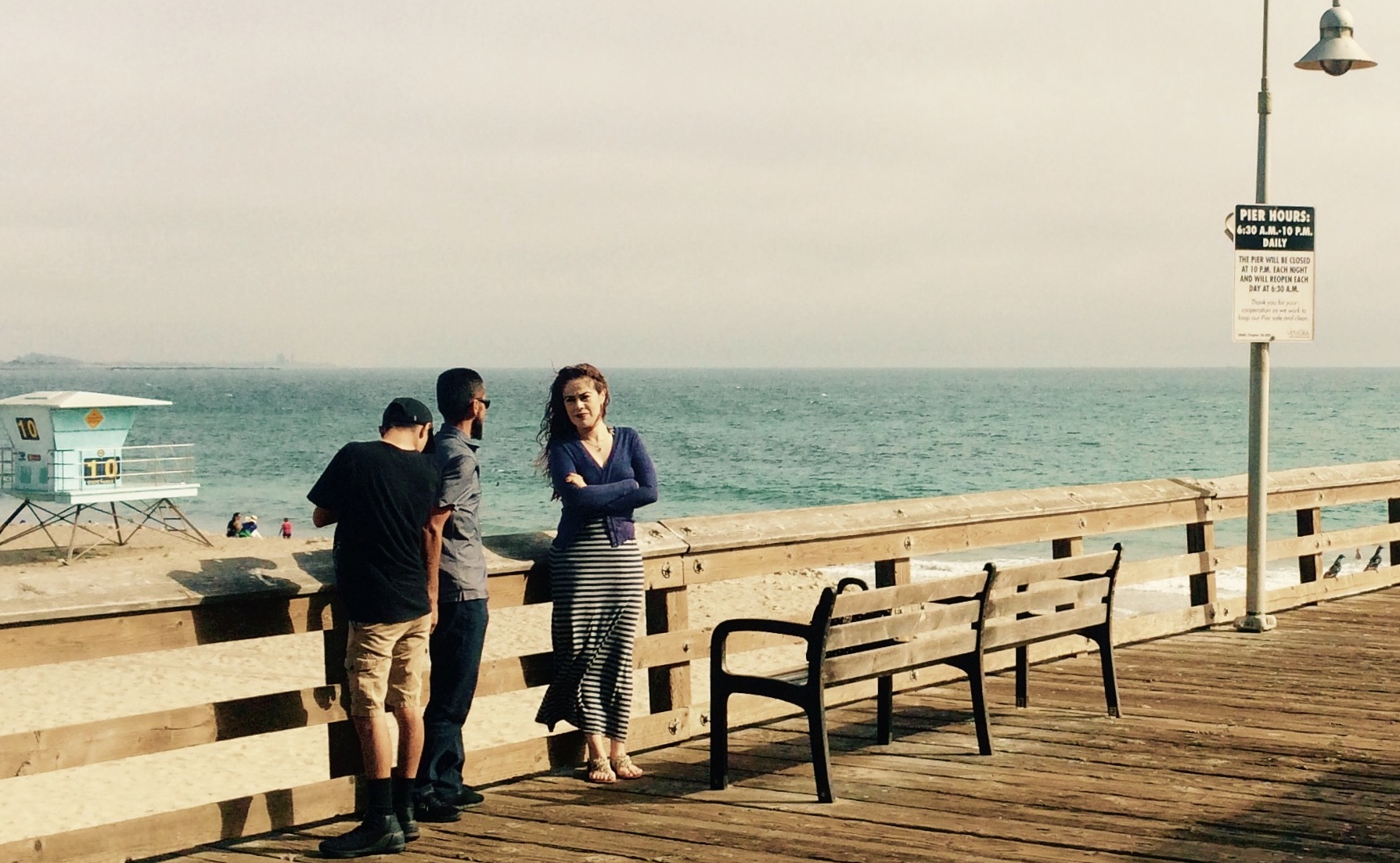
The Conference, 2017
In recent months, I have been giving myself a refresher course on what it is about street work that “works” for me. I keep coming back to images very similar to the one you see here, the instinctual capture of a moment on a pier in Ventura, California some three years ago. Something about the exchange between the woman and the two males continues to fascinate me. Maybe it’s because the woman, whose face is the only one of the three in clear view, is in such a position of dominance. She clearly seems to be in charge of whether the conversation continues, and on whose terms. She looks, at once, impatient, engaged, weary, cold, contemptuous, even maternal. I can’t nail her down, and that’s intriguing. The males are almost certainly boys, or are at least servile in the way that only boys can be in the presence of an adult woman. Either way, their energy is greatly diminished in comparison to hers. The picture does, then, what street work does best…at least for me, in that it starts conversation, but cannot end it.
Of course, some street photography is not “about” anything but itself, that is, a random momentary arrangement of props and shapes. And it would be a mistake to label such images as any less or more “meaningful” just because no clear intent is implied in them. A sunset is, for some, symbolic of many things, but for others, it’s just a picture of a sunset. As to whether it’s somehow wrong to spy on the feelings or interactions of passersby with the intent of trapping them inside a box, I’ll leave that to the philosophers. Me, I’m thinking about the grand parade of lives passing before me, which I regard as the grandest feast since the invention of Hot Pockets…
 thenormaleye