BIRDS, DOGS AND A HEALTHY CRUNCH
By MICHAEL PERKINS
ALMOST SINCE THE DAWN OF PHOTOGRAPHY, there has been one format or another for the creation of three-dimensional views. The first, and by far the most successful of the “armchair traveler” systems was the elegant stereopticon, the gadget through which paired, cardboard-mounted images transported the Victorian explorer to the wonders of the world, at precisely the same moment that many of those sites/sights were being photographically documented for the very first time. The Keystone View Company and its several imitators littered the planet with travelogues and celebrity portraits for nearly seventy years, and even served as many a hobbyist’s first introduction to color pictures (albeit hand-tinted ones) created years ahead of any practical chromatic film.
Keystone’s expansive packets on various subjects included lavish text on the card’s backs, and were marketed to adults with an emphasis on erudition. Over the next hundred years, dozens of 3-d formats would be launched, many of them supplying at least a smidge of context on their subjects, lots of them riding the line between serious devices and toys. The world’s most successful stereo product by far, View-Master, began with scenic titles in 1939, and has survived to the present day by licensing the use of Disney characters, TV and movie scenes, and in the 21st century, even an attempt at a virtual reality re-boot.
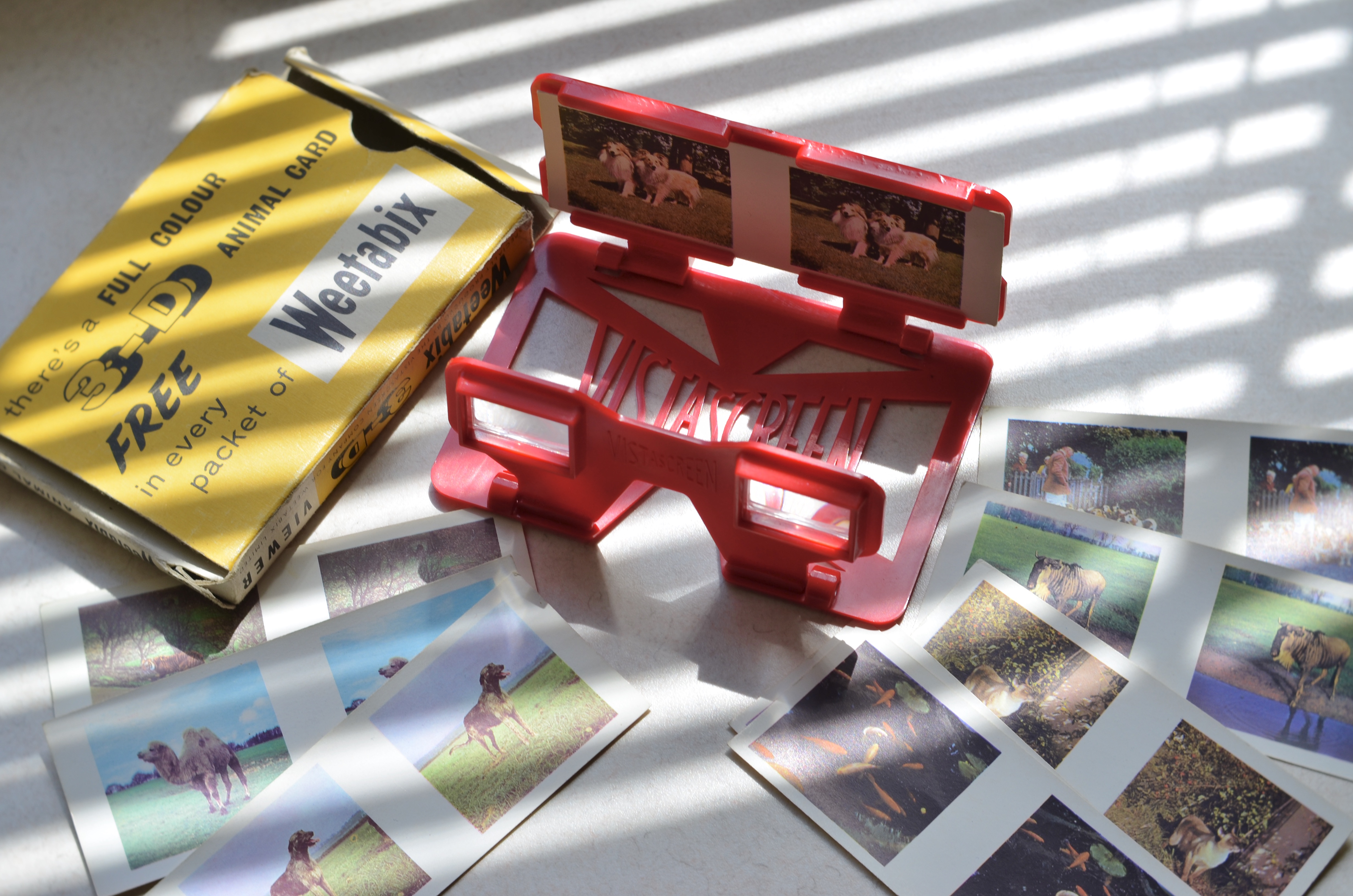
A late-1950s’ VistaScreen 3-d card viewer, shown here with stereo cards given away inside Weetabix cereal boxes in the U.K.
Leaning heavily on the kid’s plaything side of the ledger, a folding plastic card viewer from the late ’50’s called VistaScreen issued series on birds, animals and other subjects accompanied by neat little explanatory paragraphs. View sets were sold at the tourist attractions that they depicted as well as by mail order. The company’s brief tenure was boosted a bit in the early ’60’s when it entered into a promotion with the United Kingdom’s most successful cold breakfast cereal, Weetabix (think shredded wheat without the thrills). Kids in Australia, England, and New Zealand mailed away for the viewer (emblazoned with the product’s name on the back) and then collected one new stereo card per “packet” of cereal. There were 6 different sets of 25 cards with series names like Working Dogs, Thrills, British Cars, British Birds, Animals, and Our Pets. The cereal cards were disdained by stereo purists for being substantially inferior in quality to VistaScreen’s mail order sets, but the promotion actually kept the company alive for most of its five-year span, while also making a childhood 3-d fan of many a youngster, including Brian May, destined to become a stereoscopic collector, astrophysicist, and, not incidentally, the co-founder of Queen.
As a childhood View-Master geek, I was delighted to discover the VistaScreen system a few years back, since it was actually the stereo formats, and not standard “flat” photography, that first taught me composition and the importance of telling a clear visual story within a strict format. It’s ironic that I don’t typically shoot a lot of scenic titles these days, and yet have a lifelong affection for the travel images of my first photographic “toys”, the bait that got me to first pick up a camera and ask myself, “will this be a picture?”
And I didn’t have to eat Weetabix.
LOOK, UP IN THE SKY!
By MICHAEL PERKINS
IN ONE SENSE, THE GLOBAL LOCKDOWN OF 2020 has created the biggest simultaneously experienced event outside of a world war. The advertising slogans are right: we really are in this altogether. On the other hand (thinking purely like a photographer), the way we all go through this is often solitary, hidden from mass view. Many of our struggles are not waged in the public eye, which is where so many amazing images are born. Instead, we are living with a mass event without the mass reactions.
And so, yes, I miss crowds. Audiences. Throngs. Multitudes cheering, crying, yearning, celebrating. Because photographs of those instantaneous, shared emotions are, in themselves, deeply affecting, sometimes more so than whatever the crowd is actually reacting to. A static picture of a guy cranking a bat around to send a homer over the back fence is one thing, while the backdrop of amazed thousands seeing him do so takes the photo to a completely different level. Certainly, we all crave solitude, as a measure of what is most personally affecting or shaping us, and photographs borne of those feelings are undeniably poignant. But in this time of general-suffering-individually-contained, we are robbed of the pictures that actually show us all being in it together. Consider the opening to the old 1950’s Superman series. It’s not that a guy is flying right over your head: it’s that you’re in a crowded street full of people all having your minds blown simultaneously. Look! Up in the sky……
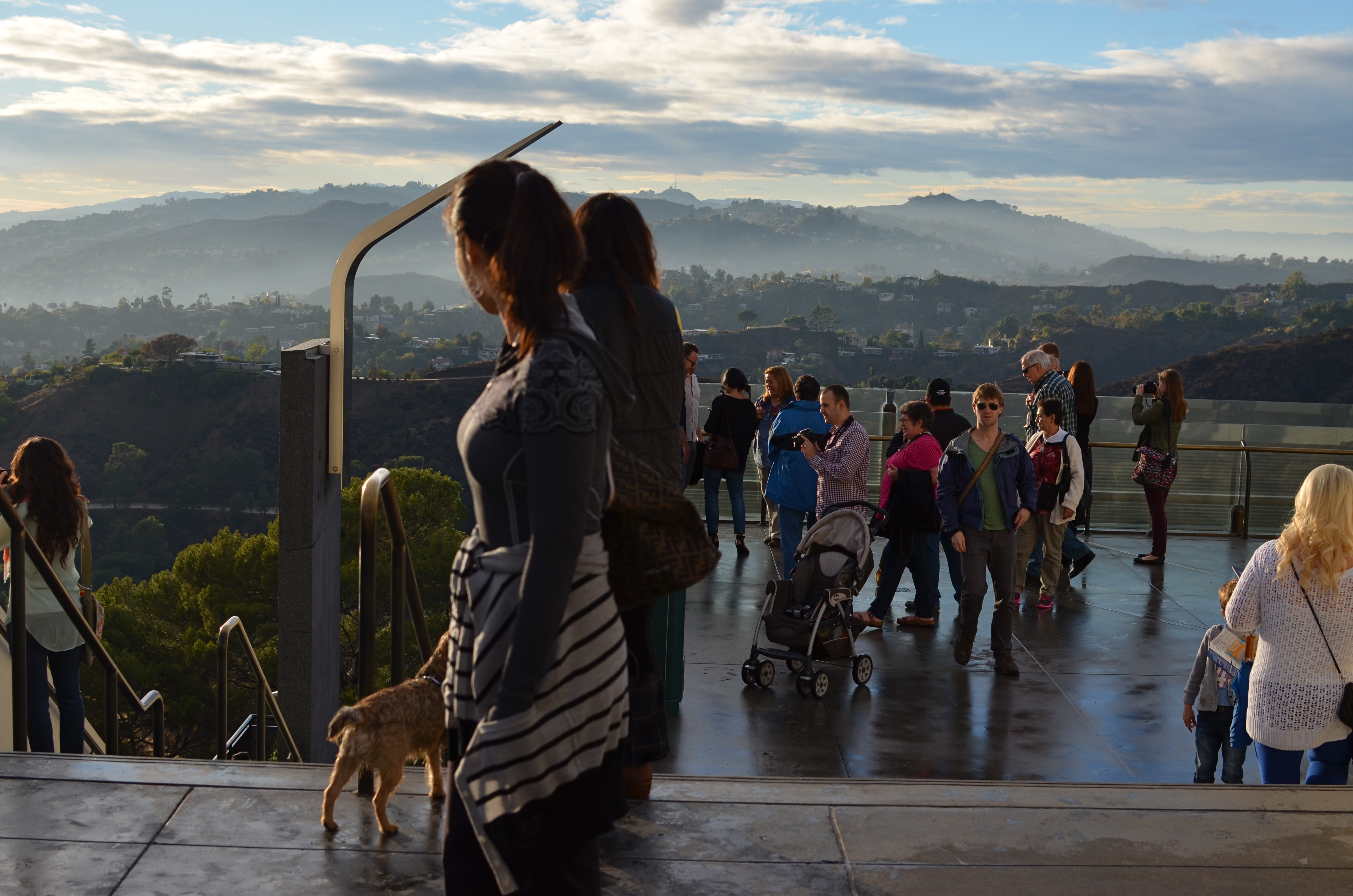
Stormbreak, Hollywood, 2014
The aftermath of a rainstorm over the Hollywood Hill, seen here, would have been gorgeous all by itself. But what makes me love this picture most is the fact that everyone gathered here (actually visitors to Griffith Observatory, which points the opposite direction, and packs its own killer view, of downtown L.A.) has been struck by the same wonder at the same time. We are all, for a few moments, one person. For just a few seconds, nothing is as important as what we’re seeing and feeling, together.
There will be a time, again, when images will be made of us all emerging from this shadow, all blinking our collective eyes at the strange sensation of walking back into the sunlight. And yes, there will, in the anxious interim, be news footage of us cramming like crazed ants into beach bars or partying heedlessly in crowded streets. But that brief surge of manic novelty won’t be the real picture. The real picture will occur when honest cameras register the genuine joy of not just getting back out but getting back to each other, and pointing skyward to ask, “is that a bird? A plane…?”
A MILITIA OF MILLIONS
By MICHAEL PERKINS
THERE WERE NO CAMERAS IN THE WORLD when America fought the first war on its soil, leaving mostly paintings of generals on horseback as a visual chronicle of the struggle. Now, in our latest war, also on our soil, there are millions of images created each day that strive to comprise a pictorial narrative of the unfolding tragedy. But more is not necessarily more: when the final battle has been fought, there will still be oceans of pictures missing from the saga, stories still left untold.
Perhaps it’s the nature of this very strange conflict, fought not against combatants with rifles but against Nature itself, which makes the pictures come so hard. Now, there is no visible demarcation between soldier and civilian: there is no designated field of combat, but thousands of little ones, many of the clashes and outcomes unseen, the casualties themselves vaporized in a fog of grief. And yet we struggle for any kind of visual measurement, some yardstick by which to measure our pain. The task may be beyond the power of any camera, at least any of which we’re aware.
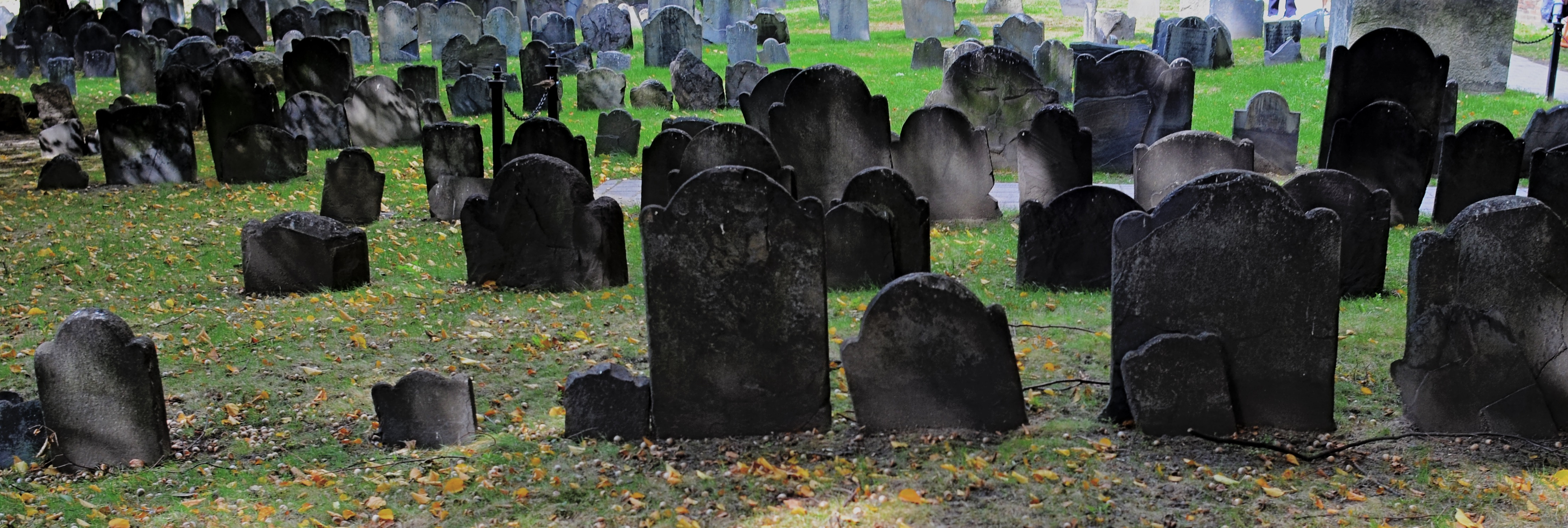
Boston, 2016
I’ve been searching over the past few days through my own stacks for the above image, because, being of a revolutionary-era churchyard in Boston, the markers shown are literally those among the first to fall in that earliest of American wars. Given that the inscriptions on the tablets have been almost totally effaced by time and the elements, I consider these monuments symbolic of the strangely imposed information blackout we are all under regarding today’s citizen soldiers, many of whom vanish from our mist without formal lists, monuments, or in all too many cases, even a human goodbye. Like the data once stored on these blank slates, our true talIy of sorrow has been edited, censored by fate.
I feel that, in the year 2020, the meaning of Memorial Day has been unalterably changed for me, and for everyone in our dread new militia of millions. Many of the fallen were not drafted, nor did they volunteer, and yet they have been conscripted by destiny in a way that is fully consistent with those whom we normally honor on this day. Many may never be inscribed on a monument that our children may visit on a school field trip: their faces will, in many cases, escape our cameras. Many more will never be interred with a flourish of folded flags or the reassuring regimen of military pomp. Still, over the coming years, watching ourselves and other survivors remember the fallen may inspire us to create new kinds of images, scenes that we can scarecely dream of at present. As with those headstones from our first days of passage, we need to retain what symbols we can of what we have lost, seeking in time to fill in the rest, to develop the remainder of the picture.
180 DEGREES OF SEPARATION
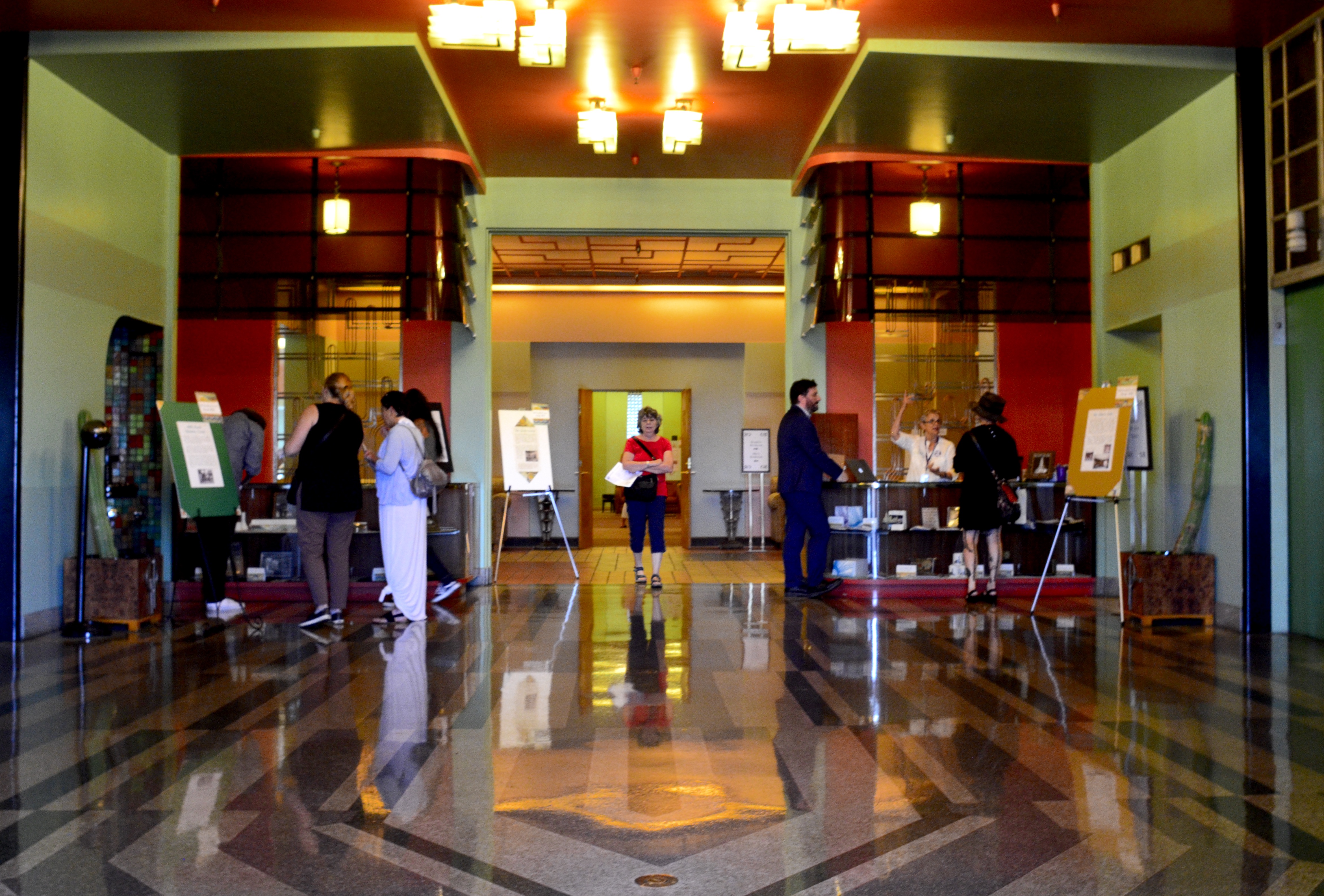
Contrast, clutter and exposure woes galore in this original shot of an Art Deco lobby.
By MICHAEL PERKINS
REFLECTIONS, OF ANYTHING, ON ANYTHING, ARE DECEPTIVE in the way they seem to store information in a photograph. We tend to think of them as perfect mirror images of something, a complete yin to something else’s yang. But if reflections are twins of a sort, they are seldom identical twins, as the duplicate is almost certain to be an imperfect copy of the original.
Consider the “mirror” idea. Anything reflected in one is, at the very least, reversed. And then we go further: are there any spots or streaks on the mirror? Did a strange bounce of light create a flare or a prismatic break of color that doesn’t occur in what’s reflected? The truth is that even a mirror reflection is not perfect but a reasonable replica. Next, let’s consider using another reflecting surface, from water to marble to other types of glass. Now the reflections are even more adulterated. We see them through floating junk, through dirt, through bounced reflections of other things, and so on.
As photographers, we often don’t regard a reflection as anything but a handy design element, a decorative, if flawed, supplement to the thing we primarily want to show. But on occasion, the thing we have set our sights on is compromised or less than effective, while the reflection, although more abstract, even backwards from our original intent, can become the part of the picture we re-set ourselves to showcase. It’s an element of how we see (or don’t see). We automatically make the adjustment in the viewpoint between portrait and landscape orientations, and yet overlook something as simple as inverting an image, to make its passive “bottom” an active “top”, as seen here.
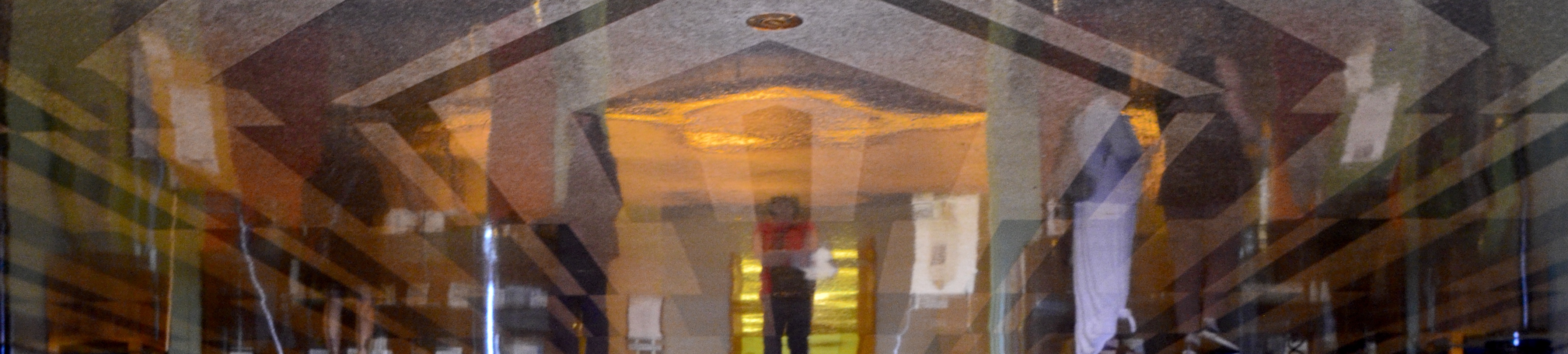
Cropped by half and turned on its head, the shot takes on a different flavor.
In the thumbnail of my original shot of a 1920’s-era lobby (above at left), the people above the floor clutter the scene to such as extent that the lobby loses its power as an image. There are also some pronounced exposure and contrast issues.However, with the photo flipped on its head, the luxuriously patterned Art Deco floor blends its own design patterns with an ethereal rendering of the people that changes not only the frame of reference but the very intention of the picture, especially with the distracting top half of the original cropped away. It’s a mix of the imperfect reflection material (the floor) and its ability to re-interpret all of the more literal stuff from the first version. All this to say that, instead of regarding reflections as mere duplicates of worlds, we should and can regard them as separate worlds of their own, with distinctly different stories to present to our cameras.
DOING WHATEVER I F/2
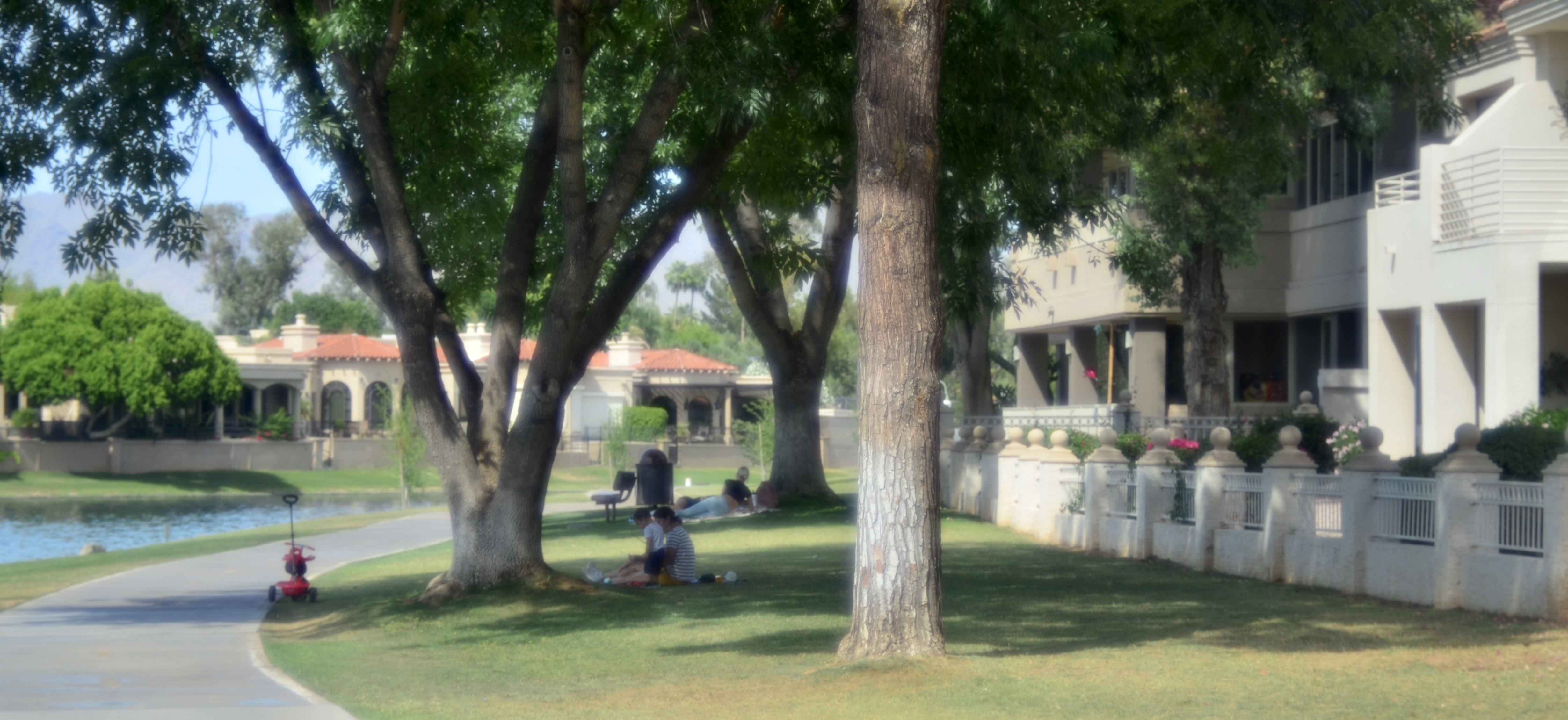
Shot with a Soviet-era Helios-44 58mm manual lens at 1/2000 sec., open to f/2.
By MICHAEL PERKINS
THOSE WHO HAVE SIGNED ONTO THIS SHIP OVER THE LONG HAUL may recall that the germ idea for The Normal Eye was a year that I once spent shooting with nothing but a manual 50mm f/1.8 prime lens, forcing myself to explore all the benefits and limits of a single piece of glass in every conceivable shooting situation. I didn’t intend the year as any kind of stunt, but as a test of my own ability to re-sensitize or “normalize” my vision (primes are often called “normal” lenses for their similar field of view to the human eye) and a disciplinary experiment in which I alone was responsible for any and all results….kind of a mind-over-matter challenge. The year showed me that nearly any lens has properties which might not be readily apparent until you spend some extended play time with them.
Wait, did he just say play? But we’re photographers. This is serious business.
Well, as to that, all I can offer is Fred Rogers’ old line about children and how their play is their “work”, not a break from it. And I’ll pretty much stand by Mr. Rogers’ results. Thing is, learning absolutely every intimate detail about a lens’ performance is time-consuming, which makes it a perfect exercise for these thumb-twiddling times. Hey, during this time-out, we’ve done all the sensitive photo essays on our feelings of isolation, community, dread, etc., etc. Well and good. But this protracted behind-walls penance is also a great opportunity to bring out the equipment that we’ve either under-loved or flat-out given up on over the years. The non-favorites that we shot a little with, weren’t really thrilled with, or consigned to some dusty regret bin. Yeah, those lenses. We bought them to achieve this, but all we got was that. Yeah, those.
Forcing a brief romance with a forgotten lens is easier when there is so much time to futz away that we can afford the luxury of mistakes. After all, you’ve already taken 300 pictures of your study and your back room with the gear that you’re most comfortable with. So call those your “keepers”. Now, you can grant yourself the freedom to shoot the “losers”, the pictures that don’t matter, except for what they can teach you. Snap on a forgotten optic and enjoy the latitude of just being… bad. Hey, delete all the defects, if it bugs you that much. But shoot, and shoot, and shoot, and get past whatever barriers exist between you and those lenses, because they can be overcome, and you may be surprised to find that they really had more potential than you ever imagined.
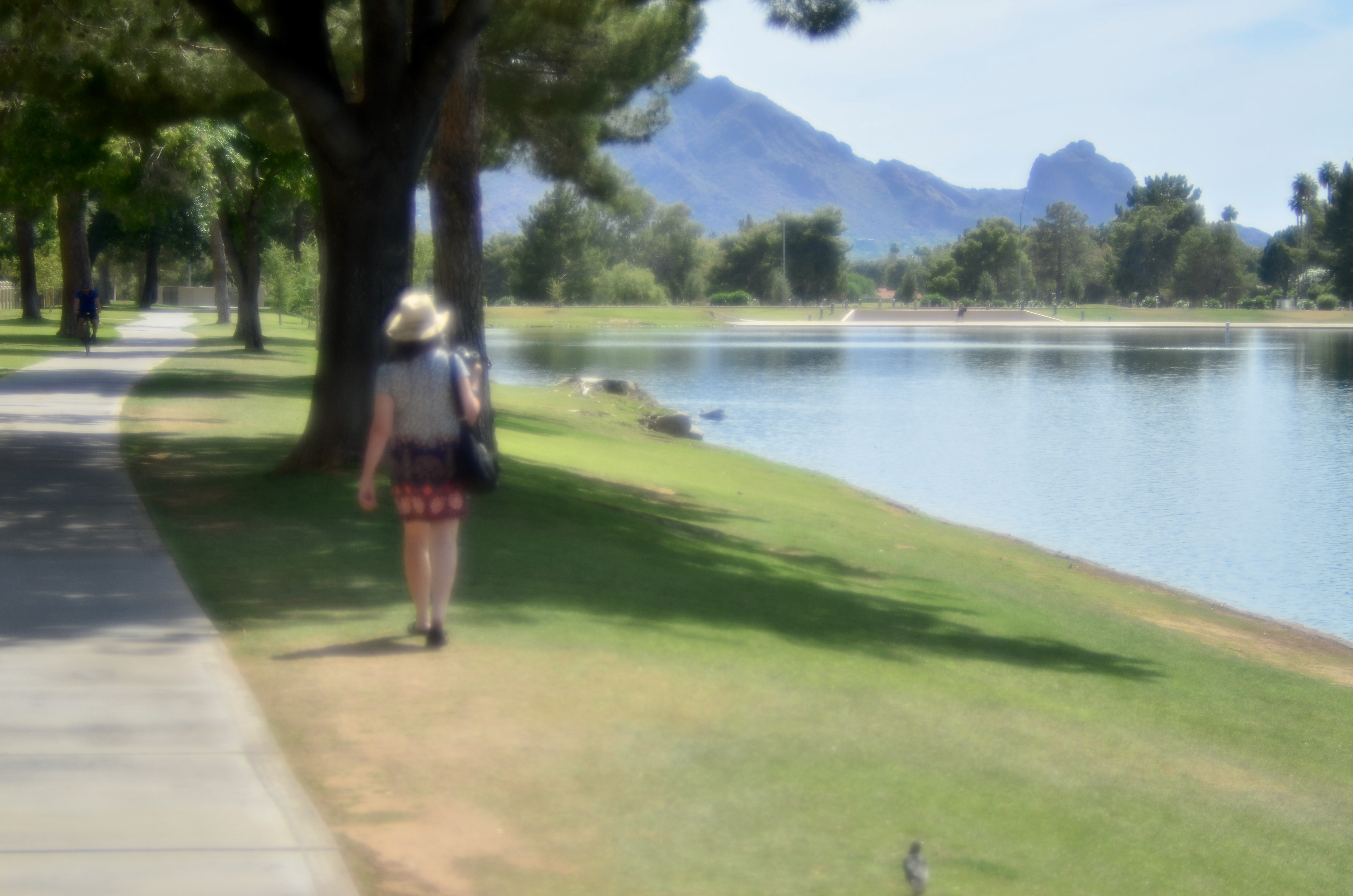
This had to be shot a little faster, around 1/2500 sec.
The images seen here are the result of a solid week spent with a real oddball of a lens, my Helios-44 58mm f/2. These Soviet-era lenses were originally attached to Zenit cameras, some of the best knock-offs of legit European cameras that rubles could buy. The camera bodies were actually inferior to the lenses, but there were millions of each produced during the Cold War, so they are cheaper than Nancy Sinatra lip gloss. I bought mine for under $40 just to get the swirly bokeh it produces on floral work, but I discovered that, in shooting landscapes at the same f/2, I got defined focus layered with a film of dreamy glow, the kind of effect modern-day art lenses are charging hundreds to deliver. Thus most of this work week was spent trying to nail manual focus on the thing at great distances, which is a little easier to suss out with the help of one of the zillions of free depth-of-focus phone apps available. So now, in one optic, I have a bokeh beast, a decent portrait lens (at smaller apertures) and a special-effect landscape lens. The Helios won’t fetch me beer or grill me a burger, but as the Brits say, it’s Early Days. Gimme another week and it might actually feel, you know, normal.
INVISIBILITIES
By MICHAEL PERKINS
ONE THING THAT GUARANTEES VIRTUALLY INFINITE VARIETY AMONG PHOTOGRAPHERS is that, not only do we all see most things completely differently, we also vary wildly on what it is important to see. Turn ten photographers loose on the same subject and the results might just as well have been shot on different planets. Our individual brains seems to rank things in the world by how “view-essential” they are, or how worthy they are of our notice. This renders somethings that are vital to me nearly invisible to you.
We’ve all experienced the strange feeling of looking at images taken by someone else of a place that we have both visited at the same time, and seeing things that we could swear were never there. Who put that fountain near the plaza? Wasn’t the mountain to the left? Our mind is selectively failing to see some of the very same information that is obviously available to it, making our own work with cameras subject to selective invisibilities.
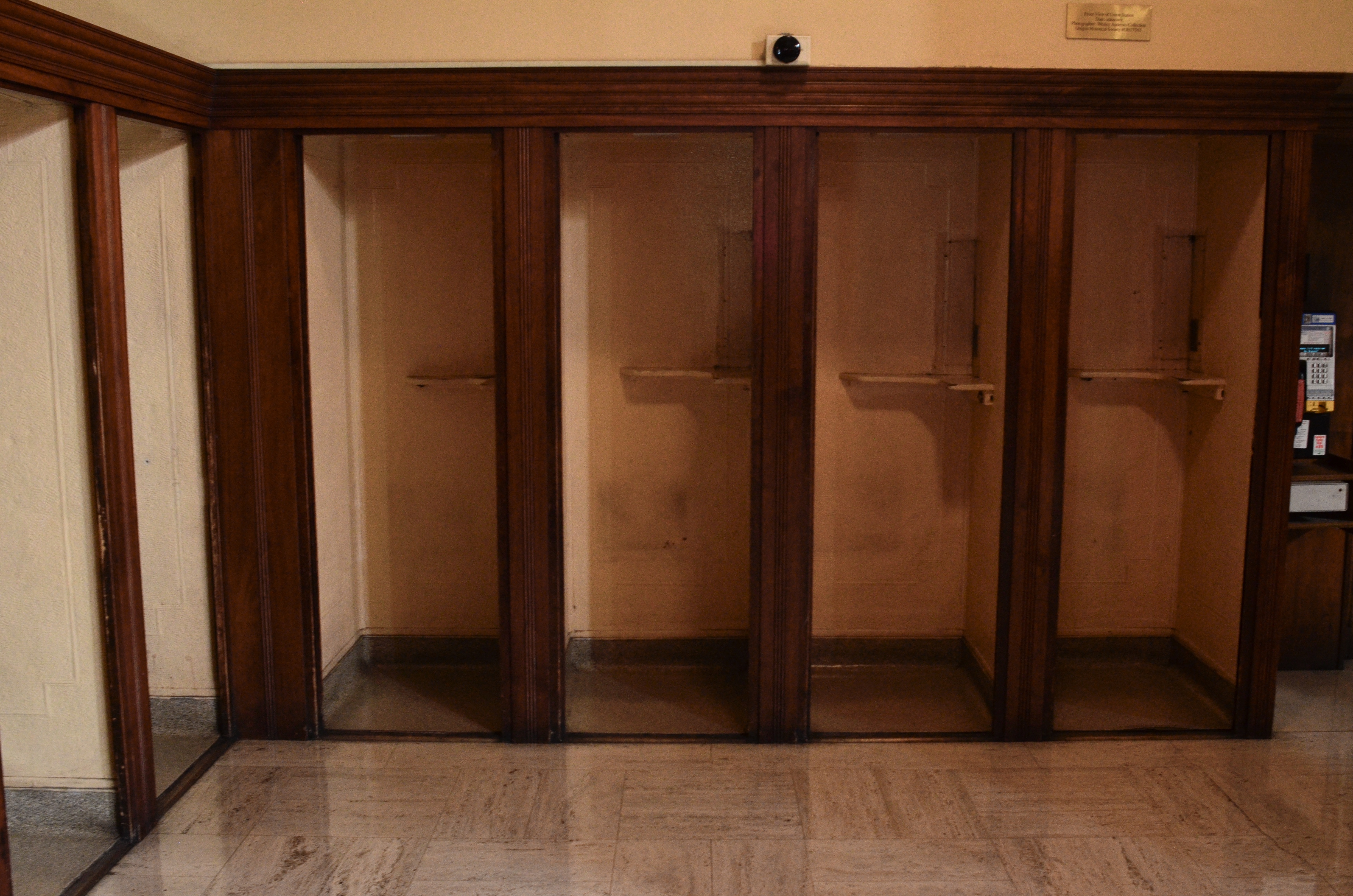
Lost Connections, Portland, Oregon, 2018.
What renders something important enough for us to actively acknowledge it? Can some things become so common, so ubiquitous in our lives that we no longer see them? In the case of the vintage cabinets shown here: what, in our daily lives, could have been more commonplace, more taken for granted, than a bank of public telephone booths? How could these structures have been more widespread than they once were, in railway stations, courthouses, department stores, bus terminals, and a million other gathering places? And would that commonality have placed them somewhat below our radar, visually speaking? Now turn that on its head: what could be more noticeable than when this everyday object is rendered obsolete, its purpose vanished in a blink of technology? Will that thing now be more visible, or completely vanished, and for whom?
I bring this up to unstick us from the tired idea that “everything’s already been photographed”, that, for the camera, there is nothing new under the sun. In reality, were we to start shooting images of all the things we have, for one reason or another, failed to see all our lives, we would find poetry and plenty in what we think of as “nothing”. Many things that are “here” go unseen simply because we will not see them, and many things that are “gone” remain because we will.
EYEWITNESS, ONCE REMOVED
By MICHAEL PERKINS
PHOTOGRAPHS STRIVE TO GIVE DIRECT TESTIMONY to life’s key moments, to minimize the distance between event and reporter. The most arresting photographs benefit from this straight line-of-sight from what we witness to how we record it. Other times, however, we are forced to depict things indirectly, making pictures not of things, but of the impact of those things.
One example of this occurs in wartime. It’s impossible, in many cases, to directly make an image of all those who are lost in a battle, but many eloquent photographs have been made of the way those dead are remembered, by photographing lists of names inscribed on a memorial, or by capturing a ritual during which those names are recited. Since society records the damage of wars or disasters in a variety of clerical or statistical ways, such tabulations, for photographers, stand in visually for the actual event.
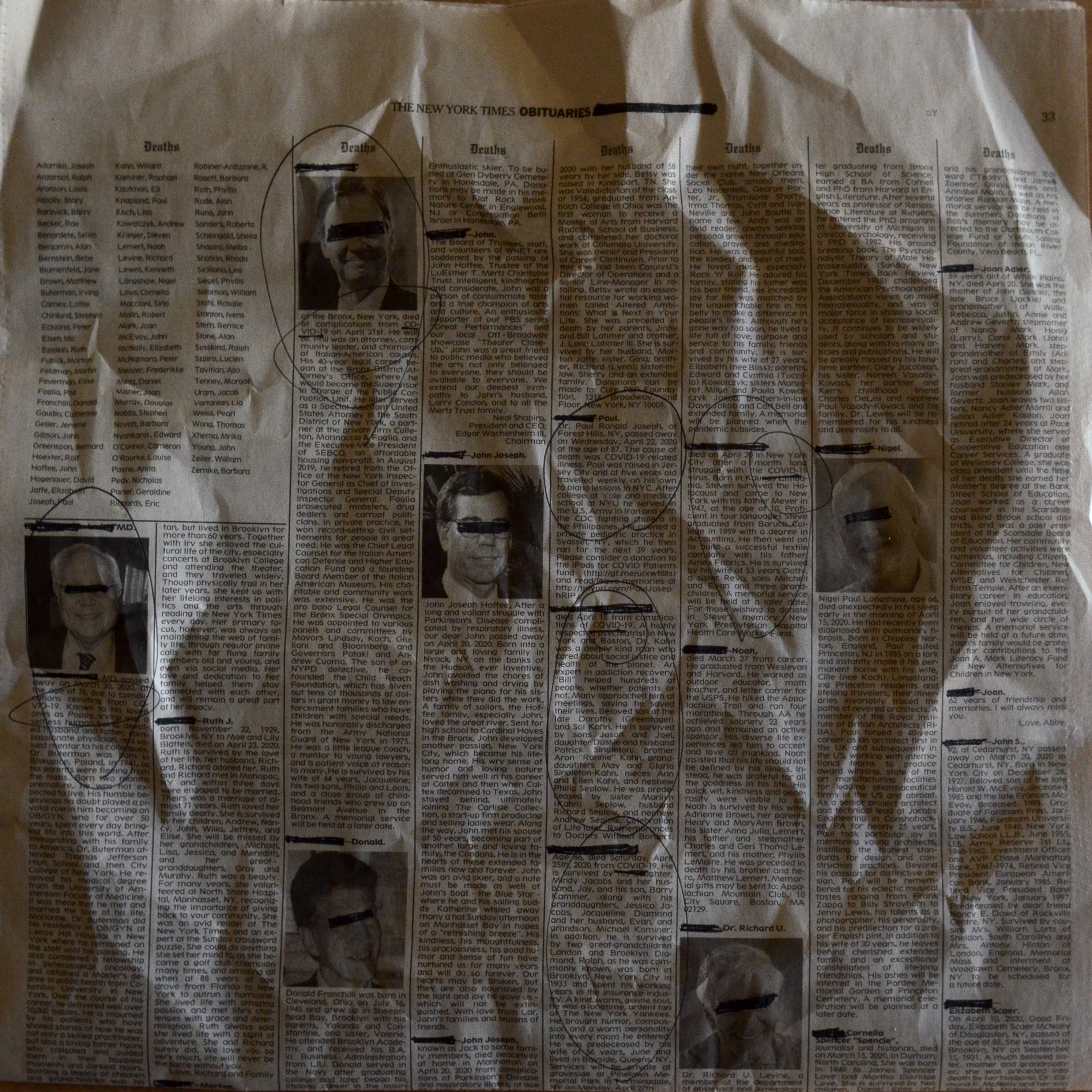
An Encyclopedia Of Vanishings, 2020
Our latest global “war”, in which even the immediate families of the dead are barred from witnessing their loved ones’ final moments, a time in which thousands of us seem to just vaporize into abstraction, has made a new, horrific addition to a very old instrument of death’s grammar: the newspaper obituary. In recent months, the virus has begun to be specifically listed as a cause of death in the stately columns of the New York Times, a revision which signals the importance of change in how slowly the Old Gray Lady adjusts to it. There now, on the page, along with the Parkinson’s diseases and the cancers and the sanitized descriptions of those who “passed peacefully” are the dread new words, now officially inducted into the vocabulary of grief.
And so, in the age of COVID-19, our cameras are stalled at arm’s length, unable to be true eyewitnesses, forced, by circumstances, to be eyewitnesses, once removed. We make pictures of pictures, images of lists, views of rosters.
It’s not enough. But for now, it will have to do.
THE “DELETEDS” CATALOG
By MICHAEL PERKINS
THE 1985 DISCOVERY OF THE WRECK OF THE TITANIC by Robert Ballard tested the talents of experts from as wide a range of specialities as the objects found in the doomed ship’s debris field. Some of the things found on the floor of the Atlantic were readily identifiable to the casual observer: chandeliers: cases of wine bottles: chairs. Cataloging others required the trained eyes of cultural historians, people versed in the daily world of 1912. The everyday becomes the exotic in very short order in the modern world. And one of the tasks for photographers is having these quotidian objects sit for their portraits before they pass, swept along in an ever-accelerating tide of change.
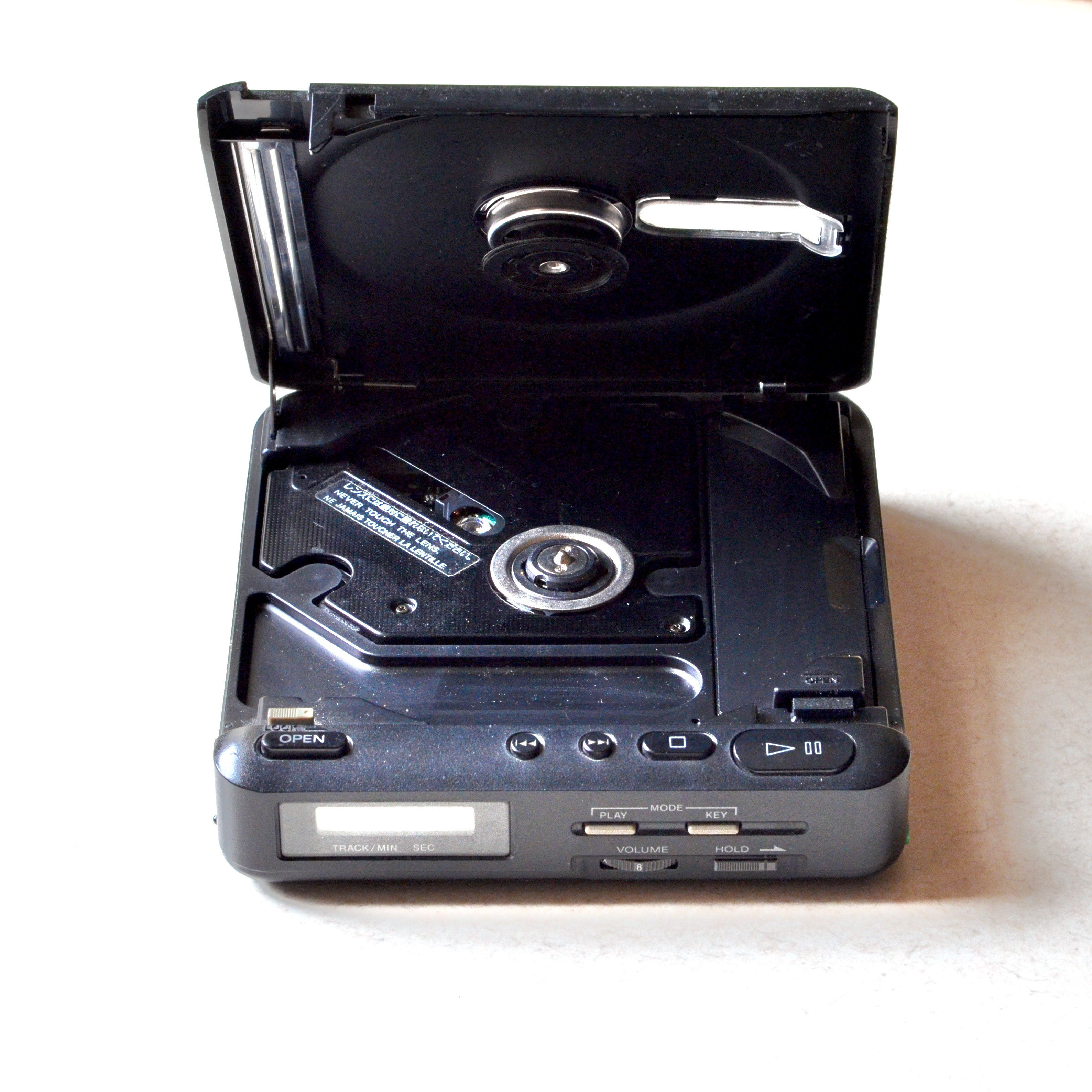
The Sony D-2 Discman, complete with surplus jacks for line-out and wireless remote. Things will be great in ’88.
You read about stunts in which common bits of household clutter from just a few decades ago are shown to millennials or teens, many of whom puzzle over what the object did, or was for. To be sure, going all the way back to, say, a rotary dial telephone could confound more than a few of us, but in these demonstrations, some young people have been stumped by iPods. Part of what brings a thing to the commercial market is the style it takes to catch the customer’s eye. If that typically fleeting style proves consistent with the object’s function, the thing may survive long enough to be a classic. Other such gizmos are transitional, the things given to us “on the way” to something more essential.
The recent Grand Hibernation we’re all under has made photographers reassess lots of things. What’s a fitting thing to make a picture of? What among our tools is still vital to our art, versus mere collected clutter? And, in the inevitable house-cleaning sparked by all this surplus time, what’s to be done with all the things we no longer use but for which we might harbor some residual affection? Should we mark their passing with a photograph? Should we create a “deleted” catalog of some kind? Is there anything to be gained or taught by doing so?
My favorite photographs often turn out to be the very ones I wondered the most about…that is, arguing with myself about whether they should be made at all. In the case of the Sony D-2 “Discman” you see here (circa 1988), I can’t say it was the first such device ever made for the purpose of making compact discs a portable and private habit, but it certainly influenced my own decision to turn away from vinyl (“heresy” I hear you hipsters hissing), and that, in turn, changed utterly the kind of music consumer I would become going forward. For some, the earlier, cassette-based “Walkman” was that moment. I just never embraced taped formats for a variety of reasons.
So this image represents a point at which I went from a rotary phone to a push-button? Craft your own analogy, and find the objects that, before they vanished, served as pivot points in your own life. Throw them out or tenderly tuck them back into storage for another day. But look at a few of them with a photographer’s eye. You may be far enough removed from them to see something new.
 thenormaleye
AGING IN THE BARREL
What’s That Moving?, April 2020
By MICHAEL PERKINS
SOON WE WILL STOP REFERRING TO THE DAILY GLOBAL TOTAL OF SELF-PORTRAITS by any specific number, since the actual figure will be (a) impossible to ascertain and (b) so astronomical as to be meaningless. A quick shuffle through just our own collection of selfies for a given period gives us an idea what happens when technical ease meets runaway narcissism. Or to put it simpler, we take a $%#@-ton of pictures of us. We love us.
The current Great Hibernation (or Uber-Lockdown, or Mass-Incarceration or Panic-Room Marathon) is forcing us to spend even more time with our favorite person, and it stands to reason that the circumstances will change the way we decide to document what we are personally enduring. Here I am in the sixth week of my bad haircut. This is me in my formal sweatpants. I don’t know where I took this…or what time…or what day/week/month. Change the nature of a photographic subject and you’re bound to change how you’ll document that subject.
The whole social context has been warped out of shape, and so must our image of ourselves, which, after all, is shaped by how we interact, where we go, what constitutes a good or bad day. And so self-portraits are being forcibly filtered through a completely different set of criteria than they were just a heartbeat ago, when all we had to do to be somewhere else was, you know, go there. The way emotions play across our faces will be pretzeled into interesting new shapes as a consequence. As we age in this particular barrel, we will be changed. Some of us will emerge from it as palpably different from the animals that went in.
That creates challenge for photographers, especially when it’s us shooting us. How trustworthy are we as narrators? How aware of we of the subtle changes we undergo when the toilet paper runs low? The pictures will eventually provide the chronicle. But in the interim, we need to ask different questions, seek different angles, spot variances. Hey, we might as well be honest. The camera never lies, right?
Share this:
May 13, 2020 | Categories: Commentary, Portraits | Tags: Interpretation, Self-portraits | Leave a comment