I KNOW WHY THE (UN)CAGED BIRD SINGS
By MICHAEL PERKINS
JOHN JAMES AUDUBON NEVER EMBRACED THE NASCENT ART OF PHOTOGRAPHY, which was only just out of its crib when the naturalist and artist passed in 1851. More’s the pity: his studies, and the magnificent paintings which resulted from them, were only accomplished by the killing of nearly all of the four hundred species he depicted, a technique well in line with practices of the 1800’s but regarded with horror by today’s birders. Photographs, in his lifetime, were a curiosity, certainly no competition for the observation and focus required to capture nature on canvas. And so it goes.
I have repeatedly credited my wife in these pages for retraining my eye regarding birds, which I certainly noticed over the courts of my life but didn’t really see. As someone who has always had a camera hanging around his neck, I have, since her miraculous intervention, experienced successive waves of “where the hell I have I been?” when naively delighting in creatures that she has been keenly aware of for decades. Fortunately, unlike Audubon, I don’t have to catch, shoot or poison them just to get a good look at their habits or habitats, as it’s rewarding enough just to be able to linger over the details of their design and grace in pictures. Sadly, I should have begun this journey as a much younger man.
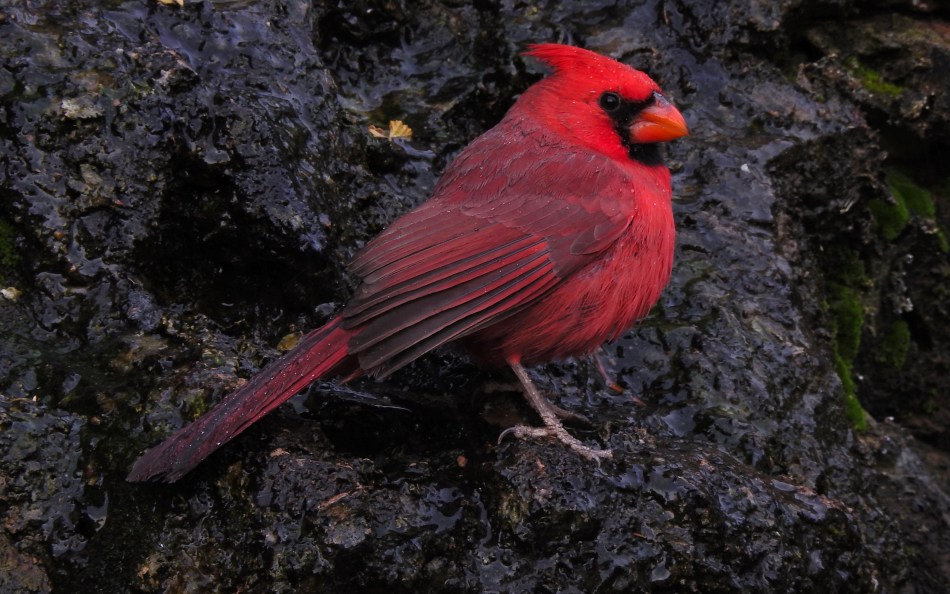
Making a photograph of a bird is a privilege.
Hang with birders for even a short while, and you will be stunned by how very much you do not, but should, know about creatures whose life is impacted, impoverished and just plain crowded out by our very existence, by our selfish gluttony and plunder of all things natural. It’s not just that we are just the loud, rude neighbors down the block: it’s as if we decided to throw empty beer bottles and cigarette butts from our parties over the back fence and into the yard next door. Birds are both a reminder of the infinite beauty built into the world and a rebuke to the unwitting war we wage against it. To measure what is either threatened or vanishing, you need a reliable recording tool….faster, more accurate, and less deadly than Audubon’s slay-’em-and-then-salute-’em method. For millions, including myself, that’s a camera.
The Audubon Society is currently undertaking the sizable task of changing the names of all birds who were identified by the names of humans. Not merely the more notoriously racist or rapaciously heedless of them, Audubon and John Muir among them, but any humans. The names will now merely be descriptive of the individual bird’s identifying characteristics, making their labels more purely scientific and perhaps sending at least a small signal that the earth is ours to inhabit, not conquer; to cherish, not dominate; to curate, not capture. And to learn, as the makers of all too many cages, why the uncaged bird sings so clearly and so beautifully.
 thenormaleye
Thank you Michael. I have always been somewhat of a semi-educated “birder”, but did not know about the new naming project. When my son was in elementary school, parents took turns coming to class and reading a book. The book I read was “She’s Wearing a Dead Bird on Her Head”. A descripton of that book follows:
Feathers on ladies’ hats were becomming more and more popular. Harriet Hemenway and her cousin Minna Hall believed something had to be done. Fashion was killing birds as well as women’s chances to have the right to vote and be listened to. For who would listen to a woman with a dead bird on her head? And if the senseless slaughter for a silly fashion was not stopped, in a few years the birds with the prettiest feathers would all be dead, gone forever, extinct.
“Why not form a bird club?” suggested Harriet.
“What a wonderful idea, ” said Minna. “Let’s do it. Let’s start a club for the birds!”
It was about the founders of the Audubon Society.
December 2, 2023 at 5:59 AM