RE-EMBRACING THE RANDOM
By MICHAEL PERKINS
LIFE FOR PHOTOGRAPHERS HAS BECOME ENTIRELY TOO SAFE.
It’s to be expected, really. In recent decades the forward tsunami of technical improvement in cameras and editing options has almost completely “idiot-proofed” the process of making pictures. In nearly every possible scenario, today’s gear guarantees that you will at least get something usable every time you take a shot, and, in many cases, images that are far better than even your best efforts could have guaranteed just a few years ago. The risk of making visuall lousy photographs has been nearly zeroed out.
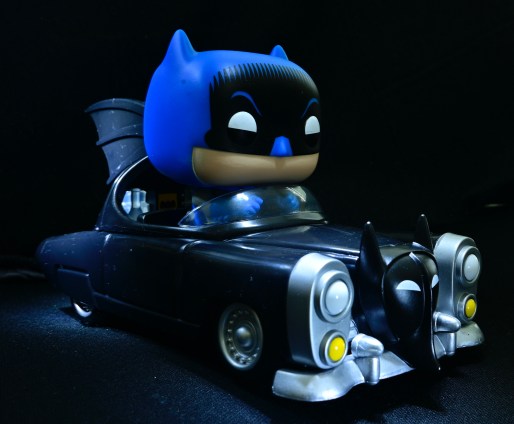
And that’s the problem. Because with the randomness of luck, which used to mean the potential for ruined images, there’s also the potential for the happy accident, the unplanned discovery that comes when something unpredictable is introduced into the mix. I was reminded of that in a recent return to the tabletop fun of light painting, where you shoot an object in complete darkness, with your camera set on full manual and mounted on a tripod. Using a remote shutter release for extra stability, you start the exposure on “bulb” setting, meaning that the shutter will stay open until you click it shut. You then selectively “paint” light onto the subject, passing over different parts of it with a small penlight. Unlike a static lighting scheme, this system more or less guarantees randomness, since you will never pass the light over the scene twice exactly the same way. And that very randomness affords you a kind of impulsive, instinctual indulgence from frame to frame.
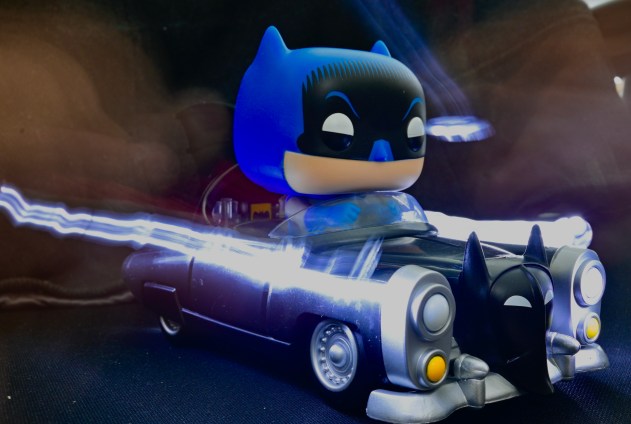
I usually shoot anywhere from thirty to fifty frames when doing a light painting, as I am always surprised or inspired by how the smallest variation in my passes will drastically affect the results. I can literally make the light look like it came from any direction, with whatever intensity I desire, from deep shadows to total blowouts. I can even let the flashlight itself be seen in the frame to suggest motion or speed, as seen in the above shot.
Is it art? Well, in that randomness is an element of risk/reward in photography, I’d say that art occurs when you can’t absolutely nail everything down. It’s often considered an alibi to say, of one’s occasional errors, “hey, I’m only human”, but, in photography, the same phrase might actually be a valid brag.
 thenormaleye
Leave a comment