THE TOUGHEST CAMERA ADJUSTMENT
By MICHAEL PERKINS
ONE OF THE MOST INTRIGUING THINGS about studying the lives of photographers who are blessed with longevity is tracking the evolutionary changes within their styles. Edward Steichen is an amazing example. In his ninety-plus years, he was, alternatively, a photorealist, an impressionist, a stellar portrait artist, an amazing industrial photographer, a student of macro images with flowers, a curator, a printmaker, and an essential influence on fashion work. At each stage of his life, as he struggled to master himself, he also adopted, mastered and moved onward through the photographic discoveries and movements of an entire century. His was no mere technical adaptability, however, but a coordinated effort between self-discovery and its application to his art. You cannot creatively have one without the other.
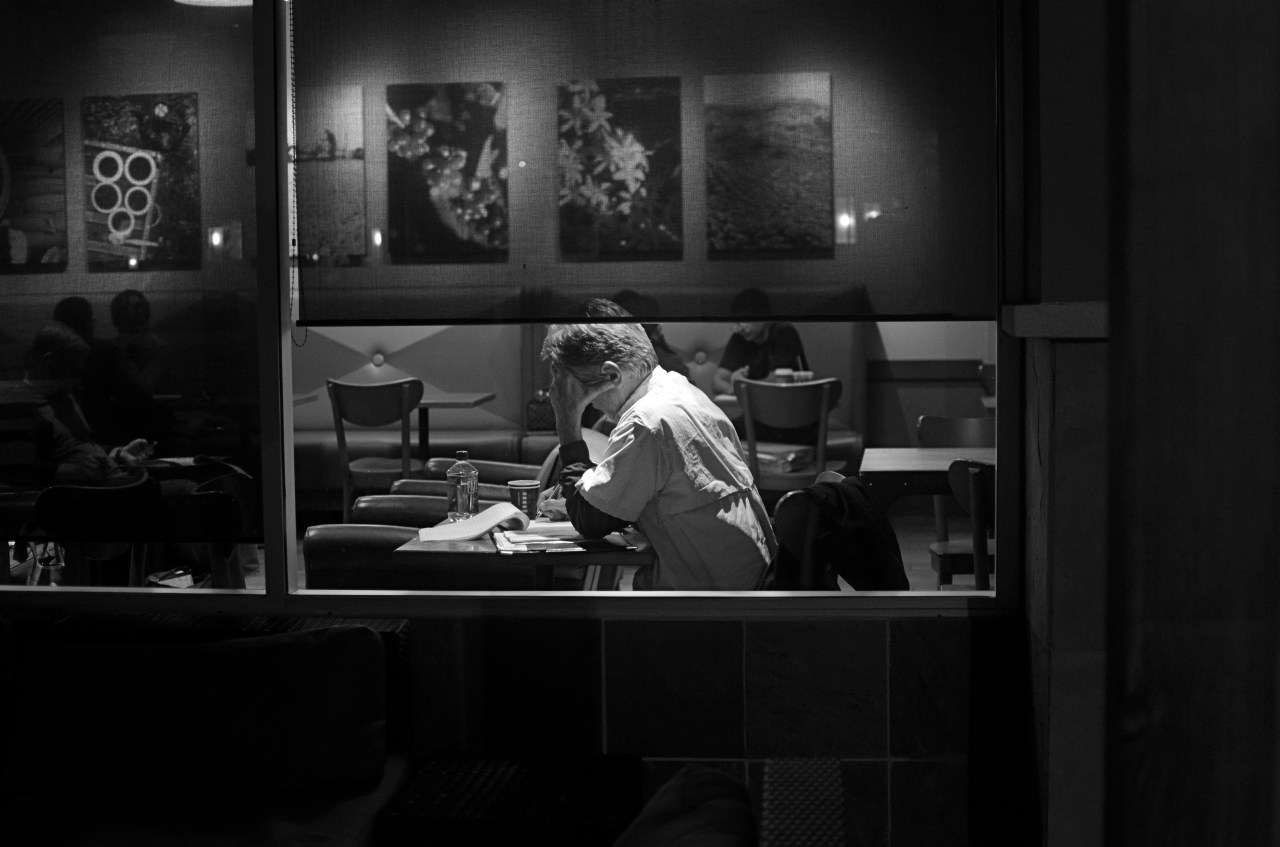
We contend with many forces in life, with the ones between the ears being the most indicative of what art we will create.
I have often told my friends, as I myself slide further into antiquity, that the greatest gift you can receive as a human being is, simply, to get wise to yourself. You must be able to catalog and identify your every limit, possibility, failing and talent, and time’s impact on all of that, to make anything of value. If you stagnate, your art will follow suit. Getting to this promontory of self-knowledge is no easy feat, as you must abandon the convenient moral habit of seeing your every failing as someone/something else’s fault, and of giving yourself sole credit for your every success. It’s beyond cliche to refer to yourself as a “work in progress”, but it is simply the signal trait of a successful life. You can’t grow as a photographer, or a potter, or a golfer, or a fry cook without steadily increasing self-awareness, and that is won only by very hard, consistent effort.
There is a reason why all of the great philosophers share some version of the admonition “know thyself”. Shakespeare famously said that if you are true to yourself, you cannot be false to anyone else. Phrase the same sentiment in the more hackneyed language of a pop song, and you get “I gotta be me”. Same message, your translation may vary. Photographs are more than mere recordings. That what seismographs are for. Creating a picture means that you start at the back of the camera (actually behind it) with an idea, then press that concept forward through the machinery like a vintner pressing a grape until the ideal marriage of willful mind and obedient machine produces something that reflects the value of both. Adjustments within the camera are mostly practice and craft. Adjustments behind the camera measure something far more precious.


Leave a comment