the photoshooter's journey from taking to making

Latest

CANYON-ADJACENT

By MICHAEL PERKINS

MANY LARGE CITIES BOAST ENORMOUS STRETCHES OF ULTRA-TALL GLASS AND STEEL TOWERS arranged in a kind of urban forest that is both broad and long. Think Manhattan, where the dense bigness of the skyline seems to stretch outward to all points of the compass at once, a town of big shoulders where all the short shoulders seem to have been crowded out, and where the amazingly new seems to nearly eclipse the old.

That idea of a solid, omni-directional bigness is not as universally true on the opposite coast, where, in many parts of Los Angeles, for example, the town’s bigness is often confined to buildings right along the main drags, with shorter, older residential neighborhoods intact, almost invisible, just a few blocks either side of that, as if the skyline went dramatically from dominoes to sugar cubes within a very brief distance. This is quite pronounced in the “museum row” or “miracle mile” section of Wilshire Boulevard, which begins in Santa Monica near the coast and makes its way northeast to the heart of downtown L.A.
_DSC3657

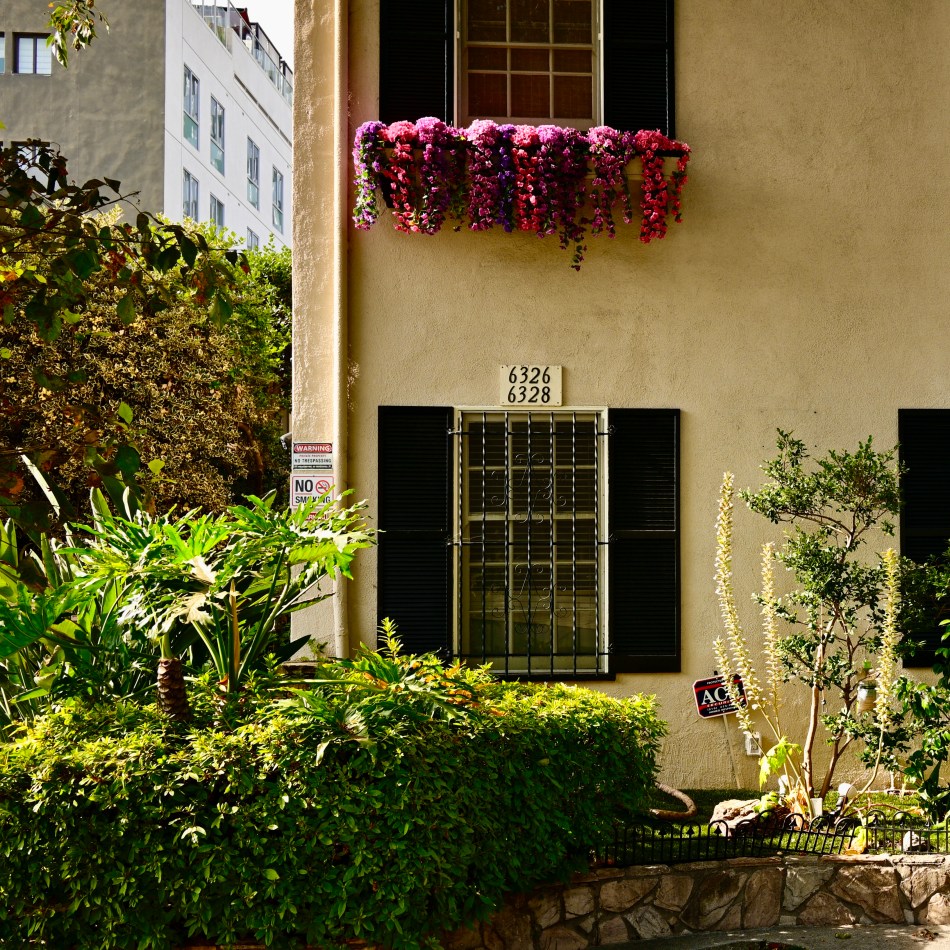
Hidden from view in the busier parts of Wilshire, and yet scarcely a hundred yards north or south of it, dozens of older districts can be found, boasting huge homes that, in some cases, date clear back to the 1920’s, largely unchanged by all the monstrous stacks of stories that line the main avenue. They are not part of the “concrete canyon”, but are indeed “canyon adjacent”. In this frame, a vintage house can stand in stark contrast to the skyward reach of its taller neighbor, almost as if the skyscrapers provide a buffer or protective wall that acts as a barrier against the encroachment of time. The average height of a structure can thus drop from dozens of floors to two, or even one, within the space of a city block.

Neighborhoods are delicate things, and it’s always a delight to see how well some of them manage to defy change, or, more precisely, to survive it, living on to assert their own identity. Los Angeles is not unique in its array of canyon-adjacent jewels, but it is one of my favorite photographic hunting grounds because of the phenomenon.
EITHER/ OR / EITHER

_DSC2941

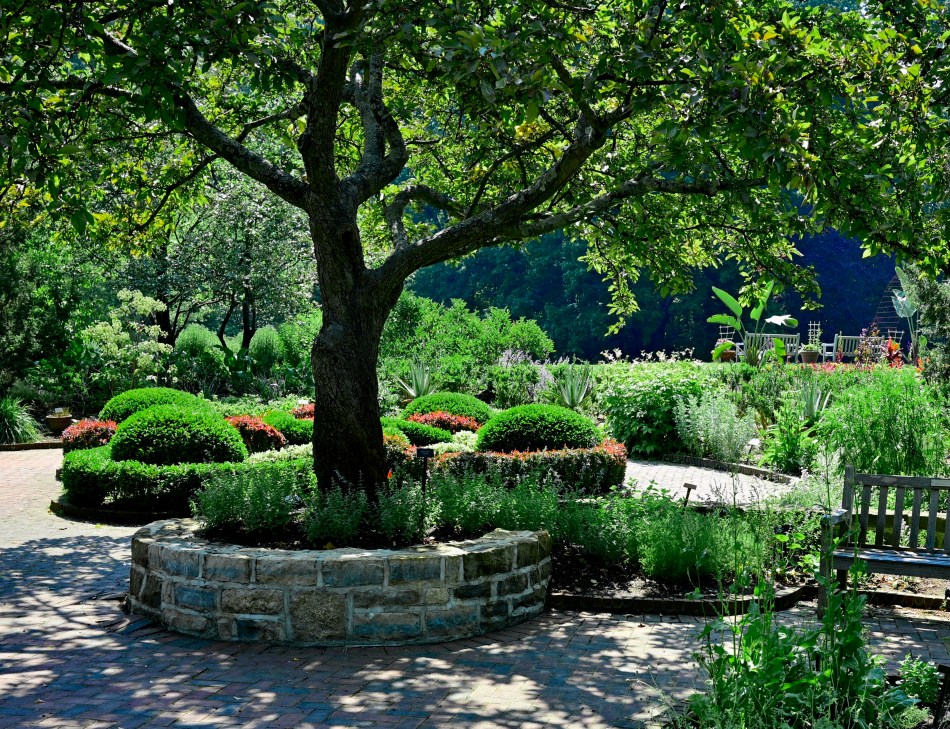
Inniswood Gardens, Westerville, Ohio, color original, 2023

By MICHAEL PERKINS

I GREW UP DURING THE MASSIVE CONSUMER SHIFT that saw most photographers, both amateur and pro, fully embrace color film, giving it real market dominance over black and white. The wind-up to the change took most of the first half of the twentieth century, given the substantial barriers that blocked quality reproduction of color in both processing and printing, problems that kept giants like Ansel Adams openly disdaining brightly saturated hues in favor of a range of tones that either seemed more objective and documentary, or at least more manageable. Color remained, until the 1950’s, the devil you don’t know, and mono was so dominant until after WWII that several boomer kids seriously asked their parents if the world was actually in black and white until well after they were born.

I was not unique at the time in that the first rolls of film I shot were Kodak Verichrome Pan. It was plentiful, everyone processed it cheaply, and newspapers and magazines still defaulted to it to a great degree. I only made the leap to Ektachrome reversal film after my father graduated prints to slides and I came to regard color as more “realistic” while gradually demoting mono to inferior status. It wasn’t until well after my teenage daughter began using Ilford roll film in a 70’s-vintage Minolta that I truly began to value the accumulated legacy of b&w, adopting Edward Steichen, Walker Evans, Margaret Bourke-White and others as honorary godparents and re-learning how less could actually be more.

_DSC2941 2

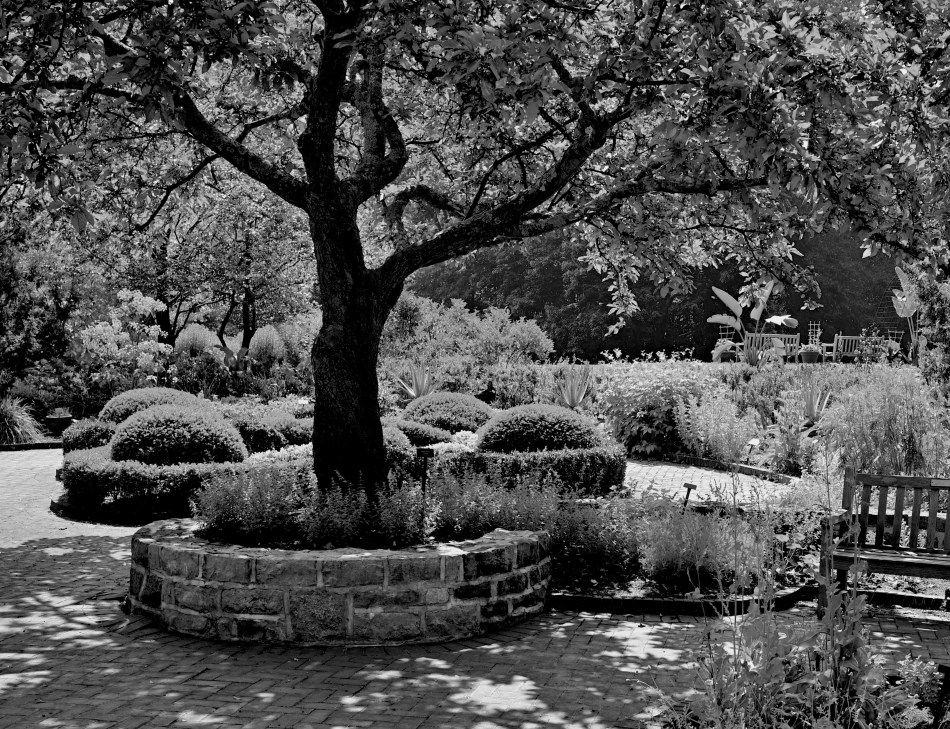
Mono conversion of above image. 

Today, I create about 20% of my shots as mono originals, although I am strongly drawn to convert most b&ws from color masters, giving myself the most options possible. The shots that begin as mono are more numerous now because in-camera pre-sets are increasingly able to simulate the tonal range and contrast of mono films, and are therefore nuanced enough that nothing seems “lost” in the absence of color. However, I still have a few hundred mental debates per year on instances where either version might be considered satisfactory, depending on your intent and mood. Some of those debates I settle: the rest are slapped back and forth like a lazy tennis volley on slow, rainy afternoons. At the very least, the ambivalence reminds me not to get complacent about when a picture’s “finished” or “good enough”, and that may actually bode well for what I’ll shoot tomorrow.

GETTING INTO IN

By MICHAEL PERKINS

AS MORE AND MORE PHOTOGRAPHERS DIP THEIR TOE into full-frame sensors for the first time, a slight re-learning curve seems inevitable. The smaller sensors that were typical on the first DSLRs taught us all to do a strange math when sizing up shots, since a cropped image was smaller by one-and-a-half times or even more than those taken on a traditional 35mm frame. This meant that some lenses shot tighter on our cameras, with, for example, a 35mm delivering a frame more like a 50 in terms of the area covered. In moving to full-frame, the process is reversed, with a 35 shooting just as wide as a 35 should, forcing us to re-think how much info we want in wide shots that suddenly seem like wiiiiide shots.

Glad as I am to have a lot more breathing room in my images, I am still being reminded that, on a really wide shot, I seem now to be very far from the center of action. Shooting mostly with primes rather than zooms, I have to take several trial shots until I hit the right balance, and, in many cases, move a lot closer to my subject. I’ve got to get further into in.

_DSC4200

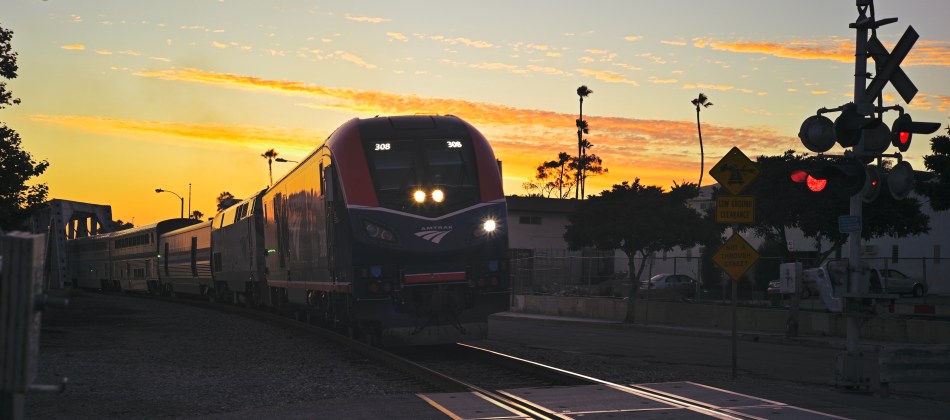
This shot of a freight train rolling through Ventura, California was shot on a 28mm lens on a full-frame Nikon Z5. I began sizing up the composition when the engine was quite far off, taking trial shots as it first emerged from under the trestle bridge seen at far left and just ahead of a local gate crossing. I was certain that my first shots would be just about perfect, but again and again I saw the train appear distant and small. I was still framing based on my old experience of seeing a 28 on a cropped-sensor, which would read roughly like a 42mm. In the end, I had to move nearer the crossing and stand so close to the tracks that my wife became alarmed, if the phrase “you’re going to get yourself killed!!” is any indication of her mood. Even so, the train seems like it’s still approaching me, not about to run over me.

Bottom line: my brain was/is still re-learning just how much a wide-angle can exaggerate the distances from front-to-back in a shot. I could, of course, have shot the scene with a zoom, but for the fact that the zoom I had with me was nowhere near as efficient in the rapidly fading sunset light, and that the bridge camera it was designed for had a significantly smaller sensor, which would become extremely noisy with even a modest boost in ISO. Far easier in the long run to adjust where I’d stand than fussing with all those other variables. I shot wide-open at f/2.8, kept the ISO to around 100, and snagged an acceptable shot. Wide-angles are a glorious tool, but in switching to full-frame, there is a break-in period as your brain resets on the rules of engagement.

MEET ME AT OUR USUAL

Star Lounge EF

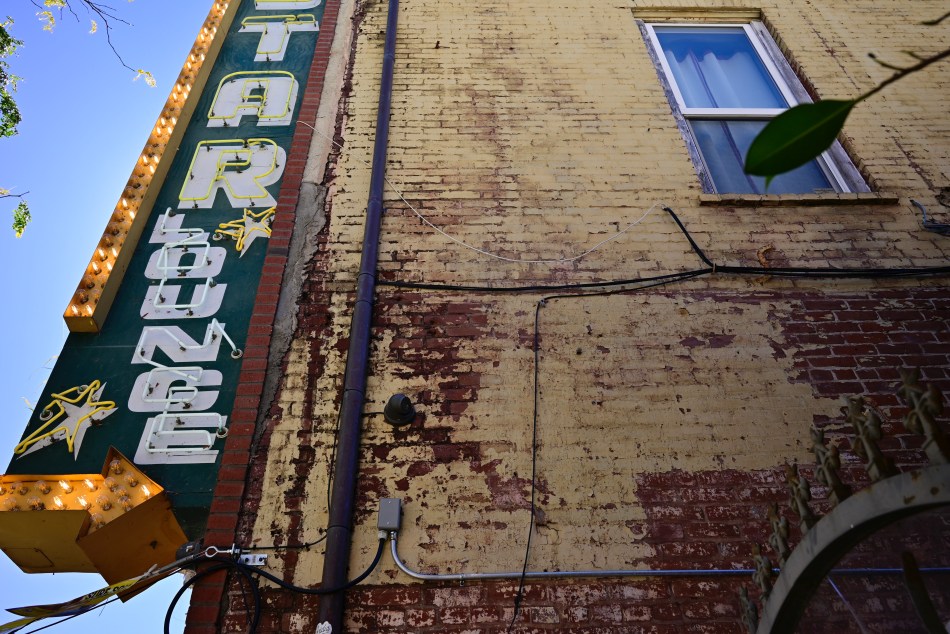
Joint redux: Ventura, California’s favorite “joint”, the Star Lounge.

By MICHAEL PERKINS

I RECENTLY READ WHAT MIGHT BE, in tavern terms, public notice of a wake of sorts, advertising the partial return of a favorite local hangout that winked out during the darker days of The Plague, capping twenty years of a generally fine stretch as an Irish pub in the main streets of Tempe, Arizona. I say “partial return” because said hangout will not be returning to its original address, but will be merely a seasonal “pop-up” within the nearby Arizona State arena district, with a small commemorative bar and fixtures from the old site on display, pulled out of storage for some strange museum effect, or, to my mind, a kind of open casket viewing. Think relics of the Titanic with a liquor license. Not exactly warm and cozy.

I have, over a lifetime, availed myself plentifully of bars, but I am nearly religious in my zealotry for what are often called “joints”. The word is elusive in its precise meaning, and we can have many a beery dispute about what qualifies this or that place for the title. Suffice it to say, however, that most joints are also bars, but many bars fail utterly at being joints. It’s a term of endearment, one which must almost always be earned.

_DSC4490 2

Right this way…

The fine establishment you see here, the Star Lounge in downtown Ventura, California, meets my very subjective criteria for a joint, and indeed is specifically known as one to the locals. As a photographic subject, you can see that it offers tons in what could loosely be called “atmosphere”. It is weathered without being seedy, unpretentious without being subtle. It’s comfy as an old bedroom slipper but still slick and busy and boisterous around the edges. Chain restaurants break their necks trying to make their mass-produced watering holes pass the joint test, and most of them come no closer than a TGIF or a Chili’s. Bars they may be; joints they most certainly are not.

I love taking images of places that have earned their slot in permanent cities, as opposed to strip malls. Joints are community assets, gathering places where great ideas are argued, great songs are sung (mostly loudly) and great reunions and occasions are arranged. In short, they are more than the sum of the accumulated furniture, which is why they can’t be replicated by merely showing off a few fixtures. Joints, in a way that a photographer can truly love, aren’t pop-ups.

They’re stick-arounds.

TURN AWAY THE STONE

By MICHAEL PERKINS

THINGS BEGIN TO OSSIFY AS WE AGE. Bones. Veins. Memory.

Curiosity.

Over time, photographers, no less than anyone else, can see their once-fluid sense of technique solidify, then freeze utterly into stone, as approaches that began as innovation descend into mere habit or repetition. Worse, such slowing of the creative muscles can be mistaken for a “style” or a “signature look” or anything that sounds better than, say, “stagnation”.

_DSC4717

Every stylistic innovation holds the seeds for future paralysis.

As we teach ourselves how to achieve a particular visual result, we pass, year after year, through four distinct phases in how we view our results. These phases determine how we regard the act of creation itself going forward, and they can be generally described thus:

  1.  I have done it this way once before.

2.   I have usually done it this way before.

3.   I always do it this way.

4.   Obviously, that’s the only way to do it.

The first phase is tinged with a bit of amazement: hey, it worked. The second speaks of comfort, the kind of casual ease that comes with relying on something that worked once, and hey, why mess with success? The third phase sees the beginning of a slow-down, a reliance on something that will be predictably safe, and, besides, it’s now a trademark of sorts, expected of me. The fourth and final phase involves the silencing of any further discussion. The old technique in question is now “classic”, the yardstick, beyond debate. Tradition. At this point, creativity becomes nothing more than replication, ensuring more and more of the same kind of pictures, veering us away from art and into the sameness of craft.

Everyday we see articles that defend artistic paralysis as some kind of grounded science. I found the way. I know the truth. We need to turn away from stone and toward an every expanding elasticity in how we see. Otherwise we are no longer photographers, but mere on-demand printers. And for that, no one needs a camera.

HUMBLE BEGINNINGS

By MICHAEL PERKINS

PHOTOGRAPHY DOESN’T NEED ANY ASSISTANCE when it comes to teaching its practitioners humility, constantly reminding the shooter that, boy, you got a lot to learn. The feedback from one’s total output, which is, let’s face it, largely composed of either near or total misses, is immediate and occasionally crushing. How can something that seems so simple be so hard to be good at? So let’s agree that the constant baseline of all picture-making enterprises is a severe whack to the ego.

DSCN4113

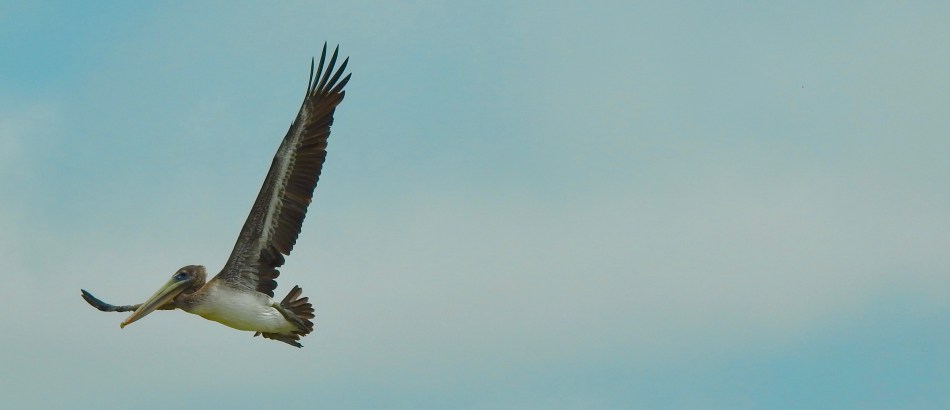
To make matters worse, piled onto that baseline are any number of additional layers of failure, as the novitiate makes his/her way up the ladder to some semblance of competency. One of the toughest such layers for me is nature work, and within that, the specially punishing hell of trying to bring off bird images. Many failures in this category are due to the shortcomings of one’s gear, as it takes at least a modest outlay of funds to get the equipment needed to capture birds under a variety of constantly changing conditions. Then there is the sheer, maddening patience that is required before you can even try to take a picture of one. Beyond the fact that, on a given day, no birds of any kind may even show up or reveal themselves, you have the golden roster of excuses: weather, foliage, distance, “the sun was in my eyes”,etc., etc. The alibis are legion, at least when I am trolling for pity as regards my own blown shots.

And even if you solve both the gear challenge (the right lens, your ability to work it well) and the search for the golden moment (are you sure the nightwings are coming tonight?), there is the problem of whether you even know how to make a picture of anything in a compelling fashion. Did you just “register” the bird’s body within your frame or did you tell a small story? Showcase something of its character? Compose for effect? Some days, you drop one more desperate nickel in the cosmic slot machine and you go home with a hat full of silver dollars, as happened in the above shot, the one salvageable image from over fifty frames taken that afternoon. Will I be back? Well, sometimes one usable pelican is enough to bait the hook and keep you on the line. Other days, you lick your wounds and curse your luck. I don’t know if that’s the same as actual humility.

But it smarts just as much.

A.L.s and E.L.s

By MICHAEL PERKINS

THE FIRST TIME I HEARD ANOTHER PHOTOGRAPHER REFER TO “art glass” I thought he was referring to a Hollywood talent agent. I guess I thought that using the modifier “art” to any reference to a lens was, at the very least, kind of a “duh” redundancy, since lenses serve no other purpose but to abet art. From wide-angles to superzooms, we program the way we choose to record the world based on the particular optic we choose. And within those choices are two very different additional paths to the pictures we are trying to create.

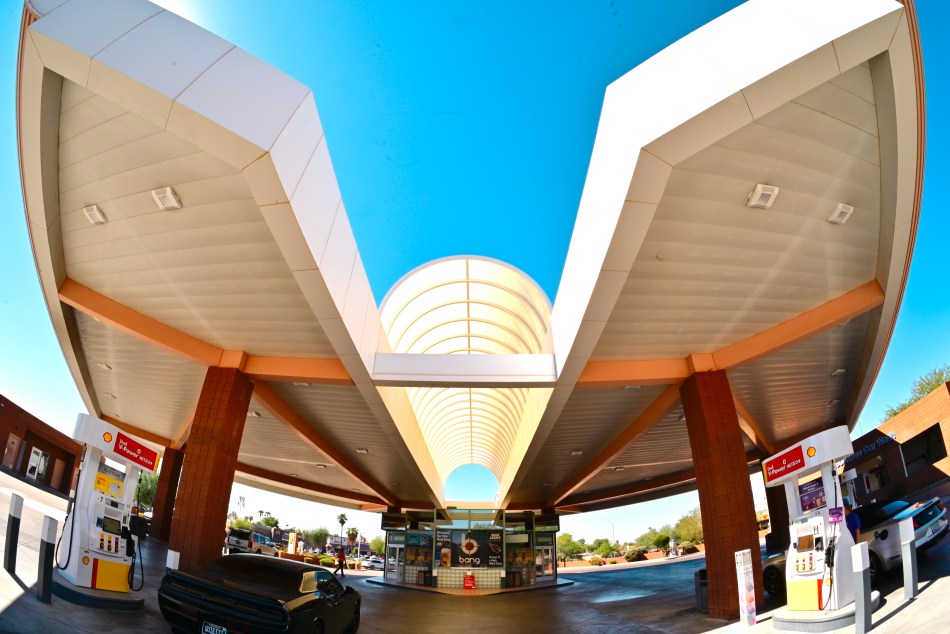
These paths begin with the selection of either an affect lens or an effect lens. If an optic helps shape an idea by enhancing its successful execution, it affects the outcome, but may not completely shape it. For example, faster lenses, or ones with a very deep focal length, help determine how a shot will come out, but the shot is not about that look per se. The opposite is true with an effect lens, where the special properties of enhancement or distortion inherent in the optic (fisheyes, macros, selective focus) can have a truly active role in shaping the final product, even going so far as to having that product be about the unique look created by the lens. Affect lenses are aides: effect lenses can do that, too, but also be the leading voice in an image, becoming, in fact, its content.

_DSC4735

The image seen here was taken with an extreme wide-angle, a f/2.8 TTArtisan 10mm fisheye, and the hardest part of working with such a lens is not letting it run away with you, and having the picture be all about, “wow, that really looks weird, man”, which is the rabbit hole that you can easily go down with an “effect” lens. For the record, there was an actual objective in shooting a gas station with this lens, which was to emphasize the wing-like contours of its architecture, something that is lost in a conventional street view of the structure, but which can be brought out through dramatic distortion at a particular vantage point. Of course, whether the fisheye helps me show what I’m seeking to show, or eclipses it with its extreme strangeness, is for others to judge. Part of me, for example, says that if I have to write a paragraph explaining what I was going for, I’ve already lost the argument. Up to you.

We often use glass as both “AFs” and “EFs” at the same time, and it can be frustrating when we are intending one thing and winding up with something completely different. But that’s merely another part of the journey we’re on in these pages: teaching the eye to not only see, but to choose the visual language essential to sharing out that vision.

THE LOVELY, THE LONELY

By MICHAEL PERKINS

SHAKESPEARE’S CONTENTION THAT “THERE IS NOTHING EITHER GOOD OR BAND, but thinking makes it so” seems an awful lot like the philosophy of a good street photographer.  The notion that all subject matter is but the starting line for a race toward meaning, and that creativity dictates that we all take our own paths to the finish line, rings as true today as it did in the reign of Elizabeth I. Like the bard, shooters come upon things or places whose contexts are incomplete, requiring that we tag them with “good” or “bad” stickers as we see fit. Cities and people shot at the speed of active life can yield results that are either lovely, or lonely, or both. The miracle is that, even though we are using a machine as our interpretative tool, the soul is clearly in the driver’s seat.

_DSC3478

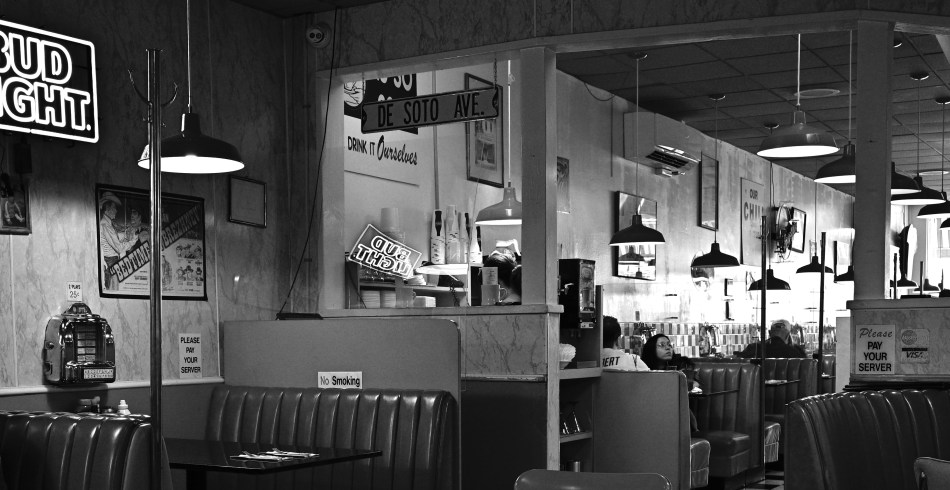
Public places like the diner shown here are like wipeboards of experience. Assemble a given set of things on that board, and the message is merriment, the enjoyment of a gathering. Then wipe down the board and arrange a few shadowy shapes. In an instant, the same board is a portal to introspection, isolation, sadness. This creative “optioning” goes across artistic lines. For example, songs mirror the plasticity of photography when it comes to interpreting spaces. One composer looks at a neighborhood joint and writes Roll Out The Barrel, We’ll Have A Barrel Of Fun, while another views that same hangout and pens It’s A Lonesome Old Town When You’re Not Around. Like the photographer, the songwriter sees what is and asks whether it would be better off being something else.

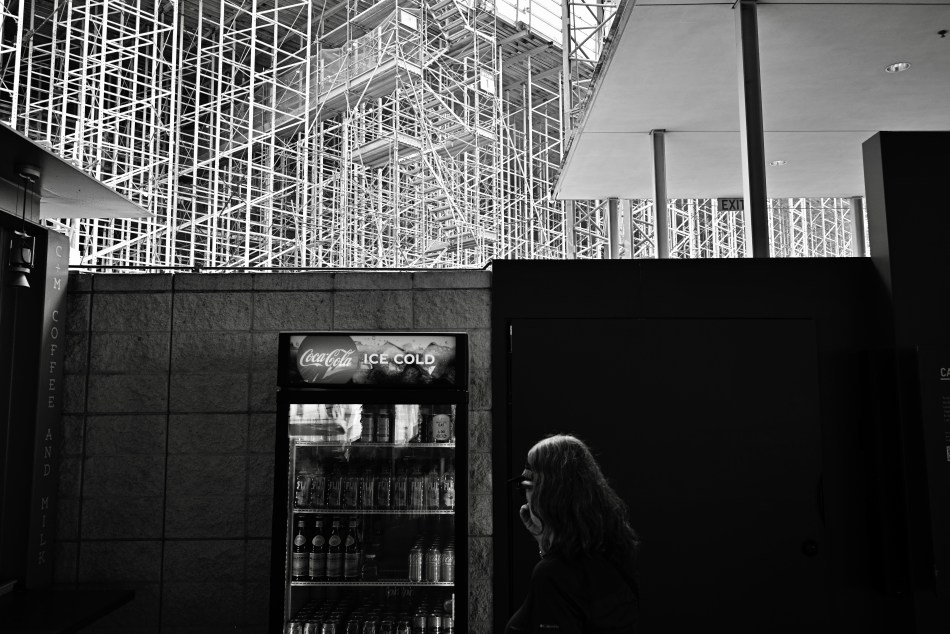
The burger palace seen here, built to recall the simpler times of the Happy Days era, is, in its natural state, fairly exploding with color, most of it Coca-Cola Red. It’s impossible to make the place look moody or poignant with the distraction of all that splendor, and so I did the master shot in mono, since converting a color shot didn’t render the same contrasts. In reality, the place bears the jolly name of the Busy Bee Diner, but, in my view, it works better as the Last Chance Cafe, and so there you are. Shakespeare, had he been born after about 1800, might have delighted in the camera’s ability to shape perception, much as Lord Hamlet loved to cast his Danish gloom over everything in his path. Of such things are plays and pictures made.

TURNING THE PAGE

By MICHAEL PERKINS

DURING AN INTERVIEW EARLY ON IN HIS DIRECTORIAL CAREER, Martin Scorcese once confessed to (gasp) a crime.

Relating stories of his poor childhood to a reporter, he rhapsodized about how essential his local library was in his younger years, especially the very few volumes dedicated to cinema history in the Queens of the early 1950’s. He had his favorites, and borrowed them as frequently as he could, but the images within one special work, Deems Taylor’s  A Pictorial History of the Movies, burned their way into his mind in a such a singular way that he simply could not bear to part with them, and he succumbed to his passion by ripping out selected pages and spiriting them home. Hardly the stuff of Goodfellas, but, as a fellow book nerd, I can relate.

And, as a photographer, I am still falling madly, deeply, weirdly in love with books, and in many cases, I find it torture to prevent myself from “pulling a Scorcese” and carting the odd volume away. The elegance, the design, the permanence of books penetrates to my soul, and so it’s fortunate that I have had a camera on hand when eyeing other people’s libraries over the years; it’s kept me out of the pokey.

_DSC3598

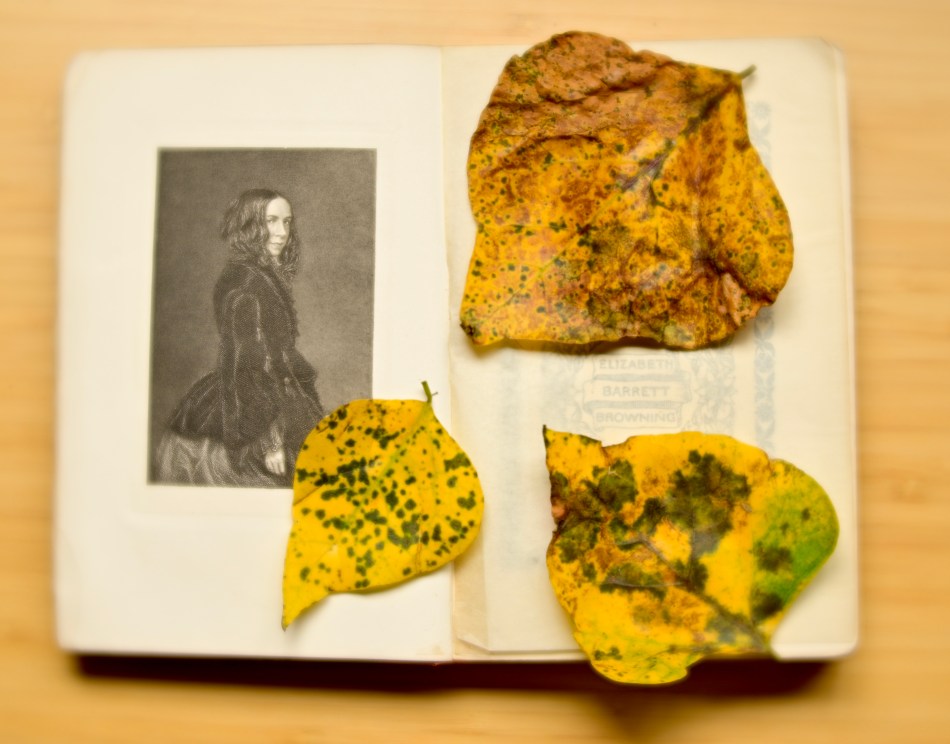
In the case of the collection of Elizabeth Barrett Browning poems seen here, “our” meeting was most random. Marian and I rented an AirB&B for a recent vacation stay, a lovely little casita outfitted with wonderful taste by its owner, who truly went the extra mile on decor, making the space resemble a cozy, settled household rather than a rental unit. One of the nicer touches was her use of variously sized books, the kinds sold in lots as visual props, and available from many design houses. Most were recent novels of no distinction, added merely for color and texture, and so the Browning volume was striking in that it looked not only a great deal older, but was also more intricately detailed and designed.

It was a triumph of little touches. Its title page illustration of Ms. B. was protected by a delicate tissue (still intact). Its binding was gnarled and pebbled. Its pages were  slightly browned at the corners. Its typefaces were elegant and intricate. I seriously teetered for a moment on the brink of “should I snag this?” but defaulted to a tabletop homage instead, making the old poetic word for pages, or “leaves”, into  literal bookmarks, and using a Lensbaby Velvet 56  for a soft, ethereal glow. And so, without resorting to thievery, I now owned something of the original book, and yet something uniquely mine as well. That’s what a photograph can do; it uses reality as a mere point of departure, with the ultimate destination  anyone’s guess.

ONCE MORE, WITH FEELING

By MICHAEL PERKINS

THE ESSENCE OF LIVING IN A CONSUMER SOCIETY is being regularly encouraged to discard the past, to believe, as did Henry Ford, that “history is bunk”, that, in the interest of selling more and more goods, any and every thing we might hold dear must, instead, be held in contempt, as tossable, replaceable, impermanent. We have now spent nearly two solid centuries living under that instinct, and, as they say, look where that got us. We are urged to discard the things we once loved so we can love their newer, sexier replacements.

This puts photographers on perpetual alert, since part of our function is to mark transitions, those quick flips between the established and the endangered. Grand, sprawling coverage of the vanishings in our cities, for example, have been created by the likes of Eugene Atget, who documented the decline of old neighborhoods in 19th-century Paris, and his pupil Berenice Abbott, whose Changing New York project recorded the same shift in that city’s five boroughs in the early 20th. Photography is the only visual art that is responsive enough to try to keep pace with the accelerating rapidity of change, and even it falls short, in that things are going away faster than we can memorialize more than a small percentage of them.

_DSC3788

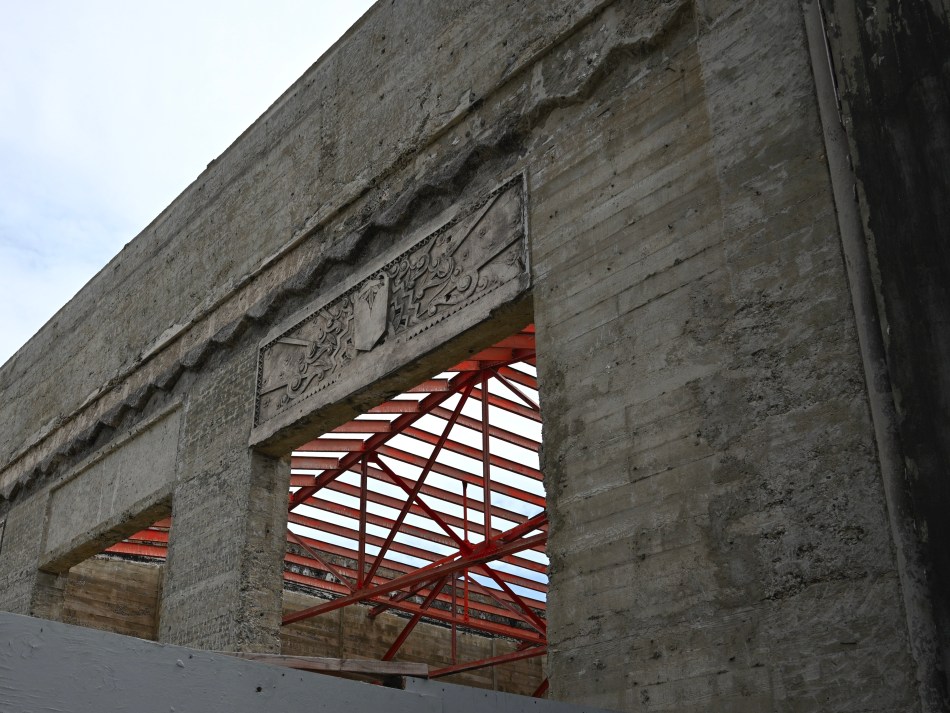
It falls to the individual photog to select which transition stories to tell, where to spot both vital and trivial shifts in our love of things, as well as our crazed craving for the ever-new. Epic or incidental, all change is a commentary on our priorities. In the case of the above image, it signaled to me that someone in the ever-shifting mix of retail in Santa Monica’s Third Street Promenade thought that the shell of an old Art Deco building deserved to stand just a while longer, albeit gutted and repurposed throughout. The same building in a different area in a different time might have met a very different fate, but this one will fend off the executioner for a while longer. Consumer societies are hard-wired to chuck out the old in favor of the new, simply because it is new, or at least that’s been the pattern for a long, long time. The recent emphasis on “once more, with feeling”, stressing the repurposing of our material goods, deserves a chance as well, though; and that presents a universe of fresh opportunities for the making of pictures.

POWERING THROUGH

By MICHAEL PERKINS

IT’S A FACE THAT’S BALANCED ON A KNIFE’S EDGE, teetering between courage and despair, desperation and aspiration. And it’s a face that we, as photographers have not only seen before, but have, in a very real way, inhabited before.

The face of someone struggling to power through.

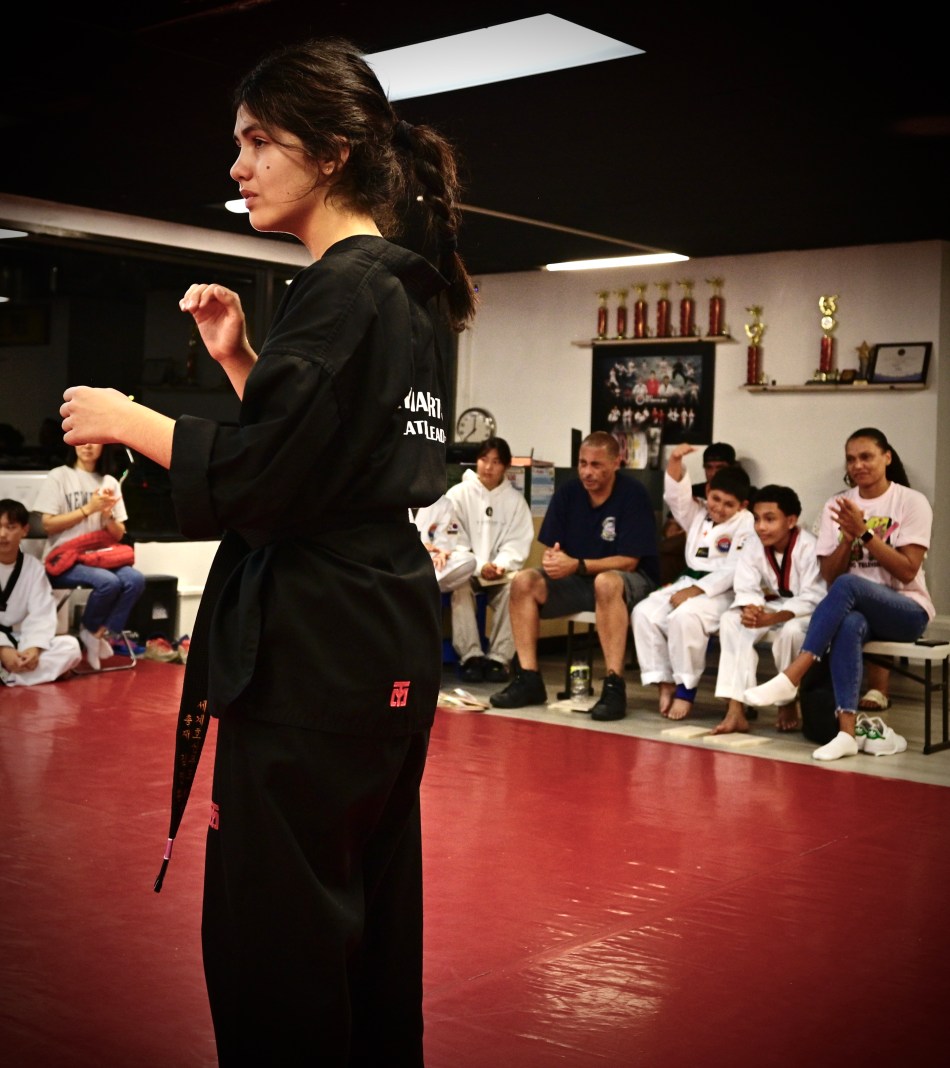
It was that utter familiarity, that universality that, for me, visually distinguished the face you see here to me, amidst a crowd of dozens of young taekwando students, all gathered for various exercises that would determine their individual readiness to advance in rank. I was actually there to photograph my wife’s grandson, but this young woman drew my attention again and again throughout the evening. At first, her face seemed merely stoic, noncommittal, maybe even blasé or bored. In fact, as I was to learn, it was a disguise of sorts, a brave mask concealing an increasingly keen state of anguish.

_DSC4410

Thwarted not once but nearly eight times in trying to shatter a board, her movements had become slower and more unsure, as the physical toll of each attempt visibly compounded itself. I had taken random shots of almost every crack she took at the board, and she had maintained most of her protective mask for nearly all of them, but, In the frame you see here, she was clearly in a horrible space between embarrassment, agony and anger. This particular shot does not show the small glistening of tears visible in the images that follow it in sequence, and yet, in a very real way, her every feature is crying. Crying because she is uncertain if she will be able to please her instructor, her family, herself. Crying because, for this instant, she is trapped, truly trapped inside an uncertain moment that must seem to last an eternity. It is the face of all of us, at one time or another. There’s fear in it, but also resolve.

Minutes after this was taken, she did finally succeed, then slinked off into the outside hall to spend the rest of the class recovering near her family. It wasn’t a triumph; it wasn’t a failure. It was something else entirely, this powering through. I stopped as Marian and I and her grandsons prepared to leave and told her I thought she was very brave. She uttered her thanks, but her face had once again become a cipher. I hope she heard me. She had indeed managed to avoid shattering her foot, but she could not know that she had, incidentally, broken my heart.

WHATEVS AND INEVITABS

By MICHAEL PERKINS

JUST LIKE PARENTS IN SOME FAMILIES, PHOTOGRAPHERS HAVE THEIR FAVORITE CHILDREN, those images that require no effort whatever to love. You have some of them yourself, I’m sure; the shots where everything in the concept came home perfectly, where idea and opportunity and execution locked into place like the final triumphant click of a Rubik’s Cube. And then there are, within your selfsame life portfolio, photography’s problem children , the kids not living up to their potential, “troubled” in some way. Their exposure or composition’s off. They’re rambunctious. Technically or conceptually, they won’t sit up straight and eat their vegetables.

_DSC3681

Poor Orphaned Thingy #463, 2023. I don’t know what this is. Why ask?

As with a parent, the expected reaction of a photographer is to praise the kids/photos that got all “A’s” and lament the wayward kids/photos that underachieved. But many photogs I know actually take the opposite approach, embracing the strange, oddball images that make no sense to love, while taking the A-list stuff for granted, maybe even stifling a yawn at the sight of them. As I have stated here several times over the years, my “orphan” shots are infinitely more fascinating, and certainly more instructive to me, than my sure-bet pictures. It’s not that I don’t cheer when I get things right; it’s more like I recognize a truer, if more raw energy at work, one I realize from my first days with a camera, in the shots that I can’t explain. With some of my “whatev” images, I can’t even convey to someone else either what I was going for or why I like the result. The picture just had to be done, and just is. In that way, it’s not only a “whatev”, it’s an “inevitab”.

I fervently believe that influential photographers, even as they assemble monographs of their best work, should also anthologize their weirdest. Stuff with no commercial potential or market. Shots that cannot even be captioned, since their origin exists only within some dark little basement of the shooter’s mind. It’s important that we celebrate the raw ideas that come into our head, since they have the same basic DNA as our keepers, and will no doubt someday be components in pictures that we may eventually count among our favorite children.

CONTACT STREET

By MICHAEL PERKINS

FOR STREET PHOTOGRAPHERS, ONE VERY SAD BY-PRODUCT  OF THE PAST TWENTY YEARS has been the incursion of the cell phone and its impact on the shooter’s art of chronicling life in the raw. Sifting out the potential keepers in a day’s work shooting among the public now consists largely of image after image of people turning inward, holding conversations with no visible partners, their faces frozen in the permanently bent, blank dataflow which now passes for life. It’s boring to look at, disheartening to witness, and death for pictures. The beauty of solo thought or quiet contemplation that used to be the harvesting field for street work is winking out of existence, one redundant text at a time. To photograph a person on a phone is to repeat the same dreary image of isolation over and over ad nauseam.

That’s why, in recent street shoots, I now search out groups of two or more people, just to show persons  in actual, active contact with other persons. The back-and-forth of shared experience animates the face, and the street is once again filled with humans rather than mere ambulatory receiving stations. And when I go looking for visually clear evidence of this sort, I eavesdrop on the friendship of women.

_DSC3782

This is all my own subjective view, of course: however, to my mind, women speak to each other in emotionally layered engagement, a physical reinforcement of their connection that is starkly different from the talking that occurs between men, who, even when they are standing alongside each other, look like they’re either waiting for a bus or queueing up for a physical. There are exceptions, of course, but when I’m looking for street subjects that look like they are actually involved with each other, I look for two or more women chatting.

Generally speaking, and in ways which greatly inform candid photography, men share information, data, or analysis, while women share all that plus feelings. They move beyond mere transactional talk into vivid communication. Images reveal the underlying connections between people, all the more eloquent because they are not always intending to show them, or are unaware of the clues that they unwittingly share out despite their best efforts. The world doesn’t need even one more lonely picture of a person on a phone, but true pictures of people experiencing a genuine connection will always surprise and fascinate. And for me, there is a qualitative deepening of that connection when it’s shown on women’s faces. If you want to know the ball score, ask the guys. If you want to know the real score, ask the girls.

A TERN FOR THE BETTER

DSCN4157

1:45pm, August 24, 2023

By MICHAEL PERKINS

BIRDWATCHING AND PHOTOGRAPHY FORM A PERFECT NATURAL SYMBIOSIS, the kind of interlocking of passions that’s been a particularly satisfying bond between my wife Marian and me. The simple division of labor involved (she spots ’em, I snap ’em) allows us both to approach the task from our respective strengths, overlapping in a shared purpose that teaches both of us about looking and waiting. Often, events out in the wild unfold slowly, almost imperceptibly so. And then there are days when change comes in like a sudden surge of surf.

DSCN4180

1:47 pm, August 24, 2023

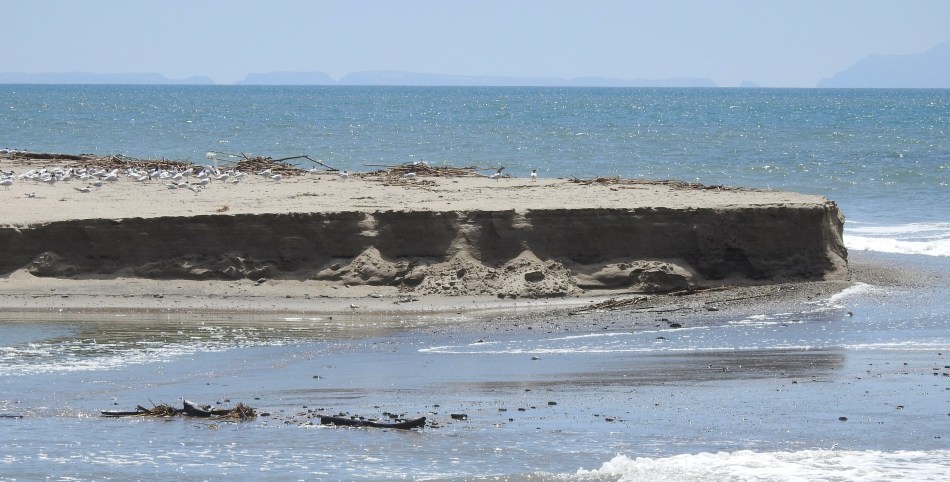
These images come from a recent walk along the stretch of oceanfront near the confluence of the Pacific Ocean and the Santa Clara River, which meet in an estuary just downwind from the busier beaches of the Channel Islands National Park in Ventura, California. It requires about a quarter of a mile’s walk away from the madding crowd, but local birders know the payoffs are real. Our first glimpse of the enormous rock shelf situated right next to the tidal line (top) showed it stark and empty, but, just two minutes later, a massive flock of terns  was holding a reunion from end to end of the crag (above). Even in a static picture, the transition was/is stunning.

Much of birdwatching is an exercise in patience, with many days of hiking and neck-craning yielding next to nothing aside from a decent walk. Thankfully, there are also days when Nature comes bounding into view with a suddenness that takes your breath away. You see the rhythms of the world, cycles that are rooted in millennia of repetition, drumbeats of life that predate you and will continue after you as if you were never here. The humility forced on one when faced with the inexorable ebb and flow of Life on the planet eventually informs everything else you do, and certainly shapes your observational skills. It’s a forced cooldown, as well as the greatest display of existence asserting itself, striving to compete, to adapt, to thrive, skills which would be well emulated by anyone aspiring to art.

COMFORT

By MICHAEL PERKINS

Home is the place where, when you have to go there, they have to take you in.—Robert Frost 

PHOTOGRAPHY IS ABOUT BOTH SUBSTANCE AND SYMBOLS, about showing things in their most minute detail, and, alternatively, also about suggesting volumes with simple arrangements of light and shadow. I began my professional life as a writer struggling to fully explain the world, documenting everything from mountains to grains of sand with meticulous accuracy. It was exhausting, and I imagine that it exhausted whatever readers I had at the time as well. Over the decades, I became comfortable with talking less and saying more, especially when it came to the important things like Love, Truth, Knowledge, even the creative act itself. That evolution had the principal effect of streamlining my writing, but it also simplified my approach to photography. I don’t always express the important ideas of life in the simplest terms, but the effort is there.

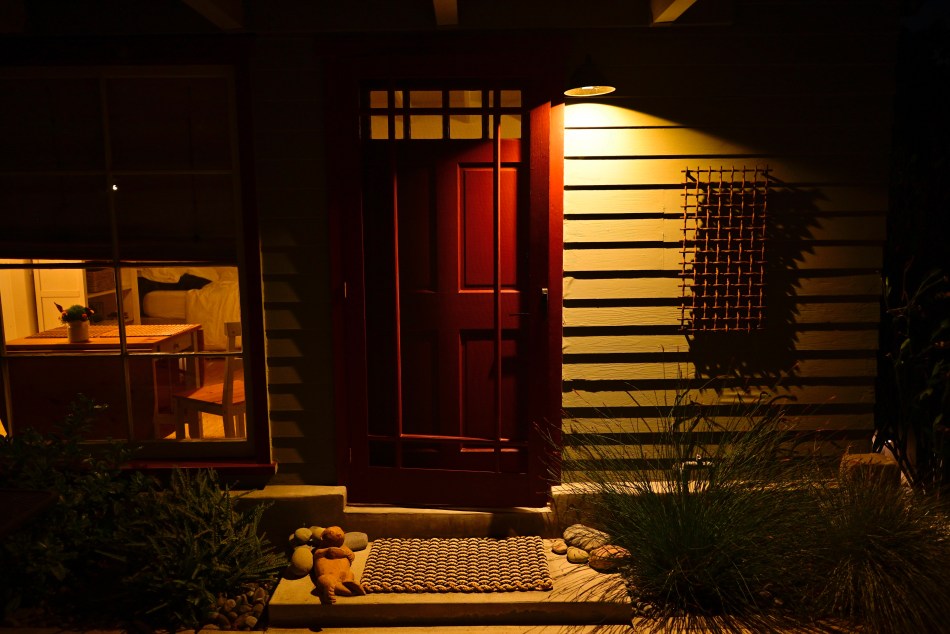
_DSC3883

When it comes to a concept like “home”, I really try to take all the thicker poetic, philosophic and emotional implications of the term and reduce it to the simplest visual symbols I can muster. Buildings instead of the people within them. Stark compositions of color and shade, with an emphasis on under-exposure whenever possible. A muting of the decorative clutter that complicate the impact of a home, with a focus on doors, windows, paths. Strong rectangles and triangles. Lighting that hints at things instead of spelling them out.

As I say, I still waver from a simplicity that, by now, should be an article of faith. Sometimes I use the camera to blurt out a paragraph when a half-sentence will do. In this image, which is not of my own house but a casita I was renting on vacation, I am trying to convey the idea of what the psychologist Christopher Lasch called a haven in a heartless world, or Frost’s concept of a place where “they have to take you in.” The interlocking rectangles and squares, the warm red of the door flanked by the yellowish porch light, the amber tones through the window, and the simple straw welcome mat all combined to form a kind of comfort food for my eye, and I made the picture very quickly. This is not the way to think of “home” merely a way. But it is in finding our own truest ways that we make our truest images. And, more and more, mine run truer when I manage, in small ways, to speak smaller, not bigger.

BACK TO BEING…A BEING

By MICHAEL PERKINS

VACATIONS ARE HARD WORK.

To be clear, lying poolside and trying to flag the waiter for uno mas of whatever’s in this drink is not as labor-intensive as, say, shoveling concrete. It’s just that applying mental mastery to the process of letting go can require practice, “focus”, if you like, for both man and camera. Doing nothing is actually just doing another kind of something, and figuring out what that something is shapes the kind of pictures you make while “taking it easy”. Like everything else “vacay”, I often feel like I’m just beginning to get the hang of things just when it’s time to pack up for home.

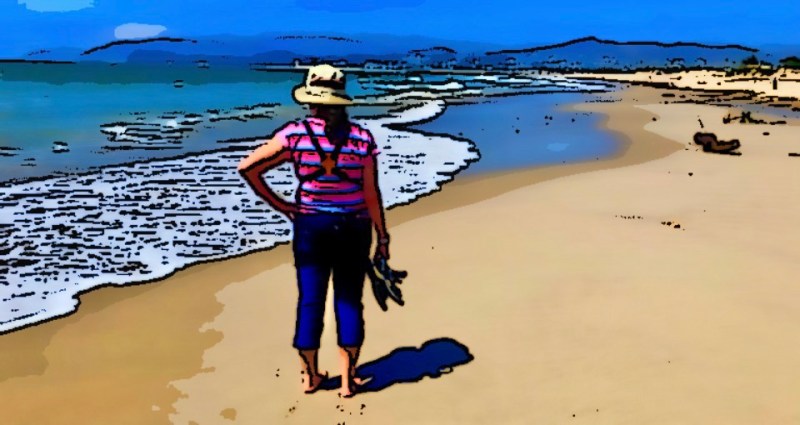
It’s not just that you shoot “looser” or more instinctively when on a trip, although that can certainly be a factor. It’s the intangibles as well. You’re not only evaluating, in the relaxed setting of a holiday, what a photo is for, you’re also making different judgements of what things are worthy of a photo. And then there are equipment issues; for example, when away, I tend to divide my work almost equally between a cel phone, on which I use a narrower, if more dramatic array of post-production remixes (see above) and my full-function mirrorless, with which I almost always shoot straight out of the camera.

In many vacation situations, the cel also acts as a kind of first-take “sketch pad” reference for ideas that I later finalize on some other device. And all of this is operating in my backbrain while my forebrain keeps nagging me to relax, damn you. But sometimes the magic breaks through. I can actually come home from time away with a small yield of pictures in which I managed to see a little differently, or somehow got out of my own way to a greater degree. In such cases I re-experience a part of the thrill I got the first time I put my eye to a viewfinder.

Now that’s relaxing.

EVERYTHING IS ON THE HOUSE

By MICHAEL PERKINS

THE MODERN-DAY FOOD TRUCK has brought back the concept of what used to be call a stand, as in hot dog stand or hamburger stand, a self-contained place where food was sold on the spot over a counter and usually by the side of the road. The customers were always served outdoors, because, unlike with a standard restaurant, there was no “indoors” as such. Following the nationwide expansion of the automobile in the 20th century, stands were situated wherever brief stops and quick eats were required by an increasingly mobile America. Photographers immediately fell in love with the individualistic, even quirky visual signatures of these small businesses.

One of the hallmarks of the stand was the time-saver of listing the joint’s entire menu on the front of the place, a kind of “this is what we have” simplicity that is now the hallmark of Food Truck Nation. The other place where single-purpose stands still survive, in an age of Denny’s and Burger Kings, is on the shabbily chic streets of beach towns, like this Thai takeaway in Ventura, California. Just a block from the ocean, this stand truly lives up to the phrase “everything is on the house” as the bill of fare is literally the entire front of the place. I don’t know if the stuff is delicious, but it sure ain’t pretentious.

I love places that have managed to thrive despite coloring outside the lines of corporate commodification. They offer hope that the American dream is still an individual vision, both for the stands and the artists of the world.

EVERYTHING, IT’S NOT


By MICHAEL PERKINS

PHOTOGRAPHERS ARE CONSTANTLY UPDATING THEIR VIEWPOINT ON ENDURING SUBJECTS; we never make just one sunset, nor do we think that our first portraits have to power to define any person for all time. Rethinks become re-takes; one day’s verity becomes a later day’s uncertainty. In making images, we not only catalogue what a thing is; we also attempt to reveal what it no longer is as well.

What you see here is the first dedicated “record shoppe” I’ve stepped inside in many years, although vinyl itself has been “back”, if you like, for nearly a decade. During that time, I’ve seen many book or department stores and artsy boutiques launch new, limited record sections here and there, but have found few stores that are completely dedicated to evoking the spirit of the all-vinyl era of my youth….the wood crates, the album cover wall art, the overall hippie/head shop vibe. This joint, located in a comfortably funky section of downtown Ventura, California, met all the visual criteria for a poignant memory jog, and yet my pictures of it seem less than substantial somehow.

For me, record shops were my community center, neighborhood hang, local pub and church, meaning that, for that part of my life, I was bringing something to the experience that certainly wasn’t present in just the discs and black light posters alone. And, that being true, there would be no way to capture that feeling, or its lack, in a photograph.


Some banishments or changes wrought by time are easily measurable with a camera, while other times, our attempts to show how our attitudes have changed toward a given subject may not be mechanically recordable, however keen our emotions on the subject. I am now well clear of the allure of the long-playing record. And while I have an affection for a time when such things were central to my existence, just wandering into a record shoppe won’t absolutely me to make a picture of everything it isn’t.

THE WAITING GAME

By MICHAEL PERKINS

THE SAYING “HURRY UP AND WAIT” may be most closely associated with the maddening stop/go cycle of events in the military, but it certainly also applies to anyone who serves the public for their living. This is especially true in small business. Not for nothing is the work of independent retail referred to as “waiting on” the customer, with most of the waiting spent in dead stretches until the next prospect actually walks in the door. 

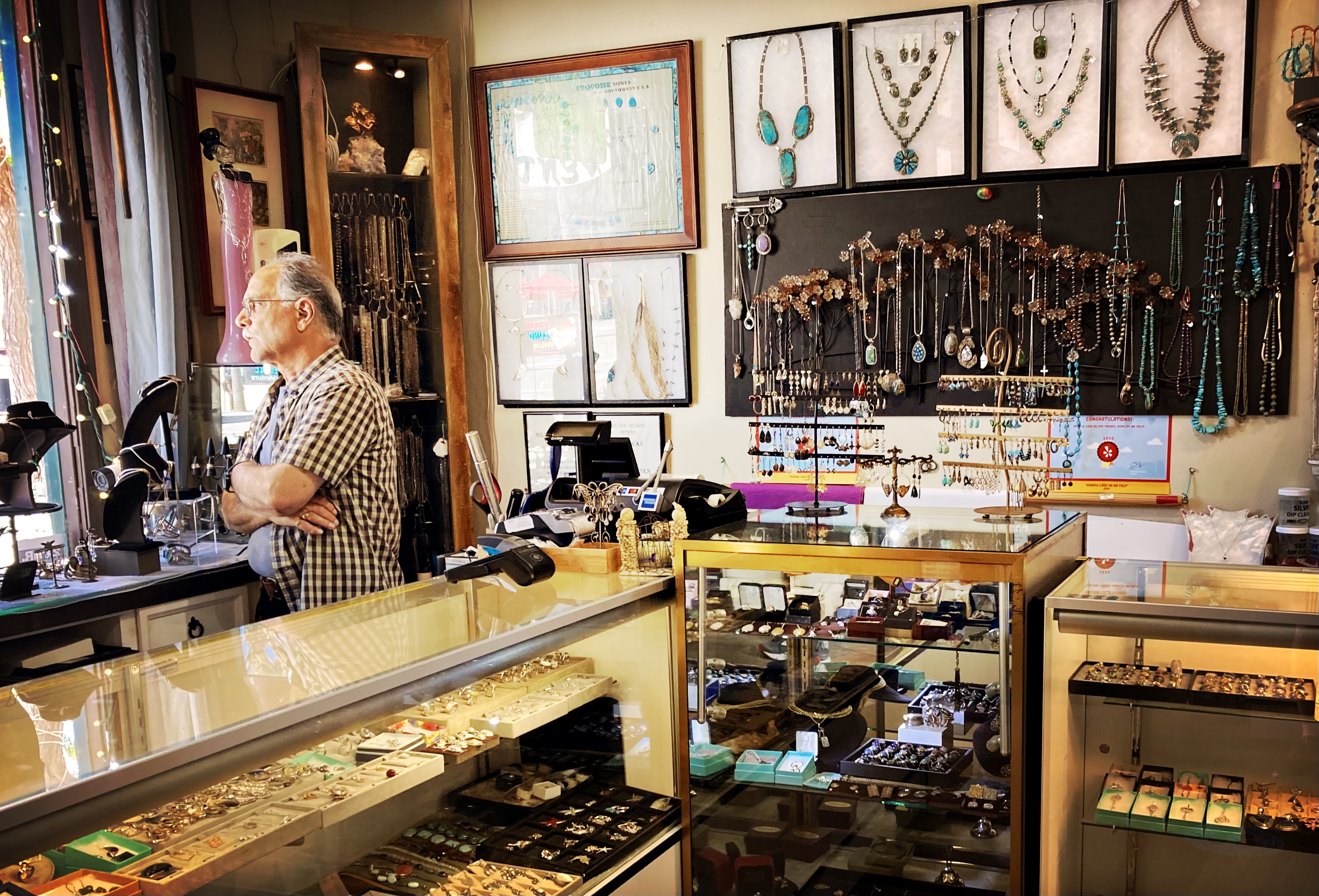
For photographers, small shoppes offer unique canvasses. Unlike the designs of chain stores, in which themes and decor are standardized on a nationwide basis, the layout of locally owned stores is as personal as a signature. The choice of where and how to mount displays, stock, even mementos is as personal as it gets, making every establishment a unique statement. But the arrangement of space is only half the equation; the other half resides in the physical presence of the proprietor.
HipstamaticPhoto-714092265.320752

Snap a local shopkeeper and you’re exploring the face and body of the decision maker. The person who has the greatest investment in the outcome, the man or woman whose fortune is on the line. Someone who is rooted into the neighborhood, who knows who will buy and who will walk. Most importantly, his or her movement within the space tracks the technique of the shopkeeper’s most essential skill: waiting.

Images based on emotion, even the quiet, slow kind, are rich harvesting grounds for photographers. Showing the engagement of the heart and mind builds strong stories in pictures, since they are more persuasively about hopes and dreams. 


SIMPLER DAYS, SMALLER DREAMS

By MICHAEL PERKINS

SMALL TOWNS ARE OFTEN ROMANTICIZED as places “where time stands still”, a label which speaks more of sentiment than reality. Our desire for a return to our personal Edens, the cradles of our formation, fires the imagination with a flurry of “what ifs” and “if onlys”, creating a fond longing for the impossible little burgs where such fantasy havens reside. Photographers, like the rest of us, hunger to capture signs that there might be a realm where the insane clock of progress is at least slightly slowed. It doesn’t take a lot to sell us the illusion.

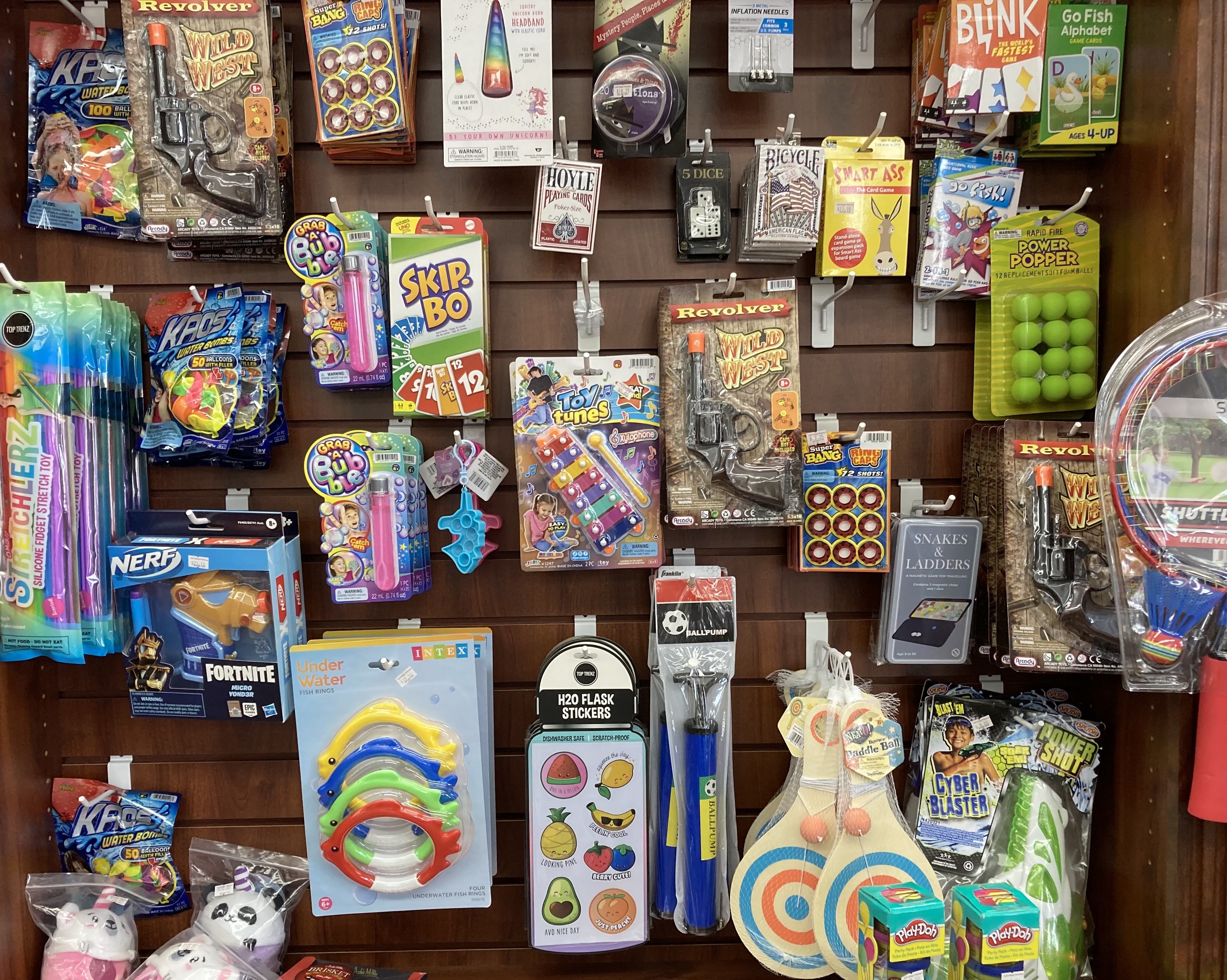
IMG_4450

Hence the strange compact pocket of commerce seen here, found in a corner of a little pharmacy in Ojai, California, encompassing the store’s entire “toy department”. And what toys; the lowest-tech collection of kid stuff to be found this side of 1958, pastimes and playthings that seem to have rocketed from the heyday of Dennis The Menace to the microchip era by magically leap-frogging past the Nintendos and pocket screens of the ‘70’s, 80’s, and 90’s. I mean, paddle balls? Bottled bubbles? Cap guns? “Go fish” card games? Holy Cold War, Batman, where did I put my skate key?

This image completely composed itself, as framing it just a few inches in any direction would have placed the viewer back in the land of contemporary meds and nostrums, unmistakably dreamless totems of the 21st century. The result is a strange kind of border region; a perimeter of “Adult” junk, cheek by jowl with a portal to simpler days and smaller dreams, a place where you measured a kid’s value by how well Suzie could negotiate the gyrations of a jump rope or whether Bobby could make it to his “fivesies” with a set of jacks. A world in which all the grand dreams of childhood could reside in one small corner of the local drugstore, snugly stored between innocence and awe.