SPITTING BACK THE CANDY
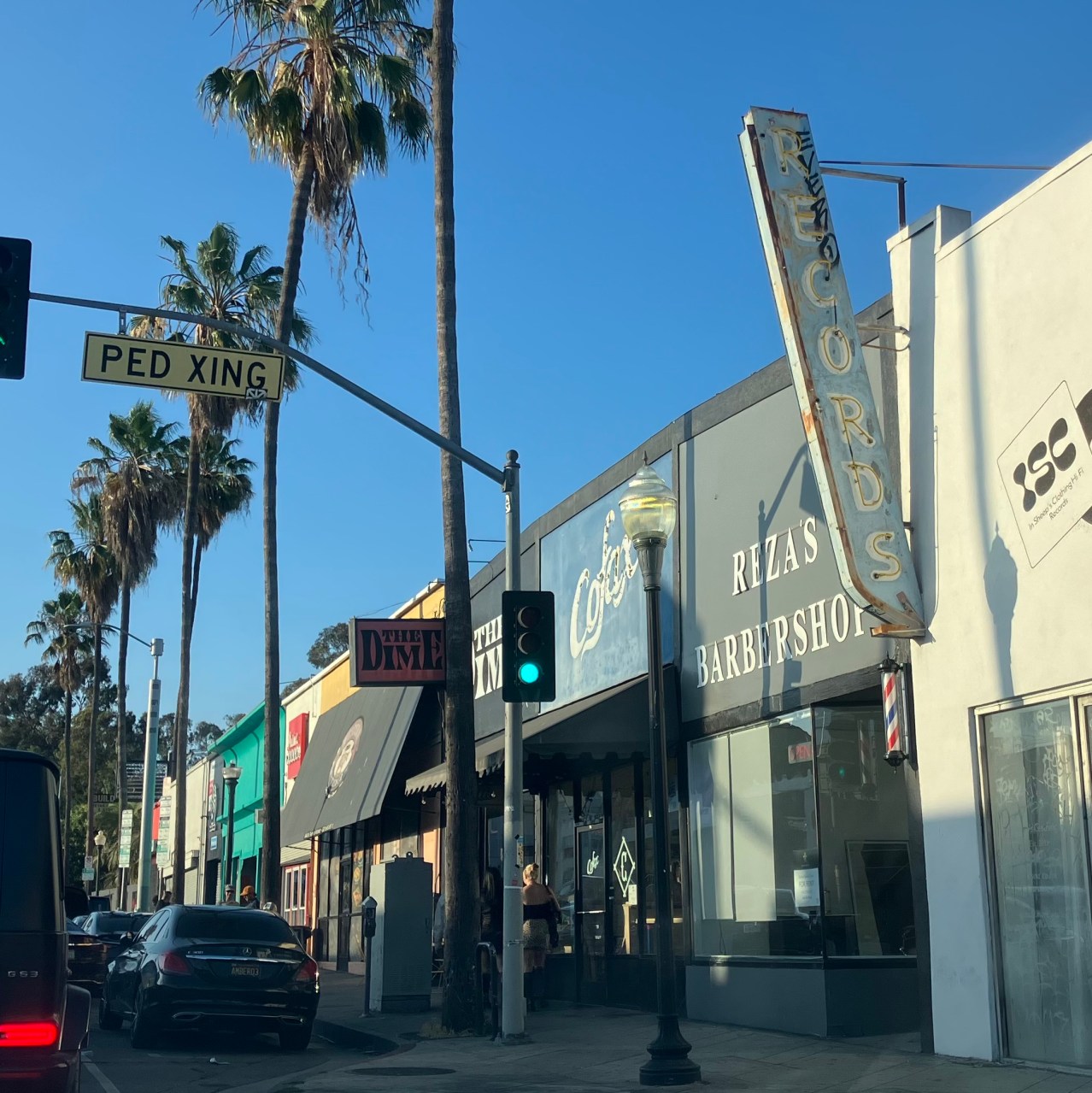
A straght-out-of-the-iPhone shot. Not remarkable, but not bad, and all my own.
By MICHAEL PERKINS
IT HAS TAKEN ME SOME TIME TO SORT OUT MY FEELINGS about the onrushing tsunami of interaction between photography and artificial intelligence. I have tried to see this tech wave as a bounty of new, useful tools, or a step toward greater efficiency. I really have tried. But I can’t get there, and now I fully understand why.
Creativity is often a collaboration, but it is a human function, and so, even collaborators in any creative act should be aligned in their common humanity. Humans have a distinct way of viewing problems, assessing results, and making executive decisions about where a given piece of art is born and where it arrives. Any process in which humans delegate this authority to non-human entities ceases to be creativity, since it surrenders the agency of the creator.
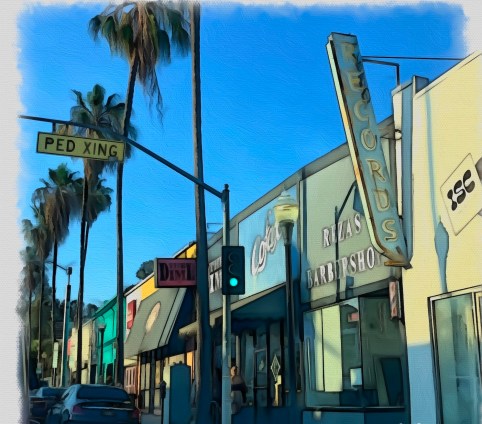
The same image, fed through a faux-painting A.I. generator app called Oilbrush.
And then there is the problem of authorship, which is called into question the very instant that a photographer makes use of an A.I. generator. In the image above, my original photo from the top of the page has been fed into an app called Oilbrush, which, as its name suggests, simulates the tonal and textural feel of a painting. In an instant, it samples billions of pictures from millions of artists, simulating their approach, technique, and, yes, even the type of brushstroke they used in an endless random mix of elements. When I click a tab in the app, I have no idea whose ideas I am compromising, or stealing outright, to enhance my own. I have traded any pretense at originality or honesty for instant gratification. Efficient as hell, and soulless.
I love playing with all these toys, but having spent some time in the their strange playroom. I do not wish to present work as “mine” when I can’t even have a conversation with my “collaborators”. I am not obligated by career pressures to fold this revolution into my own photography, and so I am free to make pictures in the way that I trust….that is, of myself, by myself. The tech treats offered these days are indeed tasty. However, after the first flavorful burst of sweetness, some of us will choose to spit back the candy.
OPEN THE POD BAY DOORS, HAL
By MICHAEL PERKINS
“ASK THE MAN WHO OWNS ONE”, suggested an ad for Packard automobiles in 1949, the idea being, I guess, that only someone who’d had the personal experience of driving said car could convey the utter delight of it. That slogan ran through my mind the other day when I saw the first image made by a photographer friend using artificial intelligence, an image that prompted me to ask this truly creative artist not what the process felt like, but only the single word, “why?”
Legal disclaimer dept: I guess if you have to insist that you aren’t a luddite you may at least have worried that you might actually be one, so let’s openly stipulate that I am not yet sold or unsold on A.I. as a tool for myself. Instead, let’s try to lay the thing out logistically. Making an A.I. picture entails dictating your terms, i.e., the elements and style for the image you want, into a computer program, then allowing it to sample examples of those features across every photograph it can access to assemble a composite result that satisfies those terms. For example, you could make a list that included instructions, like sunset, red skies, light clouds, rustic barn, scattered sheep on wooded hillside, etc., then view the results within an amazingly short period of time. That’s greatly oversimplified, but, in a nutshell, that’s the gig.
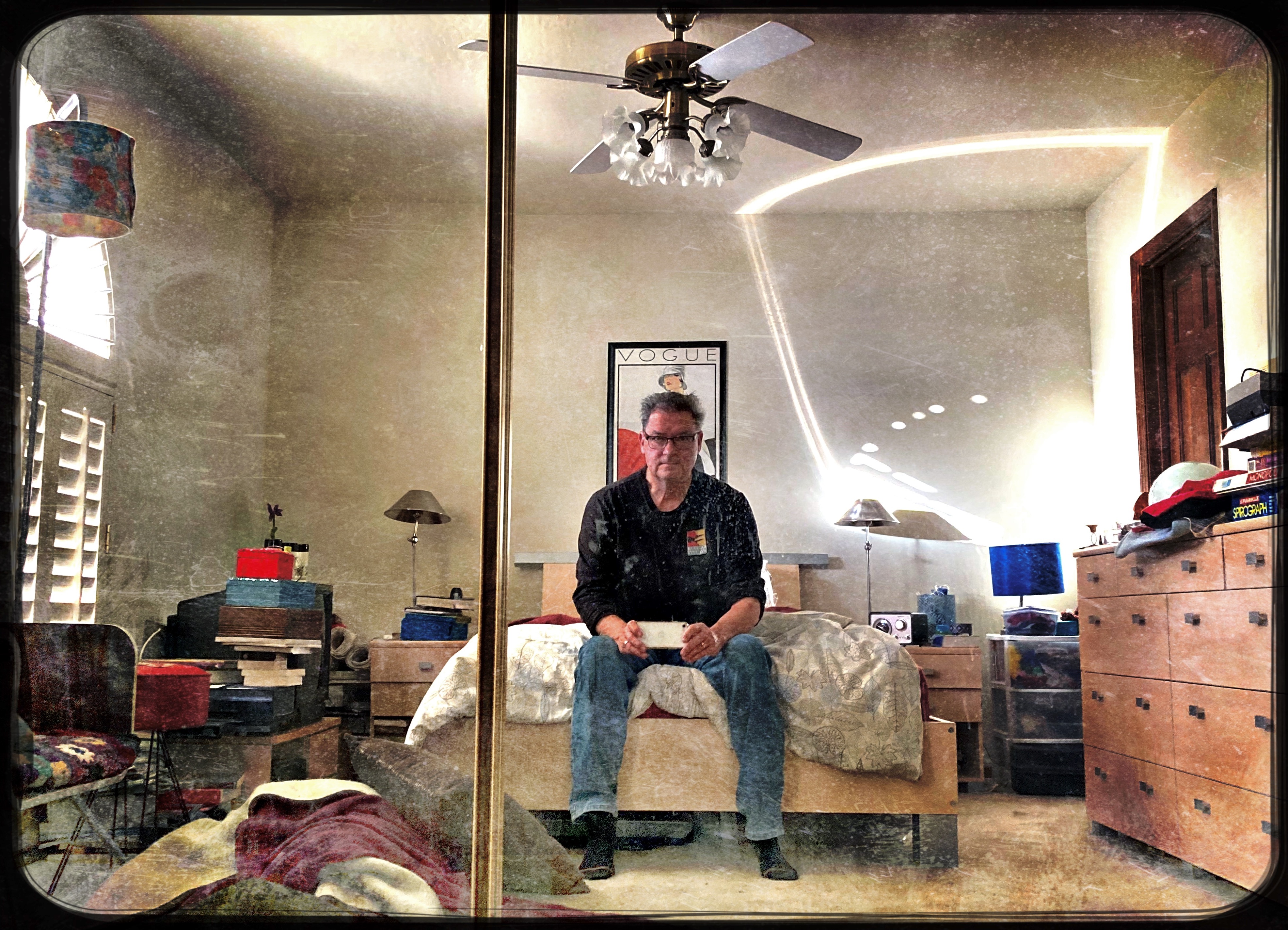
This image is manipulated, for sure. But I’m the one who did the manipulating. Of my own shot.
And so my initial question is, why would I regard this as a creative exercise, any more than I would feel a pride of a sandwich’s “authorship” after shouting my ingredients through the McDonald’s take-out window. Making a photograph is about as personal a thing as I have ever attempted, and the fact that I, myself direct how much ketchup, pickle or lettuce goes into the thing is what makes it mine. A.I. already makes some amazing images, and, for editors or marketers who can now order up anything they can imagine, on budget and on deadline, I see endless applications in the commercial world. But merely envisioning the end product and then submitting your order seems, to me, to be taking one’s hand off the creative steering wheel too completely and way, way too early. It’s like hiring a birth surrogate and then telling your friends that you “had” a baby. Well, no, you didn’t.
The move from photography to A.I. imagery is not like the shift from analog to digital. That was merely a change from one light recording medium to another. And it’s not the same as standard image manipulation, either, because, again, the artist is directly involved in every stage of post-processing. We’re in new territory here. A.I. can’t even be compared to assembly arts like photomontage, because while the final work is pieced together from disparate elements, the combining and arranging are all accomplished by a direct, personal act of assembly. And we don’t even have space here to discuss what A.I. will mean to the idea of “authorship”, which the internet has already shredded into swiss cheese. Right now (the end of 2023, in case you read this later in an archive), it’s an amazing process that generates images. And, as time goes by, the artist will be no doubt be more directly involved in making those images closer, in nature, to actual photographs. But we’re not there yet. Not by a long shot.
NEITHER HEAVEN NOR HORROR
By MICHAEL PERKINS
DEPENDING ON WHO YOU ASK, ARTIFICIAL INTELLIGENCE is either a miraculous boon or an existential threat to mankind, seen by some camps as an opportunity to evolve in untold ways and by others as the fast track to enslavement. As pertains to the arts, a quick scan of current press clippings yields mega-scads of hair-on-fire warnings that all creative pursuits, photography among them, will soon be usurped by Our Machine Overlords. Why, the reasoning goes, should anyone put up with fussy and imperfect human artists when the Frankenstein Brains can be just as creative?
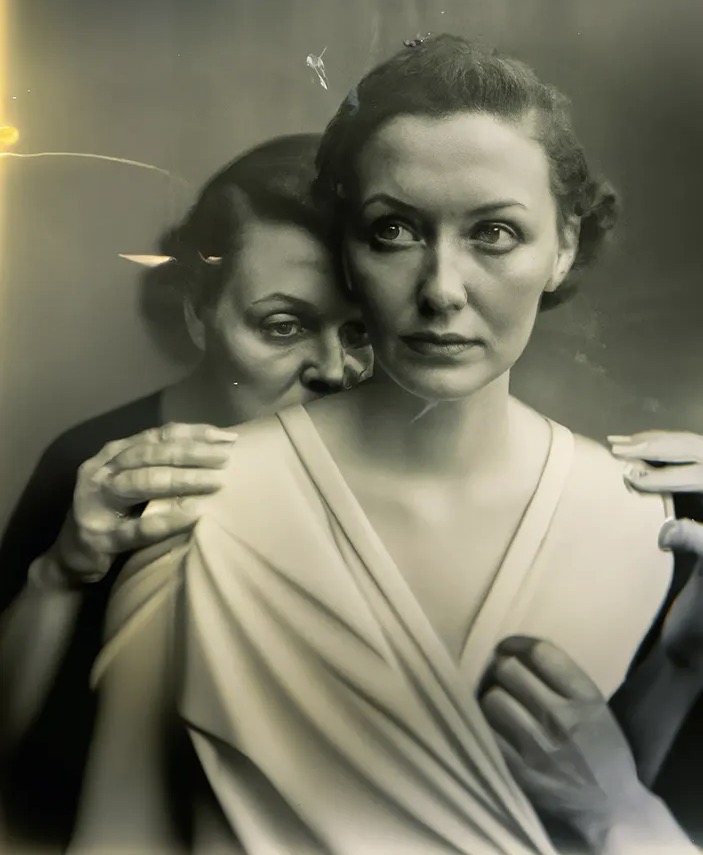
This image, in particular, has recently scared the Bellowing Bejesus out of photogs the world over. As of this writing (April 2023, for you archive hounds), its creator, Boris Eldagsen, has just won the Sony World Photography Awards competition with it. He has also thrown a rock into the pond of public discussion by refusing said prize, explaining that he cannot accept it since the picture was generated by A.I. instead of a camera. Suddenly “someday” has been shoved right into our “present-day” faces, given the image’s compelling realism as well as its nostalgic evocation of an earlier “photographic” processes. If anything can convincingly suggest the look of a photograph, Eldagsen’s entry certainly does. To make it, he typed a series of cues and conditions into a program which produced the results in mere minutes in what Boris refers to as a “promptograph”. “You start from your imagination, and you describe what you would like to have”, he said of the process in a recent interview with NPR, “and you can make such a text prompt quite complicated.” Like many people viewing the results, Eldagsen is both delighted and terrified by the results:
As an artist, I love AI. (But) as a citizen of a democratic country, I’m shocked about the possibilities of disinformation it gives. Anyone that can just type a couple of words can create a photorealistic image of the Pope in Balenciaga. You can’t trust an image anymore. We need some kind of labeling – some kind of fact-checking where you see that an image has gone through certain instances – has been getting proof by photo editors. Only then we can know it’s an authentic picture – shows something that has happened.
What’s been missing from all the panicky reaction seems to be the plain fact that photography has always, always lived at the juncture of pure light recording, technological manipulation, and the artist’s vision. Photographs are a group effort, never devoid of whatever tweaking and “post” is out there at the moment or the raw act of freezing time but always in the service of an artist who decides what the mix should eventually be. Every change in recording medium, technical gear, enhancement or format has been initially met with, at best, disdain, and, at worst, outright outrage. But just as photography never supplanted painting, A.I. imaging merely needs to be labeled and marketed for what it is, neither heaven nor horror, but merely another way to tell a story. If you love the mechanics and science of a camera-rendered image, stay in that lane. If you want to see what else is out there, trust the story you’re telling more than the language you choose to tell it. Given the advance of photography over its first two centuries, “Promptographs” have no clear advantage over conventional picture making; both require a thinking mind as their initial spark.
YOUR BRAIN IS STILL THE BOSS
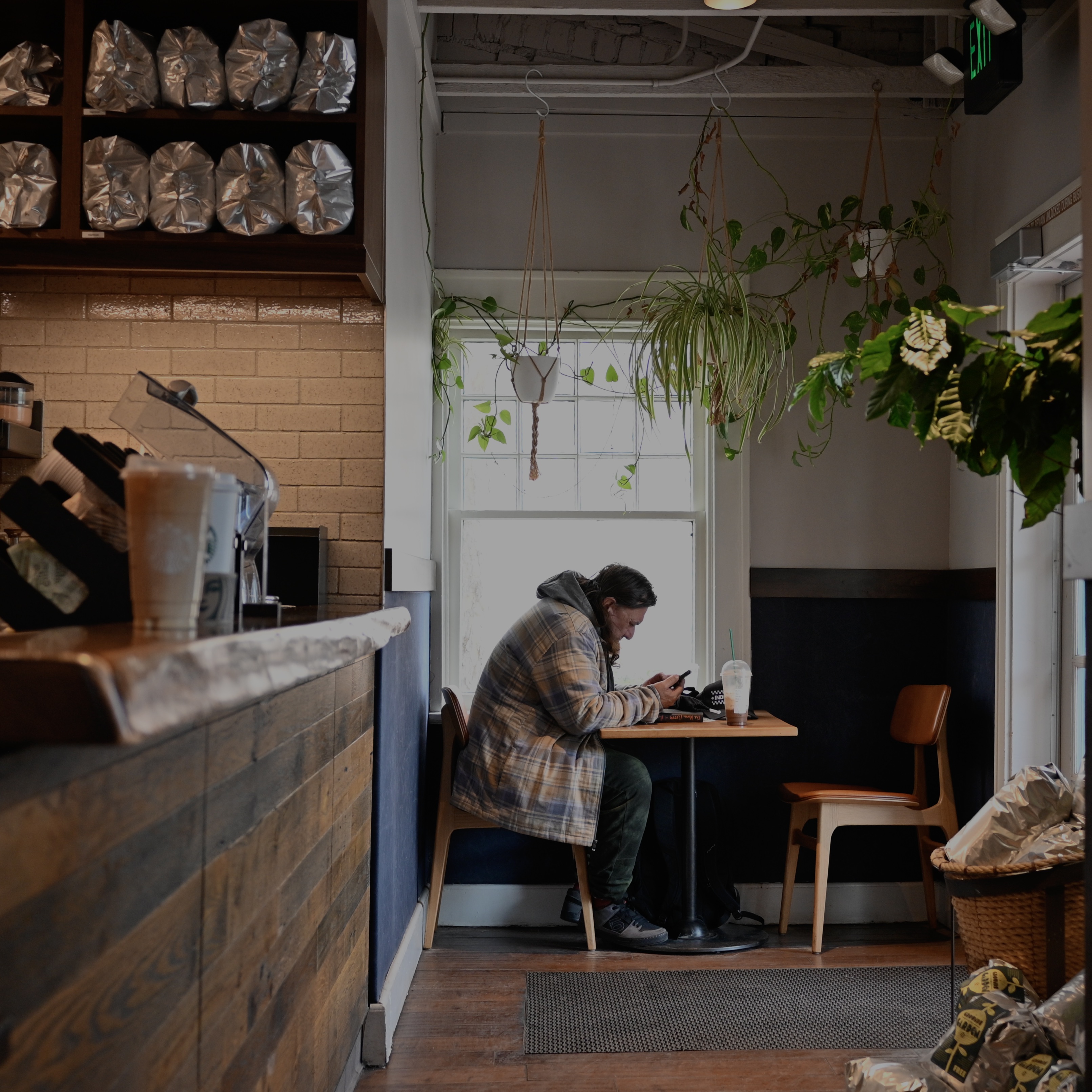
A first draft, shot on full auto: f/2.8, 1/125sec., 28mm, ISO 640
BY MICHAEL PERKINS
AT THIS WRITING THERE IS A BLIZZARD OF EDITORIAL CONTENT hitting the news services about the imminent arrival of artificial intelligence, which, according to your viewpoint, is either going to save humanity from itself or speed its obsolescence or a combination of both. Visions of 2001’s Hal 9000 setting plans to replace or murder us are making headlines and causing heartburn across all public sectors. Such trembly dispatches might seem novel to many, but, for photographers, the issue of whether we or our machines are to be the decision makers has been a regular grappling match for decades.
Technology often proceeds ahead of any true appreciation of its real benefits or risks; just ask a planet whose air was being fouled by automobiles for decades before we even started to ask, “do we really need this?” As to photography, ever since the first basic autofocus systems were introduced, cameras have steadily introduced dozens of additional features that are designed to anticipate what we will want in a picture so that it can be provided for us without our direct input. There is no reversing this trend, but the best photographers labor to keep all of it on a short leash, or, more to the point, to keep asking the question Who’s In Charge Here?
Caution: major use of quotation marks ahead.
When a camera shoots on automated modes (even partial ones like Aperture or Shutter Priority), it endeavors to create a “perfect” or “balanced” or “correct” exposure, making its best “guess” as to what you might want. But who is defining these terms, and how can they be appropriate for all the moods and motives that travel through the shooter’s mind? At best they are merely a point of departure, leading at times to, yes, a really great image that captures exactly what we imagined. At worst, they empower a device to assume what we want, creating a picture that it “reasons” will please us. This is the certain road to a tsunami of “good enough” pictures, a vast mountain of mediocrity.
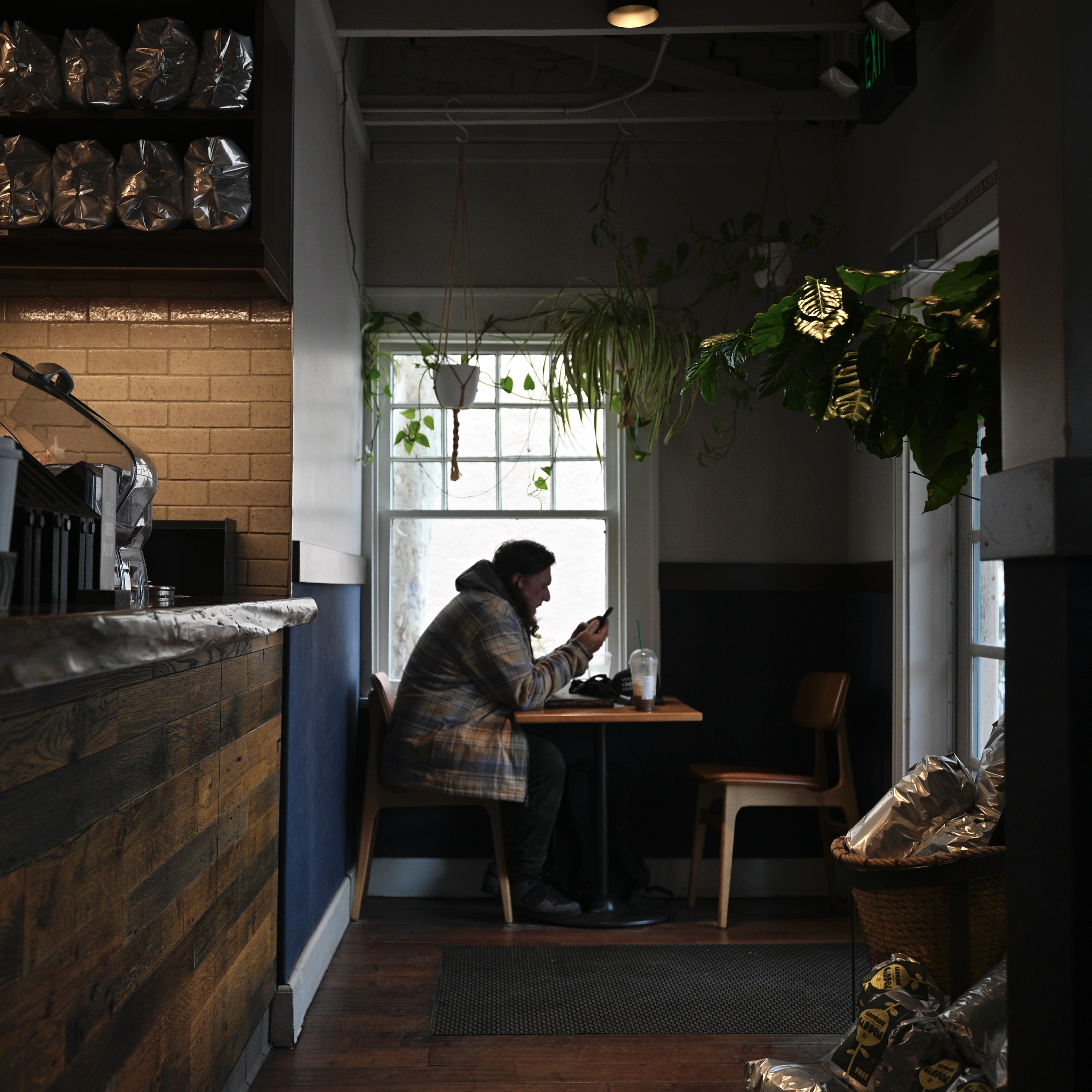
Same subject on full manual: f/3.5, 1/250 sec., 28mm, ISO 400.
In the top image, I responded to a sudden opportunity by shooting on full auto. Now, the result is perfectly okay, in that the exposure is balanced and the range of color values is, how you say in the English, “realistic”, but I feel that the second image, shot on full manual and designed to selectively illuminate some areas while deliberately underexposing others, is closer to how I see the shot. But how can I fault the camera? It, at least, is working up to its full design capacity. In telling it to shoot on full auto, it’s actually me that is abdicating my responsibility for how well the picture works/fails. Camera users have long dealt with the challenges that the population at large is just now facing with A.I., and our advice is: keep your own intelligence in the driver’s seat; something can’t assist you when it’s actually instructed to ignore you.
 thenormaleye