AN A.I. BY ANY OTHER NAME…
By MICHAEL PERKINS
ONE OF THE HALLMARKS OF THE DISCUSSION OF ARTIFICIAL INTELLIGENCE, as it applies to photography, is the strident insistence by some shooters that “I will NEVER use that!”, our words to that effect. This statement presumes that A.I. is some forbidden room whose spooky contents can never harm you so long as you don’t open the door to it. But, as they say on the high seas, that ship, for most of us, has sailed.
The angrier among us act as if they are sacred photo virgins who have not yet been violated, as if we can maintain our virtue indefinitely if we but avoid using this app or that process, as if we have all been asleep for the past fifty years. This is, of course, nonsense. If you have ever used Photoshop or its many stepchildren, if you have ever touched a slider inside Photos for Mac, if you have ever used a flick-of-the-finger shortcut to instantly boost color, you have already entered into some nature of covenant, partnership if you like, with products that were built on our collective human experience, imbued with the ability to mimic that experience in a quicker fashion, at our command. That is as good a working definition of A.I. as anything else I’ve heard. We pour our knowledge into a huge tub of skills and ideas, and we deputize certain processes to serve that back to us in whatever configurations we order up.
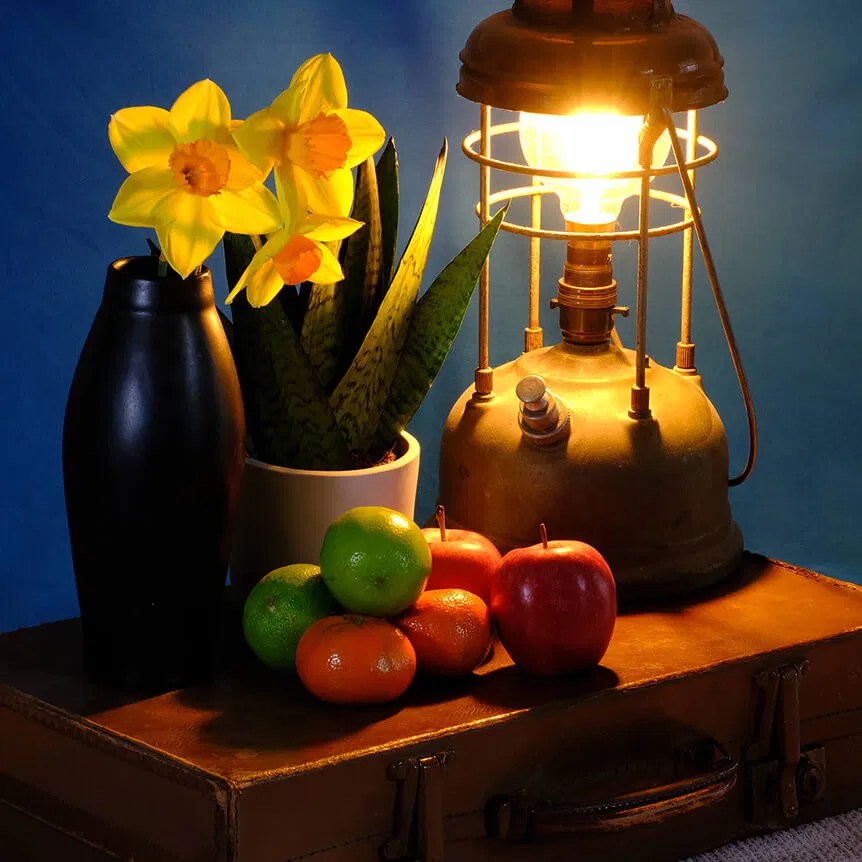
This image shows the color range and saturation rate of the classic Fuji Velvia slide film (from theleft edge to the middle of the frame) and one of the more commonly available simulations of that particular film stock (middle to the right edge) that is likely already built into the camera that you own. If it’s not, you can easily dial up a step-by-step recipe for creating that simulation as a package of custom settings via the various menus on your rig. And this is certainly not a “cutting edge” example. Film sims have been available for years, and are an immediate and cheap substitute for the costly and complex effects that only used to be achievable by lab manipulation. In fact, in the case of this particular sim, it allows the kind of adjustment that, in the analog era, was impossible with slide film, which is a final positive, not a malleable negative. What you shoot is what you get, so to speak. But, to return to my point, how is this tech NOT A.I. by a more palatable name?
The technical processes that you choose to sweeten or adjust your images are not the sole determinant of what kind of picture you wind up with, any more than your camera or media are. You are that final decision maker; you hold the tools. So what difference is there between the adjustments you currently employ and another, newer way to make adjustments? A.I. does not take your choice away from you; in fact, it offers more choices, and choices of choices, than you could ever need in a lifetime. The only thing that can make your images less “you” is your decision to let your decisions be made by someone/something else. And that’s on you.
SPITTING BACK THE CANDY
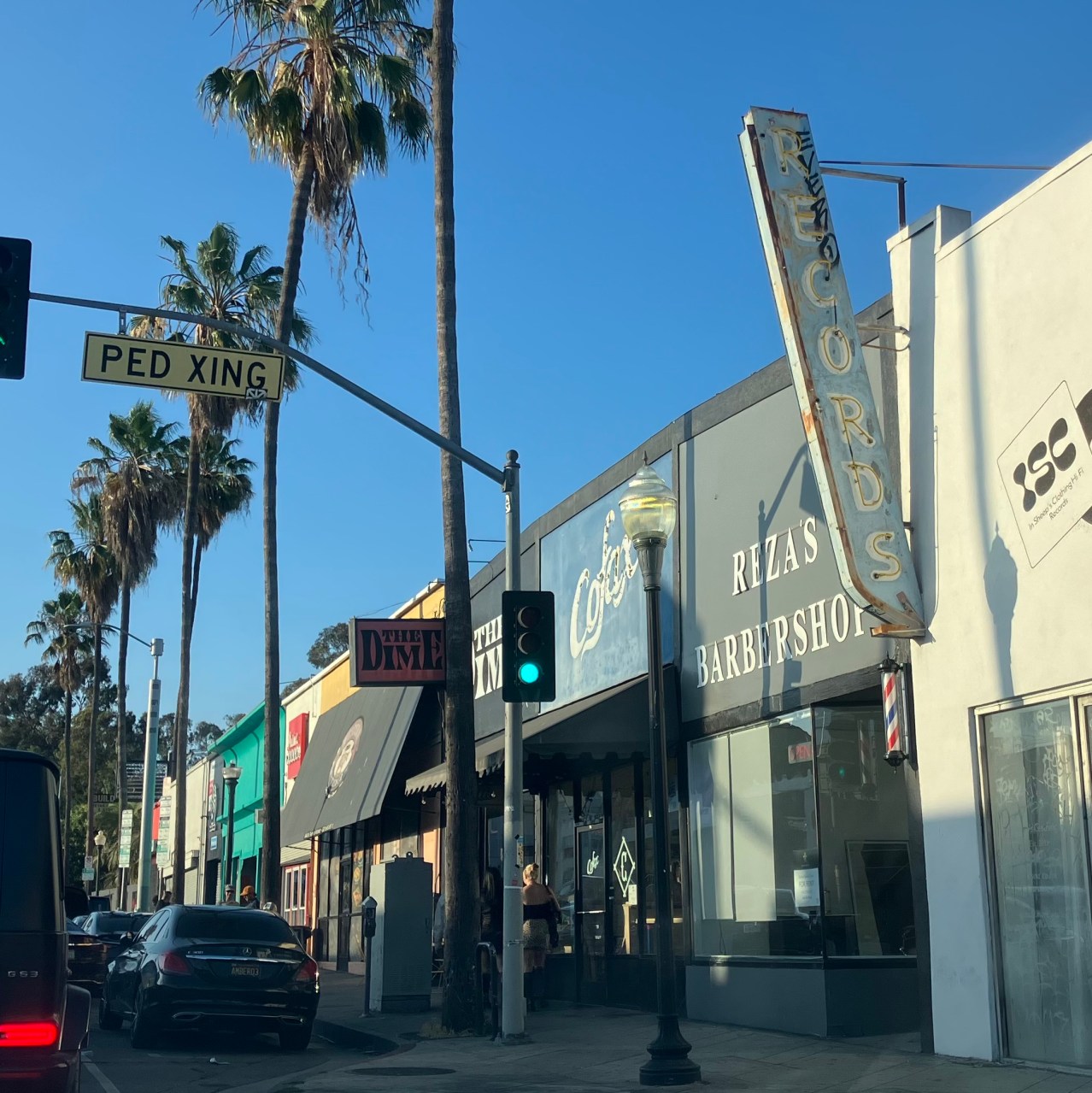
A straght-out-of-the-iPhone shot. Not remarkable, but not bad, and all my own.
By MICHAEL PERKINS
IT HAS TAKEN ME SOME TIME TO SORT OUT MY FEELINGS about the onrushing tsunami of interaction between photography and artificial intelligence. I have tried to see this tech wave as a bounty of new, useful tools, or a step toward greater efficiency. I really have tried. But I can’t get there, and now I fully understand why.
Creativity is often a collaboration, but it is a human function, and so, even collaborators in any creative act should be aligned in their common humanity. Humans have a distinct way of viewing problems, assessing results, and making executive decisions about where a given piece of art is born and where it arrives. Any process in which humans delegate this authority to non-human entities ceases to be creativity, since it surrenders the agency of the creator.
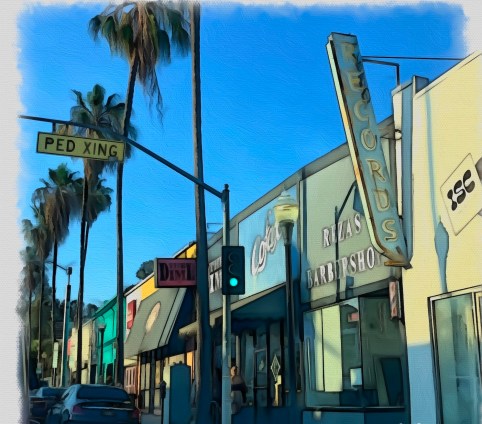
The same image, fed through a faux-painting A.I. generator app called Oilbrush.
And then there is the problem of authorship, which is called into question the very instant that a photographer makes use of an A.I. generator. In the image above, my original photo from the top of the page has been fed into an app called Oilbrush, which, as its name suggests, simulates the tonal and textural feel of a painting. In an instant, it samples billions of pictures from millions of artists, simulating their approach, technique, and, yes, even the type of brushstroke they used in an endless random mix of elements. When I click a tab in the app, I have no idea whose ideas I am compromising, or stealing outright, to enhance my own. I have traded any pretense at originality or honesty for instant gratification. Efficient as hell, and soulless.
I love playing with all these toys, but having spent some time in the their strange playroom. I do not wish to present work as “mine” when I can’t even have a conversation with my “collaborators”. I am not obligated by career pressures to fold this revolution into my own photography, and so I am free to make pictures in the way that I trust….that is, of myself, by myself. The tech treats offered these days are indeed tasty. However, after the first flavorful burst of sweetness, some of us will choose to spit back the candy.
OPEN THE POD BAY DOORS, HAL
By MICHAEL PERKINS
“ASK THE MAN WHO OWNS ONE”, suggested an ad for Packard automobiles in 1949, the idea being, I guess, that only someone who’d had the personal experience of driving said car could convey the utter delight of it. That slogan ran through my mind the other day when I saw the first image made by a photographer friend using artificial intelligence, an image that prompted me to ask this truly creative artist not what the process felt like, but only the single word, “why?”
Legal disclaimer dept: I guess if you have to insist that you aren’t a luddite you may at least have worried that you might actually be one, so let’s openly stipulate that I am not yet sold or unsold on A.I. as a tool for myself. Instead, let’s try to lay the thing out logistically. Making an A.I. picture entails dictating your terms, i.e., the elements and style for the image you want, into a computer program, then allowing it to sample examples of those features across every photograph it can access to assemble a composite result that satisfies those terms. For example, you could make a list that included instructions, like sunset, red skies, light clouds, rustic barn, scattered sheep on wooded hillside, etc., then view the results within an amazingly short period of time. That’s greatly oversimplified, but, in a nutshell, that’s the gig.
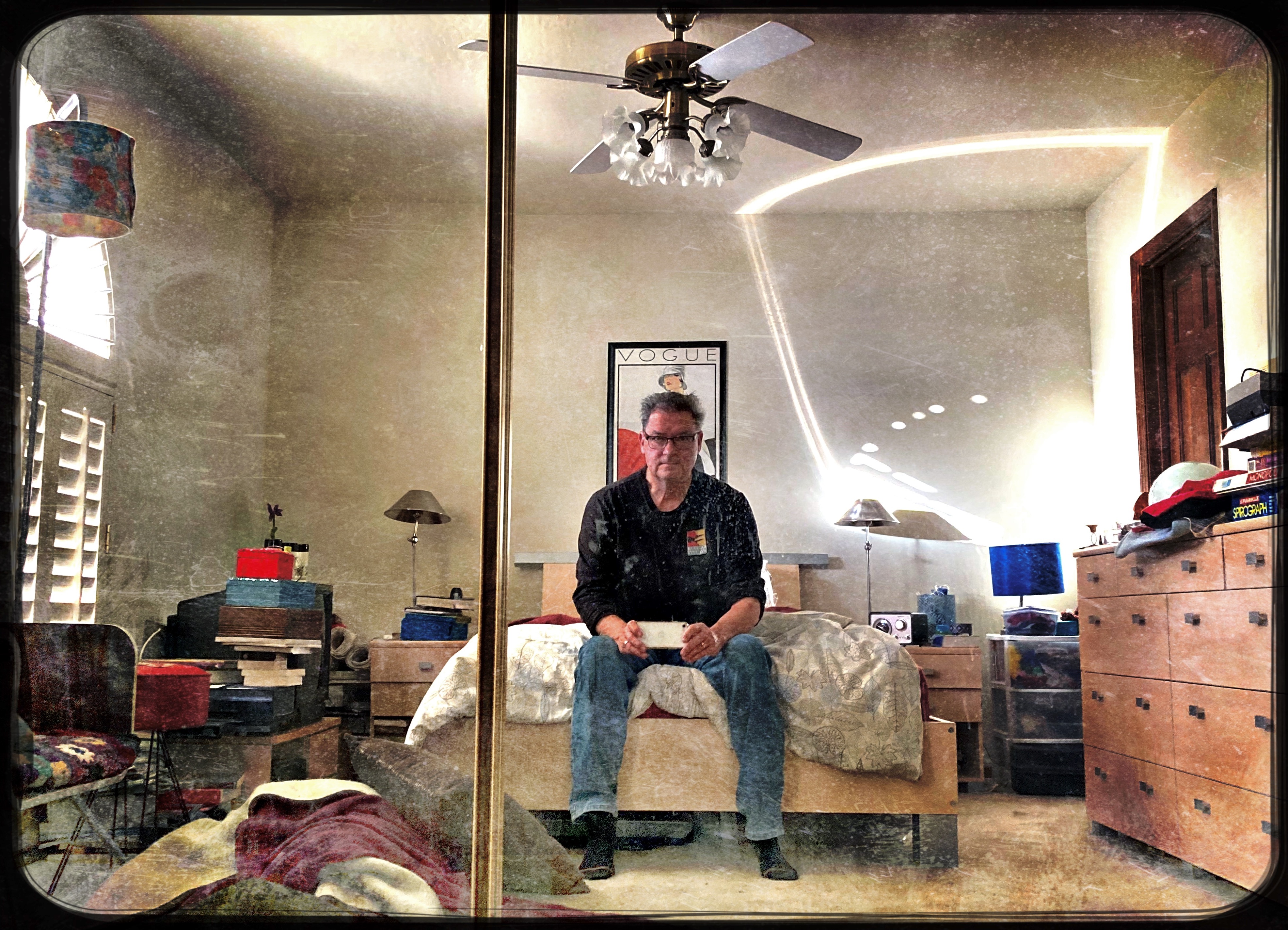
This image is manipulated, for sure. But I’m the one who did the manipulating. Of my own shot.
And so my initial question is, why would I regard this as a creative exercise, any more than I would feel a pride of a sandwich’s “authorship” after shouting my ingredients through the McDonald’s take-out window. Making a photograph is about as personal a thing as I have ever attempted, and the fact that I, myself direct how much ketchup, pickle or lettuce goes into the thing is what makes it mine. A.I. already makes some amazing images, and, for editors or marketers who can now order up anything they can imagine, on budget and on deadline, I see endless applications in the commercial world. But merely envisioning the end product and then submitting your order seems, to me, to be taking one’s hand off the creative steering wheel too completely and way, way too early. It’s like hiring a birth surrogate and then telling your friends that you “had” a baby. Well, no, you didn’t.
The move from photography to A.I. imagery is not like the shift from analog to digital. That was merely a change from one light recording medium to another. And it’s not the same as standard image manipulation, either, because, again, the artist is directly involved in every stage of post-processing. We’re in new territory here. A.I. can’t even be compared to assembly arts like photomontage, because while the final work is pieced together from disparate elements, the combining and arranging are all accomplished by a direct, personal act of assembly. And we don’t even have space here to discuss what A.I. will mean to the idea of “authorship”, which the internet has already shredded into swiss cheese. Right now (the end of 2023, in case you read this later in an archive), it’s an amazing process that generates images. And, as time goes by, the artist will be no doubt be more directly involved in making those images closer, in nature, to actual photographs. But we’re not there yet. Not by a long shot.

