KICKED OUT OF THE NEST
By MICHAEL PERKINS
“YOU MUST SUFFER TO BE BEAUTIFUL“, runs the old adage, which I always took to mean that anything worthwhile comes with some degree of sacrifice. Without musing too much about what happens to all of us who suffer and still are ugly, let’s at least admit that, like it or not, beauty, or art, has to be coaxed and groomed into existence, which I suppose is why the noun artist is so frequently preceded by the modifier tortured. The take-home of this, at least for me as a photographer, is that no real growth or improvement comes unless you risk frustration and/or failure. There’s a reason why many mommy birds teach their kids to fly by simply kicking them out of the nest. Comfort is the enemy of creative evolution.
That’s why this entry seems to cry out for an ornithological illustration, as I myself have found the pursuit of bird images to be the perfect vehicle for kicking myself out of my own creative nest. Other than landscape work, I find that shooting birds requires greater amounts of patience and humility than anything else I’ve ever undertaken in photography. Even with sixty-plus years of experience under my belt, making bird pictures puts me immediately back at Square One, feeling like an ignorant child who doesn’t even grasp which way to point the bloody camera. In terms of applying what I’ve learned over a lifetime in pursuit of greater success with my feathered friends, I keep thinking of the old Firesign Theatre comedy album, Everything You Know Is Wrong, and I fantasize that, had I the temperament of a Buddhist monk, I might, somehow, have gotten better than I am at the whole game.
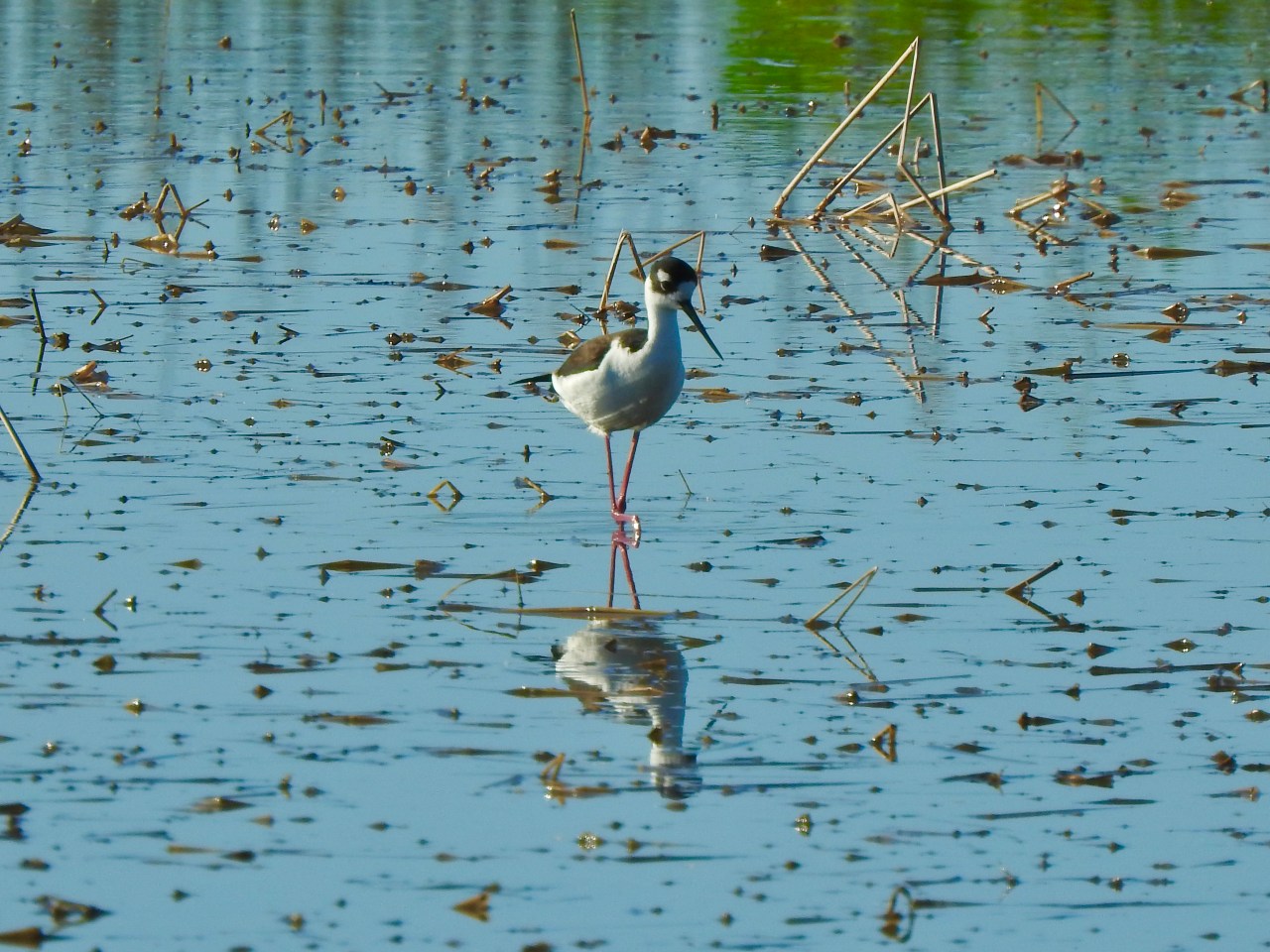
The image seen here is typical of thousands of bird images that I’ve attempted that fall into some murky grey zone between Almost Good and Bloody Embarrassing. You’ve also taken pictures like this, with one or two elements showing promise and others that seem to say Sorry, I’m New At This. “Suffering to be beautiful”, in the case of my wildlife shots, means taking what’s an average “hit ratio” of decent-to-failed pictures and learning to be satisfied with less. A lot less. Turns out that living creatures who must spend all day, every day, just trying to stay fed and alive are remarkably unconcerned with whether or not I get the shot. Go figure. That means that my photographs are made at their whim, not mine.
I have to think of myself, therefore, as a witness to a great picture rather than as its author. The number of things under my control in a standard shooting situation shrinks to near invisibility for bird work, and so, whenever I get lazy or stale, I really ought to “sentence” myself to a bird shoot just to be forced to work at the highest level of intentionality and mental focus. Returning to our opening meditation on birds leaving the nest, it’s worth remembering that some youngsters who fledge from precarious perches, like a spiny Saguaro cactus for example, have one try at flinging themselves clear of the plant to avoid being impaled on it. Now that’s someone who understands something about leaving your comfort zone.
A DASH. OR A DOSE. OR A SMIDGE. OR….
By MICHAEL PERKINS
I’VE NEVER BEEN ONE OF THOSE RIGID RULEMAKERS who dictate that all photographers must shoot something every single day. To me, that’s like saying that you must make an entry in your journal without fail, each day of the year. Now, while you certainly can do so with either pictures or diaries, the whole idea of publish-or-perish seems arbitrary, even a little anal, and I avoid it like I avoid many other things that start with “always do” or “never do”. That, for me, is just not how art happens.
When it comes to making pictures, I have two kinds of dry spells; self-imposed, due to a lack of ideas or motivation (or both); and imposed from outside, like isolation or illness. Presently, I’m just my way out of a dead space of the second type, caused by a back injury, which had meant rolling through a lot of consecutive days when either the inspiration or my own energy to shoot are in short supply. As stated above, I just can’t commit to the “shoot something every day” mantra, but there does come a point, however many days it takes to get to it, when I feel I have to try something, even if it’s small or stupid. This can include staging still life on my computer desk or tracking morning shadow patterns along a wall. I can’t say that I reap too many miracles on these interim assignments, but they are enough…a dash, a dose, a smidge…just a reminder that I haven’t lost either my touch or my enthusiasm.
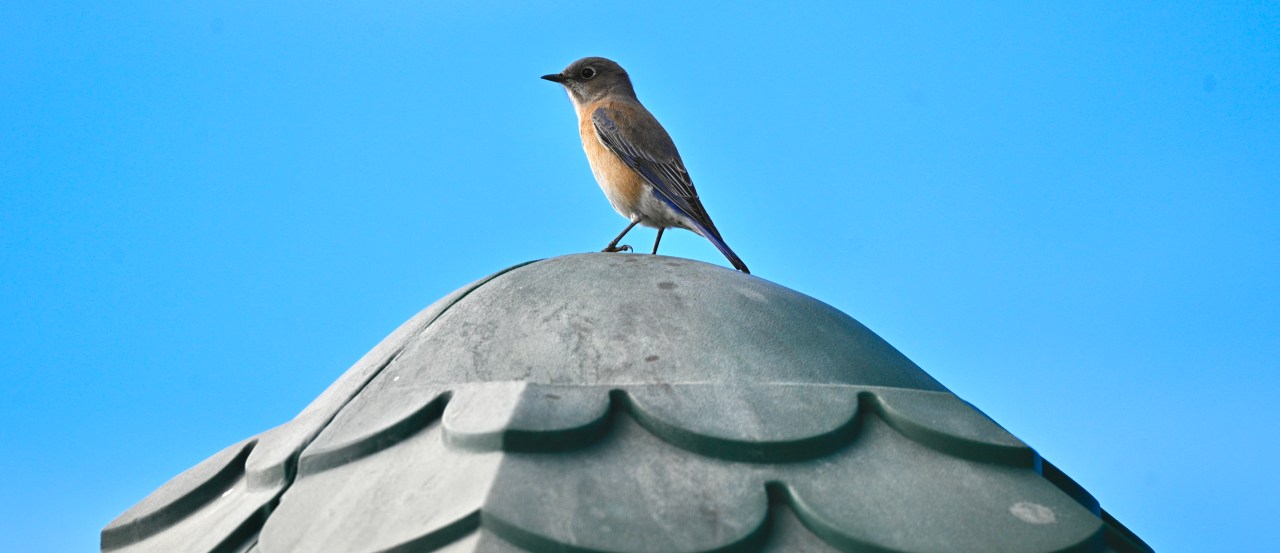
Photographers can get spooked during dead spots in their daily regimen. It’s not that we quite fear that we’ll never shoot again, more a feeling that making pictures oils some kind of mental hinge, and that rust can set in fast if we don’t give the thing a regular squirt. Imagine Jack Haley in The Wizard Of Oz freezing in mid-sentence or mid-step, needing a jet of juice to get moving again. And then, just when you think you’re washed up, a western bluebird jumps into range and takes mercy on your stranded soul. Such things fire the imagination, and, once that happens, you’re firmly on the comeback trail.
I’LL LET MYSELF OUT
Leave a tender moment alone. —Billy Joel
By MICHAEL PERKINS
I HAVE KNOWN MANY CREATIVE TYPES, from writers to painters to musicians to photographers, who struggle with deadlines. Not because they actually can’t complete assignments or projects on time, but because they find it excruciating to pry their fingers off their work, surrender it, and let it stand on its own….to, in effect say, it’s done enough; it’s good enough. Or, more precisely, realizing that it’s as good as I can make it, and that, perhaps, continuing to tinker with it in search of perfection will actually invite more flaws.
We know how to enter the “room” of a piece of work. Knowing when to head for the exit is something else again.
As a photographer who largely works for himself, I usually have the luxury of fiddling endlessly with images in the hope that I can somehow make them one step, one click, one fix closer to “finished”. This is actually a trap. If I were, in fact, delivering work on someone else’s dime, I would know that the delivery date is Friday at 5pm and that’s it. Bam. The rigid forces of the marketplace would guarantee that there would come a point when I would lay down my pencil and hand over the work. When the boss is me, not so much.
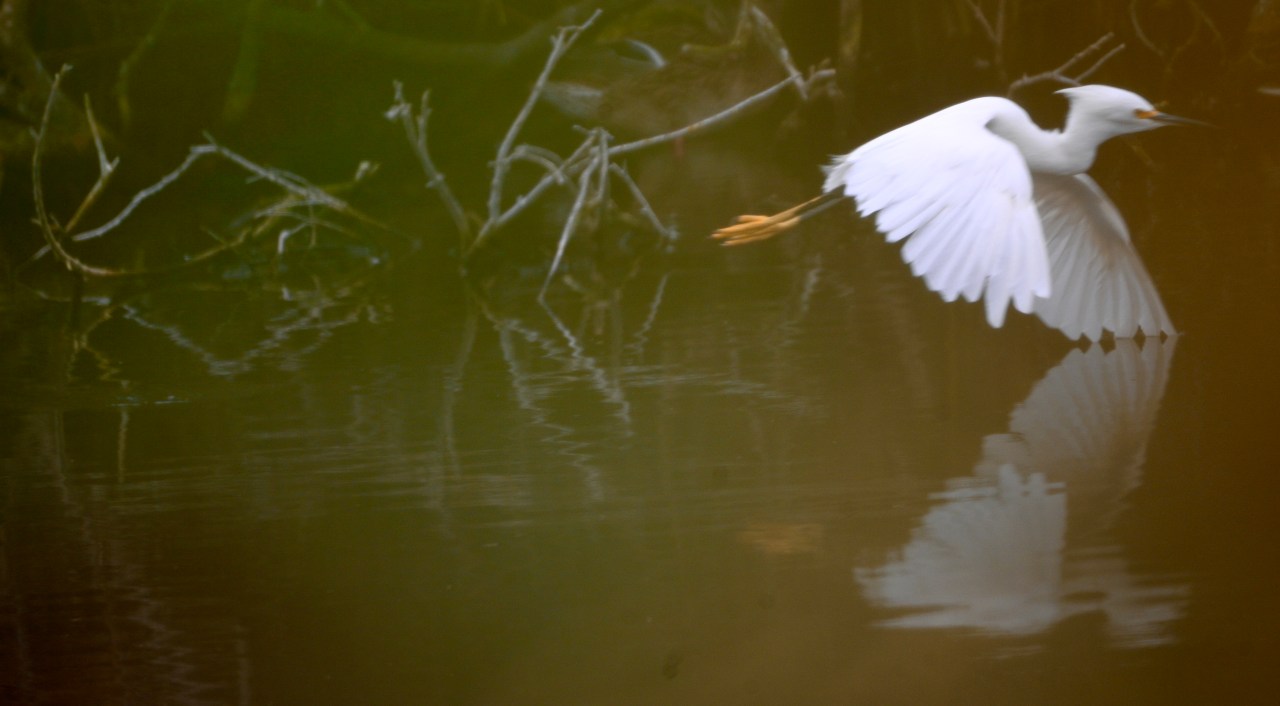
600mm, 1/400sec.,ISO 400, f/6.3
Take this image. It was a complete accident, the final image of a series of shots of an egret who had remained pretty much stable near a riverbank as I cranked away. Then, without warning, he decided to fly away, allowing me two panic-driven clicks of his exit within about a second and a half. My autofocus made a brave attempt at freezing the action, but in trying to track the bird, I was bound to create some amount of camera shake, all made worse by the fact that I was clear across the river and zoomed out at 600mm handheld. The second of the two frames largely worked, in that I caught the gorgeous contour of the bird and the reflection of his wings as they lightly skimmed the surface of the water. But the softness bothered me somehow, and so I was stuck with a technically imperfect shot that, for at least an hour or two, I told myself that I could somehow “fix”.
But you can’t really insert precision where it was lacking in the master shot, something I often have to admit only after fruitless tinkering, a desperate chase that leaves me with so-called “improved” versions of the shot that still, somehow, pale next to the original. You have to fight to keep the innocence and discovery in your work. Sometimes that means that you have to show yourself the door before you’re really ready. Often as not, though, it’s the most strategic exit you can make.
HURT TIL IT SMILES
By MICHAEL PERKINS
WILDLIFE HAS BEEN SUCH A SMALL SUBSET of my overall photographic work over a lifetime that it holds a very special challenge for me. In shooting nearly everything else, I have landed at what might be termed a plateau of competence, an ability, through repetition and practice, to predictably deliver a decent result in a variety of disciplines. However, immersing myself in nature subjects places me so far outside my comfort zone, so far from any smug illusions of mastery, that it involves real risk. Ironically, more than ever before, that is where I am deliberately placing myself. Art doesn’t always thrive in the danger zone, but, on the other hand, doing what you’ve always done means you’ll always get what you’ve always gotten.
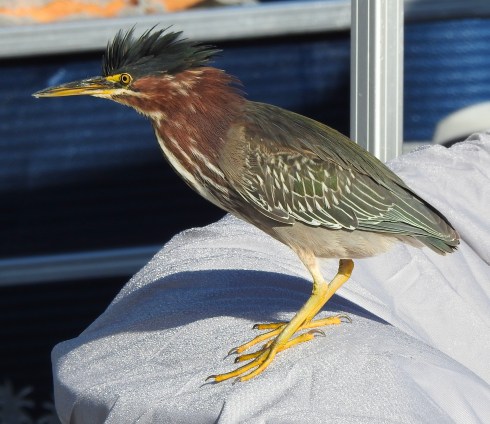
Green heron perched on a boat. Best to take the freebie and relax, but….(see next)
Bird work is a subset inside a subset, occupying a larger portion of my nature output in recent years, and offering equal portions of satisfaction and frustration. Birds are unlike other subjects for portrait work because they don’t care what I want and aren’t here to make me a success at it. They exist in their own sphere and under their own impulses and needs, and whether I can focus fast enough to catch them on the wing, or compose well enough to properly showcase them is of no importance to them. I am, by habit, caught up in what I want to achieve or capture, or, technically, succeed at. To properly photograph a bird, you have to shift every normal emphasis of style and approach. You can’t go out with a given quota or “yield” in mind, as conditions shift so quickly, so consistently that, on many days, you’re fortunate to have even a single usable shot to show for your effort. But that’s not really a negative. In fact, quite the opposite.
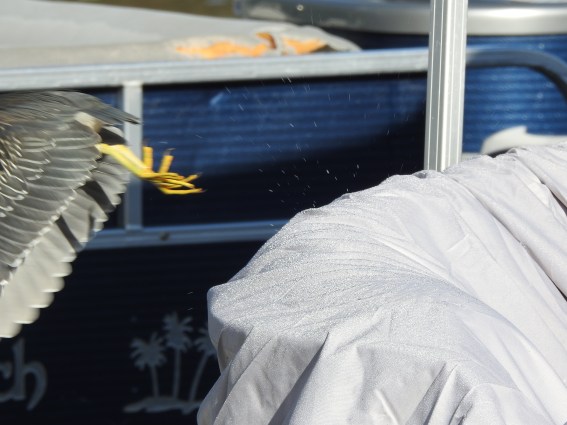
…Mr. Heron decides he’s out of here, and you’re too slow, boyo. In otherwords, a typical day.
To, as portrait photographers used to term it, “watch the birdie”, you have to develop a different kind of watching than for any other form of photography. You have to slow down. You have to listen as well as see. And you need to silence the part of your ego that instinctively thinks of the photograph as a trophy, as one more scalp on your belt. It sounds very New Age-y to say that you need to “let the picture take you”, but that is, at least, an approximation of what you’re aspiring to. Finally, given the sheer number of blown shots you must walk past on the way to the keepers, you need to be all right with failure, or at least be able to find a new definition of “success”. Art is not something that’s logged on a scorecard; it’s peeling away all the wrong versions of something until the right version is revealed. You hurt ’til you smile. Nature work is its own separate discipline, in that it’s defined by how well you manage yourself, rather than whether you tame the subject.
WONDER WHAT THEY MEANT BY THAT…..
By MICHAEL PERKINS
PHOTOGRAPHY, BY ITS VERY NATURE, pulls things not only out of their time, imprisoning them in a perpetually frozen state, but also out of their context. Extracted from all the other elements present at the time the shutter snapped, a subject must be judged on its own visual merits. It may, indeed, suggest the other conditions that prevailed when it was in the world; that is, a view of the Empire State implies the unseen remainder of the city skyline in which it exists; however, being captured in a photograph can just as often isolate an object or a person, robbing the eye of what it meant in the flow of regular reality.
Museums operate much like photographs, in that they create exhibits of things that have lost their overall context. We learn what we are looking at through explanatory texts or captions displayed near them, but the complete world the things once inhabited is removed. This forces us, as in a photo, to interpret their visual value to us. Sometimes they become diminished, while in other cases, their force actually increases. In visiting museums, I weigh a lot of factors, from empty spaces to shadow play to composition, but I am predominantly drawn to exhibits because the items in them are no longer merely what they were. My camera can thus contort their reality in a million different ways.
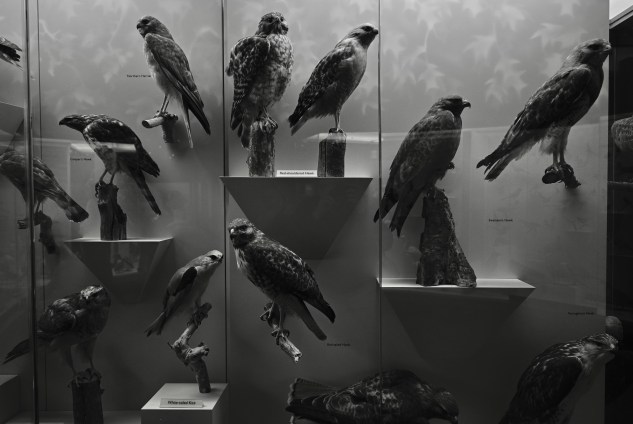
Birds are a prime example. As a birdwatcher, I see living creatures that inhabit an entire ecosystem of activity and place. As a guest in a museum, however, I see them in their corporeal form, perfect, in fact, in every detail, but now just objects to be arranged, lit in a particular way, or even abstracted. They become clay in my fingers, recognizable as birds, certainly, but capable of calling up a host of different associations. I can look at them and imagine majesty, mythical power, menace, or a mixture of all three. It reminds me that pictures are created long before the click, and that no two people can frame up the same subject and get the same result. I know what I mean, but figuring out what you mean, well, that’s the wondrous variance that keeps photography a perpetually unfolding mystery.
I KNOW WHY THE (UN)CAGED BIRD SINGS
By MICHAEL PERKINS
JOHN JAMES AUDUBON NEVER EMBRACED THE NASCENT ART OF PHOTOGRAPHY, which was only just out of its crib when the naturalist and artist passed in 1851. More’s the pity: his studies, and the magnificent paintings which resulted from them, were only accomplished by the killing of nearly all of the four hundred species he depicted, a technique well in line with practices of the 1800’s but regarded with horror by today’s birders. Photographs, in his lifetime, were a curiosity, certainly no competition for the observation and focus required to capture nature on canvas. And so it goes.
I have repeatedly credited my wife in these pages for retraining my eye regarding birds, which I certainly noticed over the courts of my life but didn’t really see. As someone who has always had a camera hanging around his neck, I have, since her miraculous intervention, experienced successive waves of “where the hell I have I been?” when naively delighting in creatures that she has been keenly aware of for decades. Fortunately, unlike Audubon, I don’t have to catch, shoot or poison them just to get a good look at their habits or habitats, as it’s rewarding enough just to be able to linger over the details of their design and grace in pictures. Sadly, I should have begun this journey as a much younger man.
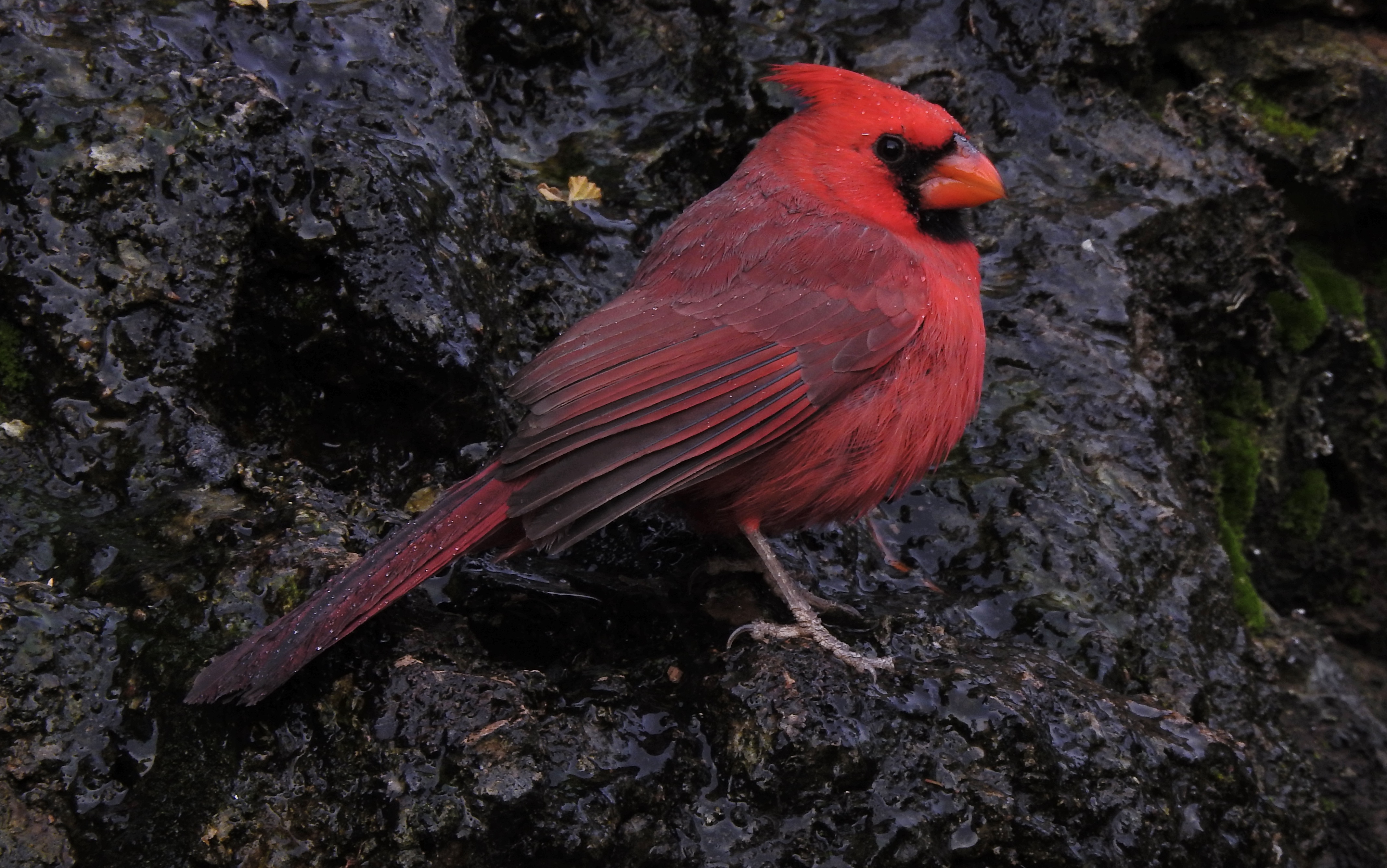
Making a photograph of a bird is a privilege.
Hang with birders for even a short while, and you will be stunned by how very much you do not, but should, know about creatures whose life is impacted, impoverished and just plain crowded out by our very existence, by our selfish gluttony and plunder of all things natural. It’s not just that we are just the loud, rude neighbors down the block: it’s as if we decided to throw empty beer bottles and cigarette butts from our parties over the back fence and into the yard next door. Birds are both a reminder of the infinite beauty built into the world and a rebuke to the unwitting war we wage against it. To measure what is either threatened or vanishing, you need a reliable recording tool….faster, more accurate, and less deadly than Audubon’s slay-’em-and-then-salute-’em method. For millions, including myself, that’s a camera.
The Audubon Society is currently undertaking the sizable task of changing the names of all birds who were identified by the names of humans. Not merely the more notoriously racist or rapaciously heedless of them, Audubon and John Muir among them, but any humans. The names will now merely be descriptive of the individual bird’s identifying characteristics, making their labels more purely scientific and perhaps sending at least a small signal that the earth is ours to inhabit, not conquer; to cherish, not dominate; to curate, not capture. And to learn, as the makers of all too many cages, why the uncaged bird sings so clearly and so beautifully.
FLY/NO FLY ZONE
By MICHAEL PERKINS
THIS MORNING, AS I WALKED THROUGH A LOCAL PARK, my “poster child” for this current phase of the pandemic became, in essence, a poster bird.
One thing is certain about predators: they’re not crazy about hanging with humans in close quarters, certainly not at a distance of little more than twenty feet, which is where I found this red-tailed hawk staring back at me on the edge of a suburban park, only ten yards away from the nearest house and barely fifteen feet off the ground. Raptors typically keep their distance and maximize their stealth in heavily peopled areas, and so I was quite astounded that this fellow was remaining within camera range for what seemed forever.
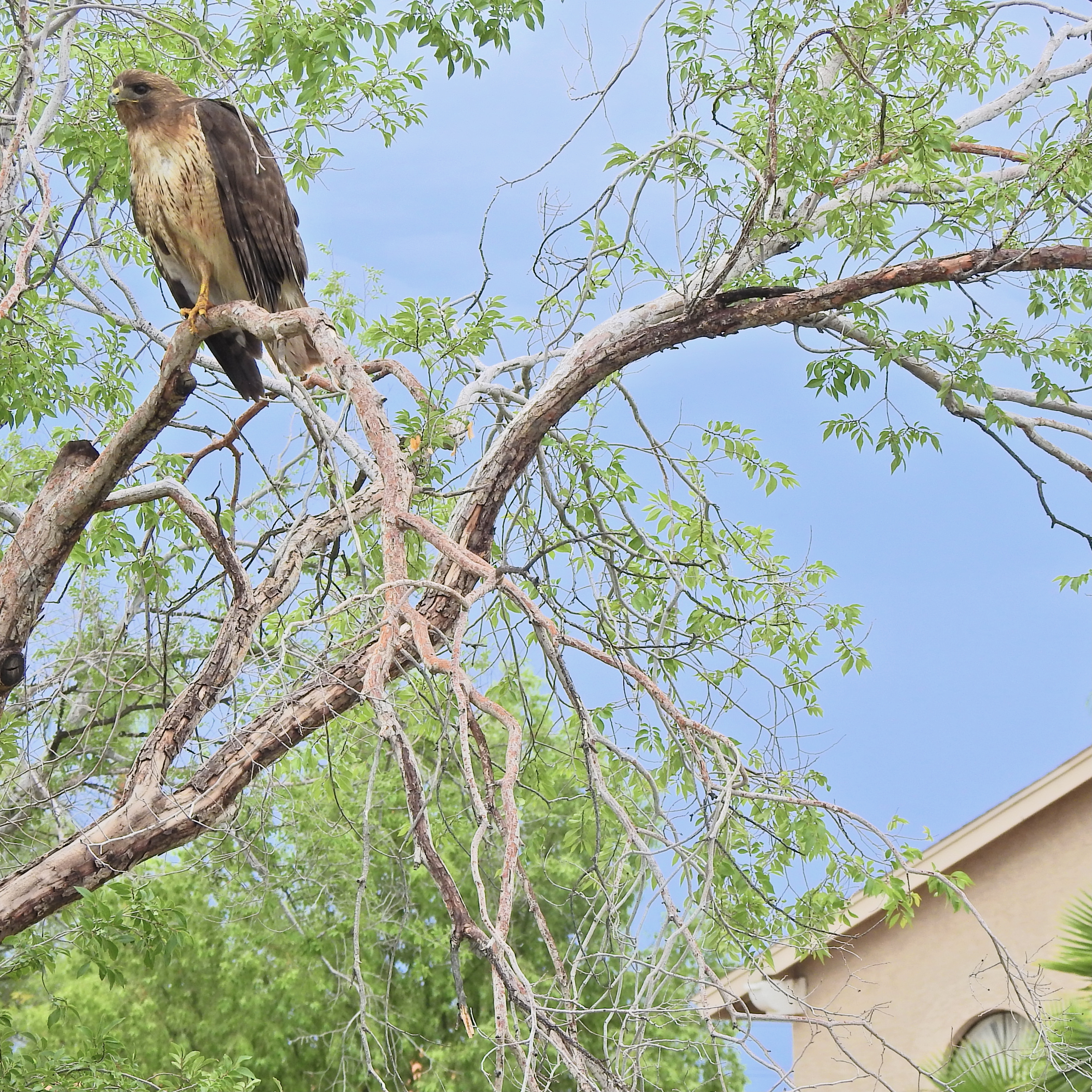
Then I noticed his left foot….or, rather, his lack of one.
A million different scenarios zipped through my brain as to how this elegant hunter might have been rendered, in the worst case, unable to hunt, to feed himself. A fight? A storm? A birth defect? All roads led to the same conclusion… that an intervention of some kind was needed. A call was made to the local wildlife rescue agency, and the street coordinates were reported. Stay there, a volunteer said, and we will call you back in a half an hour….
And so we walked….literally “once more around the park”. As we killed the clock, I began to think of the bird as emblematic of where we all are at the moment. Technically, we still might have wings, but can we fly? In the wake of our various recent “injuries”, can we protect ourselves from the possibility of even worse harm? Can we keep our balance, adapt, adjust? Which skills are most crucial to the new “us”, and which of us might prove too damaged to make the transition?
Upon returning to the tree just ahead of the wildlife agency’s return call, we found that our charge had already answered most of those questions: he was gone. The agency told us that many such hobbled birds manage, and that, once on the wing, no rescuers could capture our hawk anyhow. Its survival was completely a product of its own actions from here forward. Just like us. God, just like us……
TRANSFERENCE
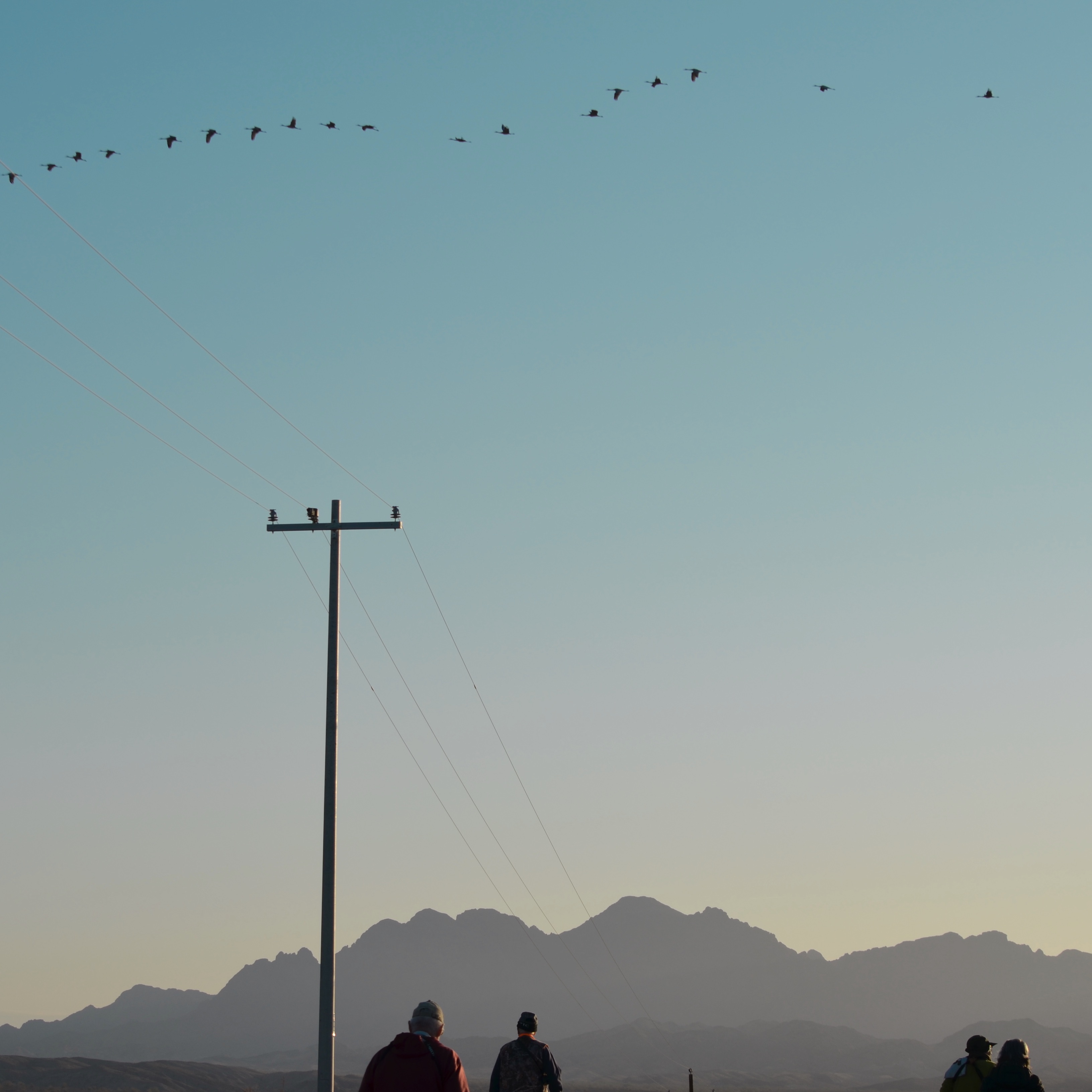
Flyover Country, 2020
By MICHAEL PERKINS
AS PHOTOGRAPHERS, WE PROVIDE THE PROGRAM WHICH CAMERAS ARE INSTRUCTED TO PERFORM. The actual box itself, like many other tools, is really a dumb thing, fueled not by its own ideas but instructed to carry out the whims of its owner. The camera thus does not really “see”, but merely follows the direction of those who can.
If they can.
The frustrating part of photography’s learning curve is that, over time, we all come to think of our most enlightened ideas as, well, primitive. The things we regard as obvious in our present incarnation as picture-makers were once invisible to us. And it follows that our present blind spots may, in a future version of ourselves, be the source of our greatest accuity. We are thus learning photography on several planes. There is the merely technical level, in which the mastery of aperture and focus is the primary mission. Then there is learning to see, as we begin to recognize patterns, themes or compositions. Finally there is the ability to evaluate what we see, to place different emphases on things depending on how we ourselves have evolved. This transference can take a pictorial element from the status of an object to that of a subject. We notice a thing differently and thus we photograph it differently.
I find myself in the process of such a shift at the time of this writing, mostly because I have recently made new friends within the birdwatching community, mostly due to my wife’s passion for the hobby. Now, of course, I have taken my share of bird photos over a lifetime, but most of them could be classified as opportunistic accidents (one landed next to where I was sitting) or as props within a composition, something to add scale, balance or flavor to, let’s say a landscape. That is to say that birds, for me, have been objects in my pictures, not, for the most part, subjects. Lately, however, I can see a subtle shift in my own prioritization of them.
Part of my pedestrian attitude toward them is borne of my own technical limits, as I have never owned the kind of superzooms that are required to make a detailed study of them. If I can’t afford to bring them into close view and sharp detail, it’s just easier to represent them as dots, flecks or shadows, as you see in the image at left. This, in turn, connects to my admittedly jaundiced view of telephoto images in general, since I think the gear required to capture them invites as many problems as it solves. I prefer prime lenses for their simplicity, clarity, efficiency of light use and, let’s face it, affordability. I realize now that all those biases are under review: I am, for better or worse, revising how I see the natural world, or, more specifically, the living things within it. Much of this is thanks to Marian, who sees the earth as a kind of game preserve with we bipeds charged with its responsible curation. The influence of her good example has been amplified further by my rage against the corporate titans who would lay waste to the last unicorn if it lined their pockets, and the fact that, at this juncture, their side seems to have the upper hand.
And so as both a photographer and a person, I can’t really relegate birds, or bison, or duck-billed platypuses to the background of my work any more. I may never become a great nature photographer, but that’s not the point. Fact is, the journey involved in sharpening our eye is always a staircase. Each step is important, but the upward journey itself is the main thing. Any photographer lucky enough to have his/her seeing powers challenged, even changed, is blessed indeed.
I know this is true. A little bird told me.
SAFE AT HOME
By MICHAEL PERKINS
IF YOU WANT TO HEAR THE UNIVERSE LAUGH, goes the adage, make a plan. Or, in my specific case, if you want to ensure that pigeons hang around your house forever, make a plan to keep pigeons off the premises.
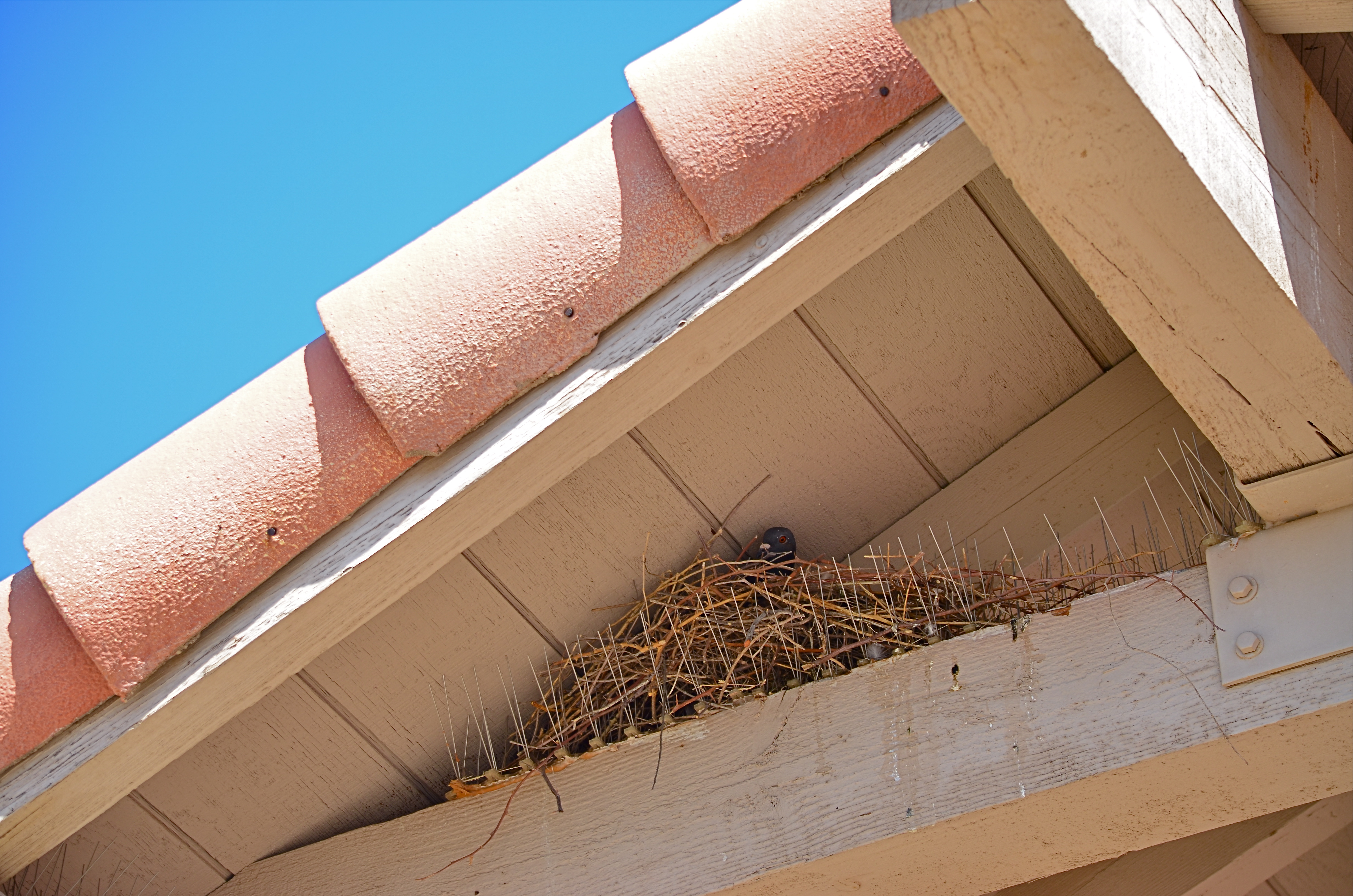
Start by installing tiny metal spikes in the cross beams right over the entrance to your front door. You’ve seen them, those steely porcupine quills designed to bar entry to all the nooks and crannies where birds love to assemble to conduct aerial assault on your sidewalks. Spikes go up, birds get packing, no cruelty, no pavement poo, everyone’s a winner, right?
And if you buy that story, I have bridge I want to sell you..
But, hey, I’m a humane slob, so I write the check, go for the whole spiny effect atop the house, and look forward to a lifetime of carefree maintenance and lordly leisure. Only someone forgot to send the spike company’s brochure to the curve-billed thrasher who decided to weave twigs between the spikes, further reinforcing his domicile against the elements. And wasn’t it nice of us to build the first phase of his nest for him? Sure, we’re swell that way.
So no pigeons living above the entrance, but still birds. Small hitch in the plan, however: Mama Thrasher isn’t a hit with the Neighborhood Watch Association (Avian Division) and leaves town. And here we see the fates in all their sadistic genius: a mother pigeon moves into my “pigeon-free” zone like a hobo in a rail car and proceeds to lay her own eggs. The circle of life is now complete!
So, as anyone wise enough to realize when he’s licked, I resolve to at least photograph this grand cosmic joke. Only the act of my going in and out of my front door each day spooks Mrs. Pudge to flight, and so it takes nearly a week to sneak a shot of her in residence……an ordinary, unchallenging, Photo 101 shot that a toddler could make, if only Nature can stop laughing at me long enough to say cheese.
Obviously, with this kind of outcome, I will not be rushing to bear-proof the back yard. Now if you’ll excuse me, the flowers could us a soaking rain, so I’m off to get my car washed.
GIVING EVERYTHING AND MORE
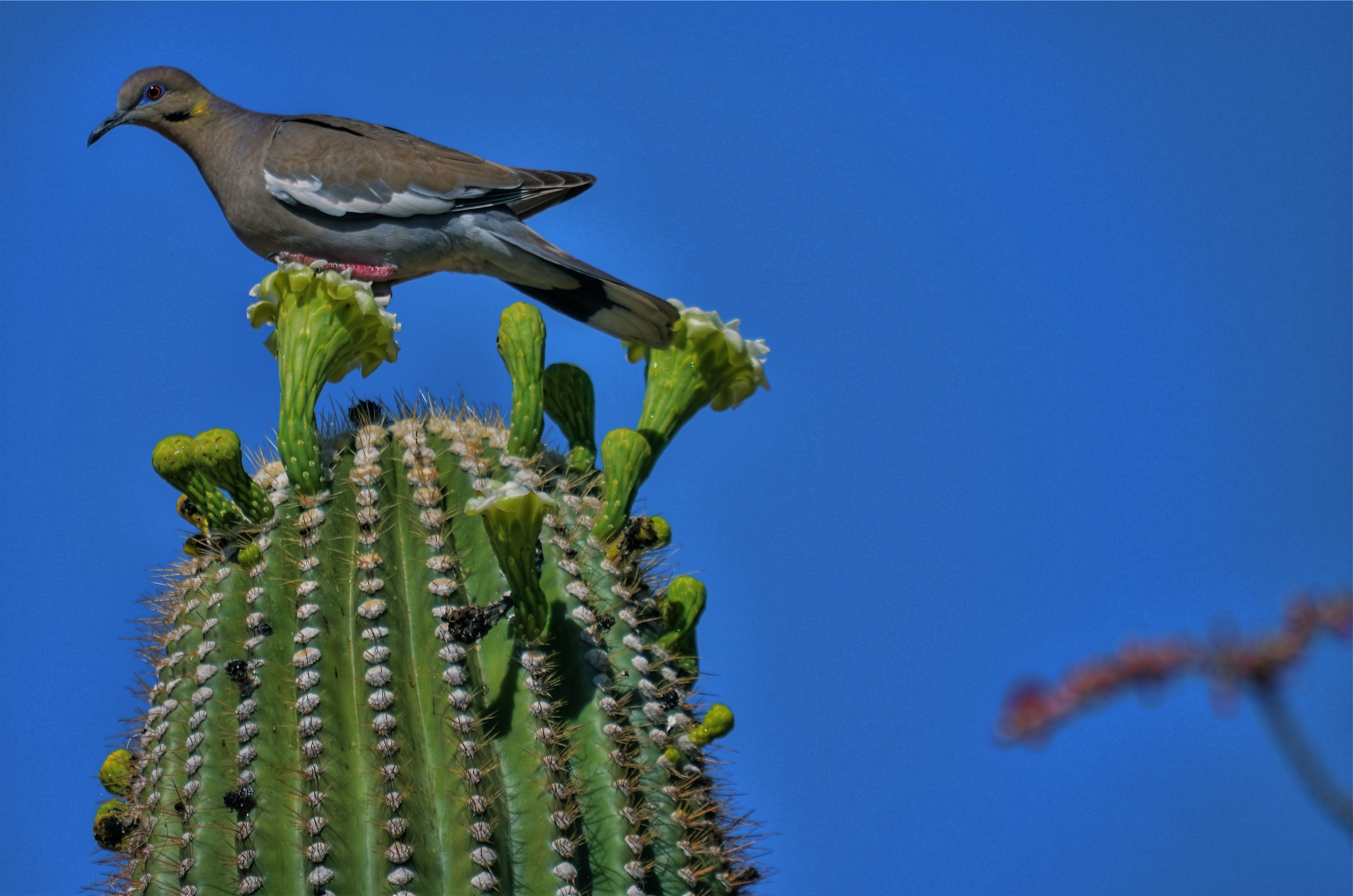
Kids are hungry. That means an early working day for Mom. 1/640 sec., f/5.6, ISO 100, 300mm.
By MICHAEL PERKINS
IN THE SPRING, JUST OUTSIDE OUR FRONT DOOR, THE MOST POIGNANT METAPHOR FOR MOTHERLY LOVE PLAYS OUT in the arms of our immense saguaro cactus. The trunk of this desert giant is regularly pockmarked by the peckings of improvised dwellings, which are temporary apartments for woodpeckers, thrashers and other breeds, and crude nests are typically crammed into the crevices between trunk and arm, so, whatever the season, we are well used to birdsong as the first sound of the morning.
But during late April and early May, an extra dimension of magic occurs when the typically blunt arms sprout hundreds of buds, and, in turn, bundles of gorgeous white cactus flowers. The blossoms are short-lived, opening and folding up dead within the space of a single day, but, for the earliest hours of their brief existence, they are life itself, not only to the regular bird crowd but also the seasonal surplus that flies in for breakfast. Between the blooms and the bugs which orbit them (also in search of nectar), it’s a smorgasbord.
That’s when I think of the sacrifice of mothers.
Birds, like most mothers you know, also spend every waking hour of their days foraging, building, sheltering, feeding, and fretting over the fates of their young. They tremble as their youngsters fledge; they learn to deal with the separation that must occur when their babies become adults in their own right; they deal with the sorrow over those who are destined never to fly. And they go on.
There is a kind of happy terror involved in being a mother, be you bird or biped, and the triumph of Mothers’ Day is that, somehow, that terror is faced, even embraced…..because the gold at the end of that particular rainbow is beyond price.
Hug a mother today, even if she’s not your own.
Especially if she’s not your own.
Connect, and say thank you.
After all, they taught us how to fly.
follow Michael Perkins on Twitter @mpnormaleye
Related articles
- Happy Mother’s Day!! (dannapycher.wordpress.com)
 thenormaleye