DUST WITHIN DUST
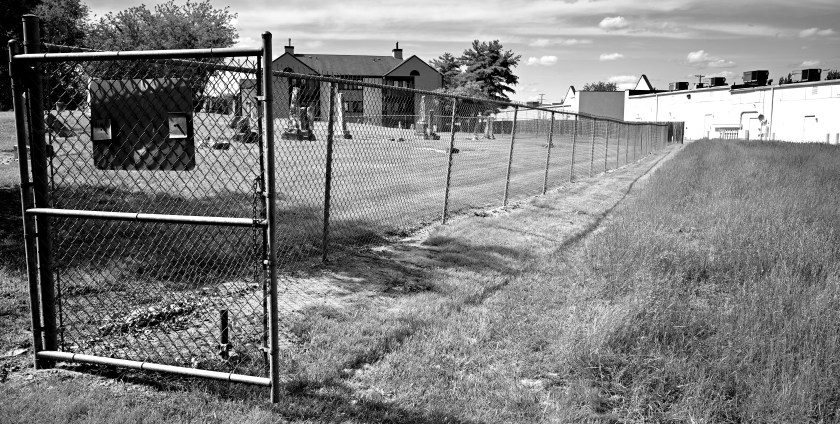
Sandwiched between a strip mall and an apartment complex in Ohio, an 18th-century graveyard..
By MICHAEL PERKINS
CEMETERIES USUALLY PROVIDE VISUAL CUES GALORE for both passersby and photographer, with hefty monuments, iron gates, placid, leafy grounds, and flower-crowned epitaphs. Most final resting places also stir in a big dollop of dignity, of august respect, a way of marking the importance of those interred below. A send-off befitting the lives they lived.
But not always.
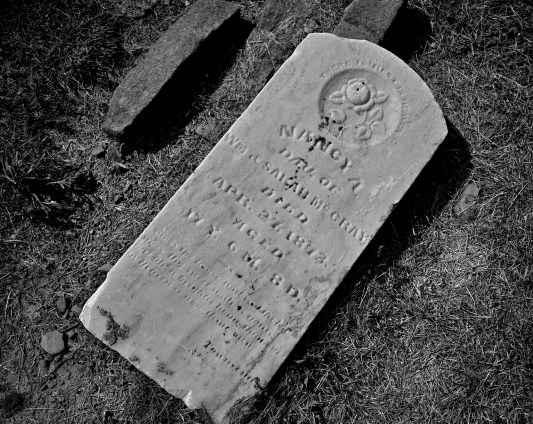
A place of neglect instead of respect.
Grave sites, and the gravitas they receive from us, vary wildly from town to town. You might be laid to rest beneath the uniform, manicured fields of Arlington, or, as in this forgotten patch behind a strip mall in Reynoldsburg, Ohio, you might be in a random gathering of crumbling headstones hemmed in by an ugly cyclone fence, overgrown with weeds, lacking even the simplest legend on the origins of souls gone so long ago that half the data on their markers has been effaced by time. The graves here date back to the earliest days of the republic, with even a few occupants from the revolutionary era. However, to drivers whizzing by the front of the shopping strip on state route 256, they may as well be on the moon, the only hint of the site’s existence being a small post-mounted sign reading “Historical 1819 Seceder Cemetery, Behind Shops.”
In speaking to several people who live in the immediate area, I found that the fact that there was an historic cemetery moldering in neglect just yards away from where the locals drop off their dry cleaning or shop for snacks was a complete surprise. The living and the dead tend to be more side-by-side in smaller towns, and, in fact, several other, more lovingly maintained graveyards are scattered throughout Reynoldsburg. But so many things slip between the cracks of history. Time not only heals, allowing pain to be endured; it also erases, allowing loss to go unheeded, or completely forgotten. For guys with cameras, both legacies of the departed impart their own poignant pain.
MY FAVORITE DESTINATION
By MICHAEL PERKINS
AS ALREADY STATED IN EARLIER EPISTLES from this little gazette, 2024 was, in every sense, The Year Of The Great Uprooting. In reality, we only moved one state over, from Arizona to California, but in a broader sense, we changed nearly every aspect of our daily lives. After twenty-five years in the Phoenix desert, we changed our entire life context by plunking down just ten minutes from the Pacific Ocean in the coastal town of Ventura. For a photographer, it was like being thrown into the middle of a three-ring circus of fresh visual stimuli; the best possible reset of the senses. It was if I had never seen mountains, or the sea, or farm fields before; I was living like a native but shooting with all the spastic zeal of a vacationer.
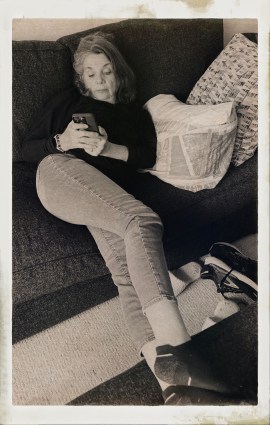
Still, with all that fresh fodder of making pictures, I find, on the last day of 2024, that my only possible choice for Most Important Photo Of The Year must, must, must be the candid of my wife Marian that you see here. In many ways, it’s the very definition of ordinary, in that I have shot hundreds of such images of her over our nearly twenty-five years together. However, the feeling that shot through as I happened upon her scrolling her phone in our new apartment, was the same one I get every time I feel compelled to grab a camera….an urgency, based on the belief that this moment must be saved.
Why not a shot of the beach or the hills ’round our new home for the “most important” of ’24? Because Marian is the real reason we landed here. It was her tenacity, her belief, her intense focus that kept me on task and fixed upon the final result during months of preparation; her conviction that, after years of daydreaming, we could actually make the leap to a new life. I am certainly a dreamer, at least when it comes to creative things, but I am something of a layabout, even a bit of a dimwit, when it comes to making practical arrangements. And so the look you see here, the slow-burning, sexy, amazing look I’ve enjoyed for decades, a perfect blend between serene beauty and keen awareness, jumped into my brain in the moment, jumping likewise into a very deep recess in my soul, reminding me why I decided, so long ago, that I had to have this woman in my life. As my life. And so, even though many scenic landscapes and local wonders from our new surroundings are sure to follow, this is the picture that defines the year, and so much more, for me. My favorite destination.
WE’LL TAKE A CUP OF KINDNESS YET
By MICHAEL PERKINS
IT’S A TIME OF LIFE FOR DECIDING WHAT TO KEEP, and what to leave behind. Photographers, as well as people in general, reach an age when lists must be made. The essentials versus the disposable. The legacies versus the litter. We know we can’t take it with us when we go, but now things are getting serious, and so we can’t even take everything with us as we, say, move across town. Boxes are searched: offers are made. Do you want this? If so, take it. If not…
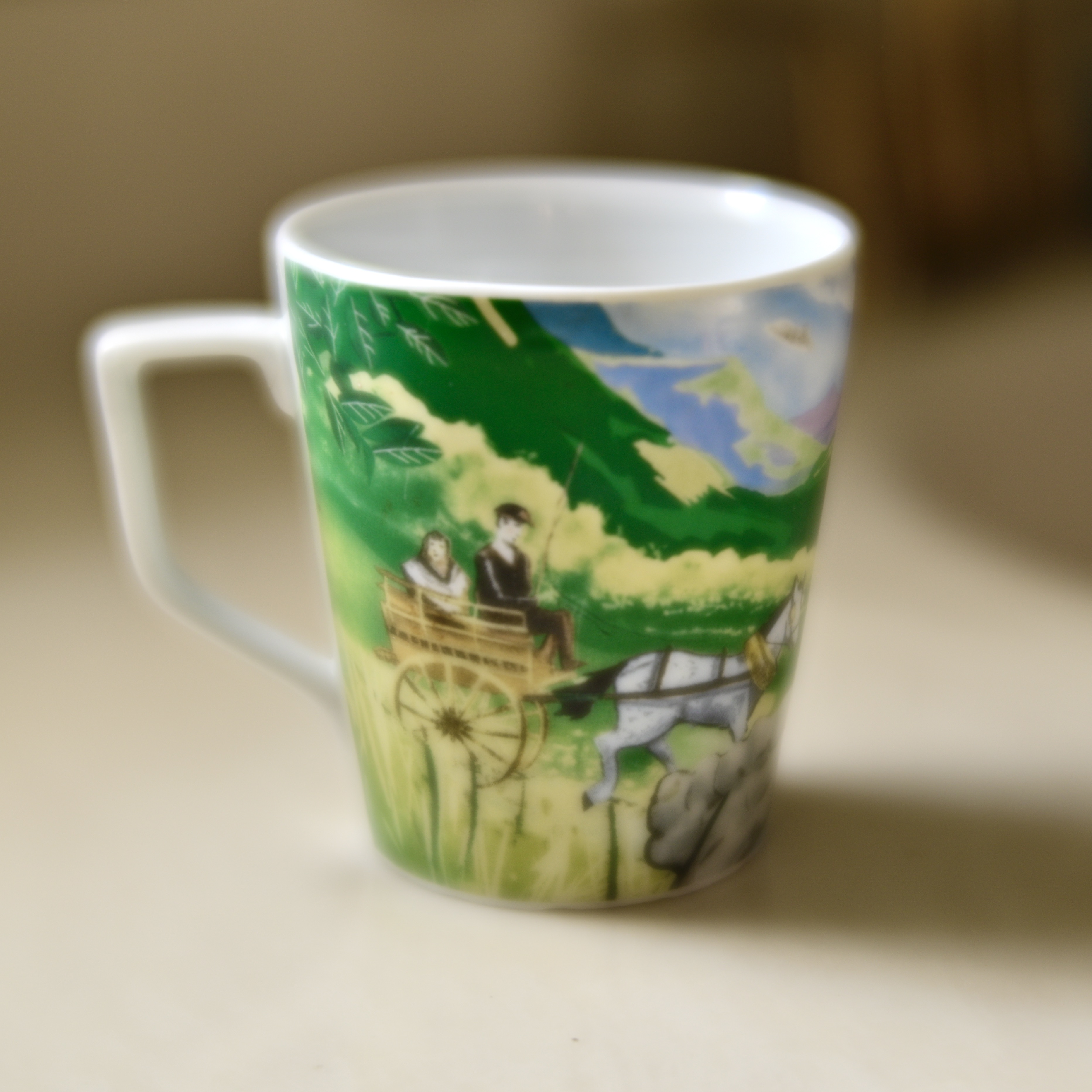
A year ago, this mug would never have made it into the keeper pile. I have often forgotten, over the years, that I even owned it, as it was one of those awkward gifts that an adult child gets from his aging mother simply because she has already bought him everything he actually wanted over a lifetime, and, oh, hell, here comes another Occasion. It’s kitschy and not my taste and was never on my radar as an object of desire. But a year ago, my mother was still alive, and so, now, it’s something quite different.
Now, the mug is bound up in things bigger than itself, having become a reminder that she loved that I loved that we were Irish. I was the one in my generation who “got it”, who thought that remembering our family’s journey from the Great Famine of the 1840’s to the present day was important, even an obsession, and so she wished up a token of that pride and sent it to me. I thought of you when I saw this.
And so, at this point, I make pictures of the mug, in an attempt to show a bit of the feelings that shape it in my mind beyond its mere physical reality. To interpret it as an aspiration, a remembrance, a ghostly vapor. Because my mother’s passing has not rendered the actual object any more valuable or artistic of and by itself. I am really taking pictures of myself from the inside out and draping that photographic veil onto the mug. In future, as the lists of keep/toss candidates pile higher and higher, the actual cup might well be left behind, but now that’s all right. In a photograph, I can continue to have something after I no longer possess it. That’s the miracle of a camera, and the best way to remember a woman who believed in, and often brought about, miracles of her own.
THE FACTUAL / ACTUAL FAULTLINE
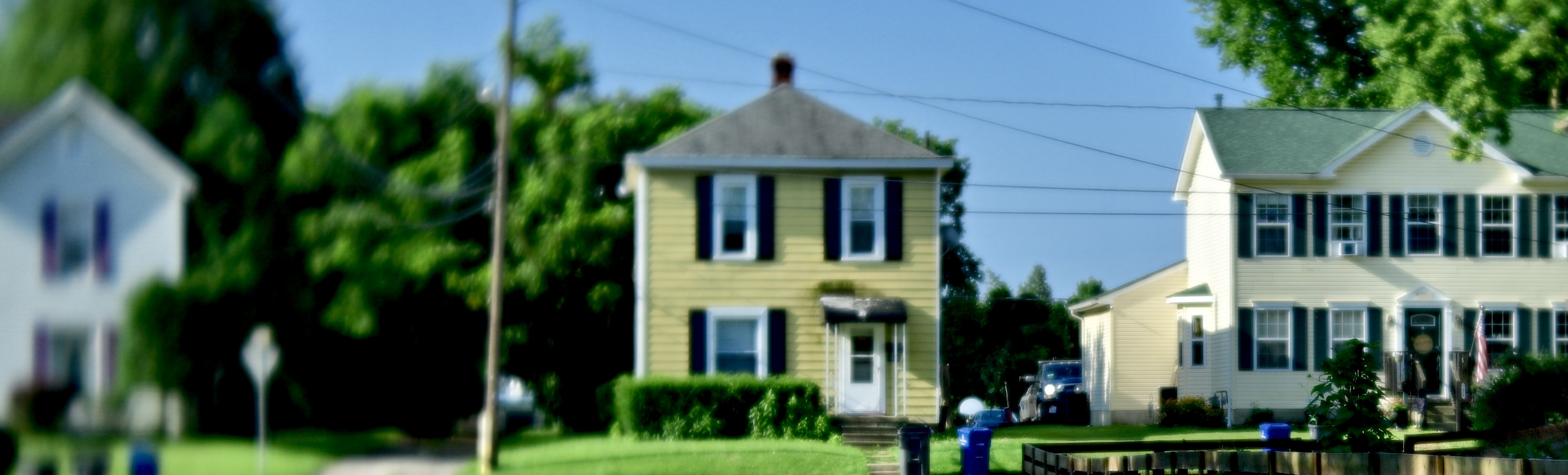
Back When The Browns Lived On Main, 2022
By MICHAEL PERKINS
I RECALL A 1972 INTERVIEW WITH A PROMINENT ROCK CRITIC in which he confessed that, three years into the new decade, he was just getting used to the idea that the 1960’s were “going to end”. Not the idea that they were already over. No, he was even wrestling with the concept that they would ever be so. Such is the plastic quality of our sense of time. In some moments, it seems like the things we’re living through will continue forever, while, at other times, it seems like everything, everywhere, is already past. This yo-yo-ing sensation plays hell with our emotions, and, in turn, with the pictures we attempt to create with transient subjects. At least, that’s what happens with mine.
One situation which gets my own internal yo-yo spinning involves making images of small-towns life, which always sets me careening between the sensation that I’m both experiencing something that’s truly eternal and, simultaneously, something that’s as gone as the dodo. Standing on the simple main streets and leafy, sleepy lanes of the villages and burgs that have so far outlasted the twentieth century, it’s easy to be assimilated into the place’s slower rhythms, to briefly be lulled into thinking that it’s really the rest of the world that is imaginary. But then there is the rude shock of walking past a 1940’s drug store, complete with lunch counter and soda fountain, and bumping into a place that repairs iPhones. For a second, nothing makes sense. The two “realities” do, of course, co-exist; however, we are aware that the relics of the earlier era have essentially overstayed their welcome. They are living on borrowed time, the same borrowed time we, as photographers must now use wisely before….before…..
The surreality of shooting in small towns dictates the look of my pictures of them. I tend to use exaggerated tonal ranges, soft, painterly looks and dreamy art lenses on them, rather than merely recording them with the sharpness and balanced exposure of mere documents. As their very actualness is now so fluid in my mind, I prefer to see them as in a dim vision or imperfect remembrance. They seem more poignant for being less fixed in our regular way of seeing.
Like the 70’s reporter that couldn’t imagine his “time” ever coming to a close, I wrestle with the task of depicting worlds that are rapidly receding into the realm of memory. Oddly, making them look less literal bolsters their reality to me. For, like that reporter, I can’t imagine that they are ever going to end, and that dictates how I tell my camera to see. At that point, the machine, the instrument, is as unreliable a narrator as my own memory, just as it’s also made more reliable to my heart.
A GAME OF INCHES
By MICHAEL PERKINS
TO BEGIN WITH, EVER SINCE THE INSTANT I TOOK THIS PICTURE, I have wondered if I had the right to.
The all-invading eye of the camera should be tempered at times by our awareness that it allows us to look in places that perhaps should remain beyond our discovery….that, having seen a thing via these miraculous machines, we cannot ever un-see them. This feeling has accompanied the most recent images I’ve made of my parents, both now in their nineties, both unsteadily Pulling Into The Station, so to speak. Their every day is a high-wire act that vibrates between desire and risk, between the drive to do what they once did so effortlessly and the daunting dilemma posed by trying to do, well, anything. They are playing a reverse game of inches.
I want to stop what time is still left. I want to lean on the camera’s reliable value as a recorder. I want just. one. more. memory. And yet, in chronicling the ever-tougher track of their days, I am aware that no single frame will convey what I’m seeing, or can ever sum up a near century of living, striving, failing, loving, dreaming. And so I keep making pictures, pictures that will always come up short, even as they are increasingly precious.
I can often feel as if I’m violating a trust, making these images.
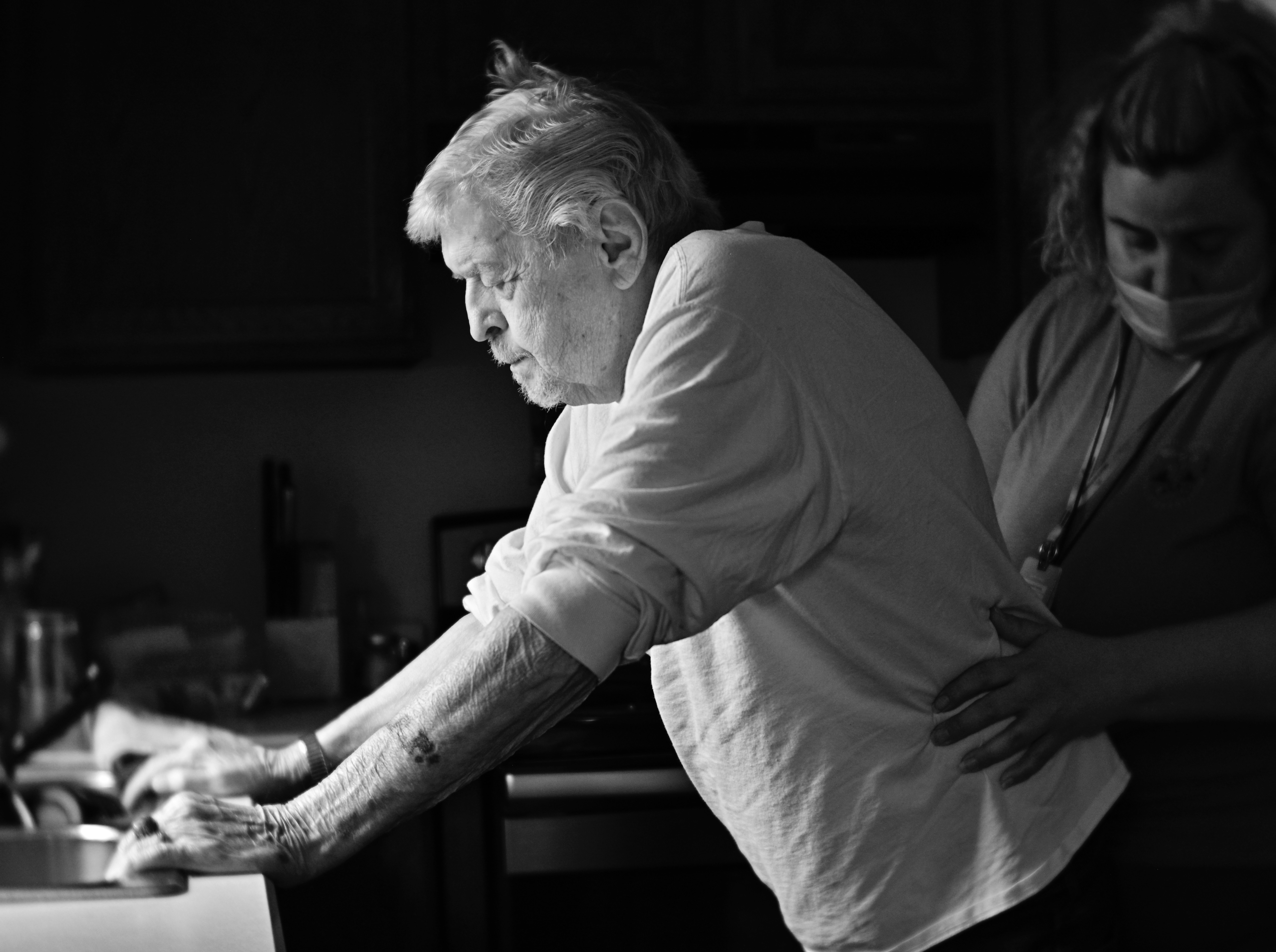
The one you see here is of a very ordinary thing; my father, at ninety-three, doing his weekly physical therapy session. He needs it to shore up his strength, protect his muscles against atrophy, improve his balance. Beyond that, he needs for his body to have something achievable to reach for, just as his still-acute mind is still stretching to embrace ever-new concepts and projects. His focus in these sessions is determined, but not angry; he knows how much has been taken from him and my mother, but his emphasis is not on regret, but instead on squeezing the juice of opportunity out of every instant of time he has left to him. Me, I have to force myself to photograph this all as dispassionately as I can, since it’s me, not him, that is mad, that indulges in self-pity. But that’s my parents; gaping into the chasm, they are still turning back toward me, the everlasting upstart student, as if to say, watch carefully; this is how it’s done.
This morning, driving around my neighborhood and mentally sketching a layout for this post, I asked Siri to play a song that, for me, has gained additional poignancy over my lifetime, Carly Simon’s “Anticipation”, knowing full well that I would be sobbing by the end of it. Still, in the context of where I and my parents are at the moment, I also knew it would leave me feeling, in some amazing way, grateful for its wisdom:
And tomorrow we might not be togetherI’m no prophet and I don’t know nature’s waysSo I’ll try and see into your eyes right nowAnd stay right here ’cause these are the good old days
FEEL CLOSE, SHOOT FAR
By MICHAEL PERKINS
YEAR ONE WITH MY VERY FIRST CAMERA was a demonstration in pure randomness. Whatever passed directly in front of my $5 Imperial Mark XII got caught in the frame. Whatever wasn’t… well..
Without a doubt, I made some fumbling attempts at composition, but, at least at first, the idea that anything at all would show up on the film was so mind-blowing that my idea of “success” was a packet of prints that came back from the processor having registered basically any registration of color or definition. I was too busy being grateful for the miracle to nitpick the results.
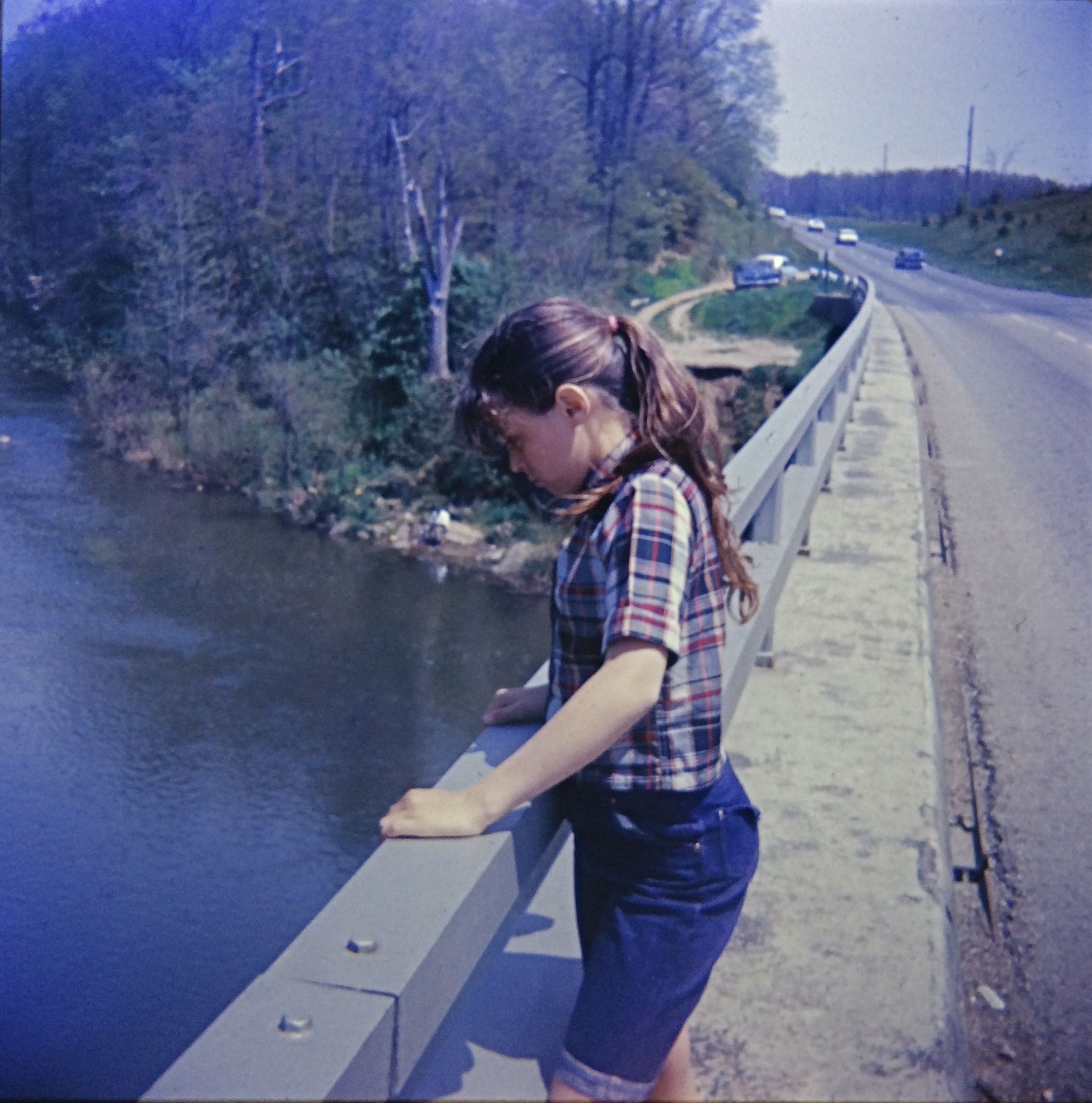
This picture of my sister Elizabeth came from that period, probably the summer of 1966, and although it was, in execution and planning, a pure snapshot, it has brought a few souvenirs along with it as it’s travelled through time. It’s shot wide, but then, with a fixed-focus plastic lens loaded with aberrations, that’s about the only way she could have wound up even reasonably sharp. Again, I said reasonably. And so, even though she is prominent in the shot, it also took in a lot of incidental time-capsule information that is really only relevant to we two, all these ages later.
For one thing, the thoroughfare to her right, a two-lane country road out in “the sticks” at the time, is now an eight-lane feeder highway to Columbus, Ohio’s massive I-270 outerbelt. The creek she is looking into is largely invisible due to this expansion. Up beyond the horizon on the right is a densely forested metro park where we were taken for school picnics and field trips. It’s still there, but negotiating a service road to gain entry into it now requires a degree from MIT. And, of course, the only place you’ll find the autos that are touring back and forth is at either a museum or a classic car show.
When I’m away from this shot, it’s easy to forget a lot, like how going to that park was a “day in the country” for us at the time, even though it was hardly a twenty-minute drive from our house. Today, that “country” is a sprawling crush of chain stores, restaurants, and housing tracts, all of which have surged further and further eastward from the city’s core over half a century. And finally there is that face, that flawless, guileless, innocent face, still free of the scarring battles that would envelop us both over the course of our lives together. This week, this child turns sixty-eight, and I am about four hundred and thirteen or so, depending on which day you ask. But when my thoughts turn to my undying love for Elizabeth, I see this image, taken wide to include lots of temporal flotsam and jetsam, but shot just close enough to bring an angel into focus.
CRUMB TRAILS
MY MOTHER IS NOW APPROACHING NINETY, and must thus be coaxed into being photographed. Good sport that she is, she can be cajoled into the occasional holiday snap here and there, but, by and large she regards sitting for the camera in the same way that she views all the other rigors and indignities of age, as a nuisance that must be endured. She has forgotten how beautiful she has been in every stage of her life, and mistakenly believes that we only want to see her as she once was, when, in reality, all we really want to do is…..see her.
As a consequence, I have taken to photographing objects that echo her presence, and, in some way, define her life as it is right now. She may, herself, be reluctant to pose, but the things she touches and uses regularly bear unmistakable elements of her, however subtle. We are long accustomed to the process of summoning the departed through contact with what they have left behind, be it jewelry, clothing, personal mementoes, or even other photographs. This was the essence of Annie Liebovitz’ amazing book Pilgrimage, her collection of images of the workday property, costumes, and physical spaces associated with Abraham Lincoln, Emily Dickinson and other essential Americans who left long before any of us living could encounter them through anything else but….things. But in the in case of our own long-living relatives still present, we can conjure their spirit in the items they use on a daily basis even as they themselves remain available to us. That affords us an amazing additional basis for comparison.
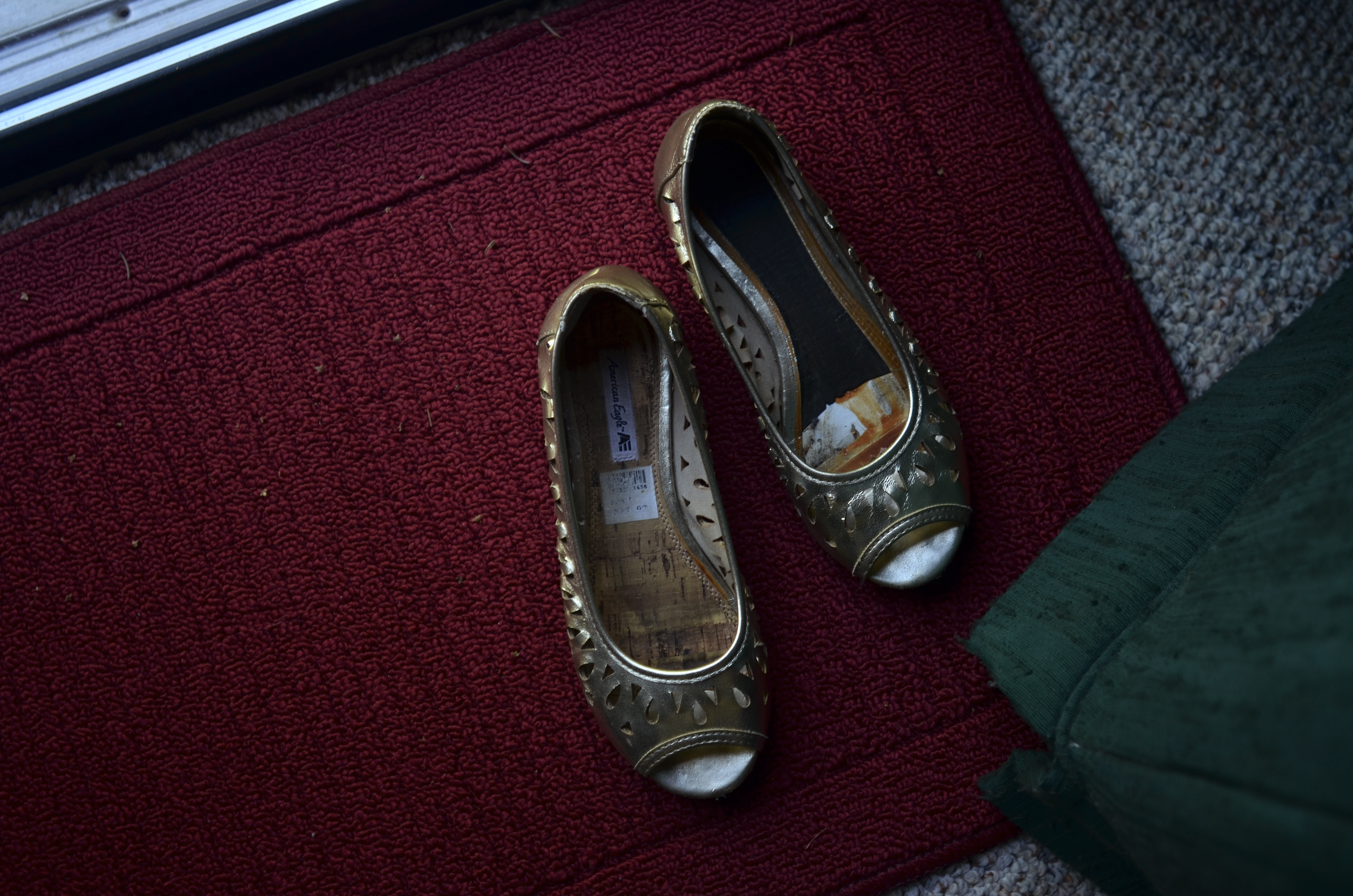
These are my mother’s casual slippers. She mostly uses them to walk out onto her rear deck for some sunshine and meditation. They are not fancy shoes in any sense. The uneven pattern of wear in them reflects the very real work required for her to move herself from one point to another, and so I wanted that to show. I also like the fact that they are not so very plain, that at least a little of the style and elegance which has always been a comfort to her continues to deliver that very human dividend. She could never wear Keds or clogs, even in the privacy of her own home. As Auntie Mame famously said, “life is a banquet, and most poor bastards are starving to death.” Mame and my mother would have found common ground on the basics of Living The Life Exuberant. So let the insides show a little fatigue. Outside, there is always room for a little glamour.
And so, in pursuit of photographs like this one, I want to spend every visit with her and my father finding all the things in the house that bespeak them, all the worn/fancy slippers that bear witness to lives that are a delicate high-wire act between the sparkle of their youth and the gravity of their final innings. That is a complicated thing to show visually, and I will need to call on every skill I possess to get it right. But that is certainly the essence of being a good photographer, and the happy/heartbreaking role of a good son.
A MILITIA OF MILLIONS
By MICHAEL PERKINS
THERE WERE NO CAMERAS IN THE WORLD when America fought the first war on its soil, leaving mostly paintings of generals on horseback as a visual chronicle of the struggle. Now, in our latest war, also on our soil, there are millions of images created each day that strive to comprise a pictorial narrative of the unfolding tragedy. But more is not necessarily more: when the final battle has been fought, there will still be oceans of pictures missing from the saga, stories still left untold.
Perhaps it’s the nature of this very strange conflict, fought not against combatants with rifles but against Nature itself, which makes the pictures come so hard. Now, there is no visible demarcation between soldier and civilian: there is no designated field of combat, but thousands of little ones, many of the clashes and outcomes unseen, the casualties themselves vaporized in a fog of grief. And yet we struggle for any kind of visual measurement, some yardstick by which to measure our pain. The task may be beyond the power of any camera, at least any of which we’re aware.
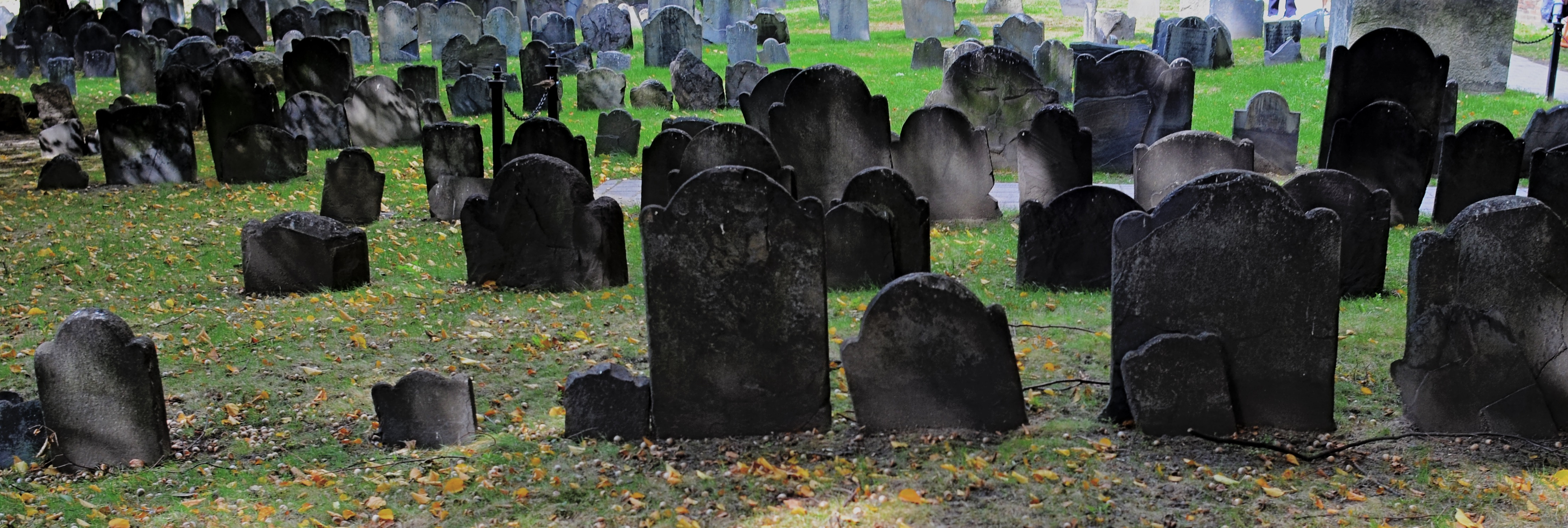
Boston, 2016
I’ve been searching over the past few days through my own stacks for the above image, because, being of a revolutionary-era churchyard in Boston, the markers shown are literally those among the first to fall in that earliest of American wars. Given that the inscriptions on the tablets have been almost totally effaced by time and the elements, I consider these monuments symbolic of the strangely imposed information blackout we are all under regarding today’s citizen soldiers, many of whom vanish from our mist without formal lists, monuments, or in all too many cases, even a human goodbye. Like the data once stored on these blank slates, our true talIy of sorrow has been edited, censored by fate.
I feel that, in the year 2020, the meaning of Memorial Day has been unalterably changed for me, and for everyone in our dread new militia of millions. Many of the fallen were not drafted, nor did they volunteer, and yet they have been conscripted by destiny in a way that is fully consistent with those whom we normally honor on this day. Many may never be inscribed on a monument that our children may visit on a school field trip: their faces will, in many cases, escape our cameras. Many more will never be interred with a flourish of folded flags or the reassuring regimen of military pomp. Still, over the coming years, watching ourselves and other survivors remember the fallen may inspire us to create new kinds of images, scenes that we can scarecely dream of at present. As with those headstones from our first days of passage, we need to retain what symbols we can of what we have lost, seeking in time to fill in the rest, to develop the remainder of the picture.
The 35MM SHRINE
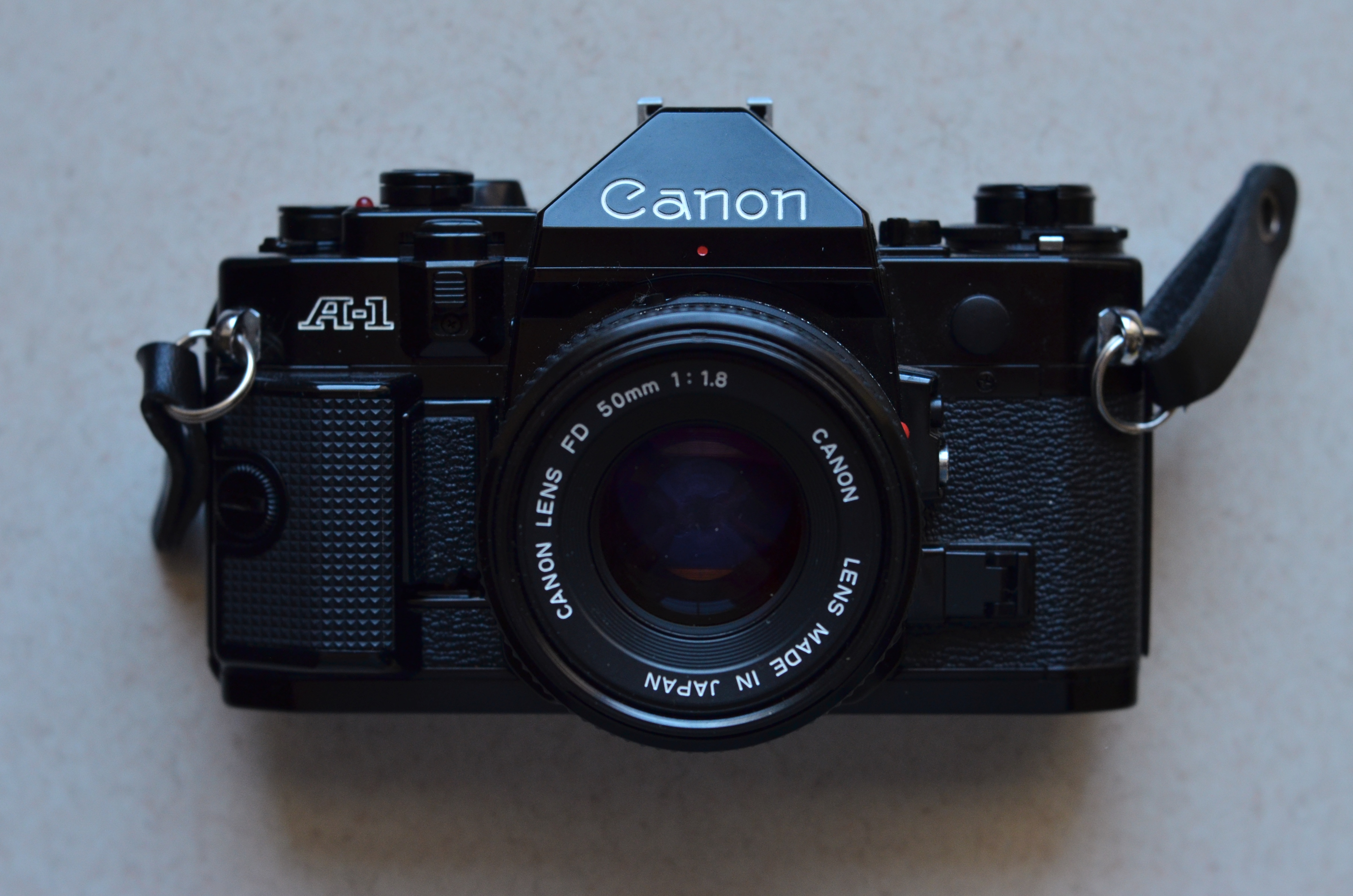
The legendary Canon A-1 35mm SLR.
By MICHAEL PERKINS
MY FRIEND PAUL IS GONE, but I am holding a small part of him in my hand.
He passed late last year, adroitly avoiding the current Great Hibernation and all its horrors. By that time, he had survived a hardscrabble farmer’s childhood, the armed forces, half a dozen skin cancer scares (the farm years’ legacy), several strokes, a fused spine, and nearly eighty years of other scrapes which he largely dismissed with a wide smile and a cackle of a laugh. Before the turn of this year, however, he finally met an enemy that was too big to side-step, and now he is gone.
I hold a part of him in my hand because his wife and friends recalled, in the grief-driven process of finding homes for his various possessions, that I liked to make pictures. And so Paul’s camera gear….including lenses, brackets, cases, bigger cases to hold the smaller cases, cleaners, filters and flash units…became mine. I wasn’t chosen for the higher purpose of carrying on his legacy, or even understanding what he did with all this stuff. But it’s mine now. Much of it, I can’t practically use, but absent even one photograph of us together after a seven-year friendship, these gizmos are, now, rather sacred to me.
Annie Liebovitz and other shooters have made entire sub-careers photographing the personal belongings of people, from Emerson to Eleanor Roosevelt, that are themselves beyond the reach of portraits in the classic sense,. The gloves Lincoln wore to Ford’s Theatre. Annie Oakley’s performance costume. Paul’s cameras are like that to me. They can’t resurrect him the way a picture would, but they are talismans that summon a part of his spirit nonetheless.
Paul was an exhaustive student of rock ‘n’ roll, taking his youthful love for that music to a scholarly extreme. He didn’t just worship Buddy Holly:he traveled to Texas and became personal friends with Buddy’s widow, Maria Elena, a relationship that moved her to give him several ultra-rare studio recordings that you’ll never find in any textbook or collection anywhere. He could rattle off the personal histories of every one-hit-wonder in Top 40 history, and, coming from my own background in pop radio, I knew he was dead-bang perfect on every detail. He was also a natural gift for any kind of technical analysis, having worked as a TV repairman in the 1950’s and for IBM back in the punch-card era, and so I can easily imagine him applying that same degree of precision to the making of pictures. The quality and condition of the gear also argues for his orderly mind, as in the case of this pristine Canon A-1, the company’s first-ever SLR with fully automatic exposure, a camera from the 1970’s that is still influencing every element of camera design in the twenty-first century. I may never be able to make pictures with it. But it makes memories for me, even as a 35mm shrine sitting on a shelf.
I often read the user’s manual, and wonder if Paul needed to. After all, he seemed to live his life as if he had already figured out the instructions all by himself. In the end, his brain did all the best kind of work that people usually credit a camera with. That means that even if I never snap a frame with Paul’s camera, he’s already taught me, through his friendship, a vision that transcends gear.
Thanks, pal.
GETTING PAST IT ALL
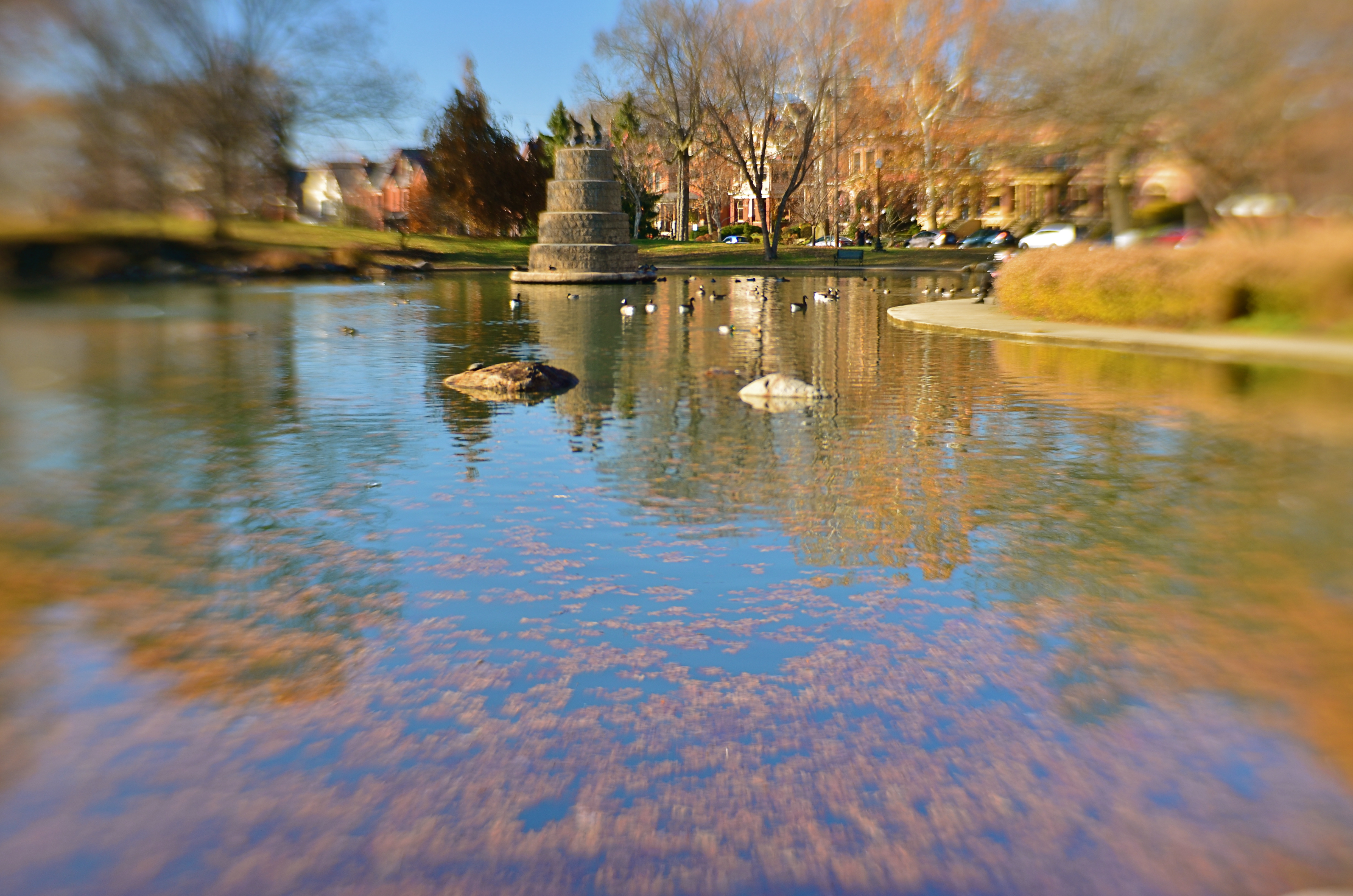
Is this image of a city park any less “real” than my childhood memory of it?
By MICHAEL PERKINS
SOME MEMORIES ARE BURIED SO DEEPLY in our mental archives that, like old snapshots, they deteriorate, browning along the edges, retrieved only in imprecise or incomplete detail. Ironically, these mainstays of our very personhood evolve over time from fact into folklore, rendering fundamental, formative events unreliable, suspect.
And if one’s personal memory of a time or place is less than “actual”, what about photographs of the places where those imperfect memories were forged? How can camera images of battlefields, home towns, even one’s childhood home record anything real beyond physical dimensions?
The park in the above picture first entered my consciousness in the late 1950’s, when my mother had medical appointments a block away and my father walked me around the perimeter of the pond to kill time while she lingered in the waiting room. I recall very specific things about tile mosaics of fish set in the concrete walkways around the water, and a few flashing impressions of a nearby cafe which no longer exists, but that’s pretty much the sum total of my memories of the place.
So, as a photographer in 2017, how do I even attempt to make a visual document of this locale? Any specifics of my own experiences here have been smeared and sandpapered until they only represent a part of a part of the real story. Shouldn’t I, in fact, sort of “free-associate” the scene, assuming that any fresh impressions are at least as trustworthy as my moth-eaten memories of it? Since I can’t reasonably capture a faded dream, isn’t the dream realm where I should draw for the missing pieces?
We only suppose that a camera, which at one level is a mere recording instrument, will act as an objective reporter on the current sites of our old adventures. But that’s the problem. It can only take measure of things as they are, not the unique mix of fact and fable that passes for experience in our imperfect minds. And so we frown at the results and mutter, “it’s not like it was…”
The reply to which should be: how would we know?
 thenormaleye