LXXIV, OR THEREABOUTS
Through his nightmare vision
He sees nothing, only well
Blind with the beggar’s mind
He’s but a stranger, he’s but a stranger to himself—Steve Winwood, Jim Capaldi
By MICHAEL PERKINS
I’VE SCRIBBLED MUCH IN THESE PAGES OVER THE YEARS about the challenge of doing something photographers both big and small do zillions of times per day, with widely varied results; attempt a self-portrait that actually tells the truth.
Knowing the kind of entertaining liar I can be at times, I always mistrust my results, as, when it comes to self-knowledge, I may be the ultimate “unreliable narrator” available for making an image of myself that is honest. Not that I haven’t tried. As decades of birthdays have come and gone, I’ve posed myself in both formal and casual settings, in search of some elusive quality of…. authenticity?……only to wind up feeling like, oh, hell, I’ll get it right next year…..
This time out, this February 8th, I saw the task differently, as I have just spent several months trying to regroup from a series of nerve injuries which included my forearms, a condition that made simple tasks like opening a pickle jar seem herculean. The temporary loss of strength and fine motor function in my fingers was especially depressing, since it wrecked havoc with my ability to operate a camera with any real degree of control. Suddenly, my artist father’s old teachings about hand-eye coordination came back to me in heartbreaking echoes. What if that linkage between what I could see and what I could execute were to remain forever severed?
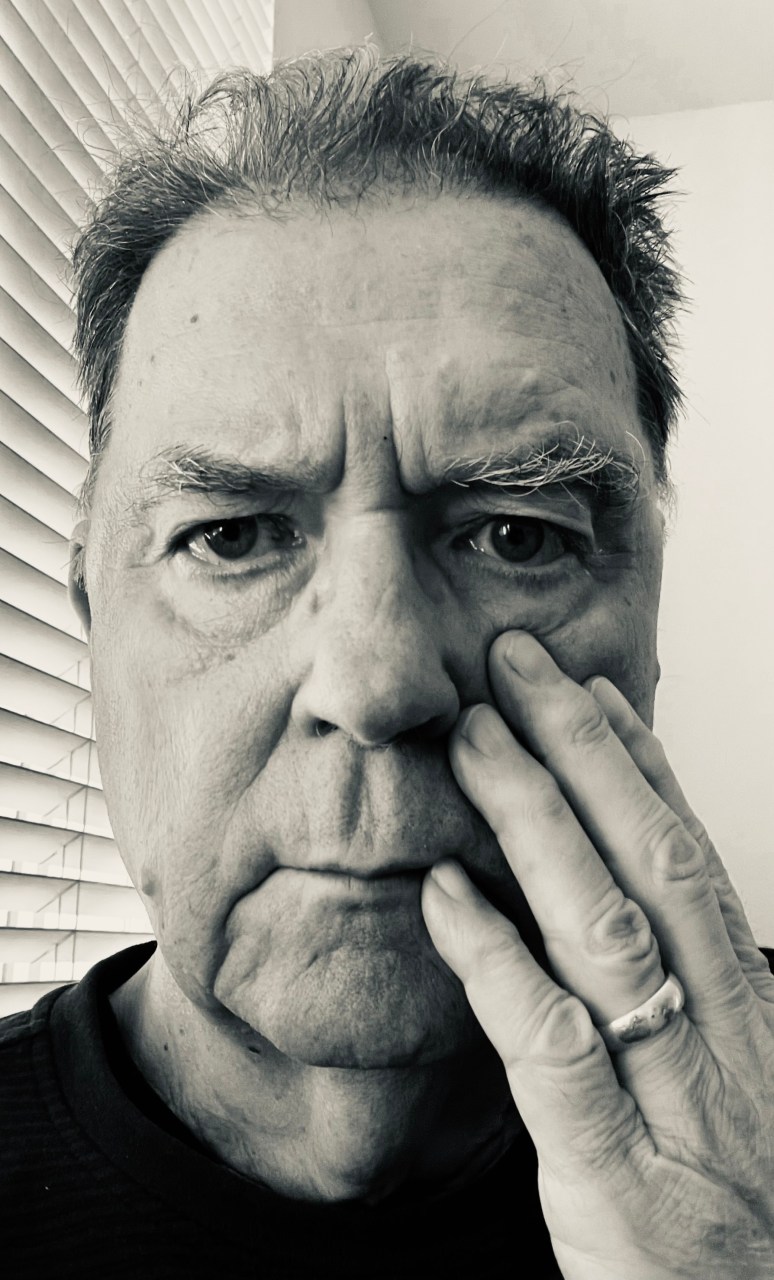
And so, with mere days to spare before turning seventy-four, for me to actually get 99% of that back….well, it certainly clarified the terms of any birthday selfie I might normally have planned. No big costume changes, no symbolic props, just a simple document that my eye and my hand were back on speaking terms. No other kind of image seemed to make sense; I was crawling out of a hole in which normally conjoined parts of me were not connecting, and there could be no other visual depiction of that reconciliation than documenting the re-establishment of that link. Life, like photography, is often a game of inches, with all of us struggling to have our grasp exceed our reach, and when your fingers occasionally close around those goals, you’ve snatched the greatest treasure in life.
NOT MY REMEDY
By MICHAEL PERKINS
OKAY, LET’S JUST STIPULATE THAT MOST OF US HAVE A larrrrrrrge photo folder filled with what I call SLAGIATT images. Now, longtime friends of this gazette will recognize that acronym as one of my favorites, this one translating to Seemed Like A Good Idea At The Time. You know what’s in the folder: bold experiments, failed executions, incomplete concepts, impossible tasks…..an “orphans” file for the stuff that didn’t work out, the ones that got away. Maybe you yourself don’t actually have such a folder per se, because the shots that qualified for it went to Delete Purgatory years ago. Whatevs. The fact is that the SLAGIATTs always, always outnumber the Keepers. They worry us, haunt us, like running your tongue over where a lousy tooth was extracted, a tooth that, with a little more flossing, you might have saved.
This right here is a SLAGIATT picture.
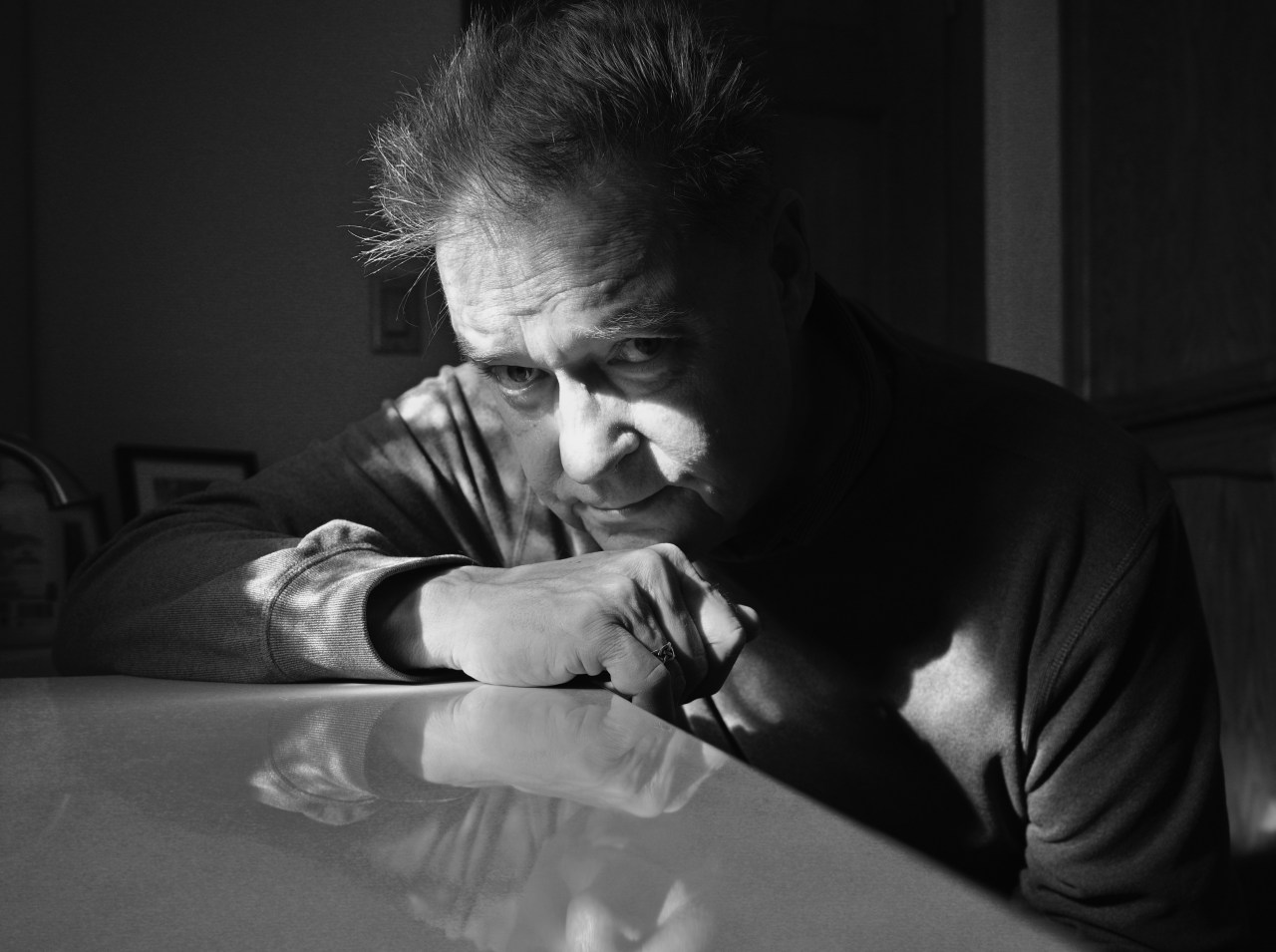
In early 2024, I was stricken with a particularly bad patch of sciatica. We’re not talking a mild ache here, but a week-long I may-need-help-getting-to-the-john stretch of agony and sleep deprivation. As it happened, the back end of the bout coincided with my birthday, which I usually mark with a formalized self-portrait, an annual state-of-the-union on my face, and what it does or does not project to the camera. I decided not to skip the ritual, despite how I felt, and thus ground out a few of the most painful pictures I have ever produced. I’m not talking about the physical discomfort involved in sitting for the session, but rather of the dismay I experienced looking at the result. I’m sure I thought, at the time (there’s that phrase again), that showing myself in distress was…..what? Honest? Authentic? Brave?? Maybe I thought, hey, I subject everything else to my camera’s unblinking, indifferent eye, so why not my wracked frame? Well, it might have been good mental therapy(again) at the time, but, looking at the pictures a year and a half later, it’s like looking at home movies of a very bad facelift.
This whole issue wouldn’t be top-of-mind with me if I hadn’t just spent another recent multi-week stretch ouching myself around the house, this time with a pinched nerve. Not quite the same level of grief as the sciatica, but enough that, in the mirror, I see, not a brave, determined soul, but merely a tired, sick whiny-baby who wants to get well, like, yesterday. No selfie is going to make me feel “determined”, or stoic, or courageous, at least not right now. And as for my camera, the only thing that’s keeping me positive at present is daydreaming of the day when I can get back out there and point it at something else. Anything else. That may not be the artistic way of seeing the situation, but there it is. In any event, the whole review has been good for me. Some ideas are so bad that they merit a re-think, and maybe a few reflective fingers of scotch.
WHAT KIND OF ME AM I?
By MICHAEL PERKINS
BEING THAT I WAS BORN DURING THE MIDDLE OF THE PREVIOUS CENTURY, most of the pictures that have been taken of me over a lifetime were, on average, shot by someone else. In my day (the old coot intoned), the self-portrait, along with the ubiquitous “selfie” was not the universal default for photography that it later became, meaning that, in my earlier years, one more carefully contemplated having one’s face captured for posterity, in that it was more of an occasional thing. Certainly, as a baby-boomer, I grew up in a world littered by millions more amateur snapshots than was the case in my parents’ generation, all of them mixed into the stew of more formal portrait “sittings” associated with major life events. Still, the ability to instantly and endlessly turn the camera inward was in no way as instinctive a habit for me and mine as it is for those born in the present era. This place in time that I occupy in time, then, continues to color the task of making my self-portrait. My aims are distinct. I seek certain things; I avoid others.
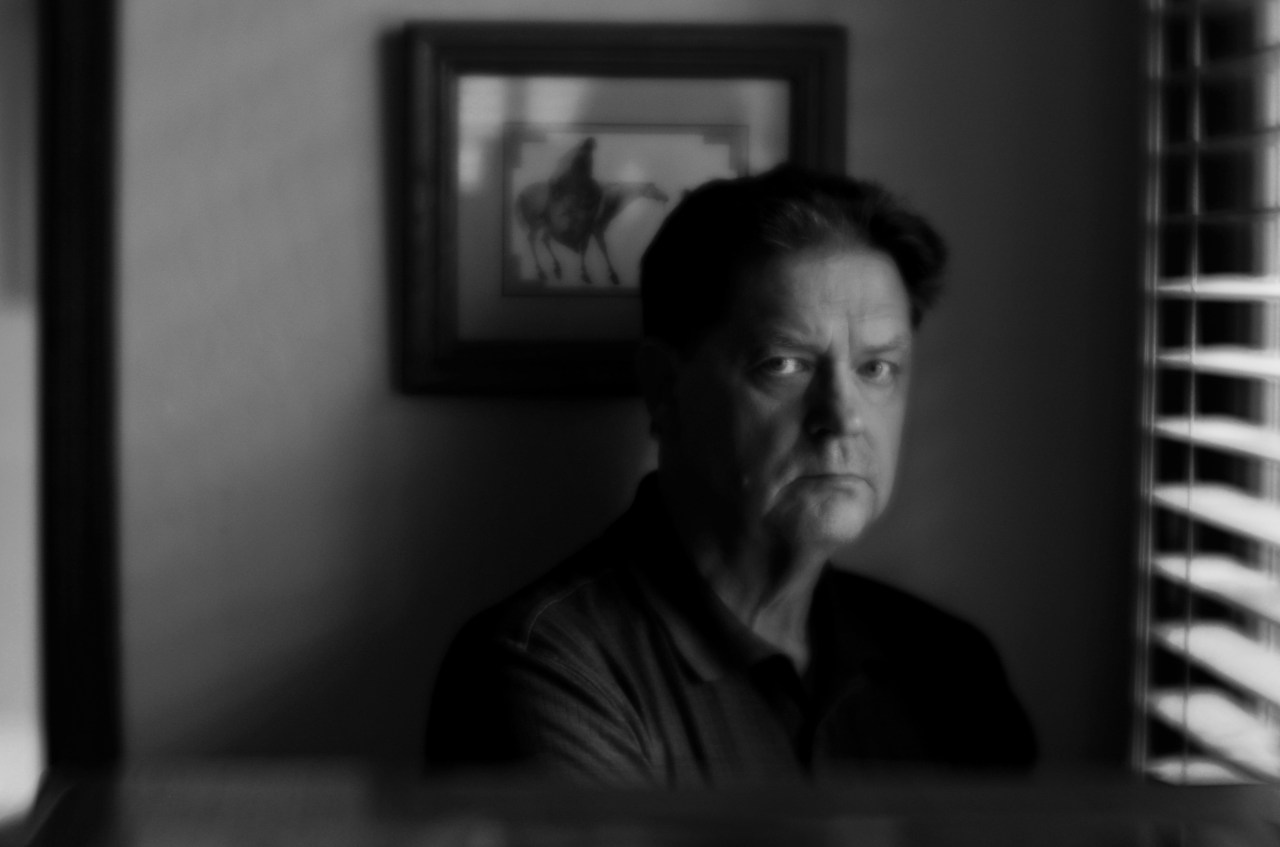
Portrait work, for me, is an investigation, an attempt by my outside eye to detect something inner about another person; to view them interpretively, possibly with the goal of seeing something in that person that not even they themselves knew existed. That draws a definite line between how they self-view and how I am privileged to approach them, that is, objectively, as subjects. When it comes to having someone snap me, however, I have the normal human instinct toward self-protection. I perform. I pose. I craft a caricature of myself that I can live, a simplified, polished rendition of my best parts.
Ah, but once I decide to capture myself, I’m hoping to plumb down into some layer that not only has never been discovered by outside eyes, but which might even surprise me. However, the modern “selfie”, by contrast, is actually anti-discovery in nature. How could it not be? We craft palatable, pleasing versions of ourselves that are as superficial as an outsider or a publicity agent might shoot, because, in the age of social self-marketing, they are commercial products designed for mass consumption, and, crucially, mass approval. Shooting straight in such a context is tricky. I don’t always like what I see in a self-portrait. Sometimes I dig a little too deep. Sometimes I still catch myself performing, attempting to make myself more serious, or intense, or important than I actually am. Hell, I’d even like to make myself look twenty pounds thinner and ten years younger. But, as a photographer who is supposedly interested in truth, I have to keep trying to find out what that actually looks like. Or what I look like when I am true.
It’s a process.
HELLO, IT’S ME
By MICHAEL PERKINS
Through his nightmare vision, he sees nothing, only well
Blind with the beggar’s mind, he’s but a stranger
He’s but a stranger to himself– Steve Winwood / Jim Capaldi
NEEDLESS DISCLAIMER DEPT: THE SELF-ABSORPTION OF HUMANS IS NOTHING NEW. Still, by itself, it can’t completely account for the virtual tsunami of photographic self-portraits that has flooded the cosmos over the last generation. Due mostly to the cell phone revolution, snapping yourself has never been technically easier. Additionally, the instant feedback of the digital era has allowed us ample opportunity to experiment, quickly and over a wider spectrum of results, making for more keepers, which, in turn, makes for more attempts, which….well, you get it.
What hasn’t always kept up, in the age of photographic narcissism, is how well we actually know our subject…that is, ourselves. You’d think that a lifetime of living inside our skin would give us a decided advantage on how to present ourselves effectively or honestly in an image, but you’d be wrong. I certainly can deliver a passable version of myself on those rare occasions when I try, although over the last decade I am making a lot fewer attempts, perhaps because I see such a chasm between what I’d like to look like and what I must, actually, look like to others.
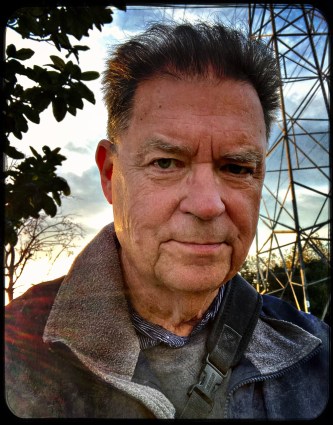
The shot you see here is my first take on a “me” shot in about eight months’ time. This selfie drought is due in part to the fact that I’ve moved to a new town, and there is so much new stuff out there to shoot that I haven’t felt the need to turn the camera around. It’s also a measure of how “over it” I am with seeing my own visions of myself come up short. And, of course, there’s also the possibility that I am just not that fascinating a subject to begin with (hold your applause) and that I am naturally drawn to more compelling subject matter. It’s just really odd, this strange state of knowing so little about how to visually interpret the same clown you’ve seen in the mirror since you were tall enough to reach over the sink. Are all selfies partially true? Mostly lies? Interpretive delusions we’ve sold ourselves? Stark reminders of our limits or fragility? All of the above?
I see one hand raised in the back. Let’s you and I have a coffee and talk it over.
The rest of you are dismissed.
GENUINE FAKE REVEAL
By MICHAEL PERKINS
THUMBING THROUGH THE PORTFOLIOS OF THE CLASSIC HOLLYWOOD PORTRAITISTS, we marvel at the combination of art and science that created not just images of the famous but delicate, artificial constructs, visual myths of lower-case gods and goddesses that held far more allure than mere snapshots. We look at these pictures now and see them for the sly marketing they were, as we were taught to value the idea of a face more than the face itself.
Today, the average photographer has tools at his command that rival those of the old masters of airbrush and studio lighting, allowing us to mold our own smiles as deftly as George Hurrell sculpted the cheekbones of Joan Crawford or placed a twinkle in a corner of Myrna Loy’s eyes. The enormous surge in self-portraiture in the digital age has grown up side-by-side with these instant-fix tools, to the point that we are seldom presenting ourselves to the world “in the raw”, but, instead are troweling layers of post-shuttersnap glop onto ourselves in a desperate attempt to, if you will, create a legend. The legend of us as we’d like to be.
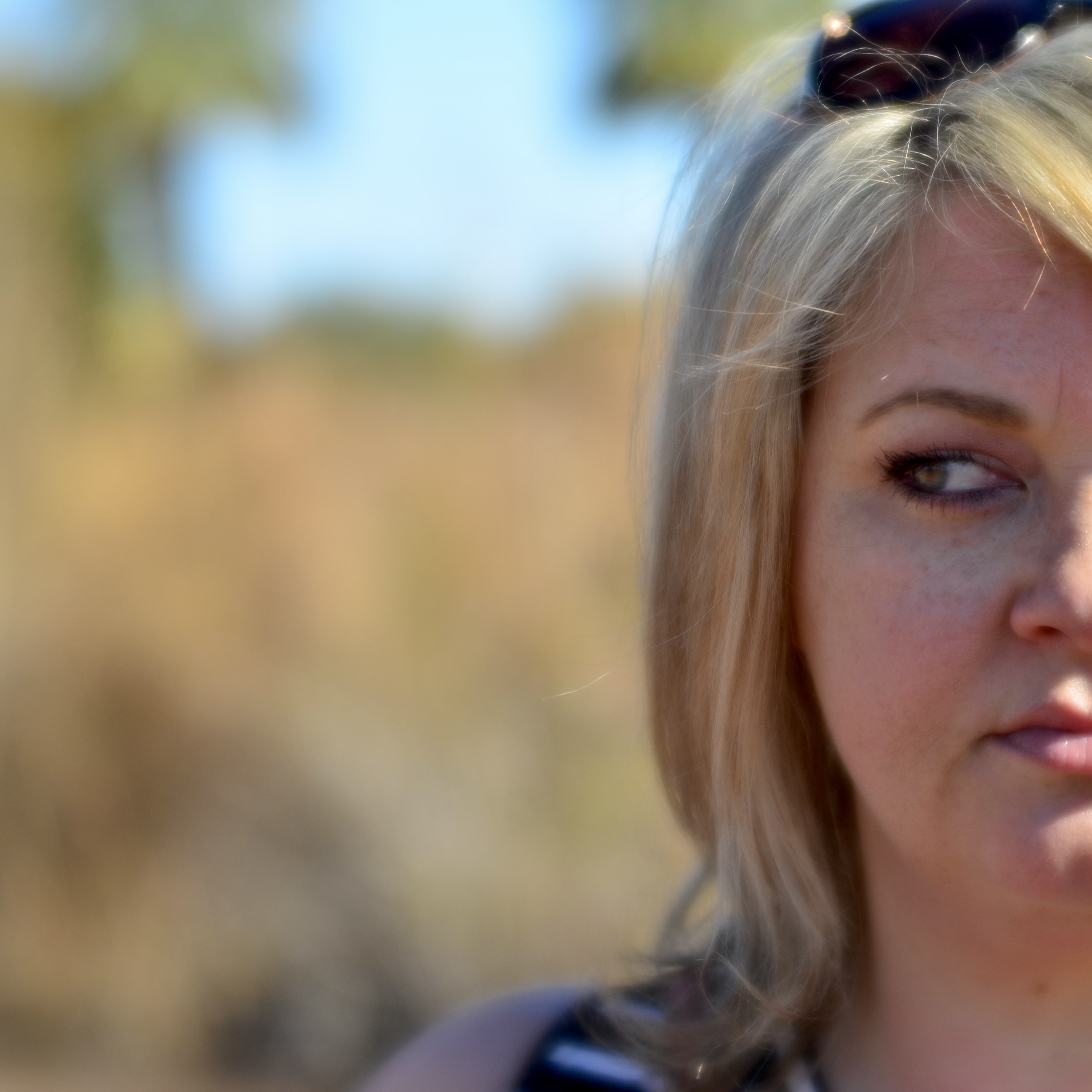
Getting the children of the iPhone age to agree to having their picture made without their direct participation in the endless preening and retouching process that comes after is a major effort. We all trust our own “vision” of what we look like and reject the original idea of portraiture, which is for the artists to make an outside observation and share out that interpretation with others. The photographer is not supposed to be a mere assistant to our own vanities, however well-justified, but an objective second opinion. He or she may produce something with which we disagree, but the beauty of art is that, as a personal statement, it can’t be invalidated as being false merely because we don’t see things the same way: art merely is.
It’s understandably impossible to create a completely honest self-portrait. We simply can’t bear the unvarnished, brutal truth of it. But that doesn’t mean someone else’s vision of our face is inaccurate or wrong in some way. Like the Hollywood giants of old, we naturally would like some publicity department to shape us until we’re perfect . But maybe, in being honest, we become more so than we ever dreamed.
ON THE FACE OF IT
By MICHAEL PERKINS
I HAVE ALWAYS HAD A VIOLENT ALLERGIC REACTION TO PHOTOGRAPHERS WHO SPEAK IN ABSOLUTES, rigidly regulated by rules and procedures, especially as regards gear. Any opinion piece or analysis that contains the phrases “alway do” or “never do” have a perverse effect on me. It’s like telling Adam and Eve that they can eat from any tree in the garden except, you, know that one. It makes the apples on said tree start to seem like they might be the most delicious in the world.
Same with telling people that a set piece of kit or a certain approach will “always” result in a miraculous image. One thing that the digital era has achieved is the increasing rarity of this kind of guidance. In the film era, we were told in no uncertain terms what good and bad focus was, what constituted a “correct” composition. Today, we’re in more of an “anything goes” arena, with people finding freedom in a more experimental frame of mind. And one of the areas where this is most in evidence, since we are more fascinated by faces than ever before here in Selfie World, is in all types of portraiture.
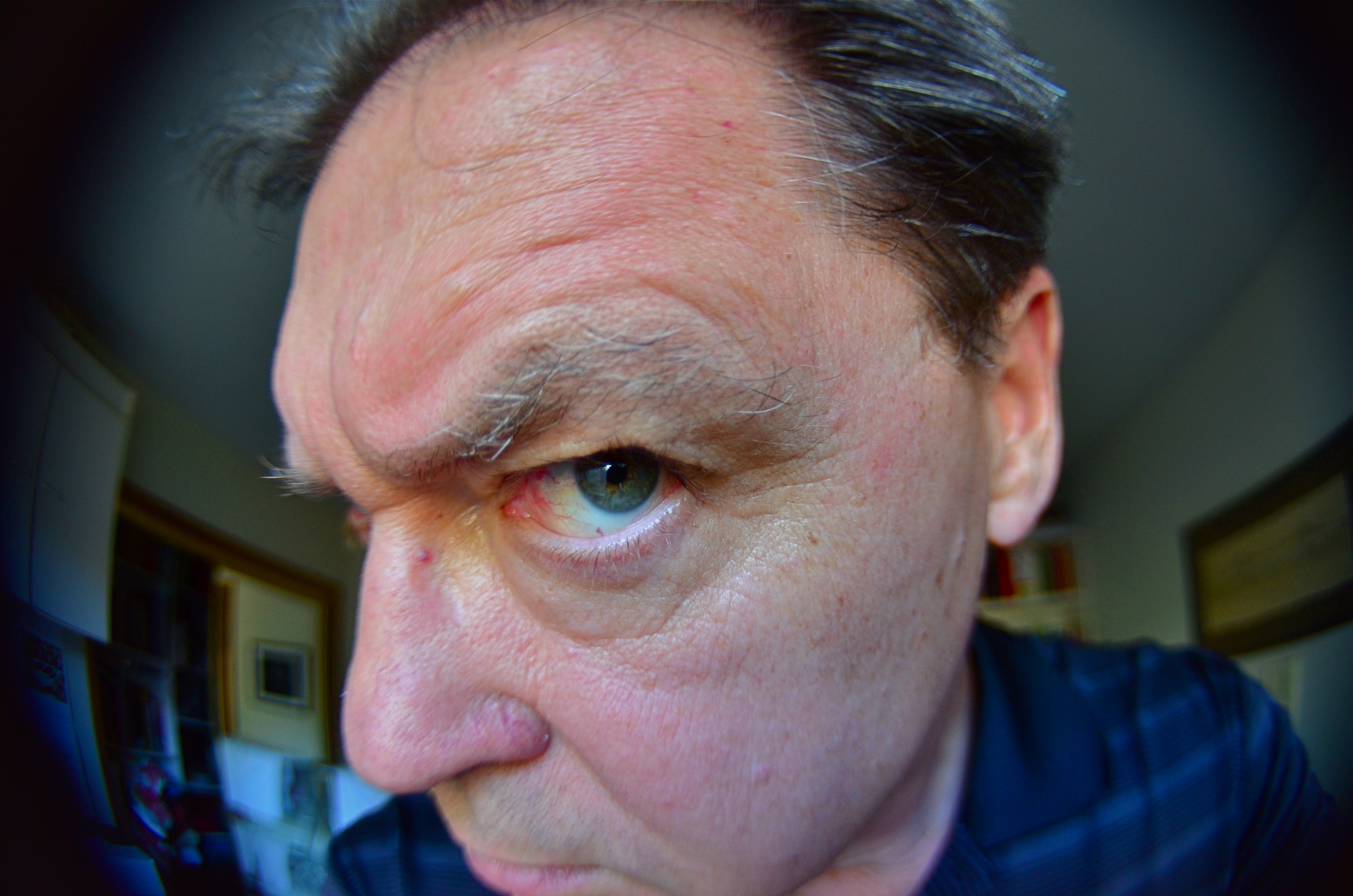
Does this lens make by eye look too fat?
Formal studios used to dominate portrait work to such a degree (hey, we get out of class for an hour…it’s PICTURE DAY!) that a kind of holy writ of thought held sway on the “best” lenses to use to capture someone’s personality. Now, with an insane variety of apps packed in our pockets, the concept of portraiture has been freed from the photo mills of the past, as is the idea of how best to present human features. Whereas amateur photographers used to use a certain hunk of glass consistently for every kind of face, say something in the 85 to 105mm range, extreme wide-angles from 8 to 18mm are now just as much in use.
One of the reason for this shift is that cellphone cameras, at least basic ones, tend to shoot in the wider focal lengths that were once considered “wrong” or unflattering, since they can create distortion in the middle of the subject’s face depending on the distance. However, some people have used just this look to purposefully sculpt their facial contours, to play stretch-and-shrink with their given proportions in order to make their faces look longer or slimmer or to accentuate other elements. On the other end of the spectrum, zooms used to looked down upon by some for portraits because it could be harder to blur out backgrounds at smaller apertures, but now, since most digital images are really only a starting point ahead of post-snap tweaks anyway, even that problem can be solved more easily than in days past.
For years I heard primes in the 35-50mm range touted as the so-called “normal” lenses, since they were supposed to “see” the face at the same proportions as the human eye, or “normally”. But do I use them exclusively? Heck, I don’t use anything exclusively anymore. And neither does anyone else. The days of the didactic “never do” and “always do” tutorials are long gone, with a great portrait defined by nothing more than your own satisfaction. Finally.
INTERPRETERS AND INCHES
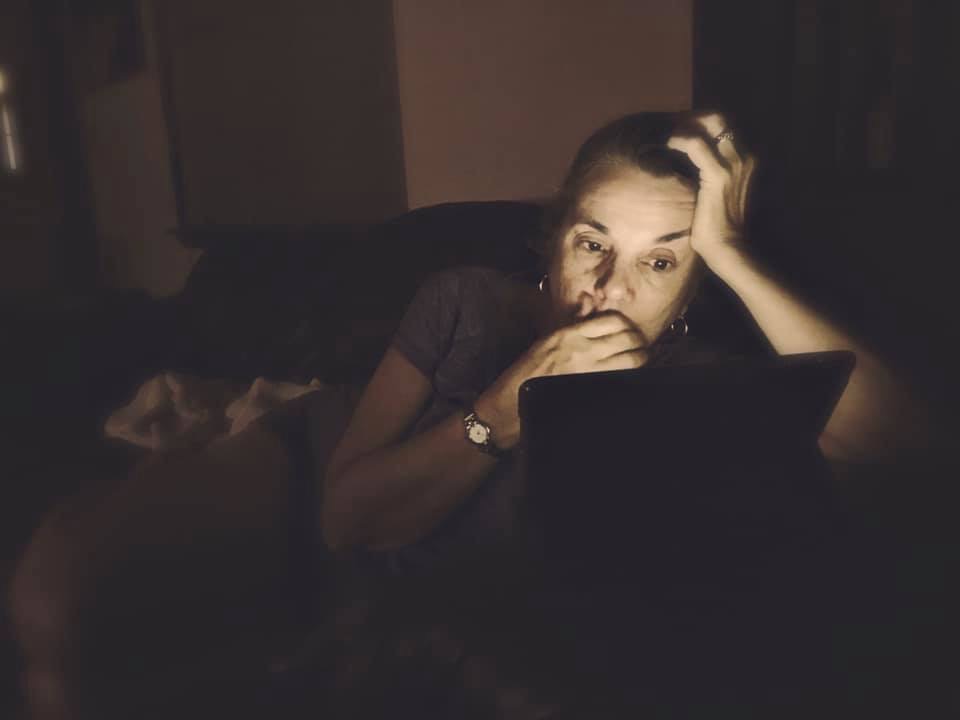
What Now?, 2020
By MICHAEL PERKINS
YOU’VE LIKELY EXPERIENCED IT: I call it shutter lock, the photographer’s equivalent of writer’s block. You have the subject. You have opportunity. And you certainly have motive. But the picture won’t come.
More specifically, the right picture won’t come. You’ve chosen the wrong angle. The wrong aspect. It’s lost in a sea of busy. Or it’s just…well, hiding. Your perfect shot has now become some frustrating game of Where’s Waldo? Should you move on? Reconsider? Or in Oz’ words, simply “go away and come back tomorrow”?
And then you move a few inches. You walk around your quarry and something else about it begins to speak, first in a whisper, and then, in a clear, loud voice that says, “of course”. And you make the picture.
My recent and most stubborn case of shutter lock has been on me since the start of our Great Hibernation, a time when photographers have flooded social media with ideas for “projects”. Essays. Statements that will sum up What We’re All Going Through. And more than a few challenges to find all that Supreme Truth in a self-portrait. How is this affecting you? How has it reshaped your features, the part of your soul that seeps though haunted eyes or pursed lips? I was fascinated by that idea, of course, and why not? We all love to explore ourselves, to regard ourselves as our own True North. But I wasn’t capturing it, or at least enough of it. I was staring at a landscape that I couldn’t turn into a picture.
And then I stopped looking inward. Selfies can certainly reveal our inner dialogues, but all my own face was registering was a kind of unreadable…numbness. And so I moved about thirty inches, and she was there.
Marian is always there at my most instructive moments of clarity. She hacks through my busy clutter and lets enough air into my brain to allow me to see sense, and regain my bearings. The most wonderful thing about it is, she often doesn’t know she’s doing it. There is was, on her face, the look I was seeking, and missing, on my own. A mix of grim resolution, hope, helplessness, exhaustion. Not a look of absolute despair….more like a dead serious attempt to re-focus, to keep swimming against the tide. Suddenly her face was not only a better expression of my own journey but everyone’s. It felt universal, beyond language. In short, it looked like a photograph.
And now it is one. I took it with the crudest camera I have, under the worst conditions possible. And then I tortured it even more in an app to make it appear antique enough to feel relevant to all crises, all dark nights of the soul. It’s technically a wreck, and yet I’m proud of it. Proud of myself for getting outside myself in order to see it. Proud of it as a possession. And proud to allow my partner to be The Interpreter.
Inches away.
FIAT LUX, Michael Perkins’ newest collection of images, is now available through NormalEye Books.
THERE WENT ME
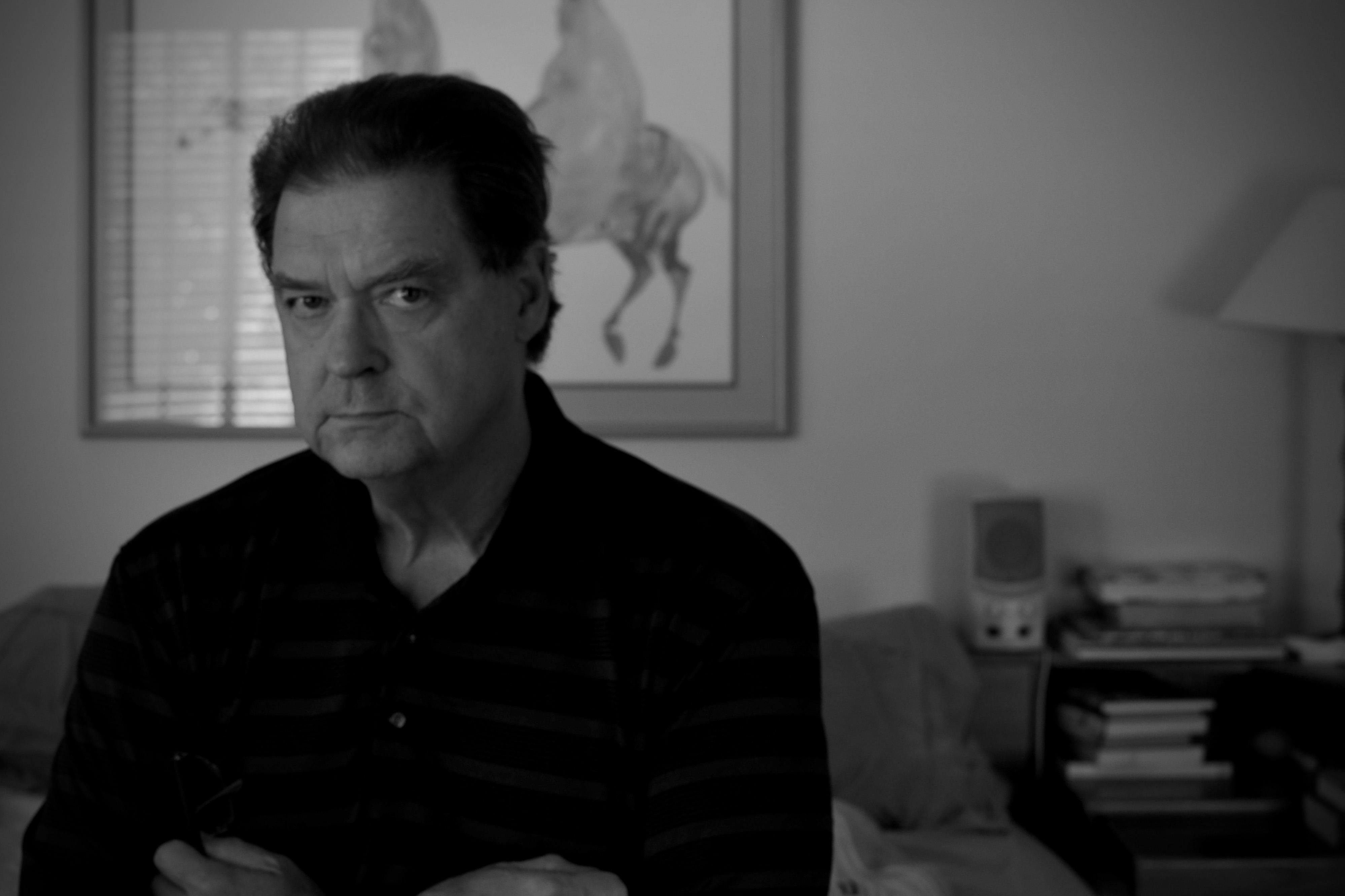
“You look angry”, someone said after looking at this recent portrait. Well, yeah…
By MICHAEL PERKINS
PHOTOGRAPHERS ARE A BIT LIKE AUTHORS OF WRITTEN MEMOIRS, in that they have to constantly worry about their trustworthiness as narrators. Armed with a machine that can shape perceptions and even influence history, can we be relied upon to tell the truth (if anyone can agree on what the truth is)? One of the key “tells” of a photographer’s veracity should be his or her ability to showcase themselves in a portrait. But that, in terms of honesty, is actually where most of the mischief occurs.
This seems counterintuitive. How can we not be the ultimate authority on how we look, or how we should be visually captured? Some of it may be how the portrait, and the selfie in turn, has evolved over the centuries. When photography was new, having your portrait “made” was an attempt to make a document of yourself. To record the official version of you. Opportunities to do so were expensive and sparse. Once photography became a mass-appeal hobby, the snapshot made portraits less formal, and, in turn, less important. People went, within a generation, from having one or two pictures made of their faces to having hundreds snapped. In recent years, even more drastic changes in ease and convenience have squared and cubed that number, as we pose for more images of ourselves than we can even put a number to. And, along the line, we have become better and better at hiding more of what we consider the boring or bad parts from the omnipresent camera.
I have been trying for weeks to think about what The Quarantine has collectively done to the human face, and how that can be documented. Some visual impacts, like strap marks on the faces of surgeons or grief carved onto the features of the bereaved, are readily apparent. But how to measure photographically what the crisis has done to our insides? What of those costs are even readable on our faces? Suddenly, a very special opportunity, or obligation, is re-connected to the selfie. Now, in the interest of truth-telling, we must un-learn the clever tricks that allow us to regularly look in the camera and lie, creating false images that say I’m doing fine. My life is great. I don’t need any help…
What you see here is an experiment. It’s not really “posed” in the standard sense, as I shot it as part of a rapid series that allowed me only minimal time to prepare, or, if you will, overthink what my expression “should be”. This is thus a piece of me, in the context of these days, but it’s not the entire story. It’s, if you will, less of a lie, but also less of the complete truth about whoever I am these days. I’m not completely untrustworthy as a narrator, but whole big parts of me are still fighting the process of baring it all. Maybe I can’t get there. Maybe none of us can. But photographers are charged with looking for answers, even if they fail in completely nailing them down.
PLANDIDS
By MICHAEL PERKINS
NOWHERE ELSE IN PHOTOGRAPHY does the conflict between mere recording and deliberate interpretation manifest itself more than in the portrait. We love the spontaneity of the unposed snap, with its potential for capturing the innocent, unguarded moment. However, snaps are a random thing, and by nature undisciplined, raw. The control of the studio, with its calculated exposure and modulated light, has its allure as well. It’s not like we want it both ways: no, we definitely want it both ways.
Hence the emergence of the Plandid.
Recent trends on social media have given rise to a new portrait hybrid called the planned candid, or “plandid”, formalized shots that are designed to create the illusion of a spontaneous snap. In fact, people have been faking “happy accidents” like these for as long as there’ve been cameras. What distinguishes plandids from earlier versions of faked reality, however, is that most of them are self-portraits and the majority of them are created primarily on mobiles.
In some ways this was inevitable. Everyone, but everyone has already done the trombone-arm, face-only selfie, the wide-screen lenses on our phone cameras distorting our heads into ovoids and ballooning our noses into sausages. Enter the plandid, which feeds into two dearly held articles of human faith; one, nothing is more worth pointing a camera at than us; and two, the only person who gets us well enough to turn us into something even more fascinating is….wait for it……us.
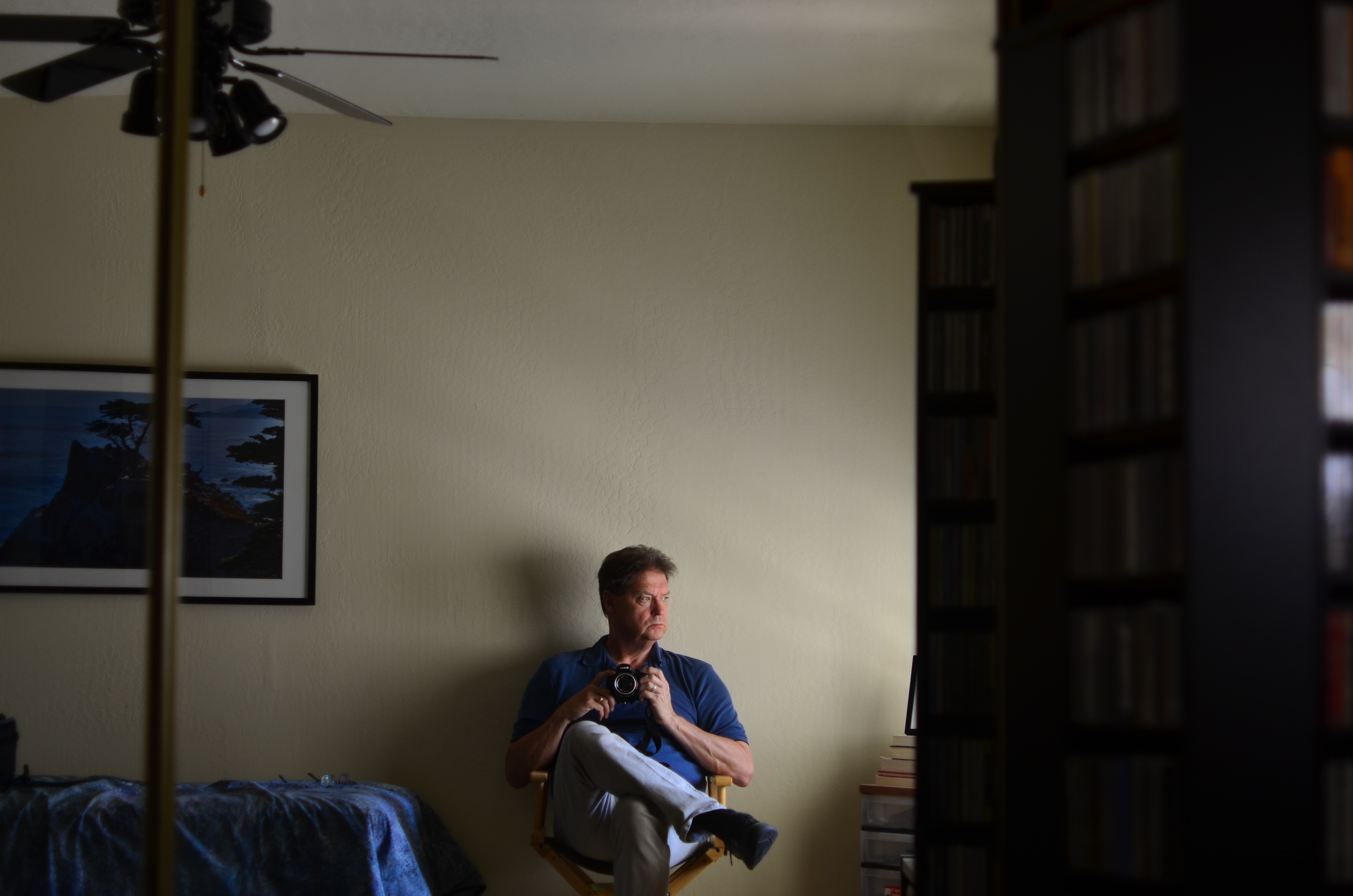
“Plandids” are a kind of Selfie 2.0.
And thus arrives the age of Selfie 2.0, in which we employ tripods and timers and pull the typical headshot back, to reveal entire bodies, props, and atmosphere. However, doing that much advance prep is way too much like conventional photography, and thus anathema to the hipster within, so the trick becomes faking the look of having “just stumbled upon” a great picture. Huh?
Of course, I’m exactly like the school dietitian who guiltily sneaks fries on the side, because of course I have absolutely hopped into this narcissistic playpen, doing my own plandids with a DSLR for that extra degree of control. Add my own patented, wistful away-from-the-camera look and you get the perfect moment in which I’m caught by some discerning, lucky amateur (me) in a stolen moment of quiet (fake) contemplation.
Diane Arbus once called a photograph a lie that tells you the truth. But there’s something to be said about just flat-out lying, just for fun.
THE REVEAL
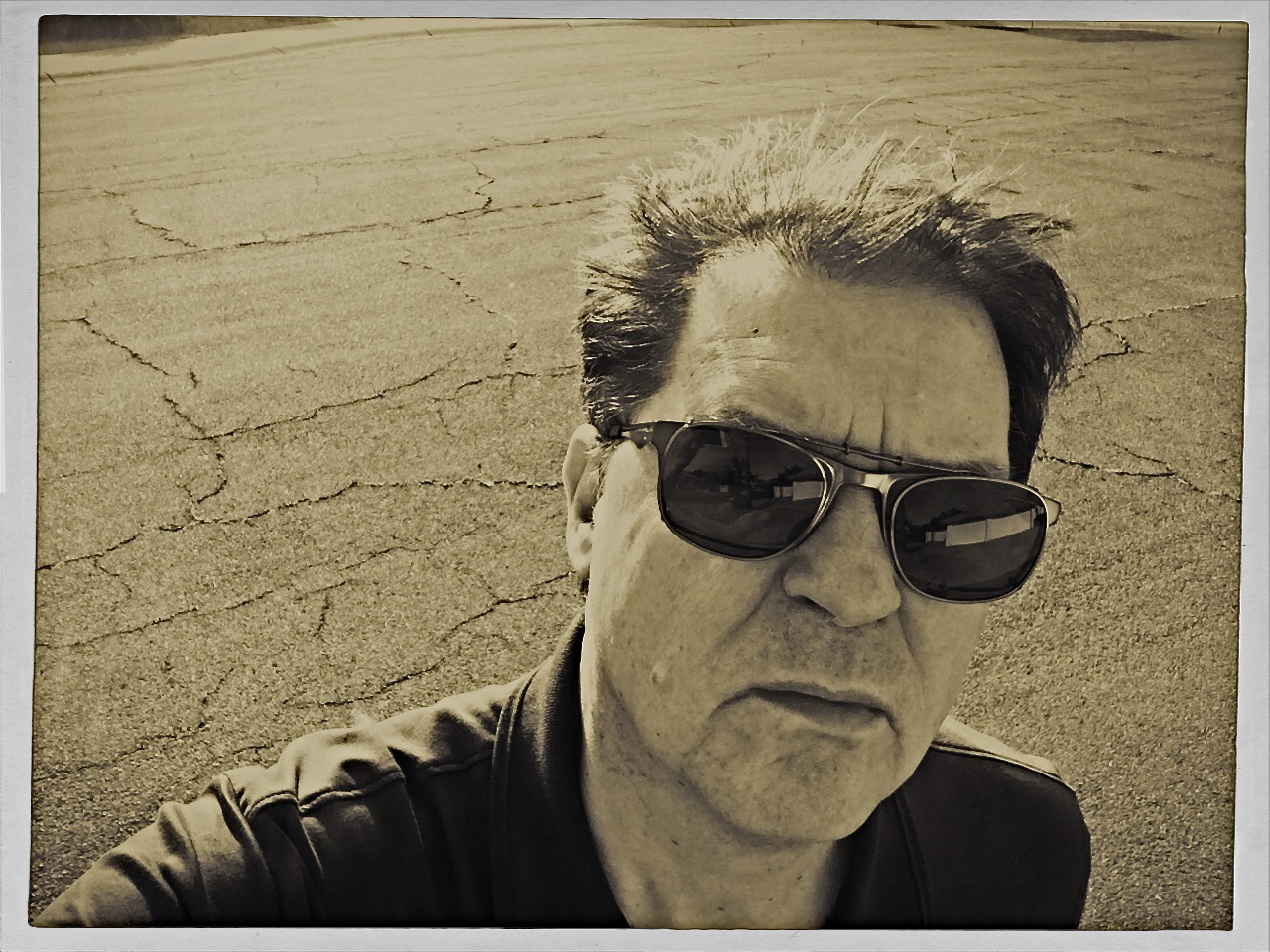
Who is this person? And how do I know? And how do I show it?
By MICHAEL PERKINS
PHOTOGRAPHERS HAVE MANY INSTANCES IN WHICH IT’S HEALTHY TO HAVE A LITTLE HUMILITY, and the biggest one probably is in the decision to depict a human face. It’s the most frequently performed operation in all of photography, and many of us only approach perfection in it a handful of times, if ever. The face is the essence of mystery, and learning how to draw the curtain away from it is the essence of mastery.
Nothing else that we will shoot fights so hard to maintain its inscrutability. It is easier to accurately photograph the microbes that swarm in a drop of water than to penetrate the masks that we manufacture. Even the best portrait artists might never show all of what their subject’s soul really looks like, but sometimes we can catch a fleeting glimpse, and getting even that little peek is enough to keep you behind a camera for a lifetime. It is everything.
Yousuf Karsh, the portraitist who can be said to have made the definitive images of Winston Churchill, Audrey Hepburn, JFK, Ernest Hemingway, and countless other notables, said “within every man and woman. a secret is hidden, and, as a photographer, it is my task to reveal it if I can.” Sounds so simple, and yet decades can go into learning the difference between recording a face and rendering its truths. Sometimes I think it’s impossible to photograph people who are strangers to us. How can that ever happen? Other times I fear that it’s beyond our power to create images of those we know the most intimately. How can we show all?
The human face is a document, a lie, a cipher, a self-created monument, an x-ray. It is the armor we put on in order to do battle with the world. It is the entreaty, the bargain, the arrangement with which we engage with each other. It is a time machine, a testimony, a faith. Photographers need their most exacting wisdom, their most profound knowledge of life, to attempt The Reveal. For many of us, it will always remain that….an attempt. For a fortunate few, there is the chance to freeze something eternal, the chance to certify humanity for everyone else.
Quite a privilege.
Quite a duty.
 thenormaleye
AGING IN THE BARREL
What’s That Moving?, April 2020
By MICHAEL PERKINS
SOON WE WILL STOP REFERRING TO THE DAILY GLOBAL TOTAL OF SELF-PORTRAITS by any specific number, since the actual figure will be (a) impossible to ascertain and (b) so astronomical as to be meaningless. A quick shuffle through just our own collection of selfies for a given period gives us an idea what happens when technical ease meets runaway narcissism. Or to put it simpler, we take a $%#@-ton of pictures of us. We love us.
The current Great Hibernation (or Uber-Lockdown, or Mass-Incarceration or Panic-Room Marathon) is forcing us to spend even more time with our favorite person, and it stands to reason that the circumstances will change the way we decide to document what we are personally enduring. Here I am in the sixth week of my bad haircut. This is me in my formal sweatpants. I don’t know where I took this…or what time…or what day/week/month. Change the nature of a photographic subject and you’re bound to change how you’ll document that subject.
The whole social context has been warped out of shape, and so must our image of ourselves, which, after all, is shaped by how we interact, where we go, what constitutes a good or bad day. And so self-portraits are being forcibly filtered through a completely different set of criteria than they were just a heartbeat ago, when all we had to do to be somewhere else was, you know, go there. The way emotions play across our faces will be pretzeled into interesting new shapes as a consequence. As we age in this particular barrel, we will be changed. Some of us will emerge from it as palpably different from the animals that went in.
That creates challenge for photographers, especially when it’s us shooting us. How trustworthy are we as narrators? How aware of we of the subtle changes we undergo when the toilet paper runs low? The pictures will eventually provide the chronicle. But in the interim, we need to ask different questions, seek different angles, spot variances. Hey, we might as well be honest. The camera never lies, right?
Share this:
May 13, 2020 | Categories: Commentary, Portraits | Tags: Interpretation, Self-portraits | Leave a comment