DOWN GO THE DOMINOES
By MICHAEL PERKINS
THOSE WHO WRITE HISTORIES ON PHOTOGRAPHY understandably see it as an unbroken series of technological breakthroughs that have allowed the art to move forward and gain wider adoption for an ever-growing audience. This leads to an endless litany of Who Did What followed by Who Did What Next followed by What Did It Mean. When I look at the breaking of these barriers, it’s even more personal. Because when something new happens in photography, the net result, for me, is to help me get to the picture-making part with less delay and fewer screwups.
Take the most elementary part of creating an image, i.e., the gathering of light. We make ourselves crazy trying to corral as much of it as quickly as possible with as few intermediary steps in the process. After actually grabbing the light, we get snarled in other thickets, such as how to refine it, how to use it as a compositional tool, even how to control its range in color and tone. All this takes time and patience and learning, and so I bow to no one in my adoration for the wizards who’ve helped me get there easier. The tools are changing incredibly fast and the benefits are bigger and deeper than ever before.
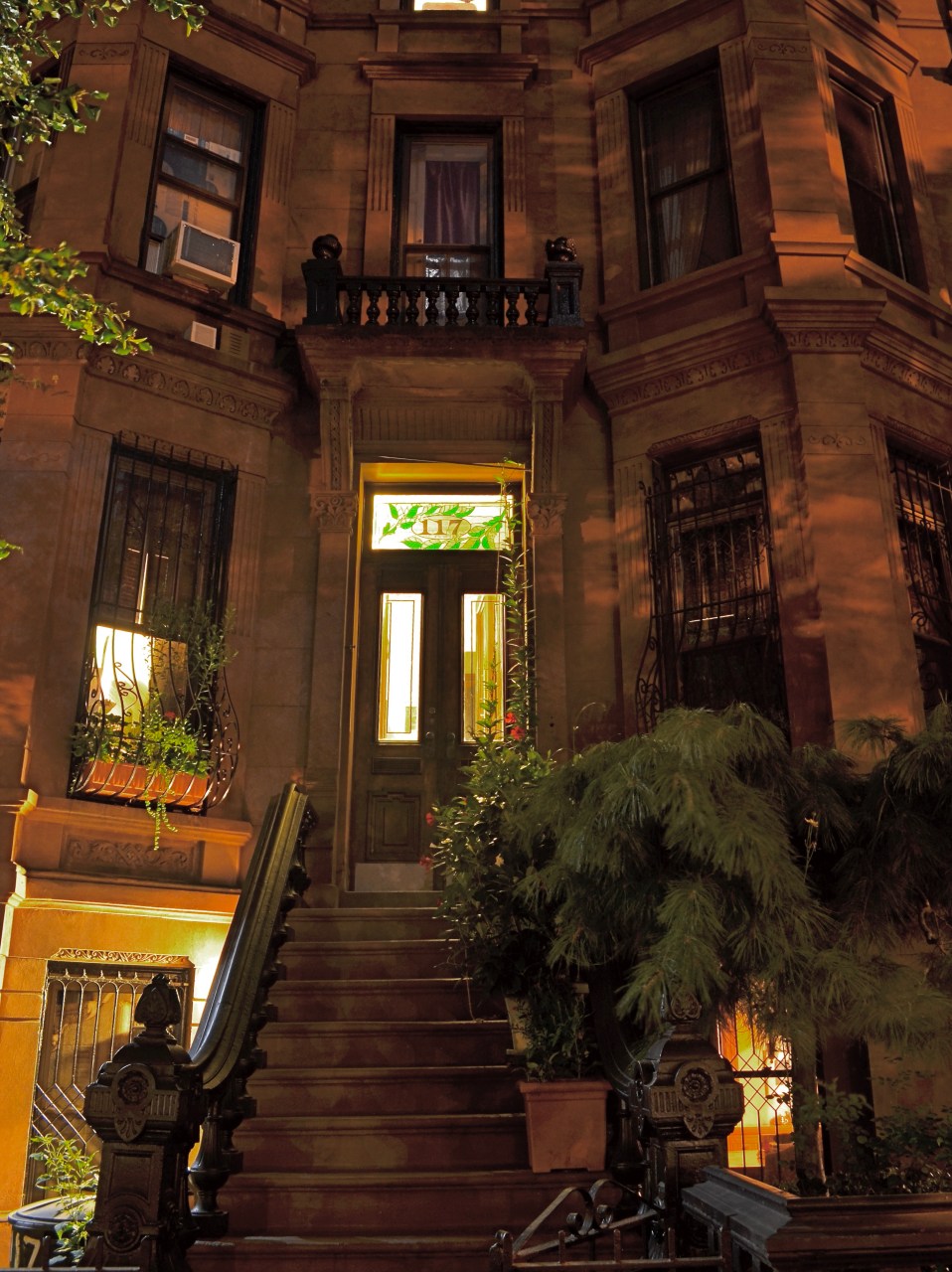
Take the idea of time exposure. The shot you see here was grabbed thirteen years ago, in the inky black of night, several hours after sunset, my camera, a crop-sensor DSLR, was mounted on a tripod and held open for ten seconds, allowing me to keep my ISO to 100, so zero noise. Jump ahead to 2025 and the larger, more sophisticated sensors of a full-frame camera, and it is nearly possible to take this photo handheld, albeit with a very high ISO that, amazingly, still comes out very, very clean. Is the tripod dead?
Certainly not, and you can draw up your own checklist of occasions that still call for it. Obsolescence happens slower than technical advancement (as witness the too-stubborn-to-die case of analog film). And yet. And yet we are that much closer to the tripod eventually going the way of the dodo, and in a remarkably brief stretch of time. That’s what I was pointing out at the top of this article; the fact that photography is swiftly getting to the point were excellence and flexibility are almost a given with present-day gear….with the steps needed to get the picture, to, in essence help us get out of our own way, being rapidly streamlined and simplified. Less calculating, more envisioning. Less adjustment, more captures. Every domino trips another domino trips another domino. Progress.
ROCK STEADY
By MICHAEL PERKINS
I MAKE NO SECRET OF THE FACT that I would thunderously applaud the total disappearance of tripods from everyday photography. Beyond the pure pain, to both back and neck, created by an abundance of camera luggage, I feel that (a) pods utterly short-circuit the concept of spontaneity in the making of pictures and (b) two centuries-and-change is more than enough time for mankind to have perfected the light sensitivity of recording media (film, sensors, etc.) or to have invented the ideal stabilization system for cameras themselves.
And while there have been amazing advancements in both A and B ), there will still, perhaps always, be at least a few cases when a handheld shot will forever be denied us. And I freely admit that there are those for whom, for one physical reason or another, the pod is an absolute necessity, and I certainly do not mean to seem unkind in wishing that that was not so. Trying to train oneself to remain rock steady when shooting handheld is a very personal matter, and results vary wildly. I have known people who are solid enough to qualify as human tripods themselves, stolid folks who could probably nail a sharp image in the middle of a tsunami, while there are others who labor mightily in all but the most ideal conditions. A blessing upon both houses.

I’ve tried many exercises to brace the camera against my body, along with experiments in breath control, changes in ISO for faster exposures….you name it, I’ve given it a go. I’ve managed to eliminate the tripod for many shots that used to absolutely require it, such as super-close macros, but, even there, I occasionally have to drag the three-legged beast out of the closet for one last curtain call. Where I’ve seen the most frustration is with so-called “super-zooms” cameras, with some models already actively working against the shooter, either by jacking up the ISO to compensate for the loss in light at super-zoom range, increasing digital noise, or just having inadequate stabilization when the telephoto range is beyond 400mm, which plays hell with resolution, as seen with the cactus wren above.
Such circumstances would seem to argue for the fixed position that a pod offers, but here again, we get back to the idea of spontaneity and flexibility, crucial considerations when your subject is a bird of other wildlife. Shooting something stationary at a distance actually benefits from the use of the pod, whereas tracking a living creature makes it virtually useless. The answer to the problem still seems to exist in the forward-thinking tech that is forever evolving: that is, make all lenses perform better under low-light conditions, and evolve stabilization to the point where even a drunk with the DTs can hold the shot steadily enough for nearly any situation. The tripod is a relic of the 1800’s. It belongs in a museum, not in a kit bag.
HERE. NOT HERE. MAYBE HERE?
By MICHAEL PERKINS
1,000,000,000,000.
One trillion.
That’s the approximate number, in the digital era, of annual photo postings to the internet in a single year.
That’s a serious buncha digits. And a significant chunk of that staggering total comes from visitors to tourist sites and museums, many of whom, awestruck by the wonders in various collections, seek visual souvenirs of said wonders.
Except when they can’t.
Public attractions in the age of shared media are struggling to accommodate, regulate, or just plain rein in the photographic urge among their patrons. You can take pictures here, but not here. Here? Unsure, ask the guy in the uniform.
Flash? Selfie Sticks? Tripods? On the endangered species list. We have our reasons.
We don’t all have the same reasons, but still…
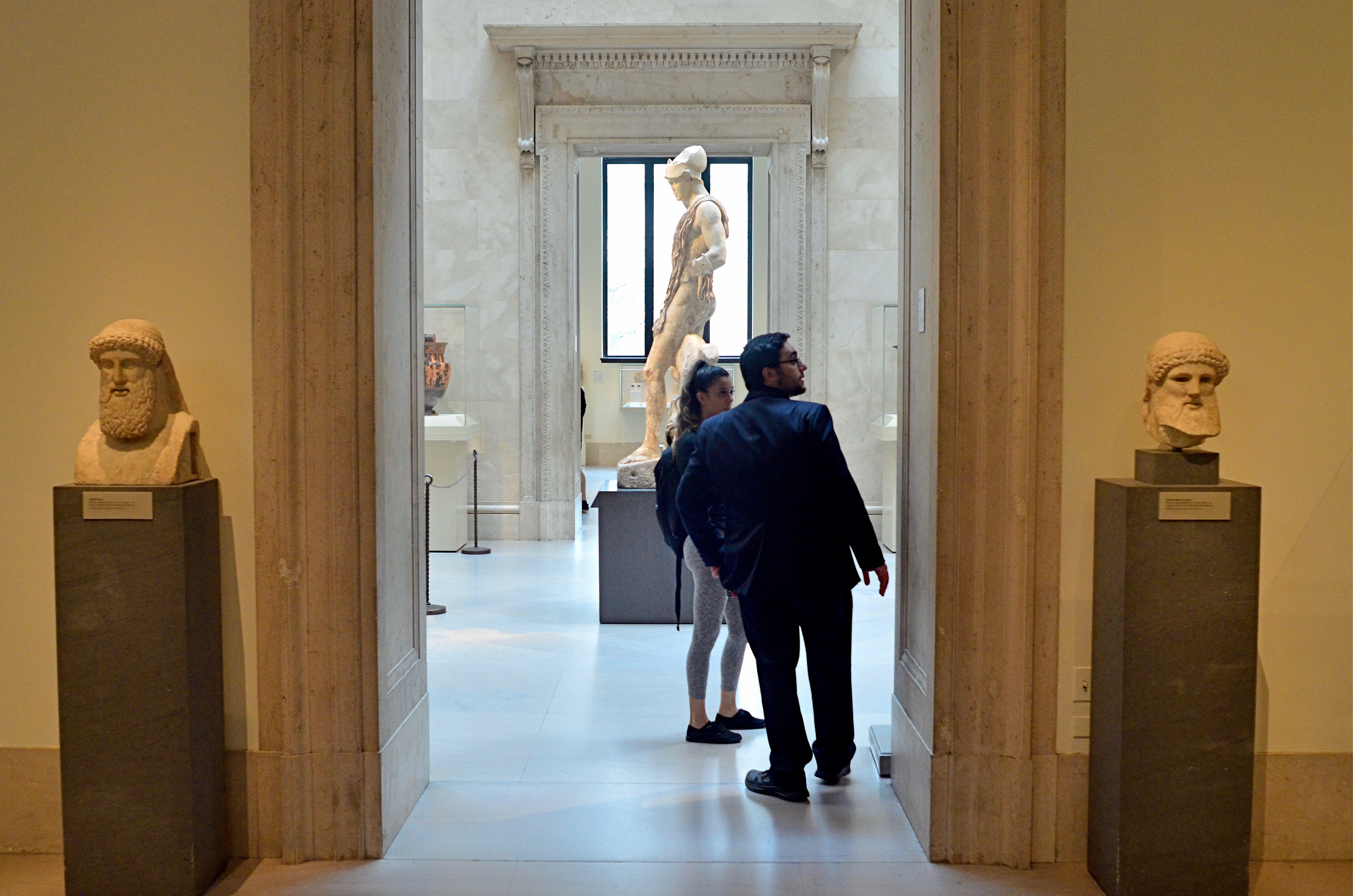
Which way to the “photos allowed” section?
Full disclosure: I am a docent at a museum. I fully understand the various problems that come with allowing photography in the halls. For example, the collection at my joint could actually be damaged by flash, so we allow clickers to go flashless. We also have found that the more hardware the hardcore photog packs in, the greatest hazard to our exhibits and our patrons, so no selfie sticks or tripods. Ours is what I would call a negotiated policy. Other shops, as you yourselves may have already painfully learned, are more draconian, from the places where no one is allowed to take any pictures anywhere to sites like the Natural History Museum of Rwanda, one of the institutions which actually charges a fee for the privilege of snapping. Between those two end zones is a lot of open field. A quick look at the challenges from both sides:
Even allowing for the fact that flashes can actually damage some types of artifacts, regulating the no-flash rule requires extra policing and essentially stands or falls on the honor of the individual photographer. Then there’s the issue of the particular kind of shooter I like to call The Selfish Jerk, who will camp out in front of a statue or a painting to the discomfort of other paying guests, because he’s just gotta get The Shot. Some of these same nitwits also employ improvised gymnastics that could get the institution sued and could (and do) get the photographer dead. Ask the undermanned park employees at the Grand Caaaaaaaanyon. Then let’s consider the “keepsake” motive that makes some people want to take a bit of their favorite art home with them. Cameras are getting better at making more perfect representations of paintings and statuary. At the same time, museum gift shops enjoy a sizable revenue stream from poster and postcard images of their own collections. If everyone can make their own, that revenue goes away, a purely and understandably fiscal reason for institutions to say “no mas”. The claim has also been made that art piracy could be exacerbated by the use of cameras, but that argument is anything but settled.
To further muddy the waters, museums and other public sites are fighting a losing technological battle, since, for every super-obvious Canon or Nikon there are legions of tinier and tinier snap machines that are damn near undetectable. Should the institutions forbid the higher-resolution DSLRs (art thieves!!) and allow the more humble iPhones (harmless amateur!)? And then there’s the problem of universal enforcement of camera bans, which is, let’s face it, impossible. What’s the answer? Some reasonableness all around: reasonable policies that do allow pictures, with limits: reasonable guests who can be asked to leave if they contravene stated policies or, well, decency: and a reasonable attitude toward the positive publicity that online sharing of images can produce for your exhibits and institutions. After all, it’s hard to buck a trillion photos a year, even if only a couple of hundred billion of them are headed in your particular direction. Policies, from free-for-all to pay-for-play, must be rooted in the real world, or they’re not worth the paper they’re (maybe not even) printed on.
 thenormaleye