Ex Machina
By MICHAEL PERKINS
A quick primer on making a camera exposure in the early 19th-century:
- Lens cap off.
2. Lens cap back on.
3. Repeat.
4. Pray.
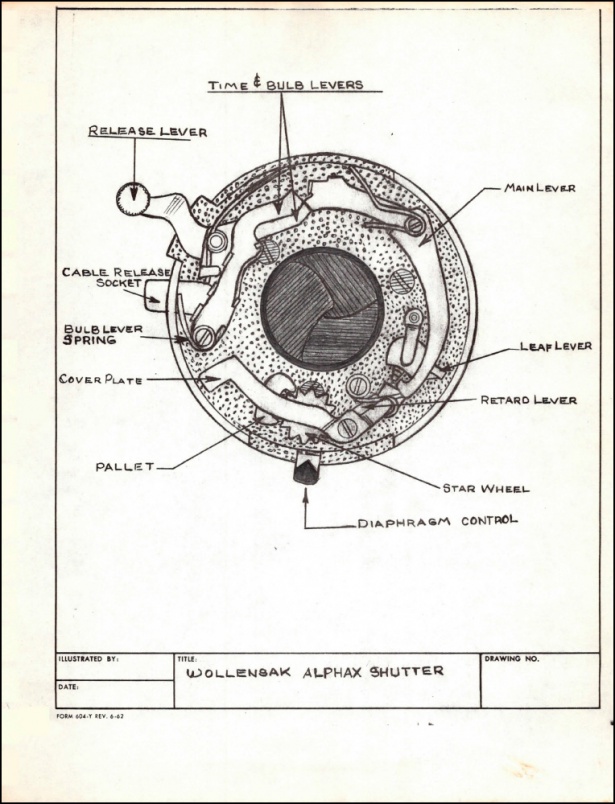
The photo-tinkerer Thomas Sutton may not have been the first to improve upon this stone-age method of allowing light onto media, but his early mechanical shutters, introduced in the 1860’s, were refined and imitated endlessly across the photographic community, becoming the first essential tool for the control of exposure rates. From that era to this, every camera made anywhere in the world has had some variant on the Sutton shutter as the principal gatekeeper for light. It is the most essential of features, and, as the last purely mechanical component in the picture-making process, is on a kind of extinction watch. It won’t happen quickly, but it’s en route.
Most major manufacturers have, for some time, included in their designs the option for a purely digital shutter, with the mechanical shutter as a default, meaning that you must opt in for the digital. Traditional shutters have “curtains” ahead of the film or sensor, and are opened and closed in micro-seconds. Digital systems are not true “shutters” at all, as there are no physical curtains per se, merely an electronic signal sent to portions of the sensor to be more or less light-sensitive in different parts of the frame as dictated by the exposure chosen by the shooter.
Already, as has been the case when other mechanical camera systems have neared their respective sell-by dates, people are choosing up sides as to which choice is better. Those who favor mechanicals will talk of superior flash syncing, great performance with artificial lighting sources, and more than 150 years of refinement and improvement. Digital shutter fans will point to their much faster speed ranges, reduced vibration and noise, and, most crucially, the lack of material wear-and-tear. Both systems have their boasts and dings, meaning that, for the moment ( A.C.E. 2026 at this writing) both will have their armies of frothing fans, delaying the decision by manufacturers to dump mechanical for good in the name of cost-cutting, customer input, or both.
Many of us, er, revered elders (translation: old coots) have lived long enough to see one mechanical function after another obviated in the modern era, just as the complex systems of analog processing were supplanted (not replaced outright) by digital imaging. One man’s modern miracle is another’s sacrilege, and so the shutter wars will take a while to shake out. Eventually, we find ourselves asking just was a camera is, with the only logical answer being the eternal one: that which facilitates the making of an image.
 thenormaleye
Leave a comment