TWO SIGNATURES REQUIRED
By MICHAEL PERKINS
PRIOR TO THE 21st CENTURY, THE AVERAGE PHOTOGRAPHER produced his/her/their work on one platform at a time. For many whose creative energy was rooted in analog, film was the tablet on which the work was “written”. That meant that, for the most part, the look of that medium was the underlying visual “signature” of whatever was recorded on it. Go back even farther, and mediums like tintypes or daguerreotypes, with their respective looks and limits, defined what we now regard as an “old time” image. Each process conferred a certain look upon whatever the photographer captured. When you were born, the recording medium you worked in dictated, to a degree, what your pictures would look like.
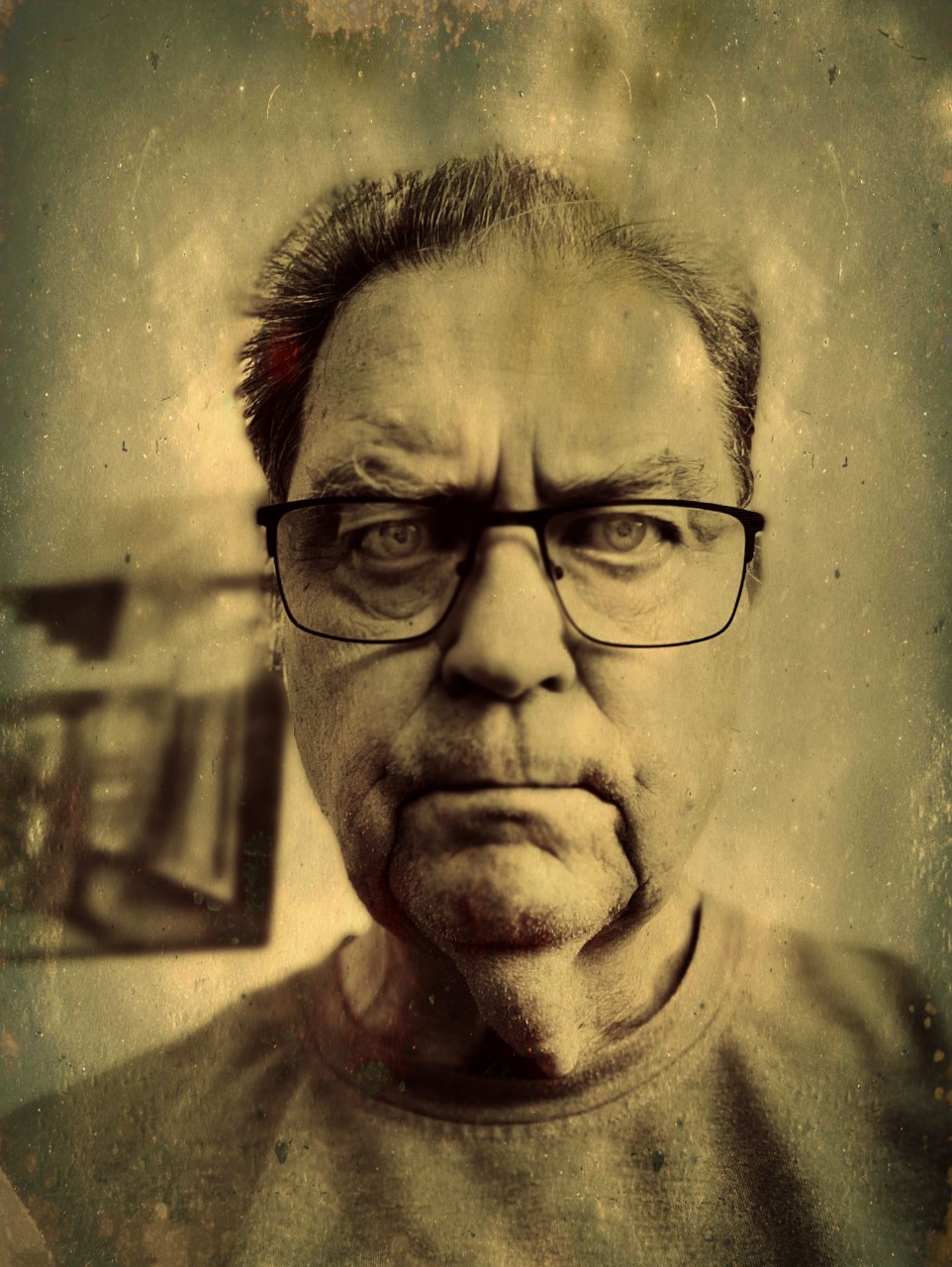
A faux tintype selfie, delivered via an app. The conception and the platform work hand-in-hand.
Fast-forward to the present, in which digital technology has completely liberated the photographer, opening up a broad swath of choices for the visual signature that you choose for a given picture. Want to render your subject in a way that reflects Victorian tech? Want to deliberately limit things like light sensitivity, texture, dynamic range? Pick a period, pick a look. It’s yours at the touch of a button or the flick of an app. What a spectacular arsenal is at our command, all in an instant.
I have absolutely no practical experience in the processing of film of any kind, but then, I have no need to learn it, unless I desire to master that tech for my own hobbyist amusement. With even modest equipment, I can absolutely simulate the various emulsions of a variety of film types, replicating how they were developed by those who grew up natively with those orientations. This is like being able to write both left and right handed. My eye is one personal signature for the pictures I hope to create, and the look of a given era or medium is a second signature. My choice of platform acts as a co-signer for my choice of approach.
The greatest blessing of the current age in photography is that we have developed gear that simplifies the mechanical process of capturing a frame to such a degree that more effort can now be directed to our vision, and less on how our machinery will execute it. When you conceive of a great idea, you are affixing your signature to the result, while the platform you choose to deliver that work signs off on it as well. Amazing.
Ex Machina
By MICHAEL PERKINS
A quick primer on making a camera exposure in the early 19th-century:
- Lens cap off.
2. Lens cap back on.
3. Repeat.
4. Pray.
The photo-tinkerer Thomas Sutton may not have been the first to improve upon this stone-age method of allowing light onto media, but his early mechanical shutters, introduced in the 1860’s, were refined and imitated endlessly across the photographic community, becoming the first essential tool for the control of exposure rates. From that era to this, every camera made anywhere in the world has had some variant on the Sutton shutter as the principal gatekeeper for light. It is the most essential of features, and, as the last purely mechanical component in the picture-making process, is on a kind of extinction watch. It won’t happen quickly, but it’s en route.
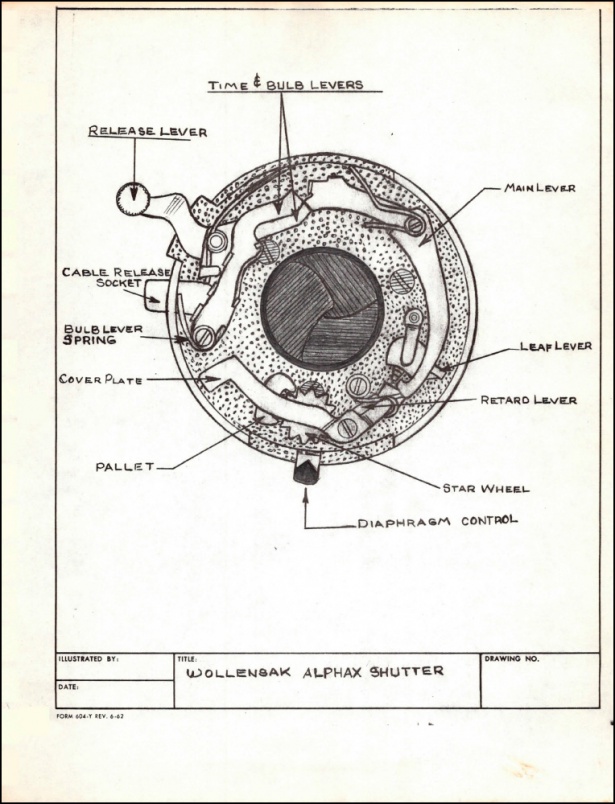
Most major manufacturers have, for some time, included in their designs the option for a purely digital shutter, with the mechanical shutter as a default, meaning that you must opt in for the digital. Traditional shutters have “curtains” ahead of the film or sensor, and are opened and closed in micro-seconds. Digital systems are not true “shutters” at all, as there are no physical curtains per se, merely an electronic signal sent to portions of the sensor to be more or less light-sensitive in different parts of the frame as dictated by the exposure chosen by the shooter.
Already, as has been the case when other mechanical camera systems have neared their respective sell-by dates, people are choosing up sides as to which choice is better. Those who favor mechanicals will talk of superior flash syncing, great performance with artificial lighting sources, and more than 150 years of refinement and improvement. Digital shutter fans will point to their much faster speed ranges, reduced vibration and noise, and, most crucially, the lack of material wear-and-tear. Both systems have their boasts and dings, meaning that, for the moment ( A.C.E. 2026 at this writing) both will have their armies of frothing fans, delaying the decision by manufacturers to dump mechanical for good in the name of cost-cutting, customer input, or both.
Many of us, er, revered elders (translation: old coots) have lived long enough to see one mechanical function after another obviated in the modern era, just as the complex systems of analog processing were supplanted (not replaced outright) by digital imaging. One man’s modern miracle is another’s sacrilege, and so the shutter wars will take a while to shake out. Eventually, we find ourselves asking just was a camera is, with the only logical answer being the eternal one: that which facilitates the making of an image.
THE FEEL OF REAL
By MICHAEL PERKINS
MUCH OF OUR INHERITED SENSE OF TEXTURE IN PHOTOGRAPHY was shaped early on by what the earliest camera images could practically deliver. We experience historic images of Lincoln, Twain, and the great generals of the Civil War through the very rough “tooth” of the processes that almost exclusively recorded them, chemical and technical methods that rendered features, clothing and skin in a certain limited fashion. And over time, those methods dictate our concept of how the skin and features of those people should look, forever, even as they define for us what words like tough, stern, brave, frightening or serious ought to mean in terms of how smooth or how coarse a mood we’d pursuing.
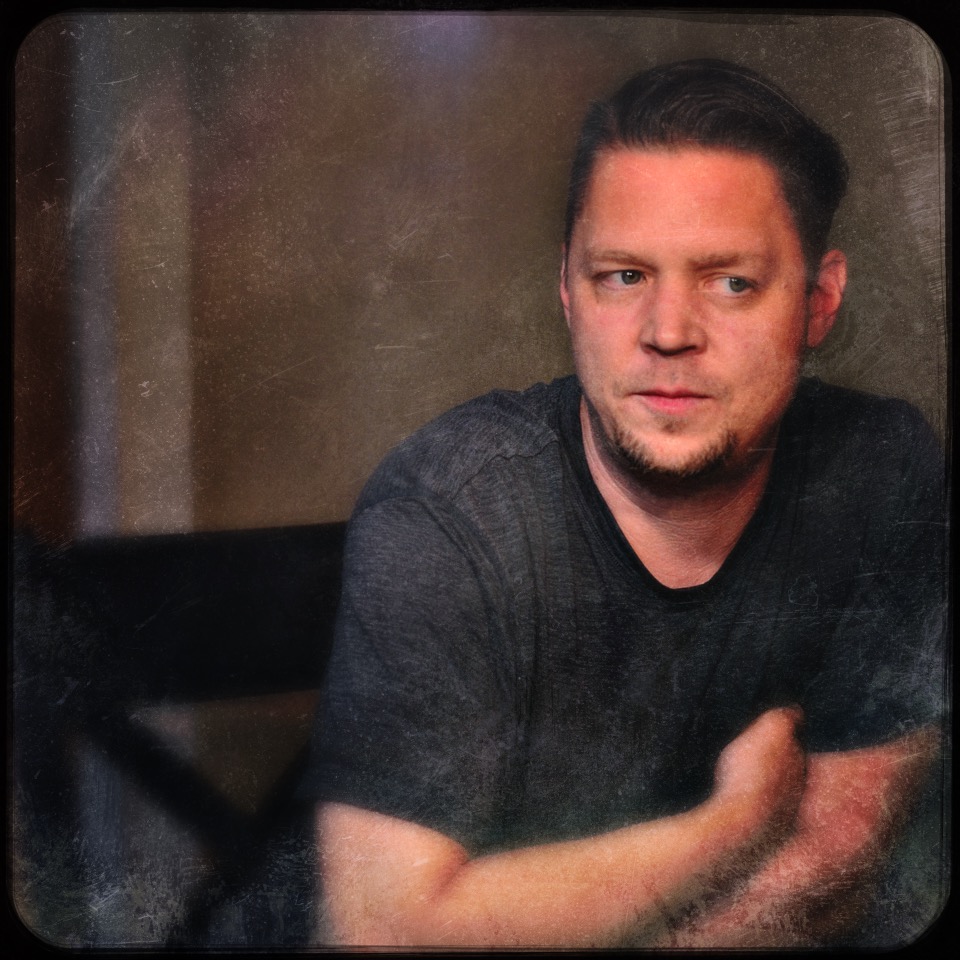
Ryan Michael Perkins, Columbus, Ohio, 2017
And it’s not merely historic; a big part of the recent retro movement toward analog imaging even a rec-creation of it on digital platforms, lies in in aping or recreating the textures we saw of people as they were depicted in previous eras. What we collectively call a “film look” is, in fact, many different looks, depending on whether you’re recalling an 1850 daguerreotype or a 1975 Kodachrome slide, with special emphasis on the degree of grit or silkiness appropriate for different time frames. In some circles, this emphasis on texture has risen to the same level of importance as such fundamental pillars as color and exposure.
I myself will often assign an older texture to selected portrait subjects, based on what elements of their personalities I wish to suggest, as in this image of my oldest son Ryan. It’s safe to say that, over his nearly fifty years of life, he has veered far closer to rough times than serene ones. A perfectly-lit or balanced image of him seems as ill-fitting as a pair of jeans that’s two sizes too small. He doesn’t do “easy”, and so my favorite pictures of him attempt to capture that fact, calling, in this case for example, a kind of sandy, friction-rubbed aging to the final frame. I don’t embrace all of the “just like film” movement, but there are moments when even the freshest faces should have a little acid-washed quality to them, as if to suggest all that time has etched into their features. “Real” and “feel” are subjective words, and they are likely, for photographers, to remain ever thus.

