LET’S BE TOGETHER, ALONE
By MICHAEL PERKINS
PHOTOGRAPHERS NATURALLY SEEK PUBLIC SPACES, looking for the individual stories that travel through great halls, museums, places of worship, centers of commerce. If you want to observe the ants, your must seek out the anthills. Certainly, we are also drawn to quiet venues that are less densely populated, but to get a sense of interaction, of human-on-human transactions and encounters, vast, crowded places have a definite narrative appeal.
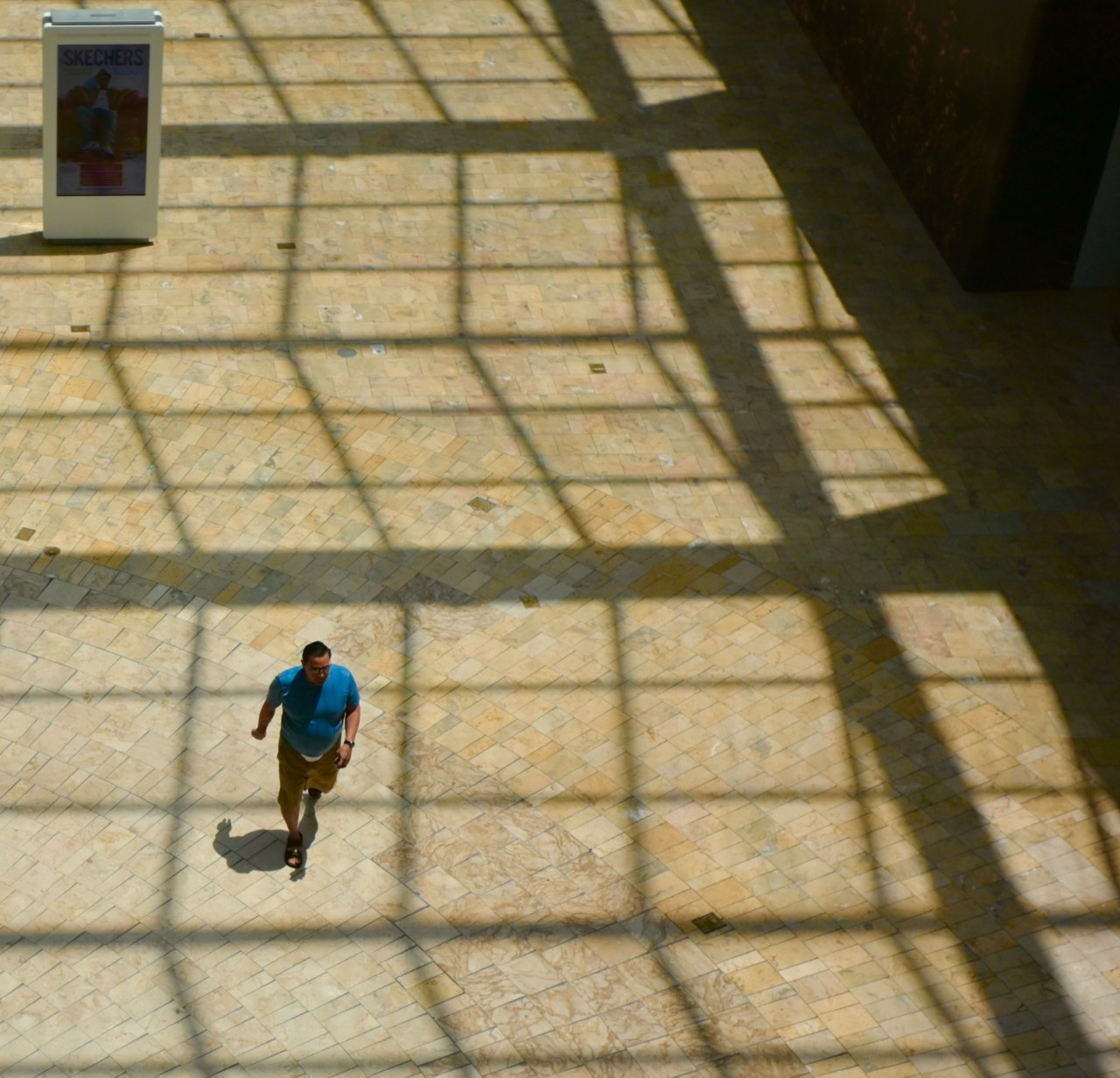
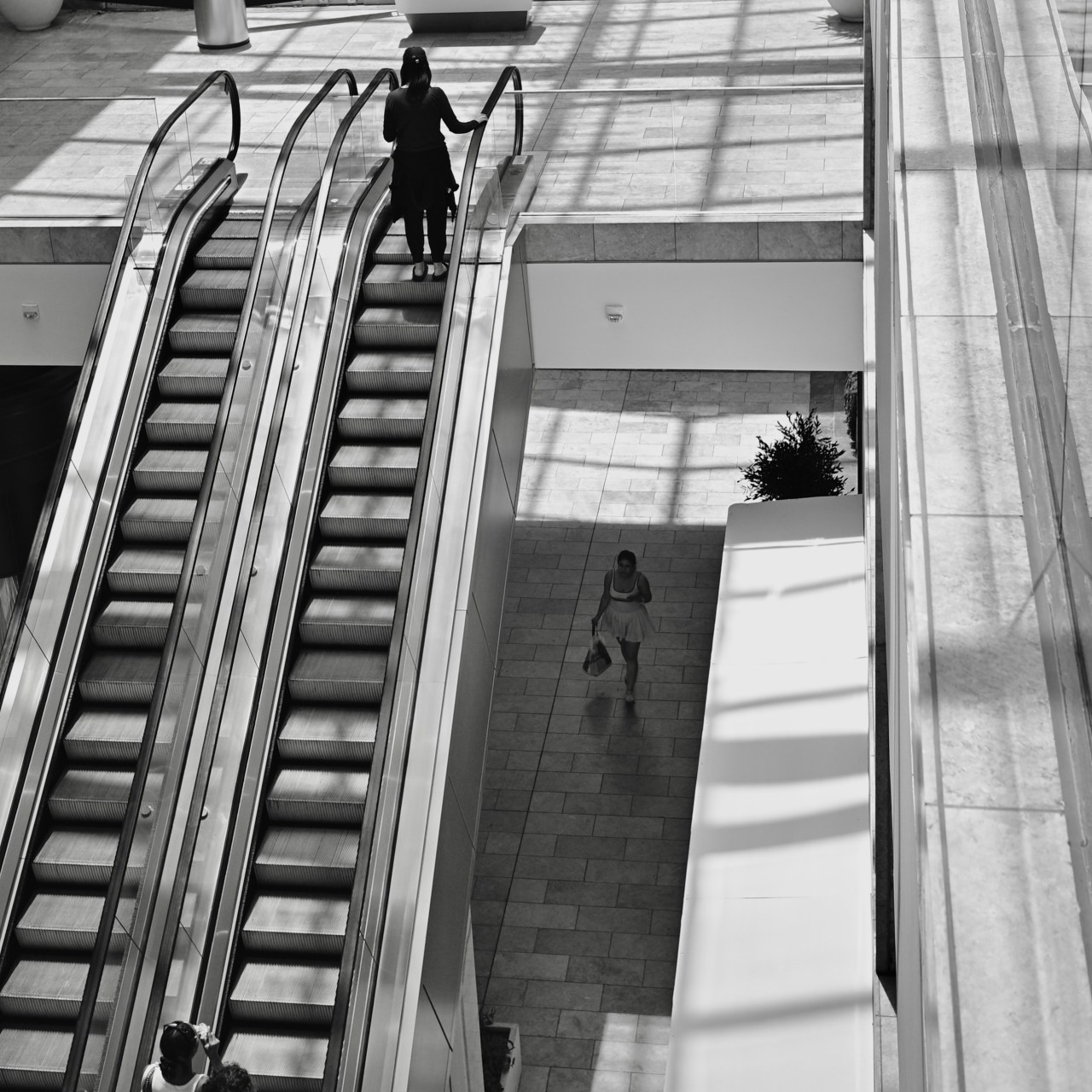
But grand spaces, at least for me, can act counterintuitively if the crowds in them on a given day are too sparse. That is, they work counter-intuitively. Big areas that are only partially filled, or even nearly empty, can strike me as lonelier than a single solo stroller on a rural road. It’s the contrast, visually and emotionally, between designs that were made to accommodate thousands and the empty feeling created when only a few dozen are on hand to fill those huge cavities. In images, it can be made to suggest a very intense isolation created when an individual is patrolling areas intended for huge throngs. The scale of things changes the terms.
A single seeker in a big woods looks like an idyllic communion with nature, whereas a solo wanderer in a huge man-made space suggests loneliness. I can’t explain it; I only know that, pictures-wise, the setting shifts the effect from Guy Getting Away From It All to Last Man On Earth. Context in photography isn’t everything, any more than any other single element. But it is a lot when it comes to showing the difference between “alone” and “lonely”. Some of this goes to the biases of the individual photographer, of course, and that’s why there is more than one of us trying to do this job. Still, I am always surprised when a single factor in the making of an image goes from important to crucial. Space, and how it gets filled or not filled, is one of the most decisive of those factors. We show what we see and we see what we feel.


Leave a Reply