SIGNATURE MOVE
By MICHAEL PERKINS
THE LINK BETWEEN CLASSIC CARS AND CALIFORNIA is an incredible, mythic bond, a marriage of American dreams. Even as we and the world are wondering, at least from an environmental standpoint, whether the romance has gone on for too long, even as we tearfully tender divorce papers to our old chrome-encrusted gas guzzlers, we Californians maintain a tearful love for What Was. It’s so easy to find a weekend show-and-shine in Cali that you might be tempted to think that God created strip mall parking lots solely so we’d have an easy way to stage seas of antique Fords and Chevys.
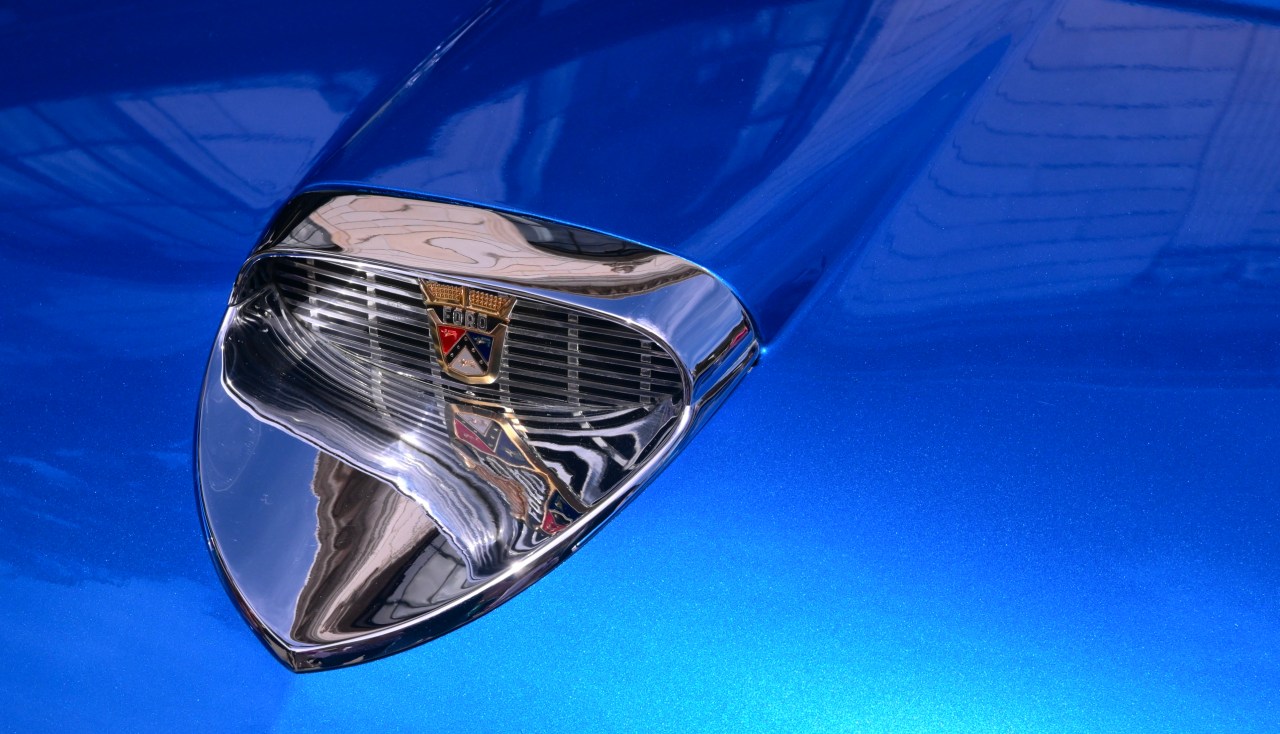
Awash in chrome, the classic logo badge from a 1958 Ford Fairline 500 Sunliner.
As a photographer, I find all this free-ranging power, color and style irresistible, but I’m fairly selective on what the sexiest portions of the entries are. It’s not the squeaky-clean, detailed engine compartments or the custom wheels, not even always the Cruise-Til-Ya-Drop cab appointments. For me, it’s the sheer elegance of the designer’s “signature” on the car, the badges, emblems, hood ornaments and company logos that grace the grills and hoods on the fronts of the cars. The car’s overall lines and contours are sinuous and sleek, to be sure, but it’s where the artist signed his name to his creation that encapsulates everything about the eras and ages that spawned these beauties.
It’s worth remembering that the first great designers of automobiles evolved from the companies that crafted luxury coachwork for horse-drawn carriages. The famous and now-bygone “Body By Fisher” emblem that was stamped onto the door sill plates of GM products for decades is, after all, the image of a coach, a nod to the Fisher family’s original blacksmith-based artisanal works. One of the hallmarks of automotive detailing, during the golden age of motoring, was the company name, branded on the front end with coats of arms, translucent plastic faux-stained glass, and Chrome, oh, my God, so much Chrome framing, well, everything. I dearly love to frame up entire classic cars, to glorify their every curve and cue from headlamp to tail light, but it’s in the small places where the company said, “we built this” that I can hear the roar of the engine, the whistle of the wind, and the squeal of the tires. Long ago, Zenith radios used to brag that “the quality goes in before the name goes on”, and, with classic cars, that signature speaks to excellence, pride, and, yes, a kind of immortality.


Leave a Reply