AN A.I. BY ANY OTHER NAME…
By MICHAEL PERKINS
ONE OF THE HALLMARKS OF THE DISCUSSION OF ARTIFICIAL INTELLIGENCE, as it applies to photography, is the strident insistence by some shooters that “I will NEVER use that!”, our words to that effect. This statement presumes that A.I. is some forbidden room whose spooky contents can never harm you so long as you don’t open the door to it. But, as they say on the high seas, that ship, for most of us, has sailed.
The angrier among us act as if they are sacred photo virgins who have not yet been violated, as if we can maintain our virtue indefinitely if we but avoid using this app or that process, as if we have all been asleep for the past fifty years. This is, of course, nonsense. If you have ever used Photoshop or its many stepchildren, if you have ever touched a slider inside Photos for Mac, if you have ever used a flick-of-the-finger shortcut to instantly boost color, you have already entered into some nature of covenant, partnership if you like, with products that were built on our collective human experience, imbued with the ability to mimic that experience in a quicker fashion, at our command. That is as good a working definition of A.I. as anything else I’ve heard. We pour our knowledge into a huge tub of skills and ideas, and we deputize certain processes to serve that back to us in whatever configurations we order up.
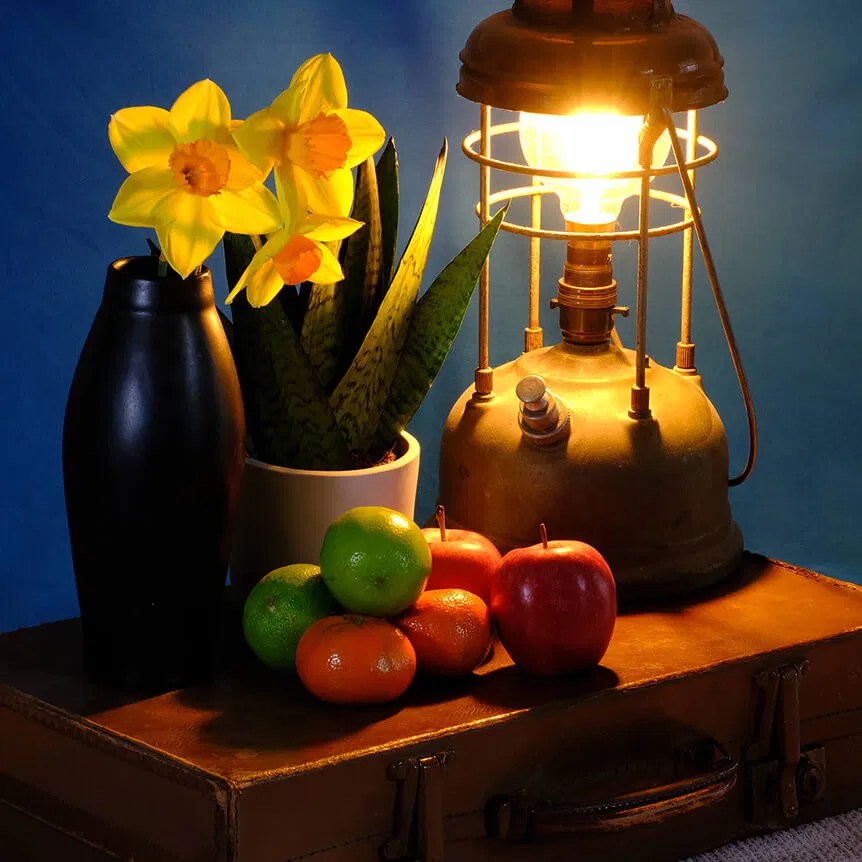
This image shows the color range and saturation rate of the classic Fuji Velvia slide film (from theleft edge to the middle of the frame) and one of the more commonly available simulations of that particular film stock (middle to the right edge) that is likely already built into the camera that you own. If it’s not, you can easily dial up a step-by-step recipe for creating that simulation as a package of custom settings via the various menus on your rig. And this is certainly not a “cutting edge” example. Film sims have been available for years, and are an immediate and cheap substitute for the costly and complex effects that only used to be achievable by lab manipulation. In fact, in the case of this particular sim, it allows the kind of adjustment that, in the analog era, was impossible with slide film, which is a final positive, not a malleable negative. What you shoot is what you get, so to speak. But, to return to my point, how is this tech NOT A.I. by a more palatable name?
The technical processes that you choose to sweeten or adjust your images are not the sole determinant of what kind of picture you wind up with, any more than your camera or media are. You are that final decision maker; you hold the tools. So what difference is there between the adjustments you currently employ and another, newer way to make adjustments? A.I. does not take your choice away from you; in fact, it offers more choices, and choices of choices, than you could ever need in a lifetime. The only thing that can make your images less “you” is your decision to let your decisions be made by someone/something else. And that’s on you.


Leave a Reply