NOT MUCH=JUST ENOUGH
By MICHAEL PERKINS
FOR ME, PHOTOGRAPHS WORK BEST, NARRATIVELY, when they don’t give away the store. Or perhaps, more precisely, the stor-Y. In my experience, images convey ideas best when they limit themselves to simple means, spare tools. Pictures that provide more information than needed to get their point across are like eating birthday cake with a birthday cake chaser; too much of a good thing. We can all be entertained by an occasional visit to places that resemble a scene from Where’s Waldo?, but you wouldn’t want to live there.
For one thing, a photo that is cluttered creates a problem for the viewer, i.e., where am I supposed to look? Or to look first? What in this grand mess is supposed to be the thing that argues best for my attention, and what, if anything, serves only as a distraction? I realize that the term minimalism has been hammered flatter than a roadside cow pie through overuse, but when you’re talking about the economy required to tell a story lean and clean, it seems to be the right word. Build your tale up in layers, like a pyramid, heading up from the foundation and adding only as many extra floors as you need to get the job done.
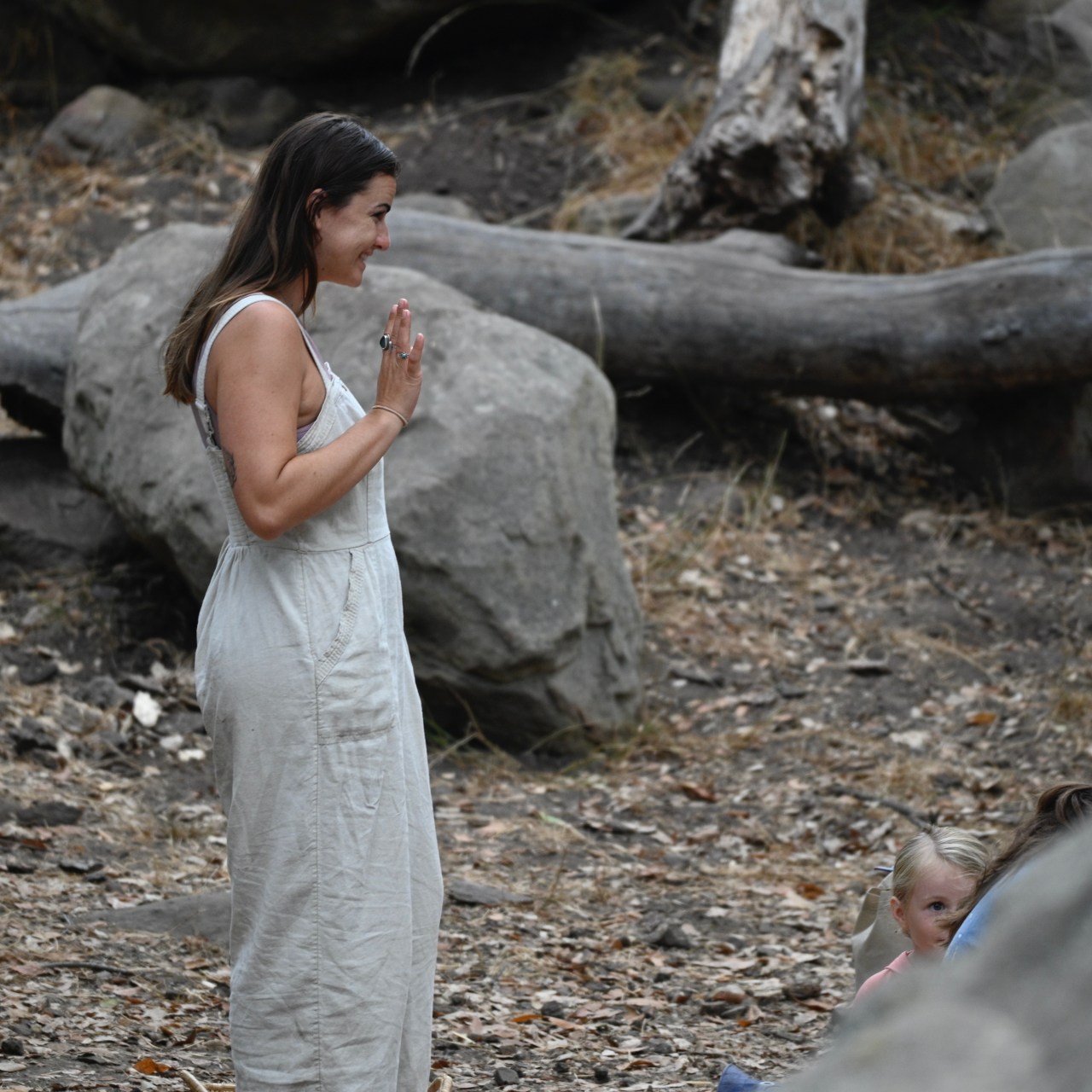
This image is an accidental example of what can be done when you stop just as soon as your narrative task has been accomplished. The young woman seen here was taken with an extreme telephoto as she faced a small group of kid campers. A part of one child’s face was actually captured here, with the rest being hidden by some obstacle. And yet, what real information about her role is missing? We can see that she’s positive, happy, welcoming. We can see that she’s addressing someone, and that her expression if open, full of energy. With just that much data, we can supply the rest of the story. It might have been cute to see the faces of her audience, but it’s far from crucial. The story, admittedly a chance catch, is pretty much told already.
I approach the amount of information in a shot in the same way I approach how much light I need to get the job done. Working up from total darkness, I add just enough light to make the exposure work, and, even then, I might deliberately under-expose to give the viewer a bit of a role in shared storytelling. Build up from nothing just far enough to make the picture work, and stop. Photographs are always better instruments when the taker and the received are both in on the job of determining what’s what. Giving away the story-y robs your audience of a role in determining what a picture is about.


Leave a Reply