UP FROM THE DEPTHS
By MICHAEL PERKINS
I HAVE A FILM SIMU PRESET ON MY CAMERA FOR MONOCHROME which, once clicked into, automatically comes up as extremely over-exposed for some reason. It defaults to a flood-glut of light, and it reminds me that my own default in photography is the very opposite, an inclination towards the darkness.
I don’t mean mood or subject matter or even attitude, but a bias toward images that begin almost completely black and then dial up, gradually, until they grab just enough light to get the job done. This is crucial. Where you wind up in the creation of a picture is determined by where, mentally at least, you start from.
Consider: the first photographic processes struggled to gather light. The first emulsions were inefficient, dictating extremely long exposure times to get usable results. The entire method for taking a photograph was based on patience, on waiting for the camera to register enough illumination to get to the finish line. For decades after those slow beginnings, there was a constant battle to court light, to speed its absorption, to control it. That imbued photography with a certain deliberation. Planning. Preparation. Intention.
That slower, more contemplative system still appeals to me.
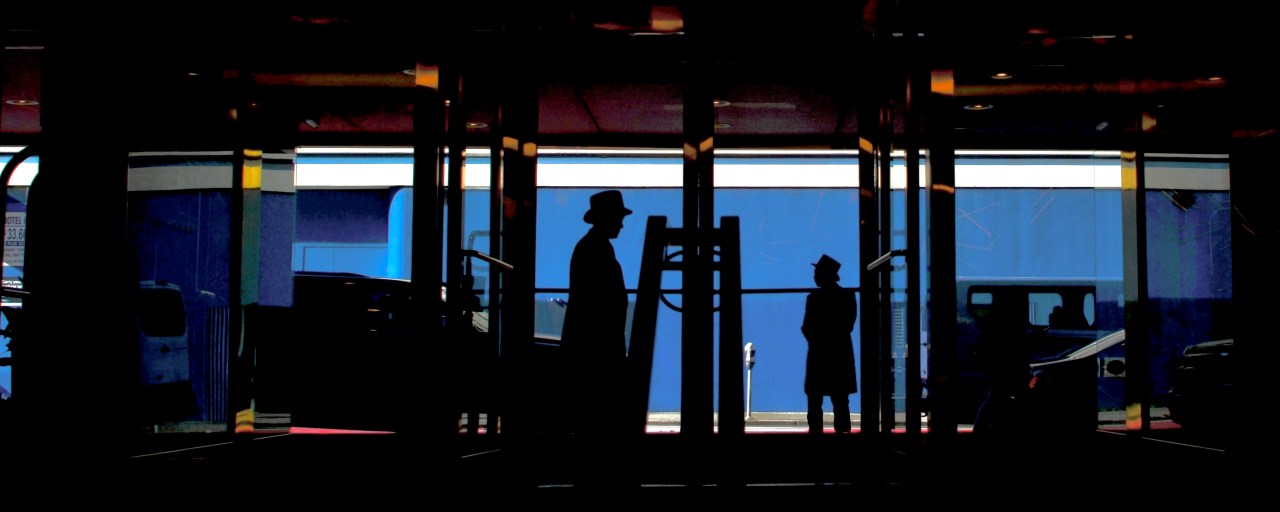
May I Call You A Cab?, San Francisco, 2018
Of course it’s easier than breathing to nail an exposure nearly perfectly every time. The camera takes care of that by itself, since technology has been instructed to deliver instant rewards to the consumer. A guaranteed win. Now, not to be a troll, but what is the fun in that? Building an image from conception to completion, perhaps starting with an all-black canvas and building just enough light into it to make it work….and then stopping just at that point, refusing to go all the way to “perfection”…that, to me, is where all the reward comes in.
The image seen here doesn’t look like it does because I misjudged how much light I’d need, or because there wasn’t enough light to take a “regular” picture; it’s this way because I made a decision to minimize everything, to draw the sharpest possible contrast between foreground and background, to register most of that foreground as a silhouette. A so-called “smart” camera will not do that. I have to intervene, to risk working at cross-purposes with a device that’s been engineered to deliver an average product with no muss or fuss. Thing is, building an image up from the depths, so to speak, is exactly the muss and fuss I seek when I set about to catch light, just enough light, inside a box.


Leave a Reply