EVERYTHING IS ON DISPLAY
By MICHAEL PERKINS
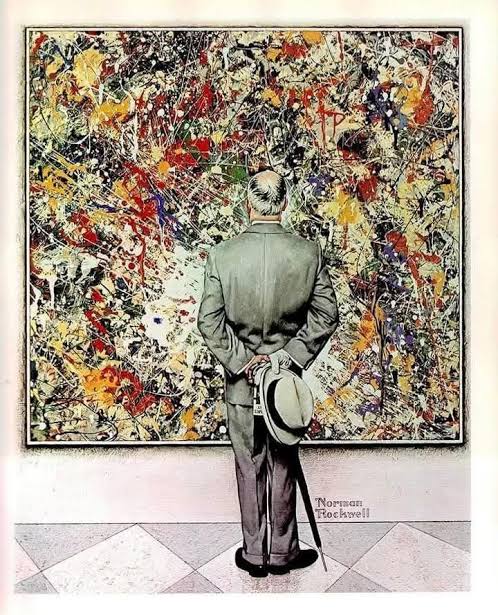
Norman Rockwell, watching the watchers in 1962
MUSEUMS, TO ME, DELIVER UNIQUE EXHIBITS that their curators never imagined, nor could ever have planned. The unending interactions between the formal collections on display and their various audiences continues to amuse and amaze me, a relationship I first considered long before I myself picked up a camera, around the time that Norman Rockwell’s whimsical The Connoisseur (above) was unveiled in 1962. That visual link between art and appreciator was forever forged for me then, and continues to shape how I experience museums today.
I love to examine the enormous darknesses and dead spaces in galleries, as that is yet another kind of contrast-defined composition, but my greatest joy is in finding my own equivalents to Rockwell’s art lover, catching people in the act of appreciating, weighing, deciding. The dynamic is never static, the pictorial results never the same. Sometimes a human figure actually completes the arrangement of objects on the floor or on the wall; other times, people create a tremendous interruption in the serenity of the exhibits. Both effects can create interest in a photograph.
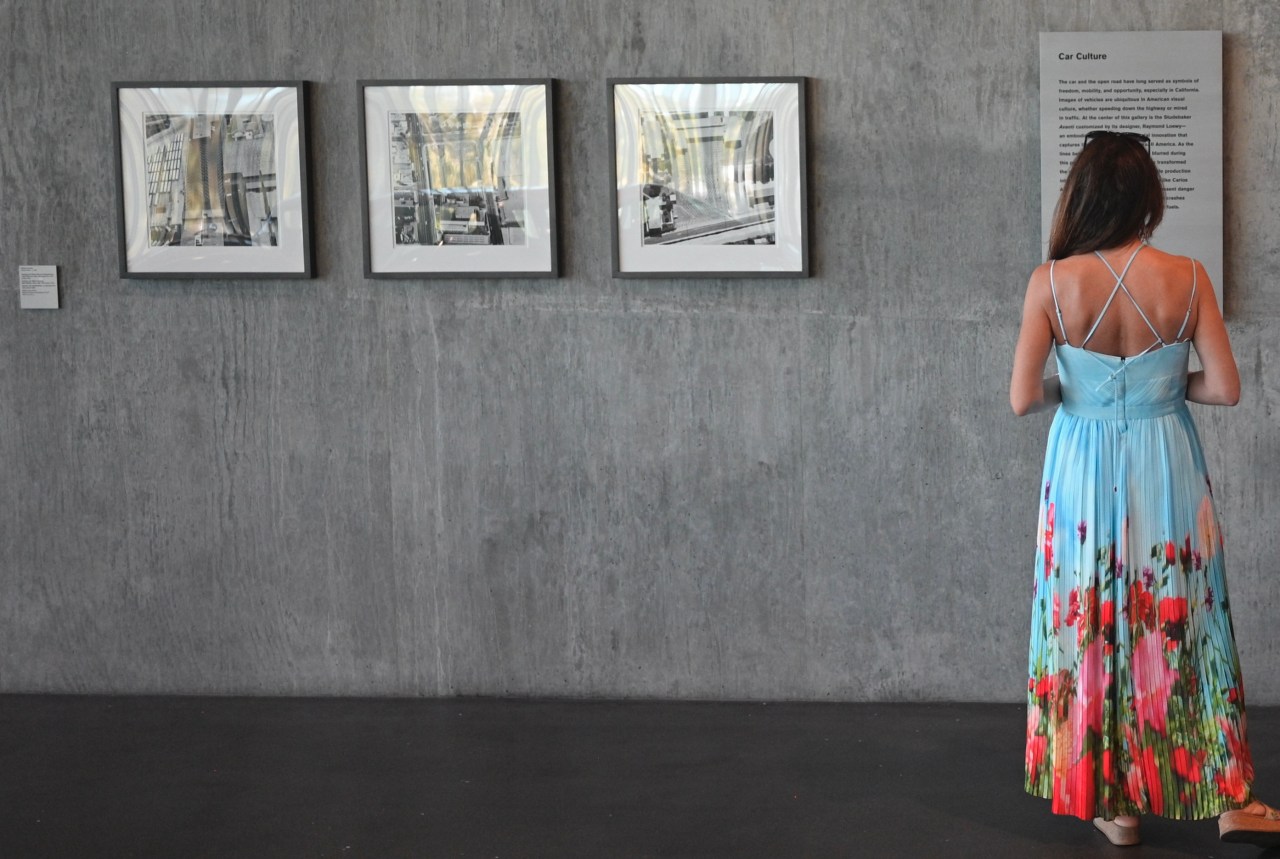
Re-pose, 2026
In this image, the bright colors in the woman’s dress are a dramatic departure from the essentially colorless wall art, with the viewer left to decide whether that completes or distracts from the result. In the complete original frame, she was flanked on her right by a man who added absolutely nothing to the composition and actually lessened her impact in the picture, so, snip, out he went. I actually spotted her walking about the gallery before I saw her “light” in one place, and waiting to get the design and drape and colors of the dress into some kind of image proved well worth the wait.
The picture is also salient for being somewhat incomplete. For example, the expression on her face, were it visible, actually would shut down or limit our imagining of her reaction to the work. Once something is fully shown, it can only be that one thing, limiting the potential for mystery and denying the viewer the opportunity to complete part of the story in his/her head. Compositionally, having her stand as a beautiful vertical bookend to the plain horizontal arrangement to her left gave me the perfect staging for her. Had I waited longer, it’s possible that another visitor might have rendered the scene in a very different, but equally workable way. Perhaps those other people and I will have another chance encounter on another day. That’s “X” the unknown. Waiting for it, and seeing the possibility it presents once it appears…..that’s photography.


Leave a Reply