FOR WHICH IT STANDS
By MICHAEL PERKINS
PHOTOGRAPHY, SINCE IT TRAFFICS IN FROZEN MOMENTS OF TIME, is, of necessity, in the business of symbols.
We have scant, stolen instants in which to try to simplify complicated ideas, to improvise a visual shorthand for concepts that the philosophers fill bookshelves explaining, or attempting to. And symbols are the key instruments in that shorthand, as we mean for this to stand for this, or for that to imply that, and so on. The tricky thing about symbols, however, is that they convey different things to different people. They are fluid, mutable. Personal.
So who owns the symbols of unity? Of freedom? Of defiance? Dedication? Memory? Pride?
Patriotism?
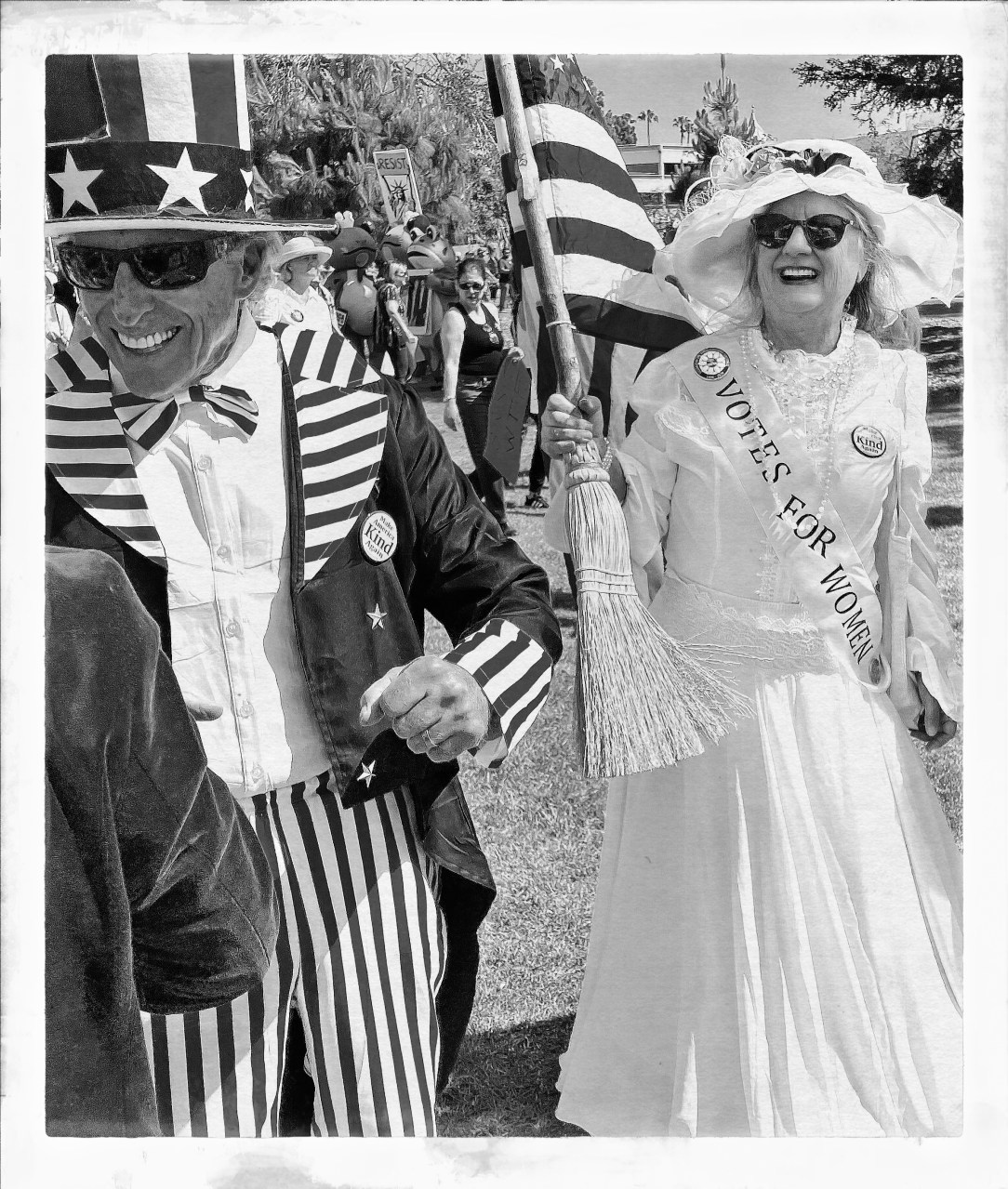
As America counts down the final weeks to the 250th anniversary of its founding, we can easily forget that flags, decals, banners or badges are not pure in their power, nor are they universal in their meaning. There are too many of us that have lived too many different kinds of lives for any one set of symbols to say the same things to all of us. And so, in an era of almost unparalleled division, it’s only natural that we disagree also over who “owns” this things. If I wear the Stars and Stripes on the seat of my jeans, am I celebrating my freedom to do so, or disrespecting the rigid ritual of Old Glory aloft on a flagpole? History is layered, and symbols can be tweaked, exploited, or shanghaied to serve the programs of many people with many aims. Photographs of the various ways we decide to celebrate something like a flag can explore nearly infinite interpretations, and therefore the visual subject cannot be exhausted. Every depiction of a widely-used symbol merely underscores how non-common, how very personal it is.
Maybe the best way to show respect for a symbol is to acknowledge all the ways it has been used; as tribute, as memorial, as rallying cry, as bludgeon, as emblem of hope, or badge of error. To photograph people who are “rallying round” a flag, or any other talisman, is to document all these uses and imply many more. Pictures thus become more than mere documents, but evolve instead into a kind of testimony.
GENTLEMEN, START YOUR LENSES
By MICHAEL PERKINS
NEW CAMERA START-UP PACKAGES IN THE YEAR OF OUR FORD 2026 are marketed in almost the opposite way they were a generation ago. Back in the days of Ronald Reagan, manufacturers that had been accustomed to selling permanently attached lenses to their bodies suddenly saw an explosion in SLR sales, and with it, the demand for detachable glass in various focal lengths. Thus came the idea of the “kit” lens, which, for quite a while, tended to be of a single focal length. Indeed, lots of us elders’ first “grown-up” cameras came with a 50mm or 35mm prime. Back then, this made more sense than equipping bodies with lenses of variable focal lengths, since zooms of the period were bulkier, slower and more expensive. Primes were more compact and reliable.
Fast forward to the current market, and you see the complete reversal of this thinking. Selling a kit lens with a variable focal length, say, a 24-70 or 18-55, is now thought to afford new photographers more versatility, an easier break-in period for a wider range of techniques. This has been made possible by vast technical improvements that allow zooms to be smaller and far more responsive than was the case forty years ago, including greater ranges for maximum aperture. There is also the consideration of price, as a variable optic allows the user to save money on the purchase of separate specialized (limited?) optics. As a consequence, new cameras today are almost never packaged with a prime as its kit.
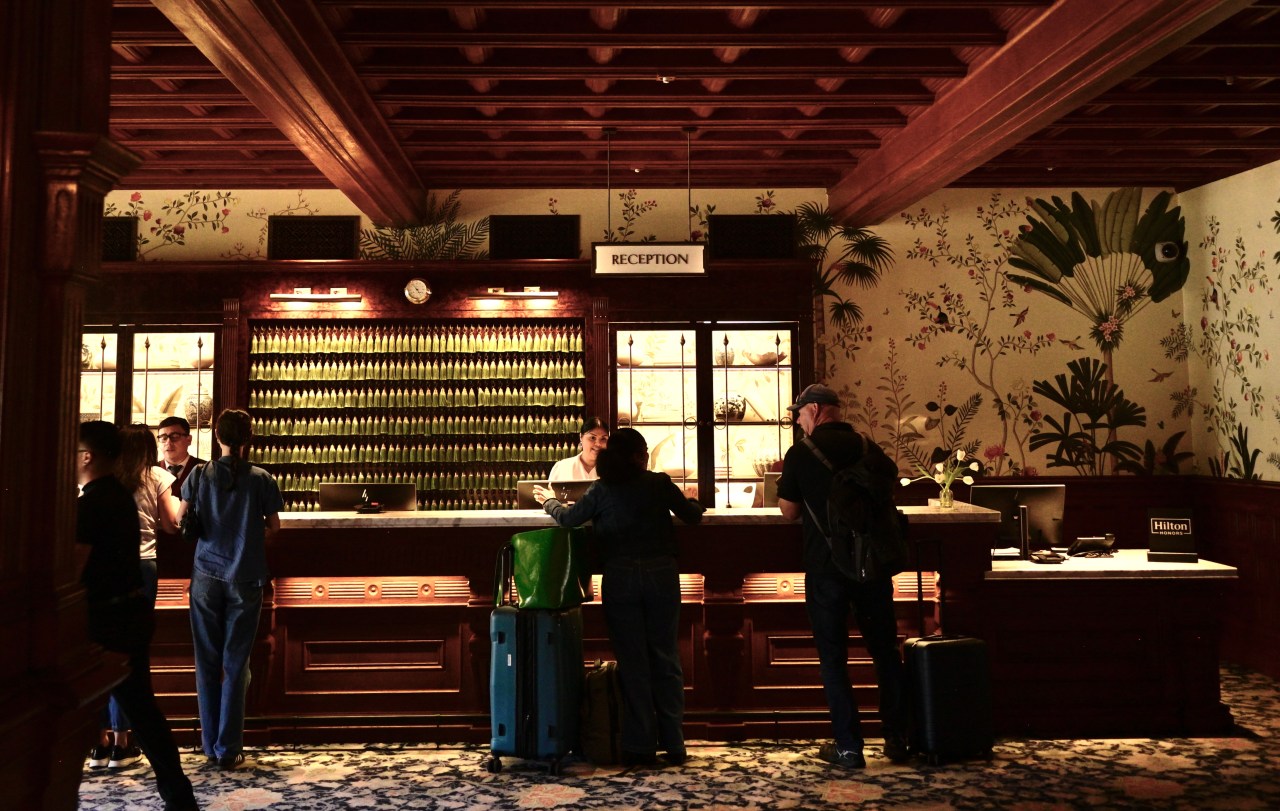
These days, both a prime and a zoom can make this shot, but the prime is still faster and sharper by far.
This where we inject the Joni Mitchell line about “something’s lost, but something’s gained”, since, in photography, new choices often obliterate old choices. Fact is, there is still an argument to be made for primes as a learning tool for newbies, if for no other reason than that, since they contain fewer glass elements than zooms, less light is diffracted on its way to the sensor, which greatly affects sharpness. Primes’ performance at lower light is also still leaps and bounds beyond that of zooms. And, of course, even primes can be “zoomed” to a degree (an old technique we call “walking”), which actually promotes more compositional mindfulness than just hitting the “tele” toggle.
My point is that, still, today, some photographers might be more than glad to learn on a prime, if it were on offer. I would therefore love to see manufacturers offer two basic kit packages when introducing a new camera, one with a zoom and one with a prime. Neither option should obviate the other for the consumer. This is merely reflective of the fact that there can never be just one way to gain experience, and that no options are strong enough to be universal decrees. I can really only speak to what works for me, and yet I strongly support more choices for more platforms. Camera tech needs to be as inclusive as possible so that photography can fully thrive.
HERE TO STAY
By MICHAEL PERKINS
IMPERMANENCE IS GENERALLY THE ONLY PERMANENCE HUMANS KNOW, with the world collapsing inward and rolling back upward like kneaded bread dough. No sooner does one of this world’s societal textures surface but it gets folded under and turned out of sight. And within that “general” pattern there is an even more insistent rhythm of change that is uniquely American. We Yanks feverishly worship the new and doggedly discount the old, tearing down just as speedily as we built up. Having reverence for age, experience or context is often too tall an order for us. And so, in America, the demolition crews and the construction gangs are in a continuous tag-team flow.
And if this is generally true in American cities in general, it is even more so in places designed for high turnover, like resort spots or beach towns, where a dizzying worship of the novel confers a kind of gypsy status on most local businesses. That’s why, as a photographer, I am not only impressed but amazed to find places that have lasted and even thrived for more than six months straight. As one example, my new hometown of Ventura, California, a beach town’s beach town, has been in the heart of a major regentrification boom for the past decade or so. Lots of that new energy naturally flowed from the business district’s forced improvs in the wake of the pandemic, when everything in town adopted a change-or-die mentality. After the smoke cleared, it was easy to see which local joints had the best staying power, because, well, they stayed.
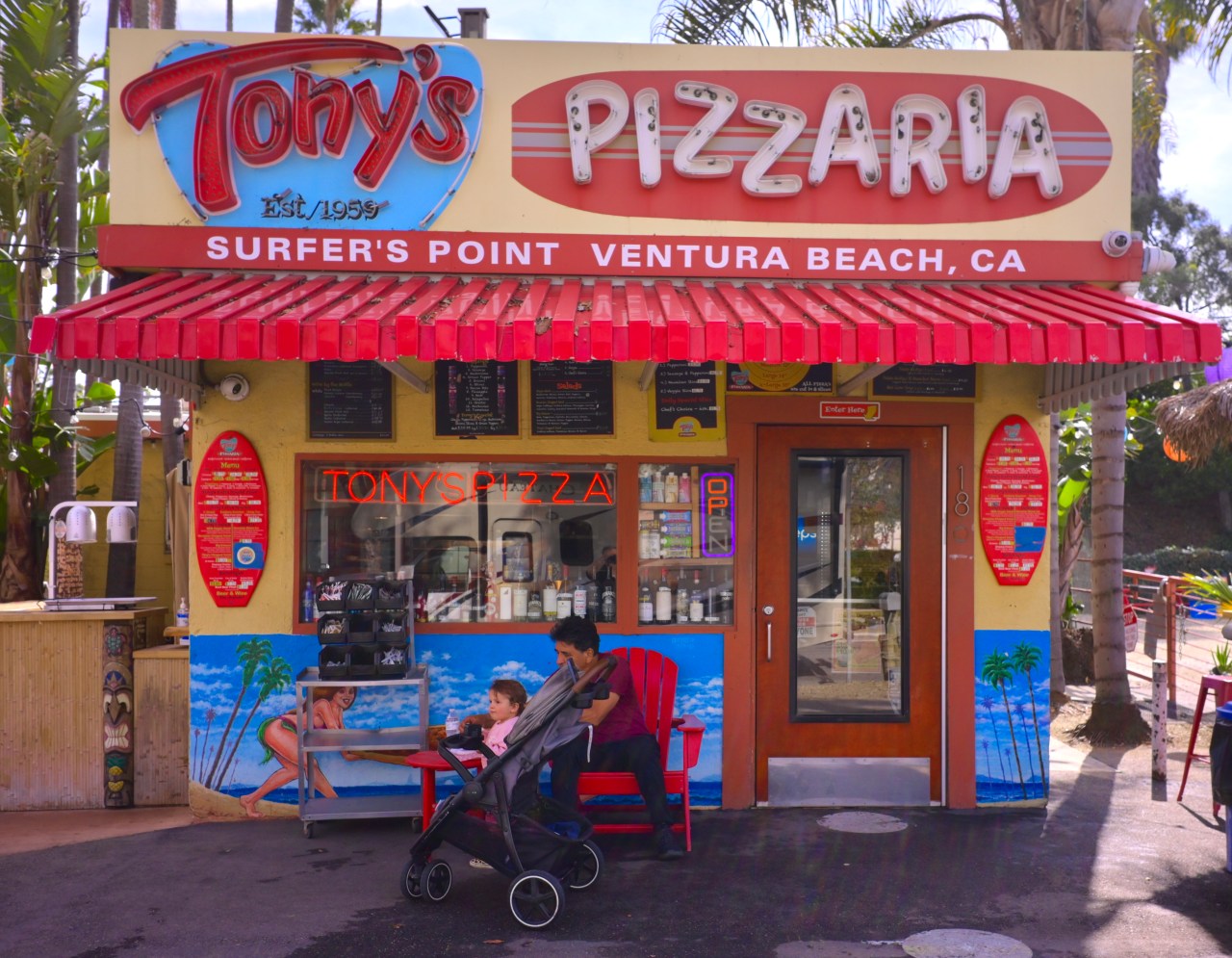
I will always slow my roll (and break out my camera) for any place sporting an “in business since (year)” sign, and so I absolutely had to check out both the street face and the bill of fare at Tony’s Pizzaria, just three blocks off the Pacific, and, as it says up front, “est. 1959”. I always shoot the entrances of such places head on, as if they are sets in a stage play, and I always hope to convey their true atmosphere by catching some customers In The Act Of. And in case you’re wondering, why, yes, I did try the pizza, and other than losing the top-half of a molar crown that was already on its last legs (roots?), I rate it a wondrous experience. I’d like to think that someone could drive past Tony’s in 2059 and marvel, as I did, that some things, even inside a centrifuge, can last.
LAST BOW

By MICHAEL PERKINS
IF YOU THINK THAT LIFE IS ABSURD, consider….death.
Not the mere fact of the end of life. No, properly viewed, that final human stage can lead to some fierce contemplation, maybe even a revelation or two. No, it’s our own hilarious method of experiencing or marking death that reveals it for, at least some of us, one final shot at vanity. At mattering. Ranking.
We shop carefully for the precise spot where we or others we love will “spend” eternity, even though none of the surface elements we employ….the rituals, the tributes, and so on, are, themselves, of the eternal world. They’re expressed instead in the physical media that we understand. Mighty monuments. Pondrous headstones. Majestic crypts. It’s our last stab at distinction; my mausoleum is grander than yours. My farewell drew more mourners.
And so on.
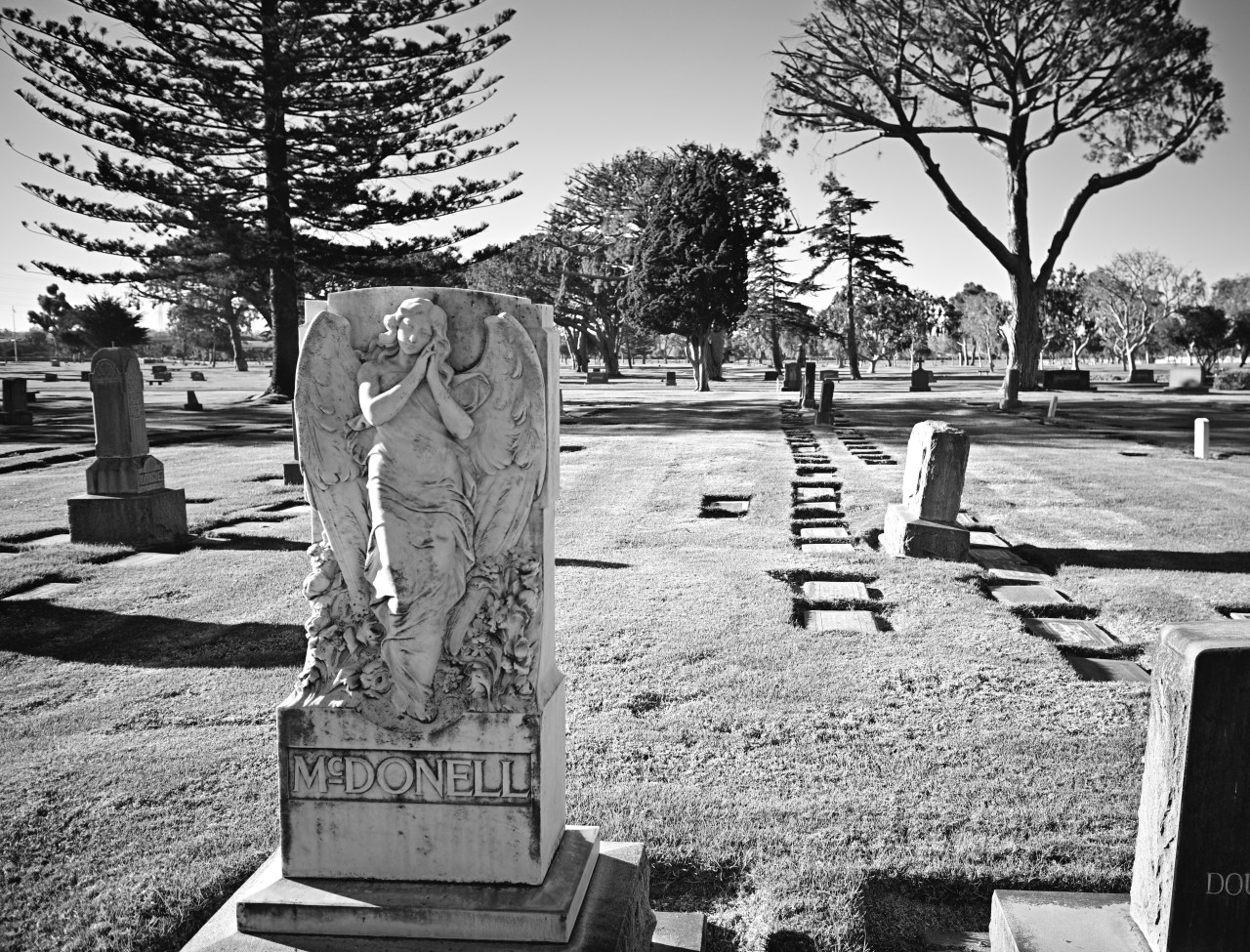
I make a lot of photographs of cemeteries when I travel. Not out of some ghoulish need to hang with the dead, but because I find that what we try to do to comfort the living is, by turns, both elegant and idiotic, prosaic and foolish. There is also the endless pictorial variety in graveyards. Many are similar but none are truly alike. And then there is the acidic scar that time etches onto the “eternal” markers we’ve erected, creating mystery about the dead that their inscriptions, washed away by the decay of centuries, cannot answer. Initially, we are just dead; eventually, we are also forgotten.
Images from various boneyards can sometimes anchor them in their surrounding communities. They provide context, even commentary. One age’s sacred ground becomes another generation’s industrial development site. It’s as if, by trying to erect permanent tributes to our mortality, we actually underscore the futility of that very task. But the attempt goes on, and the pictures that come serve as a kind of barometer of how we see ourselves, and what we think we’ve amounted to.
MEANS AND ENDS
By MICHAEL PERKINS
And if you don’t know where you’re goin’, any road’ll take you there—-George Harrison
THE PERSON WHO COINED THE PHRASE, “there’s more than one way to skin a cat” may not have been a photographer, but he/she certainly summed up a key truth about picture-making. Ever since we first started freezing images in boxes, we’ve been trying to craft shortcuts to the creation of our favorite effects, generally adopting the idea that results are about just that, results, and who really sweats what tool or technique you used to get them? Some of the earliest problems in photography, like engineering media sensitive enough to make immediate exposures, took decades to solve, as did the puzzle of providing supplementary flash without, you know, setting fire to the drapes. But we are now at a stage when the tinkerer’s first version of how to pull off something is followed up by simpler shortcuts in less and less time.
More and more, we initially discover how to do things by fairly laborious means, only to turn around seconds later and see a digital or A.I. shortcut that performs the same magic trick at the flick of a button or swipe of a screen. This convenience, wonderful as it is, is sometimes met with suspicion, as if a thing can’t be worthy or good if it comes too easy. This view, that only shooters who bravely grapple with unwieldy processes are making “real” pictures, is a snotty country-cousin to the belief that only those who shoot all-manual are “true” photographers. Me, I’m fine with painting a big wall with a paint brush, but, if I can do it just as well in half the time with a roller, then, yes, please, hook me up.
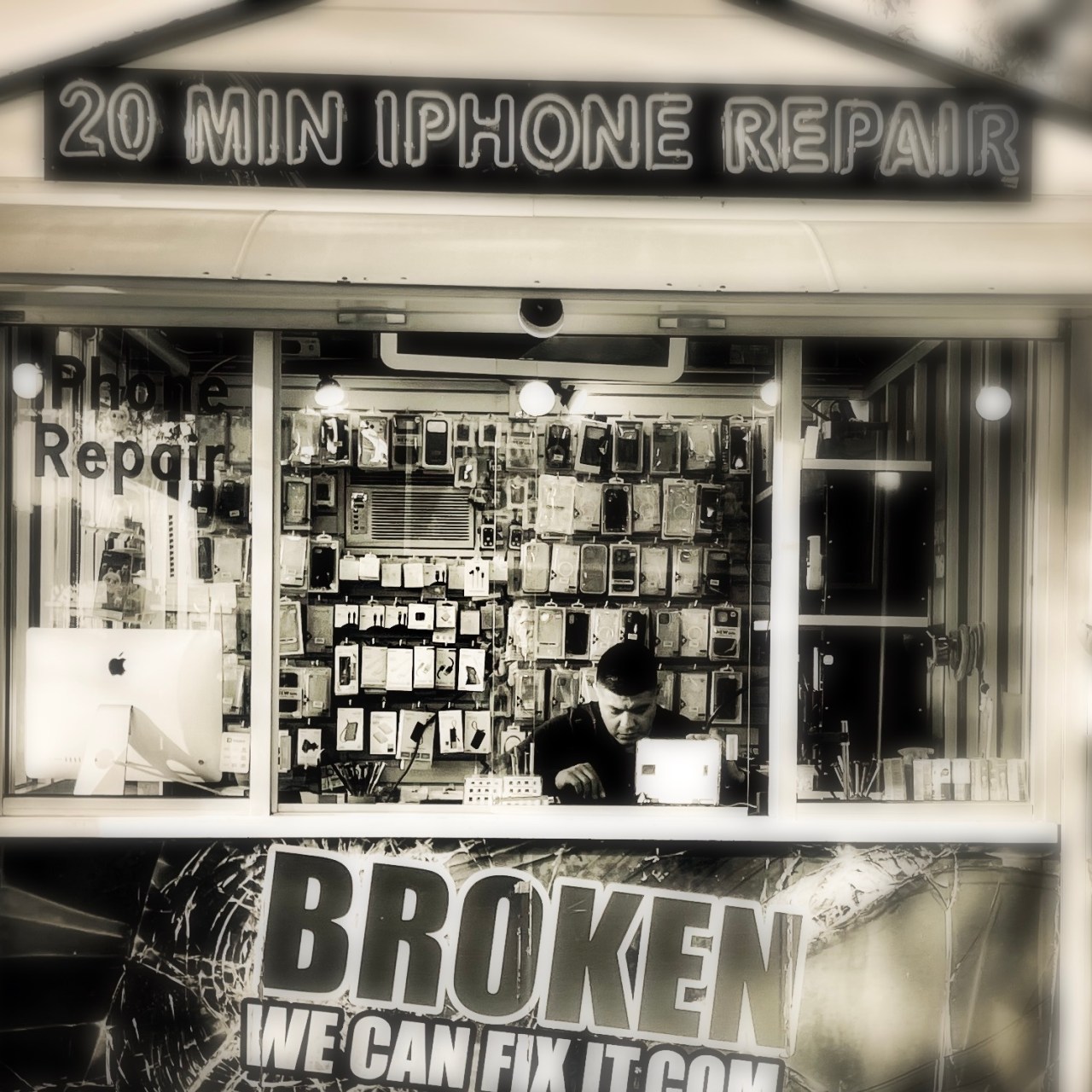
Selective “Lensbaby” focus, achieved in post-processing with a quick pinch and swipe via the Hipstamatic phone app.
Take, as an example, the recent love affair many have struck with the manual lenses that allow for selective focus to be achieved in-camera, as marketed wonderfully well by Lensbaby and other optics houses. With such specialized glass, a floating “sweet spot” of sharpness is preselected by the user, placed wherever he/she may desire it, surrounded by a soft haze that serves to call extra attention to the subject matter within the selected focus area…all of it done in-camera. These specialized lenses are fairly costly and tend to be one-trick ponies, in that their optics may not be optimum for all the uses found on standard glass. And then there is the time spent in climbing the lens’ learning curve, since uniform results are far from guaranteed.
Now, contrast that to a single trick among dozens of offered post-processing effects within a single phone app, which, in the case of our illustration, is called Hipstamatic. Selecting “depth of field” among the choices, and applying a little stretch-and-pinch of the fingers, renders the Lensbaby effect immediately, and with even greater flexibility, since, with the ability for endless re-dos of the effect before locking in the final version, there is no standard trial-and-error. Also, since you are basically working on a copy of your original, it remains pristine and ready to be taken in other directions on another day, based on your whim. All for the one-time cost of the app, which, in this case, was zero.
Having once invested in the speciality lenses required to make such a shot, must I regard the app-rendered version “less than”? Certainly not in the quality or effectiveness of the final result, and certainly not when it comes to any yardstick of economy or efficiency. The app does what I ask of all photographic processes; places as few barriers as possible between my vision of an image and my ability to hold the result in my hand. Sometimes, as G.Harrison implies, you want to calmly saunter down the old dirt road. And sometimes you want to take the expressway.
VISIONS FROM OTHER KINDS OF EYES
By MICHAEL PERKINS
IT TOOK ME OVER HALF A LIFETIME OF STUDYING WHAT I CONSIDERED THE “GREATS” OF WORLD PHOTOGRAPHY to realize just how biased my own eye was, how it was inclined to see all cultures mostly as my own culture was inclined to see. The first images I loved were basically travelogues, that is, scenes from so-called “foreign” nations, as interpreted almost exclusively by Western photographers. “My” people, looking at “their” worlds, traveling afar and coming back to me with stories whose truth I took at face value.
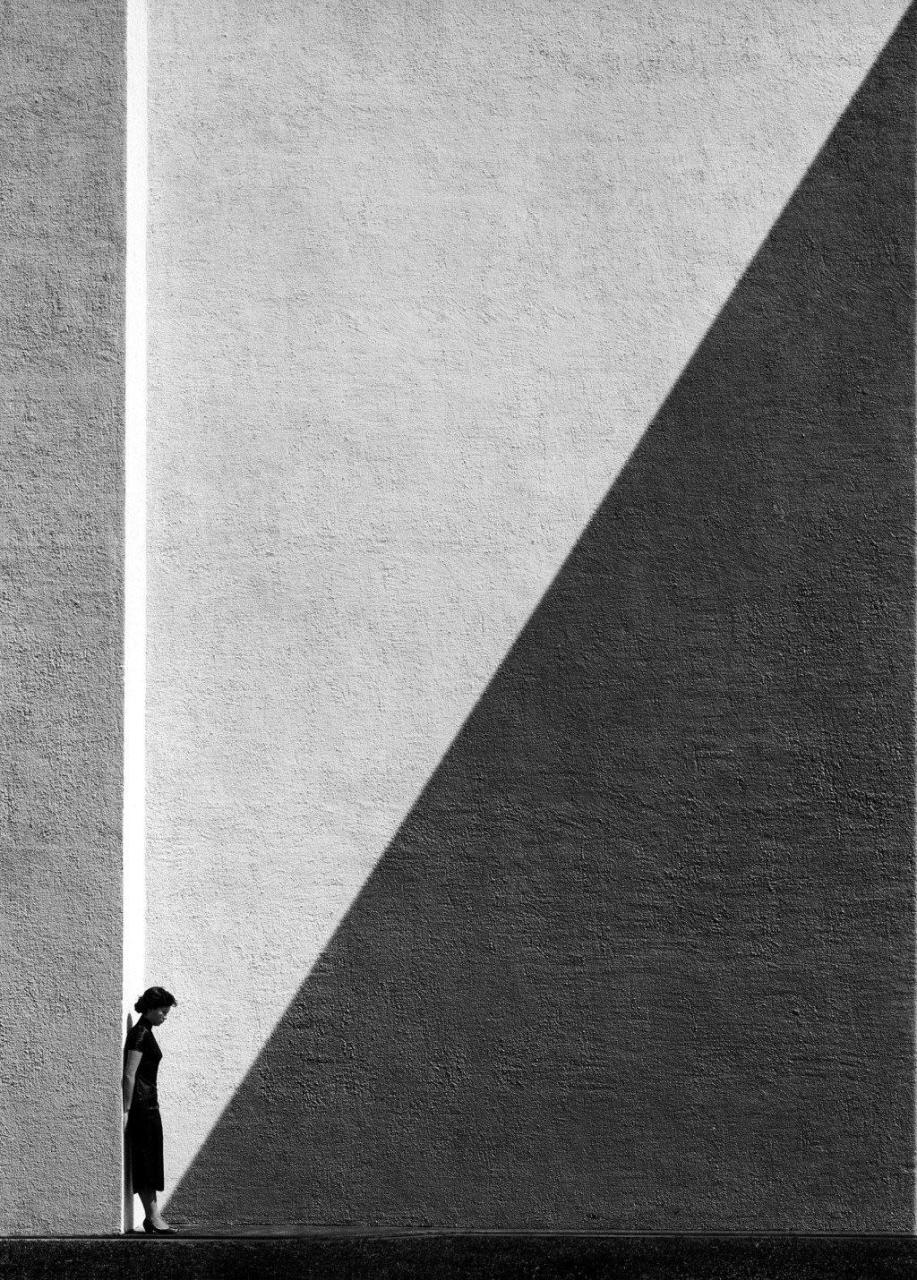
It has taken me a long time, too long, to seek out the visions of people my cultural prejudices regarded as “the other”, to delight myself in the storytelling of indigenous people reporting and commenting on their own worlds, instead of waiting for outsiders (us) to tell those stories for them. It has led me to amazing work, and, lately, to a remarkable Chinese artist named Fan Ho, a visionary whose career spanned over seventy years, ending in 2016, and standing as a true chronicle on the evolution of China since the close of WWII. He was a street photographer long before such a term existed, developing an instinct for what Westerners called “the decisive moment” that elusive instant when all the narrative powers of an image are in perfect sync.
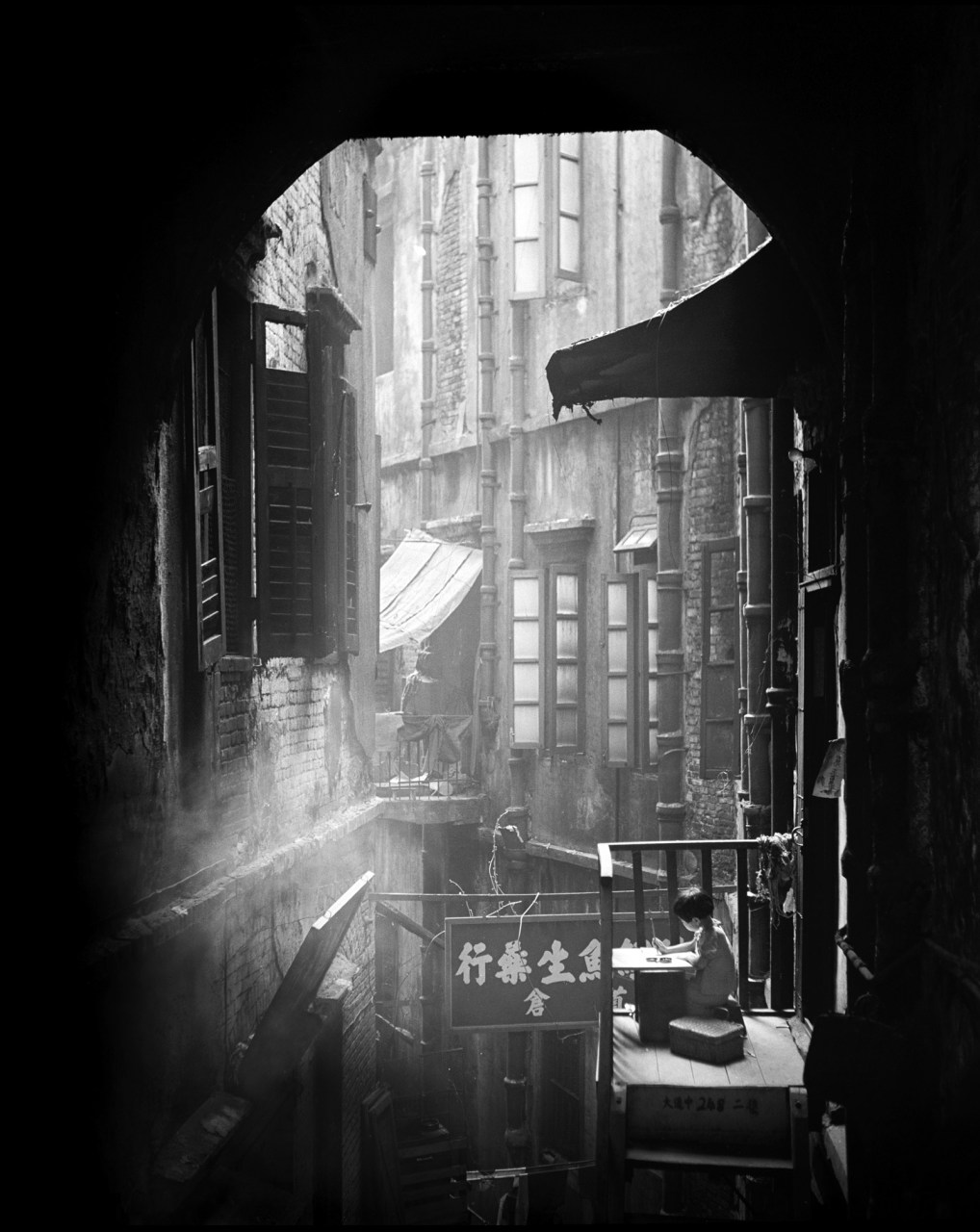
Born in Shanghai in 1931, Ho began snapping at an early age with a Kodak Brownie box camera, graduating to a Rolleiflex K4A, the camera that would be his career-long tool, when he was just fourteen. Developing his film in the family bathtub, Ho was almost completely self-taught, insisting that equipment and technique both took a back seat to emotion, and that he “didn’t work with any sense of purpose”. “I’ve always believed that any work of art should stem from genuine feelings and understandings”, he told an interviewer in 2014. “As an artist, I was only looking to express myself. I did it to share my feelings with the audience. I need to be touched emotionally to come up with meaningful works.”
By 1949, Ho’s family moved to Hong Kong, then beginning its rocket-sled ride into the fraternity of super cities, and experiencing unique growing pains and turmoil as it did so. Ho’s mastery of contrasting tones and shadows made for some of the most impactful black-and-white photography of the twentieth century, a magical balancing act between revealing and concealing. Beginning in 1956, his entry into exhibitions earned him over 280 international awards for excellence, and by the 1950’s, he segued into his second career in cinema, becoming a director a few years after and producing feature films until around 1980. Re-locating to San Jose, California in retirement, and encouraged by friends to return to still photography, he instead chose to curate his old negatives to gain access to shows in the United States, where many critics discovered the breadth and range of his output. At this writing, the easiest way to see even part of his work is in online image searches, as nearly all of his formally published collections are either out of print or seriously expensive…when they can be found.
I am one of many who wound up being late to the Fan Ho party, but a party’s still a party no matter when you arrive, and I am grateful for the chance to learn still another way to see, regardless of where the lesson originates. After all, the only real chance you have to learn anything is to admit how little you know.
KICKED OUT OF THE NEST
By MICHAEL PERKINS
“YOU MUST SUFFER TO BE BEAUTIFUL“, runs the old adage, which I always took to mean that anything worthwhile comes with some degree of sacrifice. Without musing too much about what happens to all of us who suffer and still are ugly, let’s at least admit that, like it or not, beauty, or art, has to be coaxed and groomed into existence, which I suppose is why the noun artist is so frequently preceded by the modifier tortured. The take-home of this, at least for me as a photographer, is that no real growth or improvement comes unless you risk frustration and/or failure. There’s a reason why many mommy birds teach their kids to fly by simply kicking them out of the nest. Comfort is the enemy of creative evolution.
That’s why this entry seems to cry out for an ornithological illustration, as I myself have found the pursuit of bird images to be the perfect vehicle for kicking myself out of my own creative nest. Other than landscape work, I find that shooting birds requires greater amounts of patience and humility than anything else I’ve ever undertaken in photography. Even with sixty-plus years of experience under my belt, making bird pictures puts me immediately back at Square One, feeling like an ignorant child who doesn’t even grasp which way to point the bloody camera. In terms of applying what I’ve learned over a lifetime in pursuit of greater success with my feathered friends, I keep thinking of the old Firesign Theatre comedy album, Everything You Know Is Wrong, and I fantasize that, had I the temperament of a Buddhist monk, I might, somehow, have gotten better than I am at the whole game.
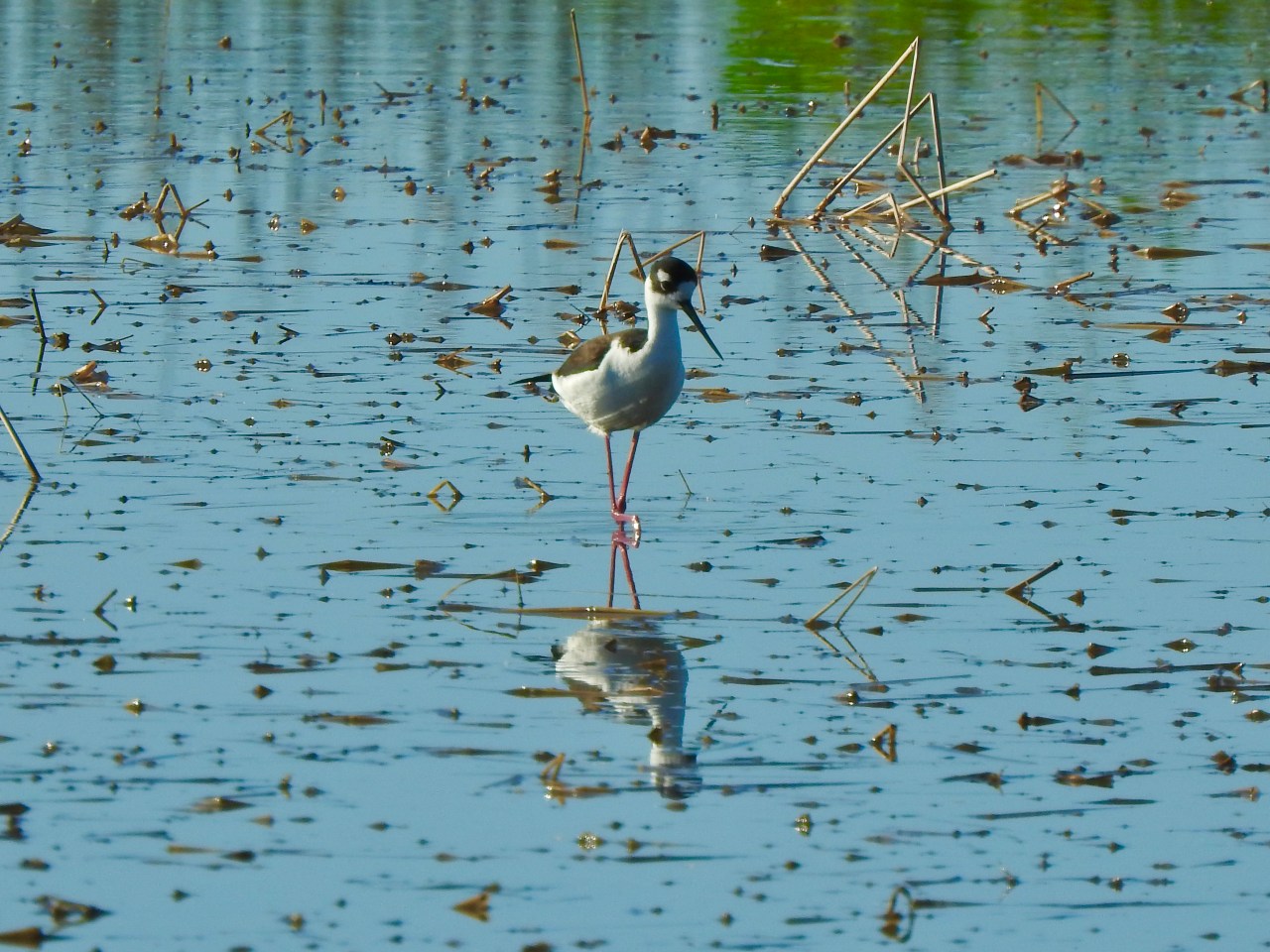
The image seen here is typical of thousands of bird images that I’ve attempted that fall into some murky grey zone between Almost Good and Bloody Embarrassing. You’ve also taken pictures like this, with one or two elements showing promise and others that seem to say Sorry, I’m New At This. “Suffering to be beautiful”, in the case of my wildlife shots, means taking what’s an average “hit ratio” of decent-to-failed pictures and learning to be satisfied with less. A lot less. Turns out that living creatures who must spend all day, every day, just trying to stay fed and alive are remarkably unconcerned with whether or not I get the shot. Go figure. That means that my photographs are made at their whim, not mine.
I have to think of myself, therefore, as a witness to a great picture rather than as its author. The number of things under my control in a standard shooting situation shrinks to near invisibility for bird work, and so, whenever I get lazy or stale, I really ought to “sentence” myself to a bird shoot just to be forced to work at the highest level of intentionality and mental focus. Returning to our opening meditation on birds leaving the nest, it’s worth remembering that some youngsters who fledge from precarious perches, like a spiny Saguaro cactus for example, have one try at flinging themselves clear of the plant to avoid being impaled on it. Now that’s someone who understands something about leaving your comfort zone.
RISE OF THE UPSTARTS
By MICHAEL PERKINS
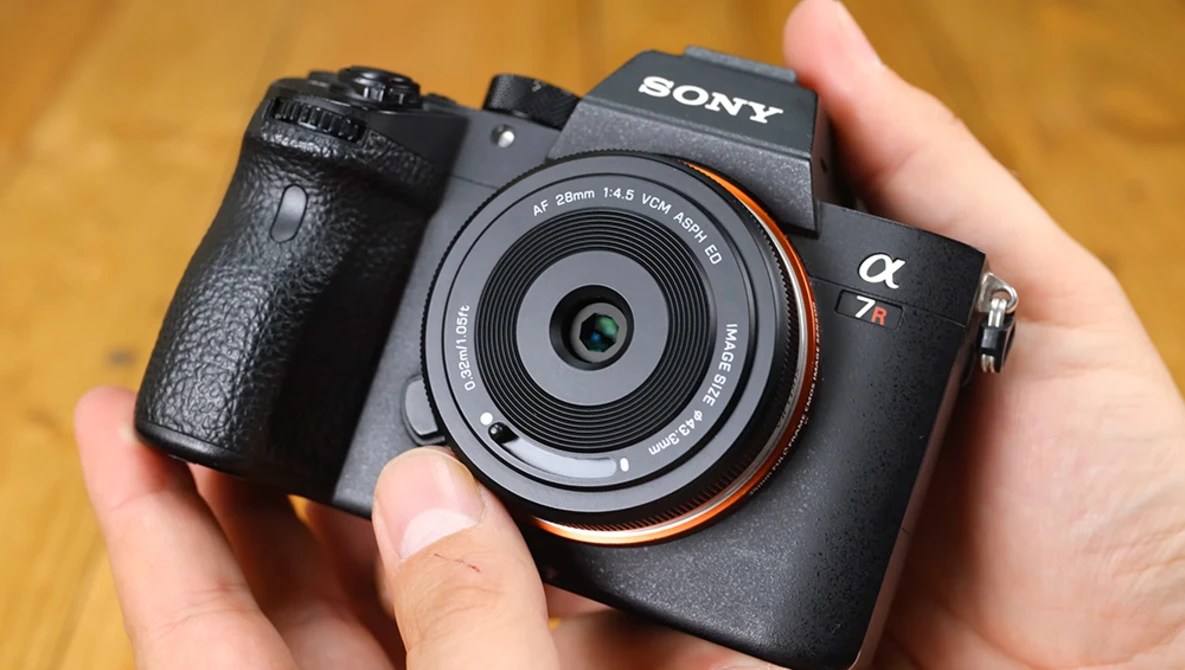
Pancake with a punch: newcomer Viltrox’. body-cap-sized 28mm f/4.5 for full-frame cameras (various mounts) with AF.
THE MARKET FOR CAMERA LENSES HAS ALWAYS EXPANDED in all directions at once, affording photographers an embarrassment of riches when it comes to selecting their best optical options.
There is always the most traditional route, in which various makes of cameras promote their own proprietary lines of brand-new products from macro to telephoto and everything in between…what one might call the “brand-loyal” route, a path which can lead to a substantial investment in cutting-edge tech. Then there is the “lest we forget” wing, in which new cameras are paired with older model optics long vanished from their parent company’s active product line, often adapted from one format to another, such as the refit from DSLR-era glass to new uses on full-frame cameras. Lately, there has also been a kind of retro retrenchment, as lo-fi (but not always lo-cost, lol) lenses are marketed to “serious shooters” for a rebirth of randomness, error or “authenticity”, as unpredictability is re-introduced to a process that’s grown, for some, a bit sterile.
And now, as we near the one-third mark on the 21st century, a tremendous wave of fresh product is coming from a new crop of third-party optics houses entering the market at the low end of the investment scale, providing amazing features that traditionally were found only in costlier major-brand lenses. Established third-party players like Tamron and Sigma have been joined by new players that include Laowa, Rokinon, TTArtisan, 7Artisan, and Viltrox, with more players entering the game each year. And while the new kids had mostly been sporting models with manual focus only, that barrier is falling as well. The small-as-a-body-cap Viltrox 28mm f/4.5 pancake lens shown here delivers quick, responsive auto-focus for just $99, with other brands rushing their own wafer-thin, fixed-focal-length versions to market as we speak. Reviewers whose critical default is a down-the-nose dismissiveness toward upstarts have had to rethink their biases, and the “rules” of who can be competitive in the optical field are likewise being radically rethunk. Long gone are the days when one country, tradition or brand had a lock on what constituted a “good” lens, a leveling of the playing field which can only benefit the consumer.
IT COULD ONLY EVER BE THUS
By MICHAEL PERKINS
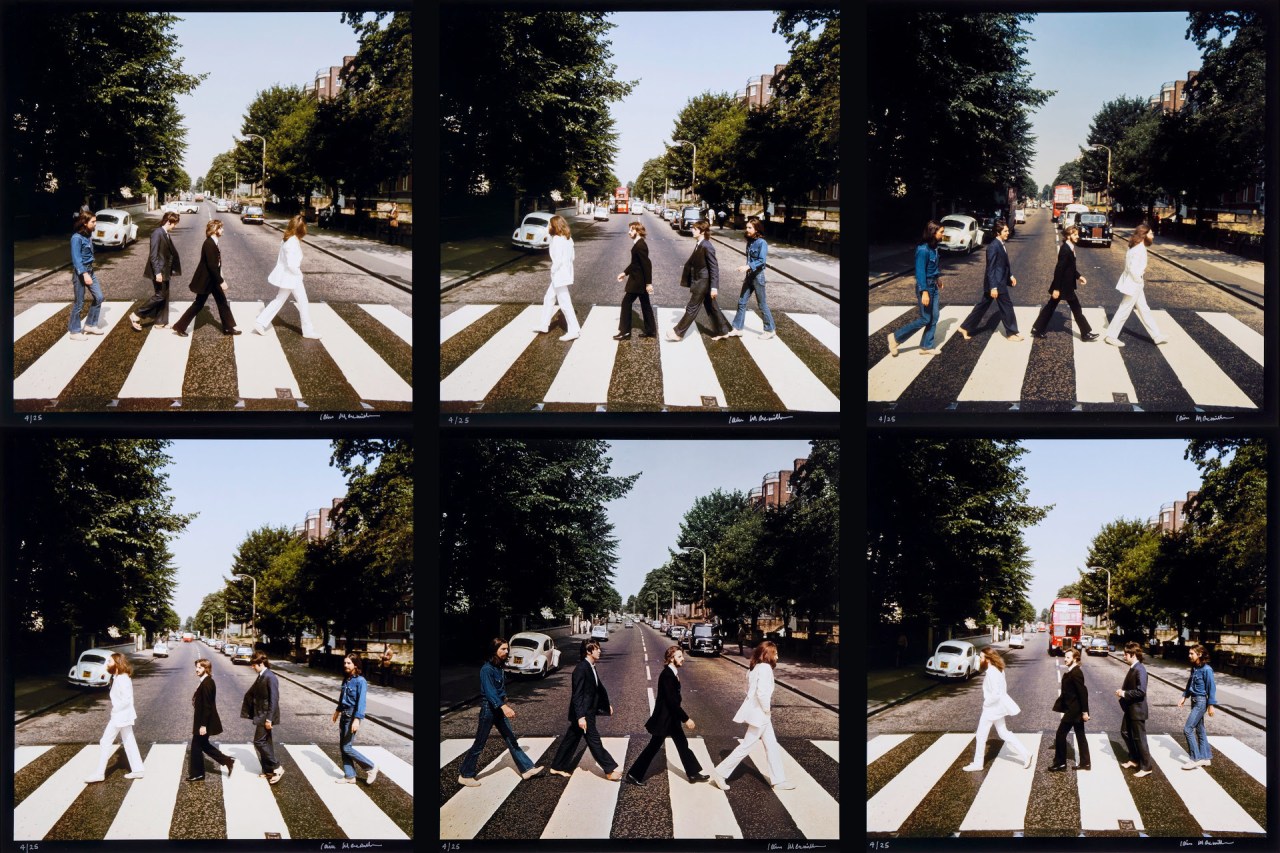
COMPARED TO THE INTRICATE ASSEMBLY OF THE COVER SHOT FOR THE SGT. PEPPER ALBUM just two years prior, the creation of the cover for 1969’s Abbey Road, the Beatles’ final studio album, was a relative snap (excuse the expression).
Whereas Pepper’s “people we like” montage of life-sized celebrity cut-outs took days of prop arrangement and a true jigsaw process of addition and subtraction, the task for photographer Iain Macmillan on Abbey was relatively simple. Find a suitable location, engage a cop to briefly block traffic, and parade the Fab Four back and forth in what would become the most iconic procession in pop music history. Macmillan, a friend of both John Lennon and Yoko One, arrived at the site with a rough idea of the object of the shoot, as Paul McCartney had already worked up some pencil sketches of how the group wanted to be arranged in the “zebra” crosswalk. Iain needed only to clear the intersection and climb a borrowed ladder to get the correct angle and framing for all four Beatles.
And since I can hear you all asking out there in the blogosphere, Macmillan’s weapon of choice for the assignment was a Hasselblad fronted by a 50mm lens. He shot at f/22 and 1/500th second, given that it was a clear August day with plenty of sunlight to spare. The entire shoot totaled no more than six frames, with McCartney selecting the fifth shot in the sequence, reportedly because it showed the group walking away from the Abbey Road studios, a kind of subtle farewell to the site of their best work over the previous decade. It also came closest, among the frames, to give the impression that they were all in the same general step rhythm (make of that what you will). What the final choice shows most clearly, though, given the global familiarity of the final product, is the way in which a simple editorial call can take a shot that’s merely one in a generally similar batch of images, and make it not only acceptable but inevitable, as if to say, of course, that’s the only one which would have worked.
In examining the options that might have been in the making of a classic photograph, we see the true value of editorial judgement, of learning how to pluck the classic shot from a clutch of okay alternatives. Assuming that McCartney was, indeed, the final arbiter of which of Macmillan’s photos was to be “the keeper”, one wonders what George or Ringo, accomplished photographers in their own right, might have chosen. But Fate went the way She went. Inside many of our most casual bursts of frames might lurk an “inevitable”, a picture that cries “it could only ever be thus”. Our judgements after the snap are often the equal of everything that went before it. It’s a long and winding road (again, sorry).
GOODBYE TO ALL THAT
BY MICHAEL PERKINS
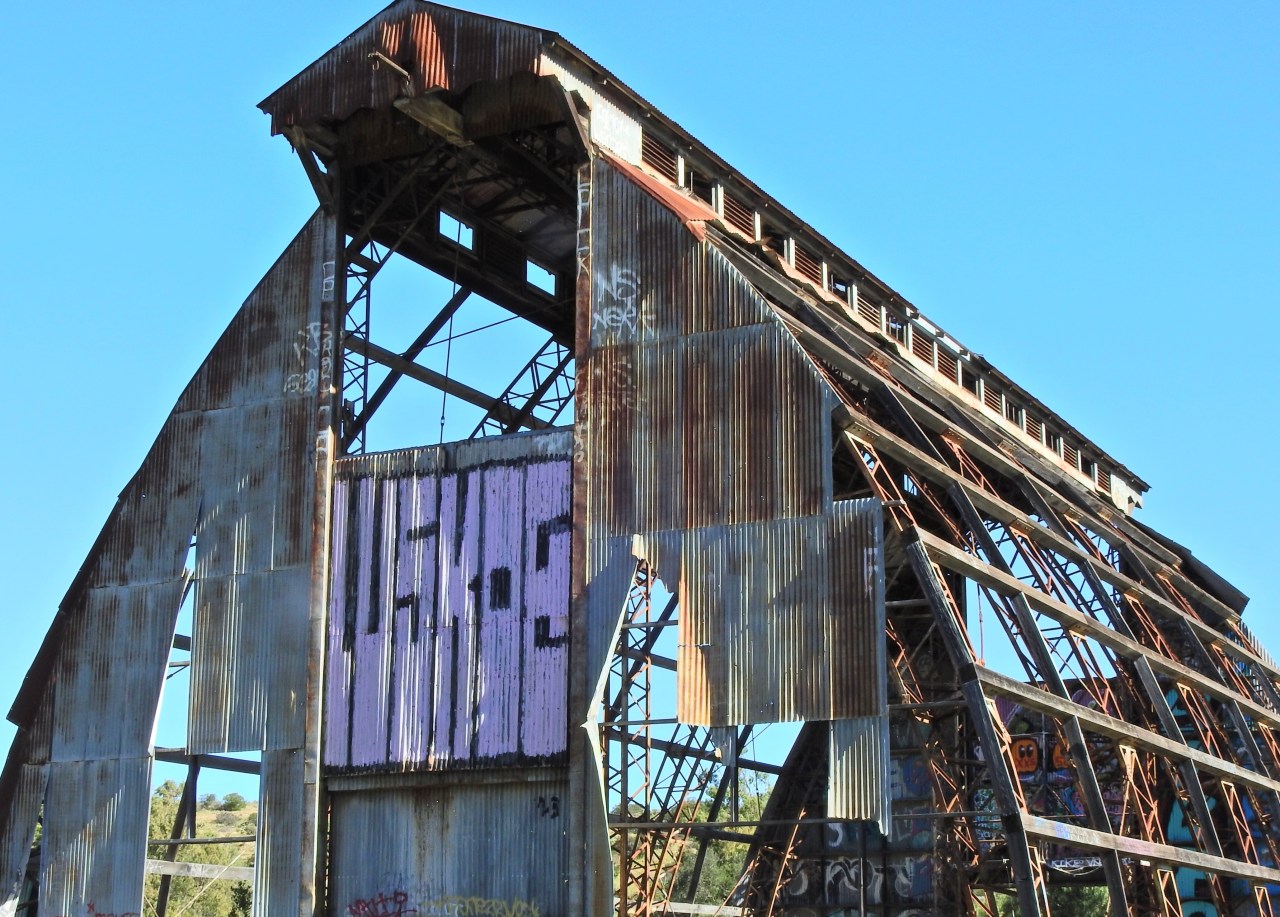
I’M AMAZED THAT, AMONG ALL THE MYRIAD THEMED PHOTOGRAPHIC COMPETITIONS the whole world over, that at least one annual contest isn’t totally dedicated to Ruin, a sort of Devastation-Thon of images dedicated to all things ravaged, savaged, rotted, bombed, exploded, imploded, crashed, crushed, smashed, burned, broken, annihilated, obliterated and generally blown to hell. It would not, as you might first assume, be a montage of misery, but a celebration of one of the most consistently appealing subjects in the history of photography.
Let’s face it; ever since we began freezing images inside boxes, we have been endlessly fascinated with the remains of things, the disintegrating aftermaths of global conflict, urban decay, human tragedy. In various ages we have labeled this fascination “realism” or “journalism” or “commentary”, but whatever tags we apply to the practice. we continue our attraction to the visual depiction of destruction and loss. Ashes. Wrecks. Carnage. We chronicle the places where hope has flown, where glory has faded, where victories turned to failures. We and our cameras are always on call When Things Go Wrong.
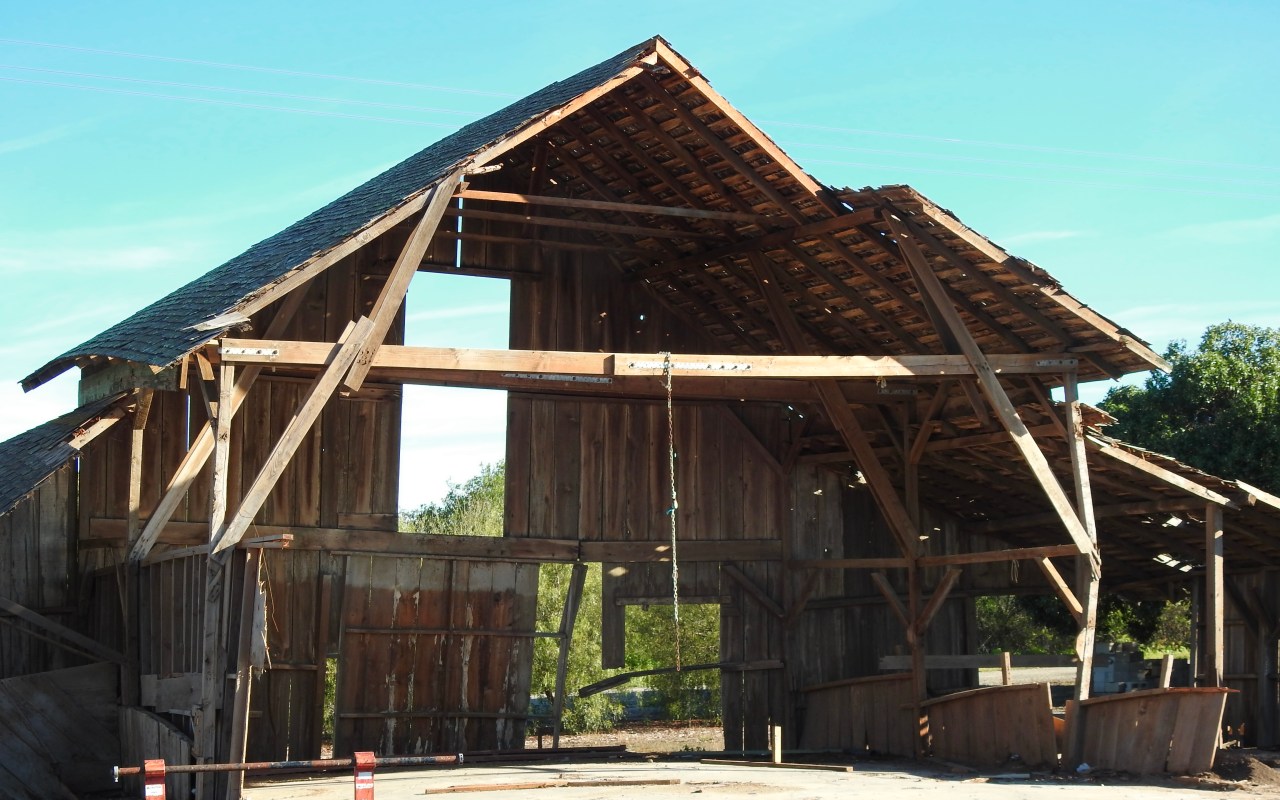
As storytellers, we are drawn to when the story grinds to a close, when the fresh becomes the trashed. Maybe making pictures of ruin is just half the job of telling the tale of mankind. Beginning, meet end. Dream, meet nightmare. But I honestly believe that we should embrace our role as photographic crepe hangers by hosting a dedicated and curated show of Absolute Misery. It’s more entertaining than flowers, mountains and sunrises, and, as we’ve shown since the first camera started clicking, it’s a subject we cannot exhaust. Or resist.
INVISIBLE BLIGHT
By MICHAEL PERKINS
CLEAR BACK IN THE LATE 1940’s, ARCHITECT FRANK LLOYD WRIGHT began correspondence with various agencies and even president Harry Truman to protest the construction of an array of massive electrical towers proposed for the open desert directly opposite his seasonal headquarters at Taliesin West in Scottsdale, Arizona. He was furious at the idea of the pristine view out the front door of his architectural academy being polluted with the sight of the metal monsters, and proposed that the power lines connecting them be buried underground. Wrong century for fighting the westward advance of American infrastructure. The towers were built and Wright reversed the entrance to his retreat, architecturally turning his back on the ugly sight.
Skip forward three-fourths of a century later and views all over the world are still blocked and blighted with the hideous snarl of wires and relays from the 1900’s. It is the kind of visual garbage that, as regular citizens and especially as photographers, we have all learned to not see, rather like looking through a windshield that is so coated with spatters and bug guts that our lacerated eyes simply focus through it all. Moving from Wright’s bailiwick in Scottsdale to Ventura, California nearly two years ago, I found myself with a stunning view out my apartment terrace of the Topatopa mountain range which, like many peaks along the central coast of the state, rises up rapidly from the nearby Pacific shoreline, going from warm sands to snow-capped peaks of well over 7,000 feet in height within just a few miles. It is the kind of view that begs to be captured in a camera, one of nature’s photographic freebies.
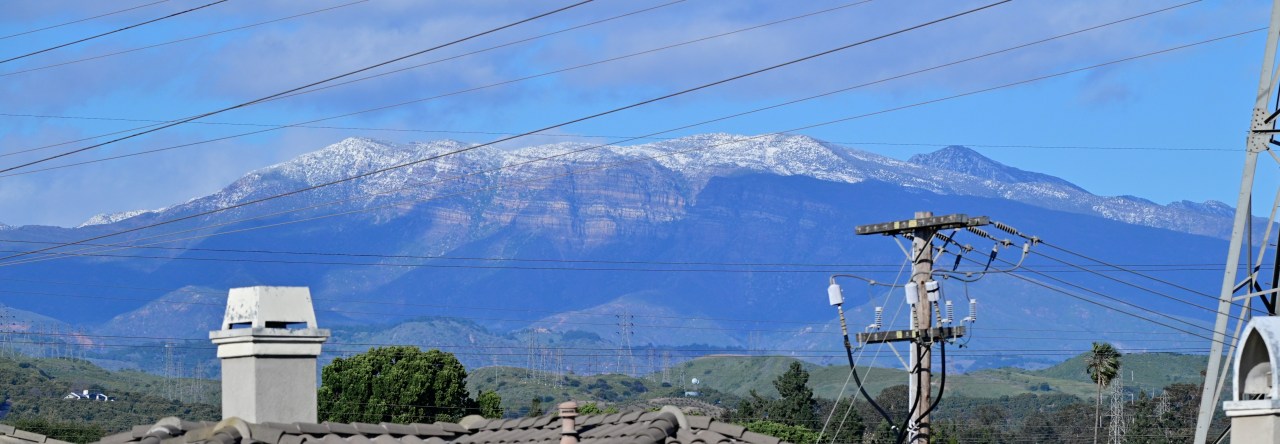
Except.
Except that, to my amazement, while composing the shot, I was astonished by the degree to which I simply did not notice that any view of mountains would have to be through a maze of wires. More upsetting than the horrible clutter of the scene was realizing that I had simply become accustomed, over far too many years, to just not seeing them at all. I once heard a Nikon ambassador say that one of his students could have been on an ocean liner, hundreds of miles from land, and still manage to get wires into her pictures. Now, I was that person, instead of the champion of intentional vision that I had convinced myself I was. Given the gorgeous sight of snow across the top of the Topatopas the other day, I’m still glad I took the shot, although it now goes, along with many other near misses, into the Good Idea, But file. In my youth, I held put the hope that that file would shrink somewhat as I grew old and wise in my photographic pursuits. But, as it turns out, the mountain of mastery is always there, day after day, and just as dauntingly tall, no matter how many times you loop around the race track. And learning to look for what you’ve taught yourself not to see, the invisible blight, is part of that daily ascent.
IT’S NOT THE SHOES
By MICHAEL PERKINS
I WAS RECENTLY READING AN ARTICLE that centered not so much on the unique talent of legendary photographer Henri Cartier-Bresson as on the succession of early 35mm Leica’s that were his go-to tools. In the writer’s defense, I believe he was at least trying to make the case that HCB’s kit merely facilitated his own wonderful vision, assisting but not making his greatest images. However, a reader that already regards certain cameras with the zeal of a cult worshiper could easily come away with the opposite view, that those Leicas were, themselves, a determinative force in how his pictures came out. And that’s unfortunate.
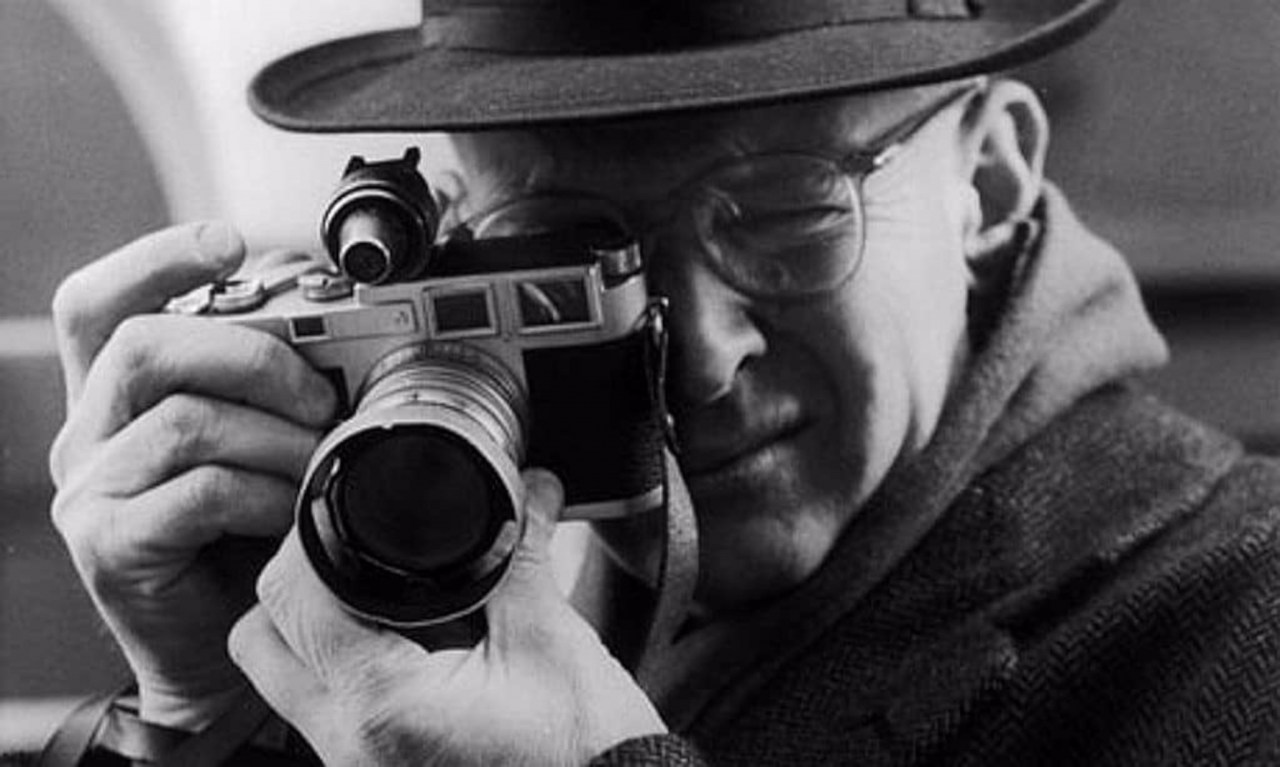
People who sell consumer goods tap into the human habit of crediting things for what might be achieved by intelligent use of those things. Eat this breakfast cereal and break the four-minute mile. Ride around your neighborhood on the tires that won the Indy 500. The pitch even works in reverse psychology, as in Spike Lee’s brilliant ’80’s ads for Nike, in which he kept asking various basketball superstars, “it’s the shoes, isn’t it?” The payoff was, of course, a knowing wink to the consumer, i.e., “well, no, it’s not really the shoes, hee hee, but, P.S., Jordan wears ’em, so…” And, for shooters, the equivalent pitch: buy this camera/lens/attachment/app and become a great photographer. It’s an easy approach for advertisers, because it appeals to our own bias about what creates excellence, which, in many cases, the advertisers have “taught” us to believe in the first place.
Cartier-Bresson, whose sense of composition was said to be so keen that he was known to merely raise the camera to his eye and click in one unbroken motion, developed that economical sense of execution on his own, irrespective of what gear he was using. He employed the simplest, most streamlined approach to making pictures that he could, and, as a matter of historic accident, the early Leica’s, themselves very no-frills affairs, gave him all the machine he needed to get the job done, and nothing more. Other manufacturers could likely have served the same elemental function for him, but, as fate would have it, Leica got there first, and so became an inextricable part of his legend, a lazy kind of “oh, that’s how he did it” explanation for a genius that simply cannot be explained.
One wonders how long the camera industry could thrive if manufacturers could not (a) make us discontented with what we already have, and (b) convince us that the next toy we buy will make us a Cartier-Bresson. But the real “camera” in photography is the one positioned behind our eyes. Knowing where to hit the nail-head is more important than merely buying a premium hammer. It really, honestly, swear to God, is not the shoes.
REALITY ON DEMAND
By MICHAEL PERKINS
ANY TIME I HEAR SOMEONE WAXING NOSTALGIC for the “good old analog days” I am tempted to check their forehead for sign of a fever. Certainly there are elements of the film experience that, decades after the dawning of the digital revolution, I can still look back on with a smile, there are just as many aspects of working in that medium that fall into the “good riddance” category…clumsy, burdensome steps that put ungainly obstacles between envisioning a shot and being able to execute it expeditiously. Strangely, initial reaction to the technical simplification of the making of an image has often been negative, even vehement. For example, many of we elders can still recall the hue and cry that issued from the ranks of the purists when auto-focus was introduced, with direct predictions that true photography was now dead, etc., etc.. blah, blah, blah.

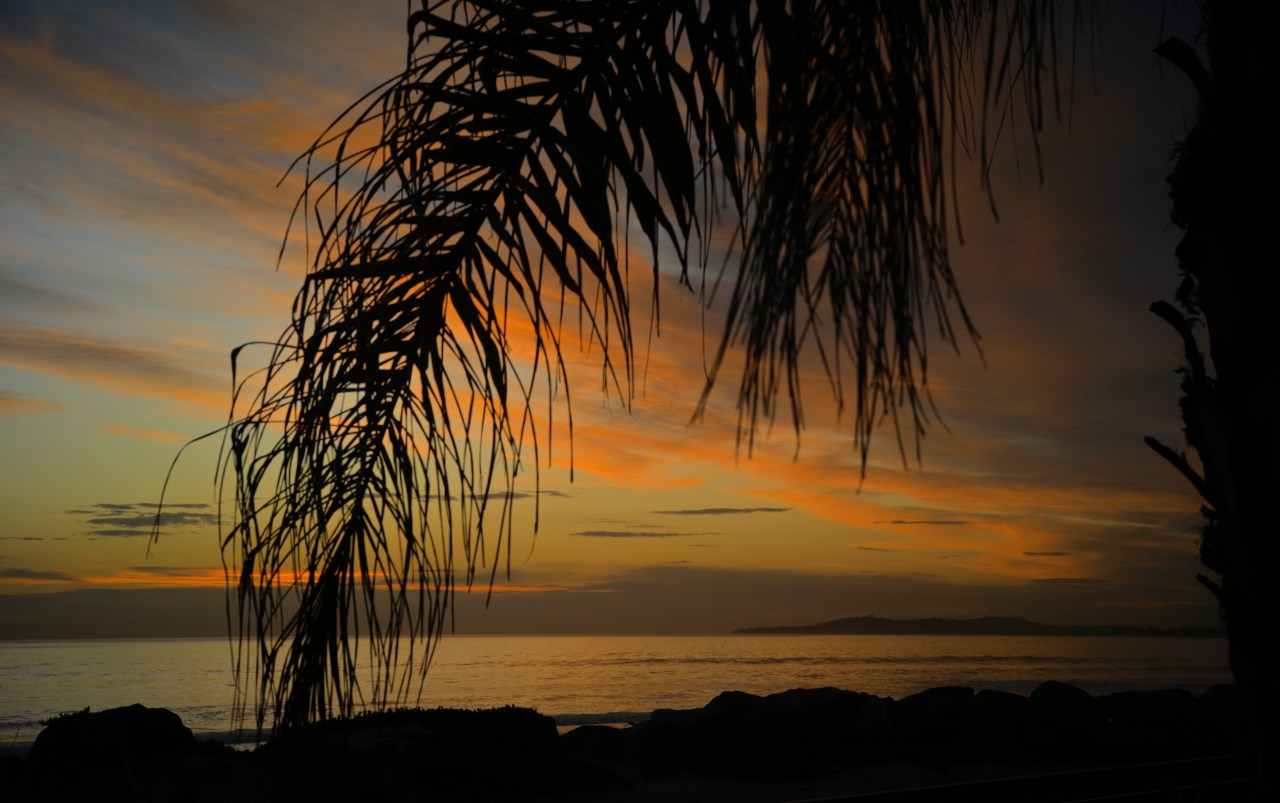
And you can go on down the line, from the math whiz meanderings of light meters to automatic film advance, to, well, make your own list. Near the top of my own “thank God that’s over” roster is the calculation of white balance, which used to require a lot of back-of-the-envelope figuring and is now, like so many other fine functions, an on-demand dial-up. Clicks. I certainly am not downplaying the vital aspect of the right color temperature for the right shot, and, indeed, formal portraitists and studio shooters still have a more essential need for pinpoint precision in this area. But for many more of us, WB is an elective choice made in a moment and largely on a whim, as in the two sunset exposures seen here, taken barely a minute apart from each other. These images are one intentionality level up from straight snapshots, and yet, I can produce drastically different results in an on-the-fly shooting situation where the ambient light is changing rapidly and speed and ease are key.
Cameras are now loaded with many more control options than many of us will need in a lifetime of use, like the now-standard menus of emulations designed to re-create the look of dozens of different classic film emulsions, or custom settings for diffraction compensation. Many of these functions were once, like white balance, slow and tricky to achieve. Now they are a click away. And with the departure of all that bother, another barrier between thinking of a shot and getting it has been eliminated. The purists can, of course, make things harder for themselves out of some affection for “authenticity”. Me, I want to get to the making the picture. Immediately, if not sooner.
LXXIV, OR THEREABOUTS
Through his nightmare vision
He sees nothing, only well
Blind with the beggar’s mind
He’s but a stranger, he’s but a stranger to himself—Steve Winwood, Jim Capaldi
By MICHAEL PERKINS
I’VE SCRIBBLED MUCH IN THESE PAGES OVER THE YEARS about the challenge of doing something photographers both big and small do zillions of times per day, with widely varied results; attempt a self-portrait that actually tells the truth.
Knowing the kind of entertaining liar I can be at times, I always mistrust my results, as, when it comes to self-knowledge, I may be the ultimate “unreliable narrator” available for making an image of myself that is honest. Not that I haven’t tried. As decades of birthdays have come and gone, I’ve posed myself in both formal and casual settings, in search of some elusive quality of…. authenticity?……only to wind up feeling like, oh, hell, I’ll get it right next year…..
This time out, this February 8th, I saw the task differently, as I have just spent several months trying to regroup from a series of nerve injuries which included my forearms, a condition that made simple tasks like opening a pickle jar seem herculean. The temporary loss of strength and fine motor function in my fingers was especially depressing, since it wrecked havoc with my ability to operate a camera with any real degree of control. Suddenly, my artist father’s old teachings about hand-eye coordination came back to me in heartbreaking echoes. What if that linkage between what I could see and what I could execute were to remain forever severed?
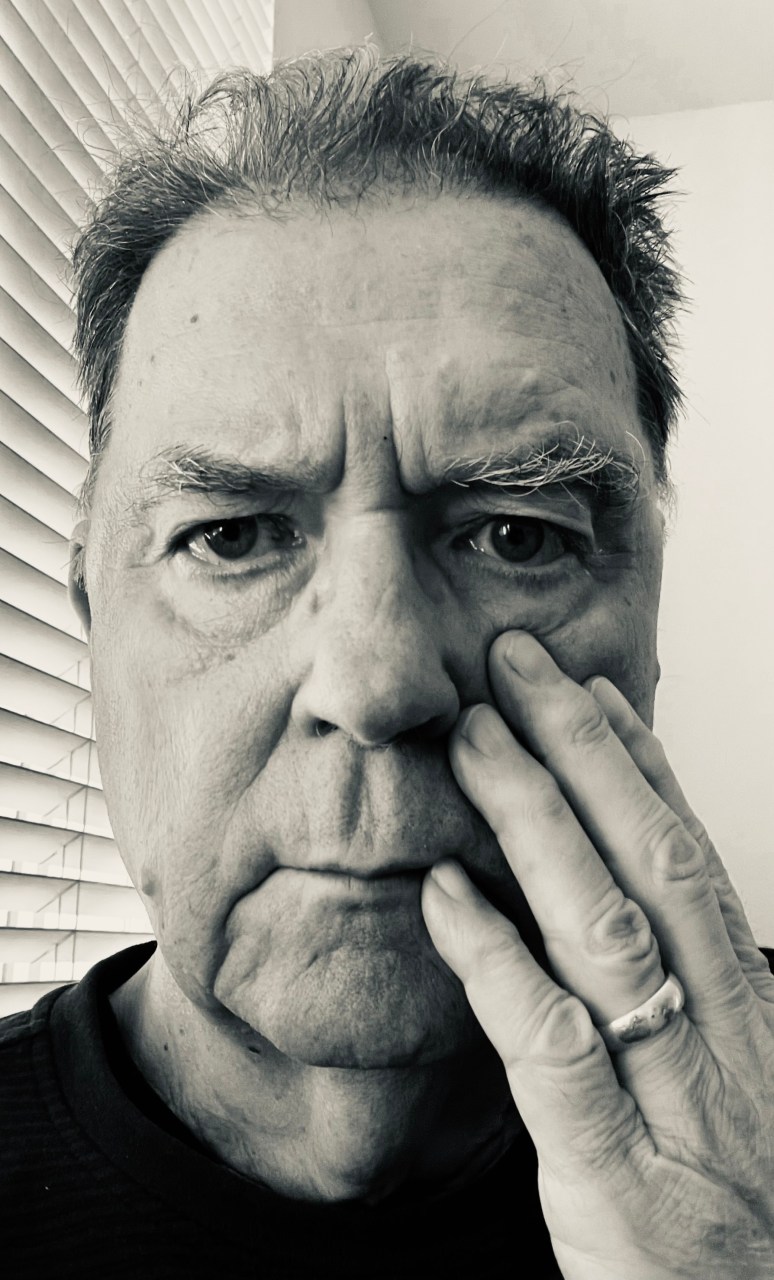
And so, with mere days to spare before turning seventy-four, for me to actually get 99% of that back….well, it certainly clarified the terms of any birthday selfie I might normally have planned. No big costume changes, no symbolic props, just a simple document that my eye and my hand were back on speaking terms. No other kind of image seemed to make sense; I was crawling out of a hole in which normally conjoined parts of me were not connecting, and there could be no other visual depiction of that reconciliation than documenting the re-establishment of that link. Life, like photography, is often a game of inches, with all of us struggling to have our grasp exceed our reach, and when your fingers occasionally close around those goals, you’ve snatched the greatest treasure in life.
SLOW YOUR (CAMERA) ROLL
By MICHAEL PERKINS
WE’VE MUSED OFTEN, IN THESE PAGES, on the difference between what I call snapshot mentality and photographic mentality. The first occurs when our minds are in “the moment of the moment”; quick, instinctual reaction. The second speaks to a more contemplative approach to making pictures, something that requires intention, planning, and a number of creative choices. The omnipresent tsunami of gazillions of images generated by the convenience of the mobile camera favors snapshot mentality, while older tech, film for example, bends toward photographic mentality. One approach urges that we do things in a hurry, sorting out the chaff later (if ever), while the other dictates that we slow down and focus.
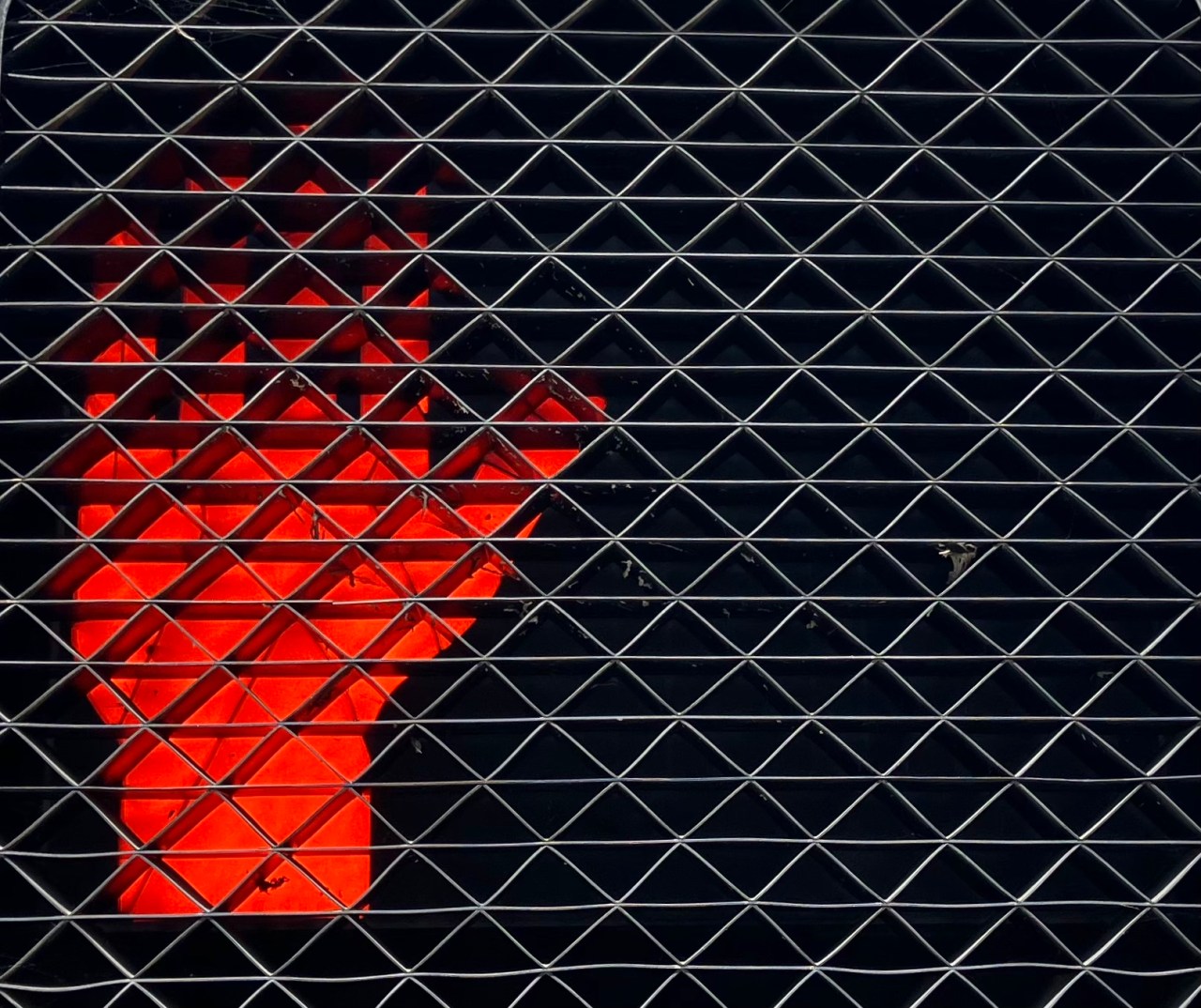
Several disciplines within photography actually seem to be trying to make photographic mentality a priority. The recent explosion of new medium format cameras, for example, emphasizes careful design of an image rather than quick takes. The retro fascination with film, especially with technically limited toy cameras that are prone to error and failure, also forces the user to stop and think before shooting, if for no other reason than sheer economy (mistakes that don’t matter in digital are costly and time-consuming in analog). Another key demarcation is the decision to shoot on either manual or full auto. which also imposes its own unique methods. And then there are the spiritual or mystical approaches that enter into every creative process, demanding that all shooting decisions promote patience and deliberation, a kind of zen hive mind. It’s like the old predictive primer Megatrends, in which the author argued that, like a pendulum, mankind swings between the poles of high tech and high touch. Once high tech begins to overload our senses with speed or convenience for their own sake, the human need for high tech…..a direct, tactile, and yes, slower engagement with the world, becomes needful as a corrective.
We all do a percentage of our work in both snapshot and photographic mentalities. Neither approach is sufficient for every situation. But there is a lot to be said for stopping, waiting, and evaluating what we are doing on the most complete terms possible in the moment. Photographs never suffer from too much advance planning, after all. And while we all admire the sentiment that we must “stop and smell the roses”, the very first step is to notice that there are roses in the first place.
TOGGLING BETWEEN TRUTHS
By MICHAEL PERKINS
If you can’t do it right, do it in color.——-Ansel Adams
THE MAN MANY REGARD AS THE JEDI MASTER OF PHOTOGRAPHY could be said to have had a sizable blind spot when it came to his preference for monochrome over the course of his long career. Part of his distrust of color came from the fact that black and white afforded him a degree of fine technical control that emerging color systems of his time could not yet rival. Another part of his bias stemmed from the fact that he accepted that mono was a departure from reality, a separate realness that he could manipulate and interpret. In his time, color was closer to mere recording; garish, obvious, and, for him, the opposite of art.
By contrast, the world we live in has been dominated by color images for so long that we can easily develop our own prejudice regarding its opposite….that is, to see monochrome as less than, as if, by choosing not to use color, we are somehow shortchanging our art, performing with one hand tied behind our backs, doing more with less. Of course, black and white photography is in no immediate danger of dying out, proving that it has a distinct and definable purpose as a storytelling medium. Further, mono can, in fact, engender its own counter-snobbery, as if certain kinds of work are more “authentic” because we purposely limit our tonal palette, like writing a minimalist melody. Both views, when taken to extremes, can cause creative paralysis, since there is no way to prove or disprove either argument’s rightness or wrongness. There is only the pictures.
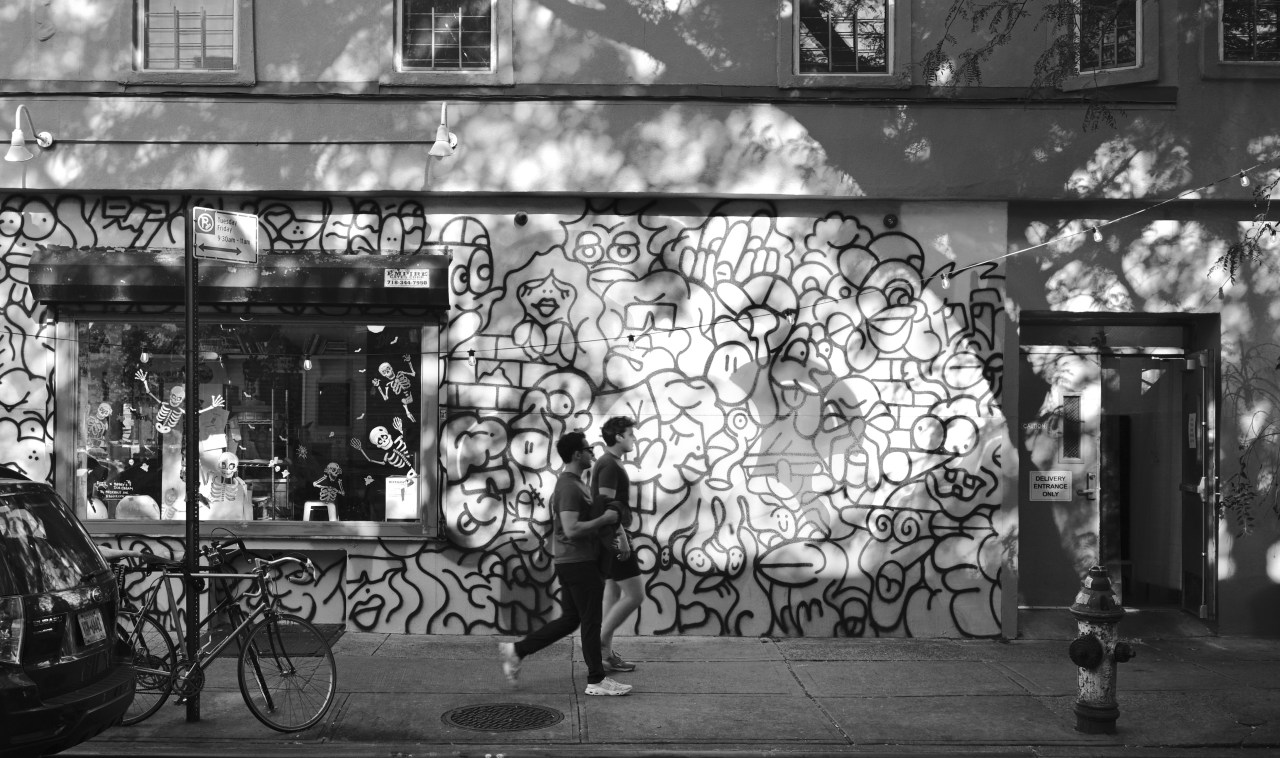
Mono image taken as one of three rapidly snapped frames, each one using a different pre-assigned preset in real time.
Over the past few years, I, like many, have tried to provide myself with several choices when capturing an image in real time. With a number of different film emulations pre-assigned to my camera, it’s easy to erase risk by just clicking from one such custom setting after another, taking the same scene in, for example, a faux Fuji transparency style, a simulated Kodachrome look-alike, and a custom monochrome profile reminiscent of classic Tri-X film. I don’t always elect to do this much coverage on a shot, but there are times when I worry about whether I’m making the right decision in the moment, and so I find the extra coverage reassuring, as if I’m improving the odds that something will work out. There is plenty of room in the photographic world to accommodate more than one kind of visual “truth”, and the most creative of us must be willing to toggle between them with flexibility and ease.
RETURN TRIP
By MICHAEL PERKINS
“HEY!!!”
A very young, high and urgent voice from nowhere in particular.
“COME BACK HERE!!!”
Who come back where? Oh, wait, the sound seems to be coming from straight ahead, but I can’t see…
Oh, there’s something….
A small blur with a blue tail on it streaking off to left, followed, an instant later, by a small boy, emerging from the front entrance of a coffee bar that occupies the corner parcel of a retrofitted apartment building in downtown Ventura, California. The blur is, in fact, his dog, and the blue tail is his leash, and boy, is he bulleting out of the joint, heading down the street at Tireless Puppy Speed, pursued by his young master. Me, I’m shooting architecture in the neighborhood at the moment, which is why I find myself directly opposite the java joint, armed with a camera, but too slow to actually catch Fido’s escape. However, I have faith that I will soon get another bite at the apple.
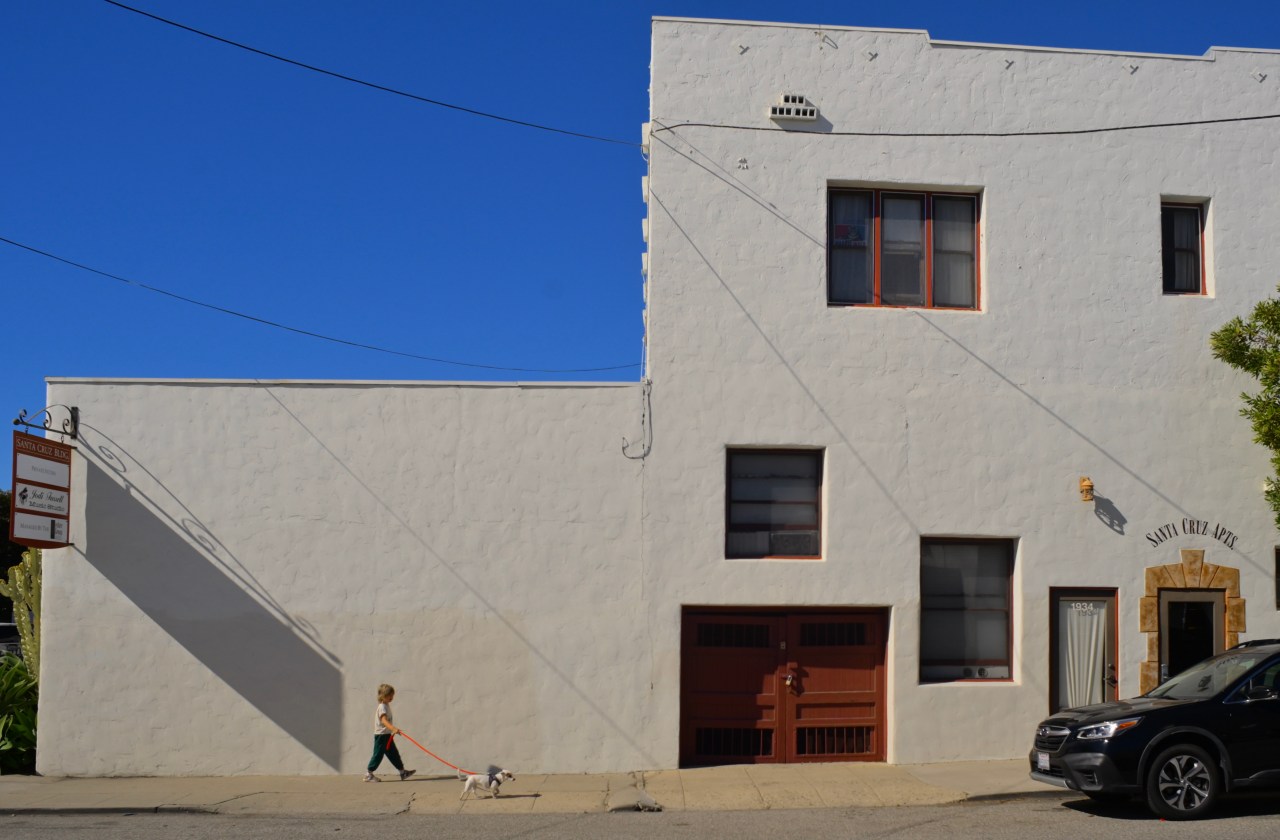
And so I do, as Young Master catches up with the little one within half a block and proceeds to march him back to the coffee shop entrance, giving me a chance to squeeze off a series of shots of the two framed against the incredible blue of the SoCal sky and the lumpy off-white of the long adobe building. It’s a great time of day for long shadows, as witness the shade cast by the wall-mounted sign, but I wait to get the boy clear of that to keep the shot simple; just two small figures against the broad, empty canvas of the building. Young Master is moving at a fairly slow space, giving me the luxury of planning a bit. Frame number three is the one. I have been largely taking pot luck with the other shots of the morning, but this one opportunity redeems all the meh results from the session. That’s the way street work happens; on its own terms, with little notice and just a quick clue that something worth having might be on the way.
Like Tireless Puppy, you just need to sense when a door is opening, and be ready to run.
ALL OR NEARLY ALL
By MICHAEL PERKINS
A COMMON MISTAKE AMONG CAMERA-TOTING NEWBIE BIRDWATCHERS (a very distinct subset among photographers at large) is to regard their outings as either Successes or Failures, as if they were hunting for deer, or trying to land a ten-pound bass. That is, either I ‘came back with something’, or the morning was a waste of time. Of course, it’s disappointing when either no birds show, or the ones that do show can’t be persuaded to jump into your camera. I have even heard some photogs say that, unless they actually managed to capture an image of a particular breed or species, it doesn’t, for them, really exist. Such people are bound not only to be horribly bad birders; they are also likely to be failed photographers.
To be out in the world in search of a particular thing is to deliberately narrow your concept of what’s “worth shooting”, and it’s counter-productive to why you should be out in the first place; to develop and exercise your eye. Certainly, there will be days when the winged ones seem to be deliberately thwarting you, but who said that they must be the only thing you train your camera on while you’re out anyway? In short, if the birds ain’t happening, what else is? If you’re not trying to answer that question, then your shooting experience will be pass/fail, completely binary. It’s as if you went to a state fair and said you were only going to shoot the hot dog stands. Using that logic, a quartet of naked aerialists juggling flaming chainsaws might pass by you while you held out for a shot of a wiener on a stick. Short-sighted?
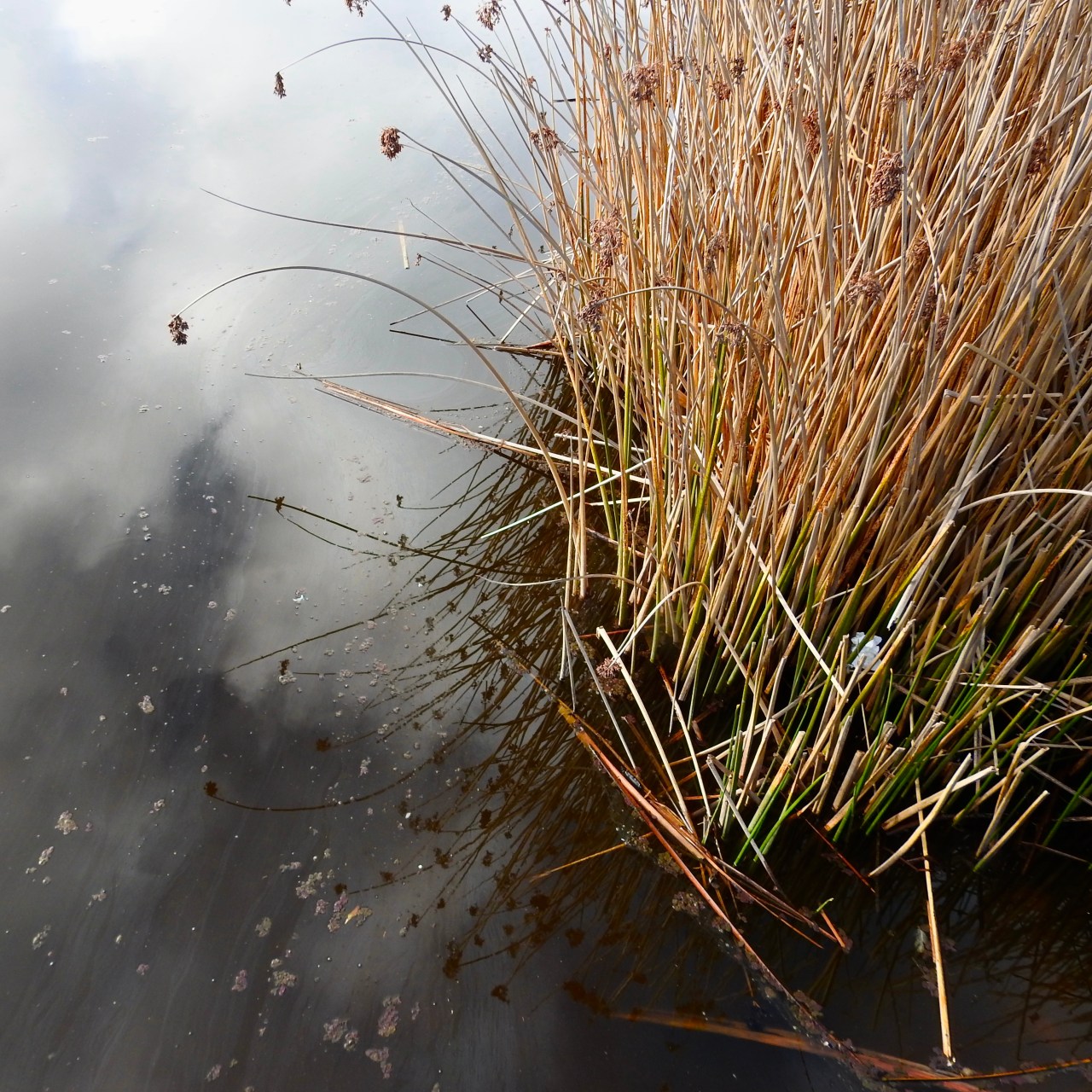
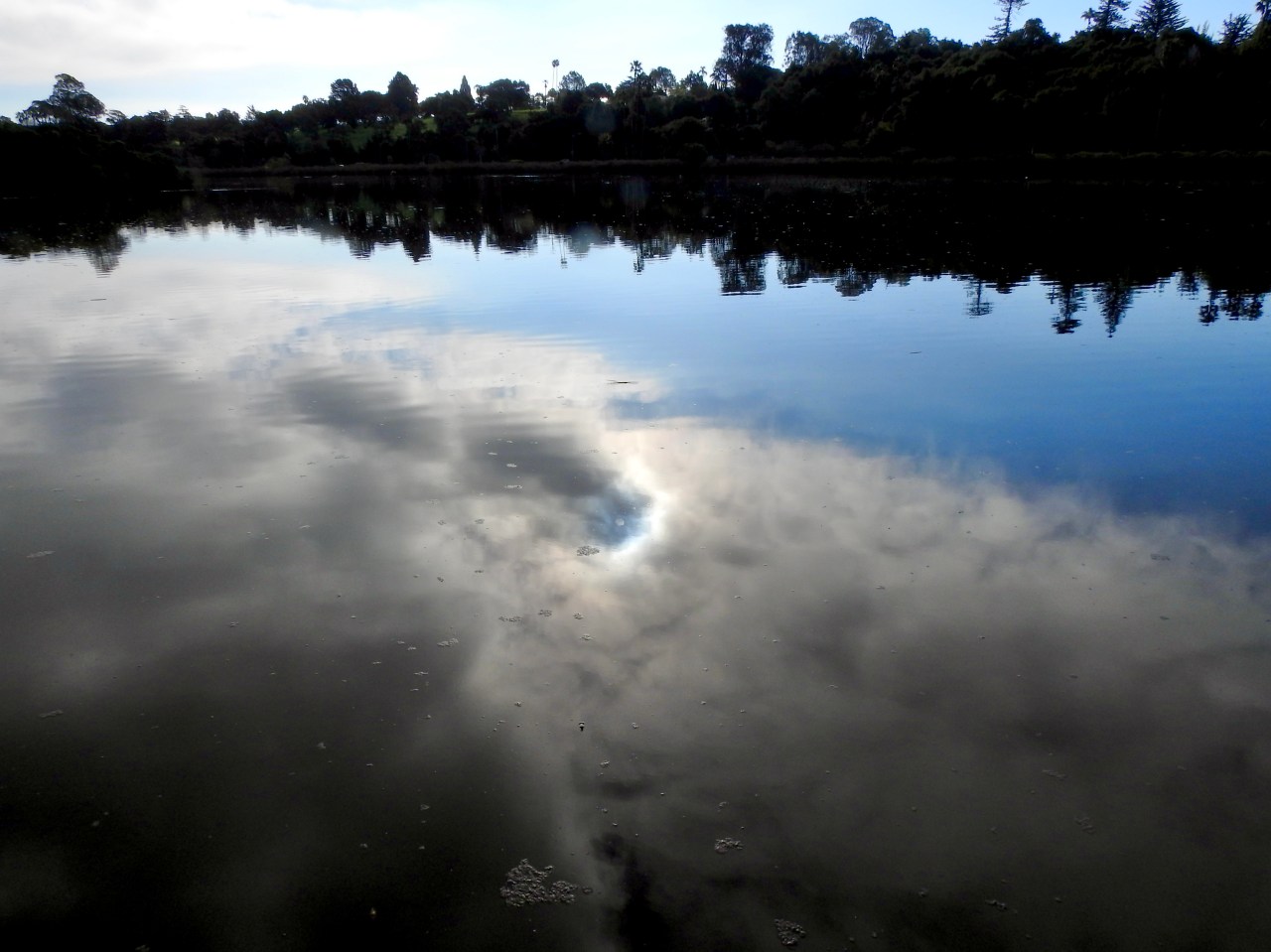
Some of the things that redeem many of my birding outings have nothing to do with what I couldn’t find and everything to do with what else was available in the moment. Birdwatching is really about observation, and so, being already in that state of mind, why wouldn’t you also be equally fascinated with whatever else comes to hand? Yesterday I shot over 100 frames, most of them failed attempts at capturing winged subjects that were just having none of it. As birding is usually communal, this left me with a lot of time to fill, since the others in my pack were having better luck or were simply more skilled. As they scored on the feathered column of their scorecards, I shot environmental impressions of a pond we were scouting. It wasn’t what I came for, but I was glad I didn’t write off the entire morning as a “miss”. Photographers obviously stumble upon many naturally amazing scenes that are, if you will, “ready-to-eat”, but remaining open to the less obvious is even more important than a quick win. That’s where your growth comes from. A bird in the hand….
GO-TO / COME-BACK-TO
By MICHAEL PERKINS
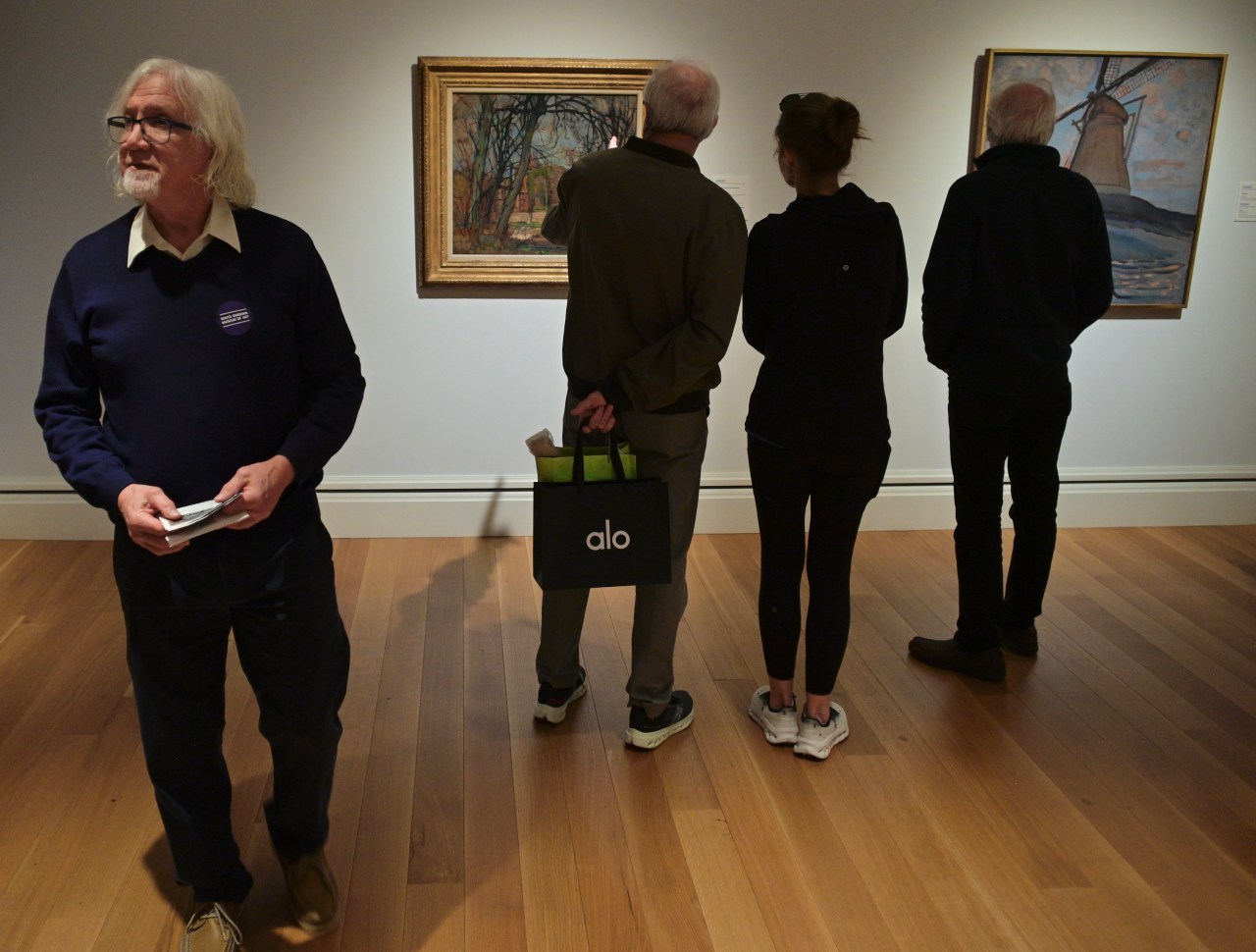
THE URGE TO DO MORE WITH LESS, to make better and images with a smaller central amount of kit to carry around (or invest in), probably hits every photographer at least once in his/her life. It’s great fun to add to one’s arsenal of weapons/toys in the pursuit of being able to shoot anything under any circumstances, but it’s also very freeing once you decide on the absolute minimal amount of gear that it takes to do nearly the same thing. I’ve gone through any number of “return to basics” phases over a lifetime, always looking for that one set-up that’ll keep me from over-complicating the elemental principles for making decent pictures, which are, let’s face it, pretty simple.
This all leads to the search for the so-called “go-to” lens, an ongoing vision quest for me, and, I suspect, for many of you. But there is another, slightly different comfort category, which I call the “come-back-to” lens, a piece of glass that may, at one time, have served as a go-to, and now has earned the right to occasionally return to the front of the pack, like a one-off date with an old flame. A true come-back-to may not be a universal solution to all shooting situations, but it likely will have been proven in battle in some manner at an earlier time, and thus deserves to be deployed again in a similar situation. This goes a lot to the issue of familiarity, of ease of operation, of not having to think too excessively about how to get the pictures you want. The come-back-to is, in essence, a return to comfort. It’s not a box of chocolates: you know what you’re going to get.
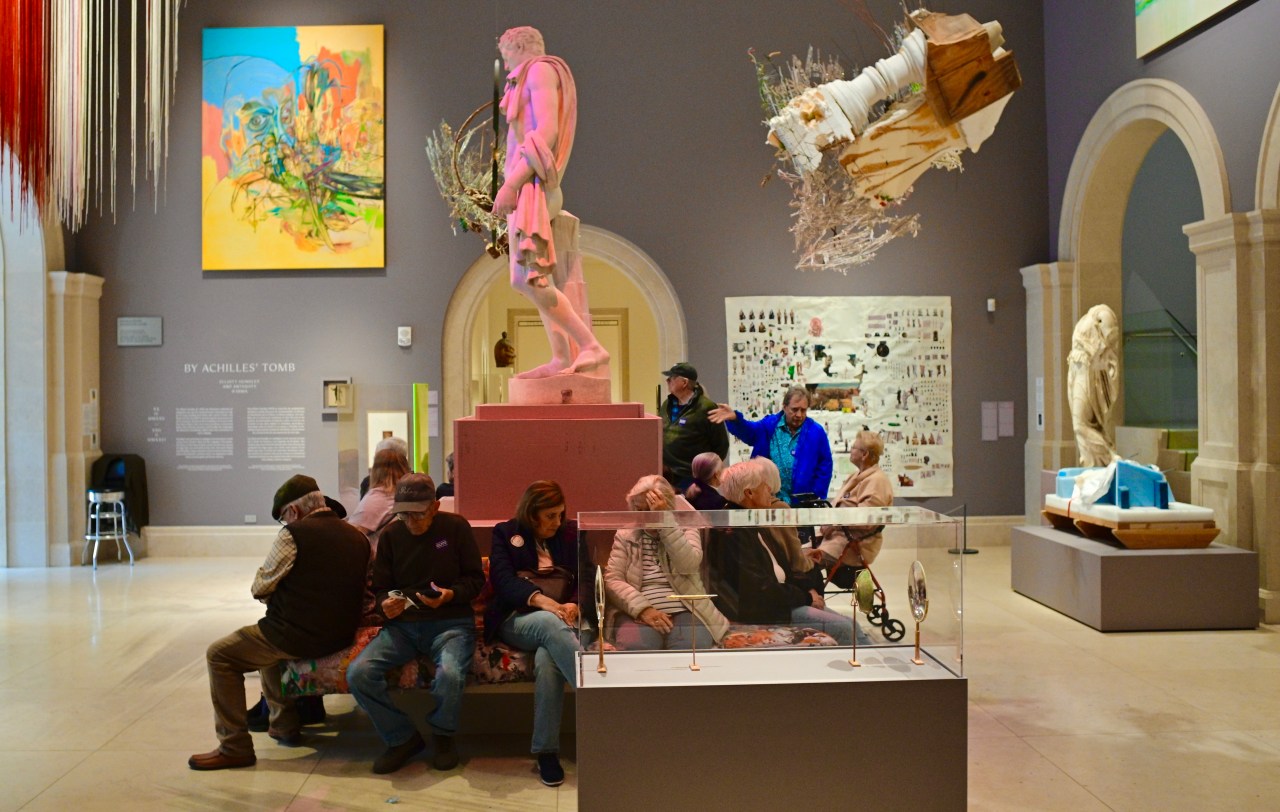
So, an example: when I want to set up my camera to handle the shifting mix of light, exposure challenges and color rendition in the tricky environment of, say, a museum, I go digging for one of the oldest optics I have, a 1970’s-era Nikon 24mm f/2.8 manual lens that I’ve used, off-and-on, for about fifteen years. I set my Nikon Z5 on full manual, pre-selecting a medium focal length like f/4, and tell the camera to allow auto ISO to make any necessary tweaks on my sensor up to 3200. At that point, I’m working almost literally with a point-and-shoot, a level of ease that allows me to react to a rapidly changing series of environments without slowing down to fiddle. It’s not strictly logical, but then the advantage of a come-back-to is mostly emotional. I feel as if I’m going to get good results, which is half the battle. A ” go-to” is a lens that can be counted on to do damn well nearly everywhere; a come-back-to is like going home again. Or so it feels to me.
 thenormaleye
THEY ALSO SERVE WHO ONLY STAND AND WAIT…..
By MICHAEL PERKINS
STREET / NEIGHBORHOOD PHOTOGRAPHY IS LARGELY A STUDY OF CONTRASTING ROLES, of bearing witness to the millions of tasks, large and small, that are our daily assignments. We go here and do this. We always open this, or close that, or wait upon he, she, it, etc., etc, as if we were pre-cast in some larger production. Or as the Beatles famously sang of the pretty nurse, selling poppies from a tray, “though she feels as if she’s in a play, she is anyway….”
For me, there are endless narrative opportunities in just isolating these roles, these tasks, and by looking at them a little closer, elevate them a bit from mere “work” or “this is just what I do.” I try to find people that are lost in repetition, locked into the mechanical rhythm of doing certain things over and over. And just as there is fascination in seeing how the gears and wheels of a massive timepiece mesh together for a common result, there is just as much of a story to be read in just one of those gears….its design, how it is meant to fit into its larger context. What it (or who) was designed to do.
I can’t speak specifically about what caught my eye about this greeter/ticket-taker/stage door manager sitting the check-in desk at a community arts center. He just seemed to perfectly fit where he was placed, and thus was as atmospheric as the surrounding furniture or fixtures. As is the case with many photographs, it was very much a thing of the moment, and what constitutes “a moment” for me might leave you utterly cold. So be it. So be the pictures. It’s a Sunday morning and I am lazily looking back at images of different people doing what they themselves would term “nothing special” and musing over my attempt to see, and show, that they are actually very special indeed.
Share this:
March 15, 2026 | Categories: Uncategorized | Tags: Candids, Commentary, Street Photography | Leave a comment