HELLO DARKNESS MY OLD FRIEND
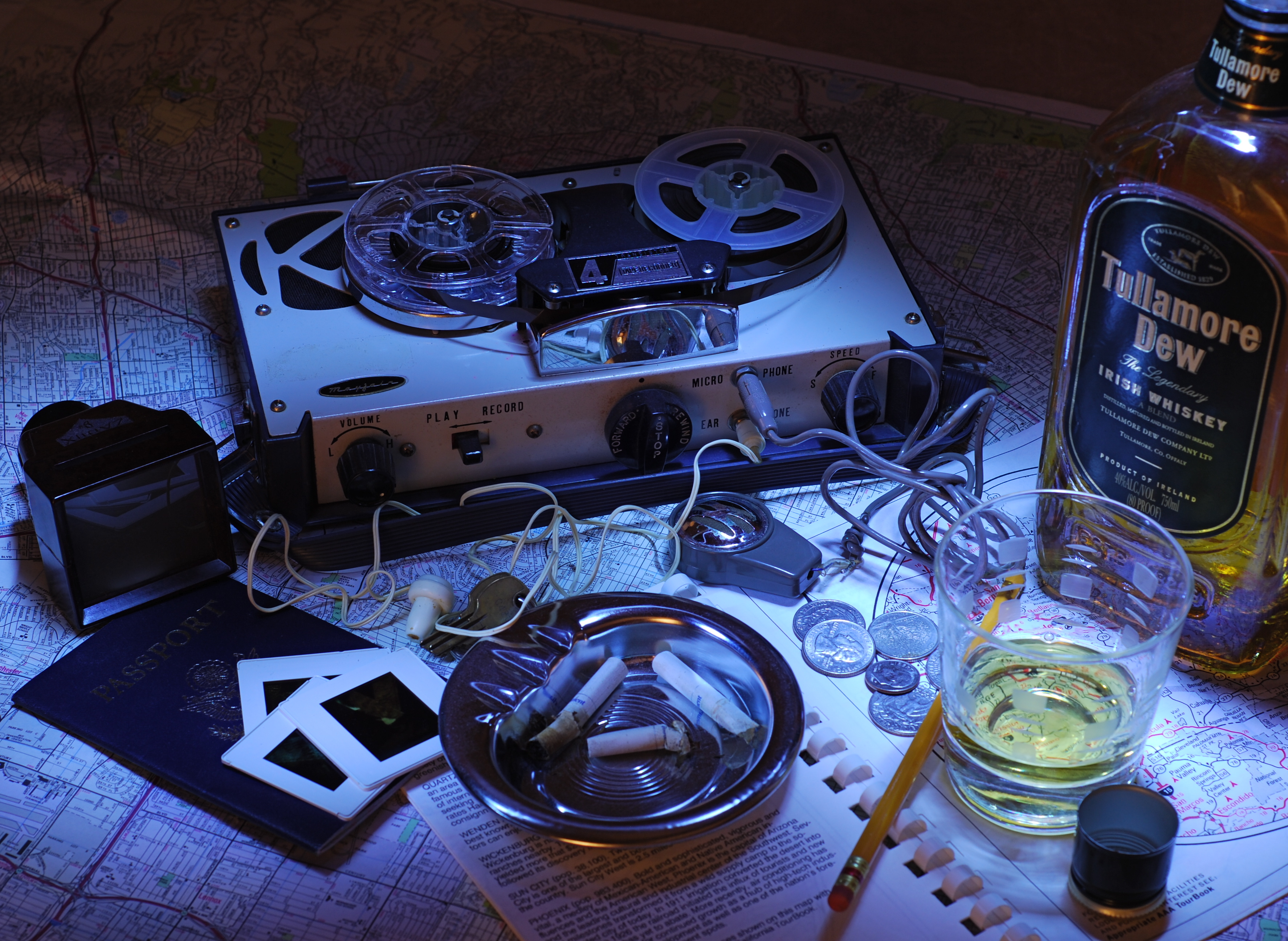
This still life, designed to recall the “cold war” feel of the tape recorder and other props, was shot in a completely darkened room, and lit with sweeps and stabs of light from a handheld LED, used to selectively create the patterns of bright spots and shadows. Taken at 19 seconds, f/6.3, ISO 100 at 50mm.
By MICHAEL PERKINS
MOST OF THE PICTURES WE TAKE involve shaping and selecting details from subjects that are already bathed, to some degree, in light. “Darkness” is in such images, but it resides peripherally in the nooks and crannies where the light didn’t naturally flow or was prevented from going. Dark is thus the fat that marbles the meat, the characterizing texture in a generally bright palette of colors. It is seasoning, not substance.
By contrast, shooting that begins in total darkness means entering a realm of mystery, since you start with nothing, a blank and black slate, onto which you selectively import some light, not enough to banish the dark, but light that suggests, implies, hints at definition. For the viewer, it is the difference between the bright window light of a chat at a mid-afternoon cafe and the intimacy of a shared huddle around a midnight campfire. What I call “absolute night” shots are often more personal work than just managing to snap a well-lit public night spot like an urban street or an illuminated monument after dusk. It’s teaching yourself to show the minimum, to employ just enough light to the tell the story, and no more. It is about deciding to leave out things. It is an editorial, rather than a reportorial process.
The only constants about “absolute dark” shooting are these:
You need a tripod-mounted camera. Your shutter will be open as long as it takes to create what you want, and far longer than you can hope to hold the camera steady. If you have a timer and/or a remote shutter release, break those out of the bag, too. The less you touch that camera, the better. Besides, you’ll be busy with other things.
Set the minimum ISO. If you’re quickly snapping a dark subject, you can compromise quality with a higher and thus slightly noisier ISO setting. When you have all the time you need to slowly expose your subject, however, you can keep ISO at 100 and banish most of that grain. Some cameras will develop wild or “hot” pixels once the shutter’s open for more than a minute, but for many hand-illuminated dark shots, you can get what you need in far less than that amount of time.
Use some kind of small hand-held illumination. Something about the size of a keychain-sized LED, with an extremely narrow focus of very white light. Pick them up at the dollar store and get a model that works well in your hand. This is your magic wand, with which, after beginning the exposure in complete darkness, you will be painting light onto various parts of your subject, depending on what kind of effect you want. Get a light with a handy and responsive power switch, since you may turn the light on and off many times during a single exposure.
You can use autofocus, even in manual mode, but compose and lock the focus when all the room lights are on. Set it, forget it, douse the power and get to work.
Which brings us to an important caveat. Even though you are avoiding the absolute blast-out of white that would result if you were using a conventional flash, lingering over a particular contour of your subject for more than a second or so will really burn a hot spot into its surface, perhaps blowing out an entire portion of the shot. Best way to curb this is to click on, paint, click off, re-position, click back on and repeat the sequence as needed. Another method could involve making slow but steady passes over the subject….back and forth, imagining in your mind what you want to see lit and what you want to remain dark. It’s your project and your mood, so you’ll want to shoot lots of frames and pause between each exposure to adjust what you’re doing, again based on what kind of look you’re going for.
Beyond that, there are no rules, and, over the course of a long shoot, you will probably change your mind as to what your destination is anyhow. No one is getting a grade on this, and the results aren’t going in your permanent file, so have fun with it.
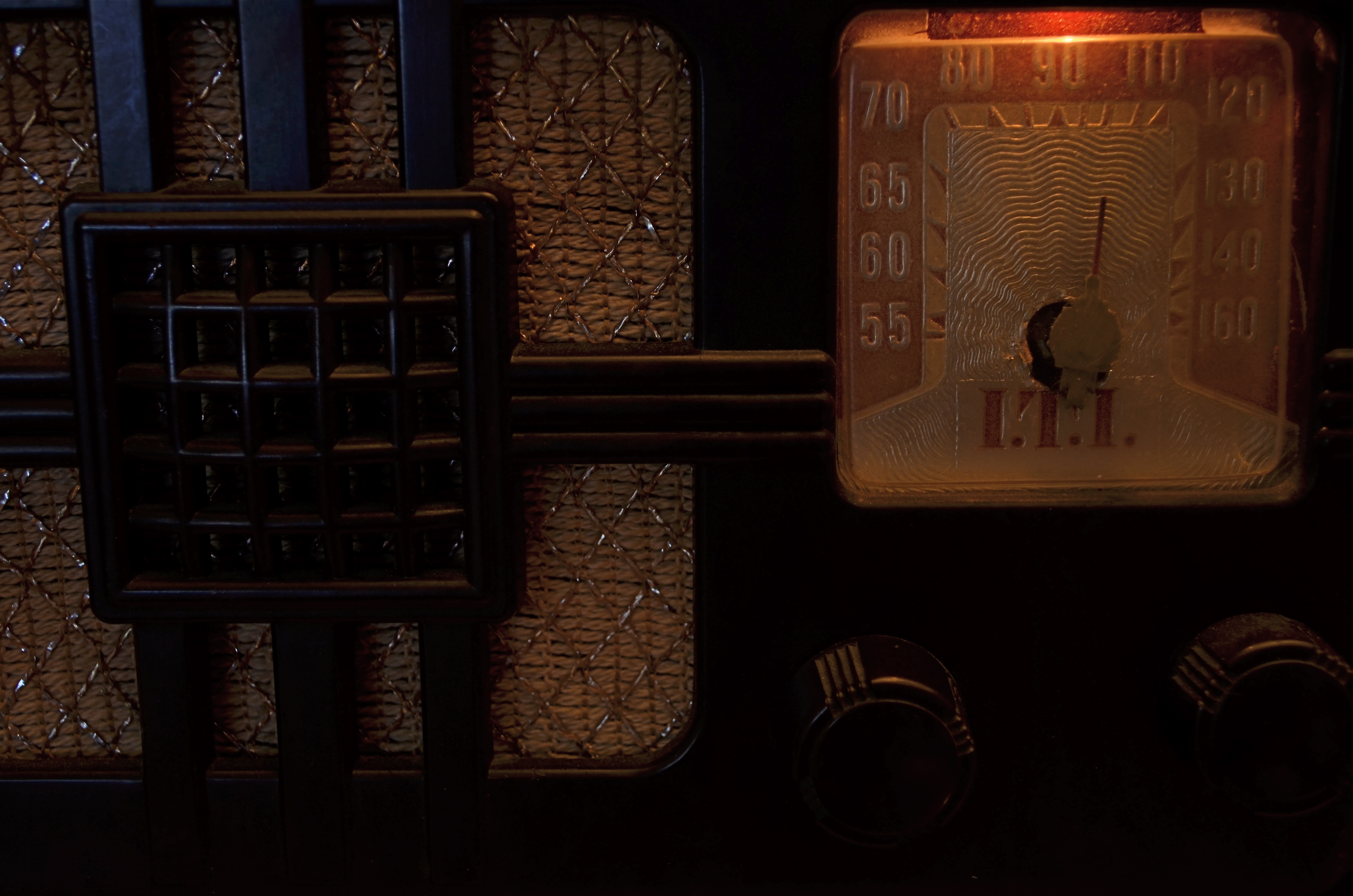
Also shot in a darkened room, but with simpler lighting plan and a shorter exposure time. The dial created its own glow and a handheld light gave some detail to the grillwork. 1/2 sec., 5/4.8, ISO 100, 32mm.
Some objects lend themselves to absolute night than others. For example, I am part of the last generation that often listened to radio in the dark. You just won’t get the same eerie thrill listening to The Shadow or Inner Sanctum in a gaily lit room, so, for the above image of my mid-1930’s I.T.I. radio, I wanted a somber mood. I decided to make the tuning dial’s “spook light” my primary source of interest, with a selective wash of hand-held light on the speaker grille, since the dial was too weak (even with a longer exposure) to throw a glow onto the rest of the radio’s face. Knobs are less cool so they are darker, and the overall chassis is far less cool, so it generally resides in shadow. Result: one ooky-spooky radio. Add murder mystery and stir well.
Flickr and other online photo-sharing sites can give you a lot of examples on what subjects really come alive in the dark. The most intoxicating part of point-and-paint lighting is the sheer control you have over the process, which, with practice, is virtually absolute. Control freaks of the world rejoice.
Head for the heart of darkness. You’ll be amazed what you can see, or, better yet, what you can enable others to see.
Thoughts?
NOTE: If you wish to see comments on this essay, click on the title at the top of the article and they should be viewable after the end of the post.
Related articles
- Lighting Techniques: Light Painting (nikonusa.com)
- Light Writing (cutoutandkeep.net)
BOXFULS OF HISTORY
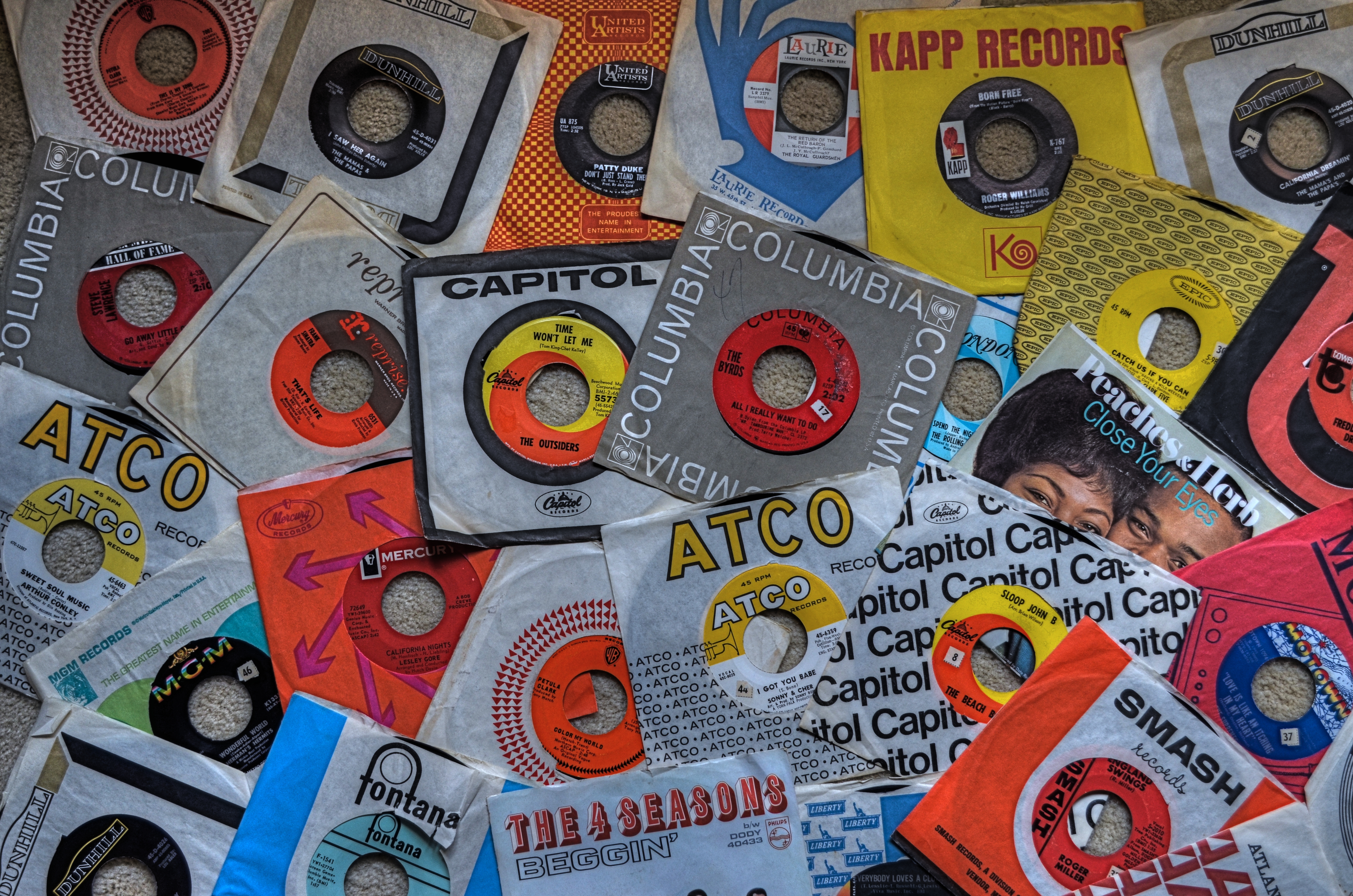
Once, these objects were among the most important in our daily lives. Seen anew after becoming lost in time, they show a new truth to our eyes. 1/60 sec., f/4.5, ISO 100, 30mm.
By MICHAEL PERKINS
THERE ARE DAYS WHEN THERE IS NOTHING TO SHOOT, or so it seems. The “sexy” projects are all out of reach, the cool locales are too far away, or the familiar themes seem exhausted. Indolence makes the camera feels like it weighs thirty pounds, and, in our creative doldrums, just the thought of lifting it into service seems daunting. These dead spots in our vision can come between projects, or reflect our own short-sighted belief that all the great pictures have already been made. Why bother?
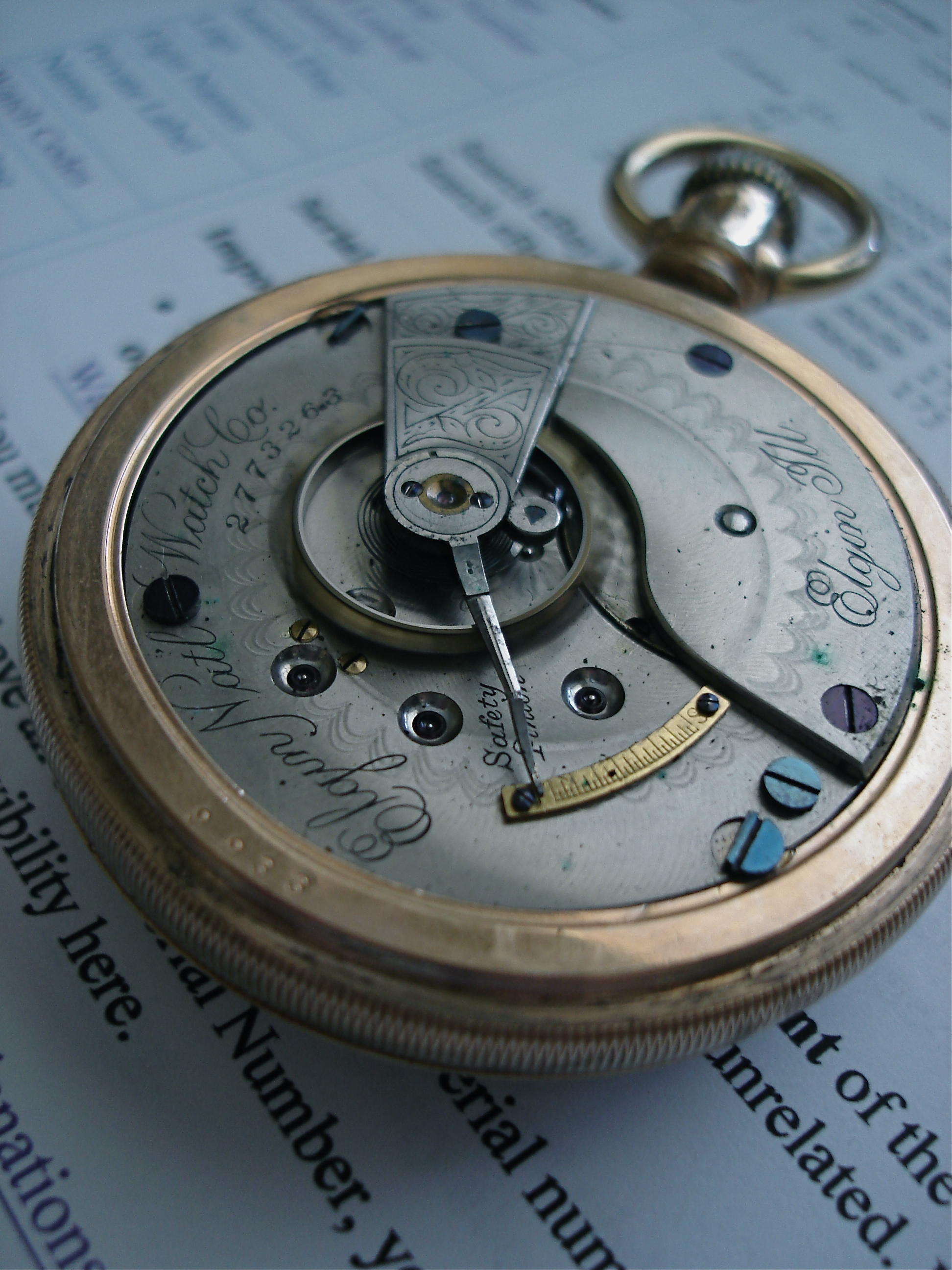
“Time is wasting”… but need not be wasted. Find the small stories of lost objects lurking in your junk drawers. 1/30 sec., f/2.8, ISO 200, 7.9mm.
And yet, in most people’s immediate circle of life there are literally boxfuls of history …..the debris of time, the residue of the daily routines we no longer observe. In Raiders Of The Lost Ark, the villain Rene Belloq makes the observation that everything can be an archaeological find:
Look at this pocket watch. It’s worthless. Ten dollars from a vendor in the street. But I take it, I bury it in the sand for a thousand years, and it becomes priceless.
Subjects ripe for still lifes abound in our junk drawers, in the mounds of memorabilia that our loving friends or spouses dreamily wish we would give to the Goodwill. Once ordinary, they have been made into curiosities by having been taken out of the timeline. In many ways, our camera is acting as we did when we first beheld them. And getting to see something familiar in a new way is photography’s greatest gift, a creative muscle we should all be seeking to flex.
Call it “seeing practice.”
Ordinary things are no longer ordinary once they are removed from daily use. Their context is lost and we are free to judge them as we cannot when they are part of the invisible fabric of daily habit. For example, how ordinary are those old piles of 45-rpm records on which we no longer drop a needle? Several revolutions in sound later, they no longer provide the same aural buzz they once did, and yet they still offer something special in the visual sense. The bright colors and bold designs that the record labels used to grab the attention of music-crazed teenagers in the youth-heavy ’60’s are now vanished in a world that first made all “records” into bland silver-colored CDs and then abolished the physical form of the record altogether. They are little billboards for the companies that packaged up our favorite hits; there is no “art” message on most of the sleeves, as there would have been on album covers. They are pure, unsentimental marketing, but the discs they contain are now a chronicle of who we were and what we thought was important, purchases which now, at the remove of half a century, allow us to make a picture, to interpret or re-learn something we once gave no thought to at all.
Old trading cards, obsolete clothing, trinkets, souvenirs, heirlooms….our houses are brimming with things to be looked at with a different eye. There is always a picture to be made somewhere in our lives. And that means that many of the things we thought of as gone are ready to be here, again, now. Present in the moment, as our eyes always need to be.
The idea of “re-purposing” was an everyday feat for photographers 150 years before recycling hit its stride. Everything our natural and mechanical eyes see is fit for a second, or third, or an infinite number of imaginings.
Your crib is bulging with stories.
All the tales need is a teller.
Thoughts?
BEYOND THE THING ITSELF
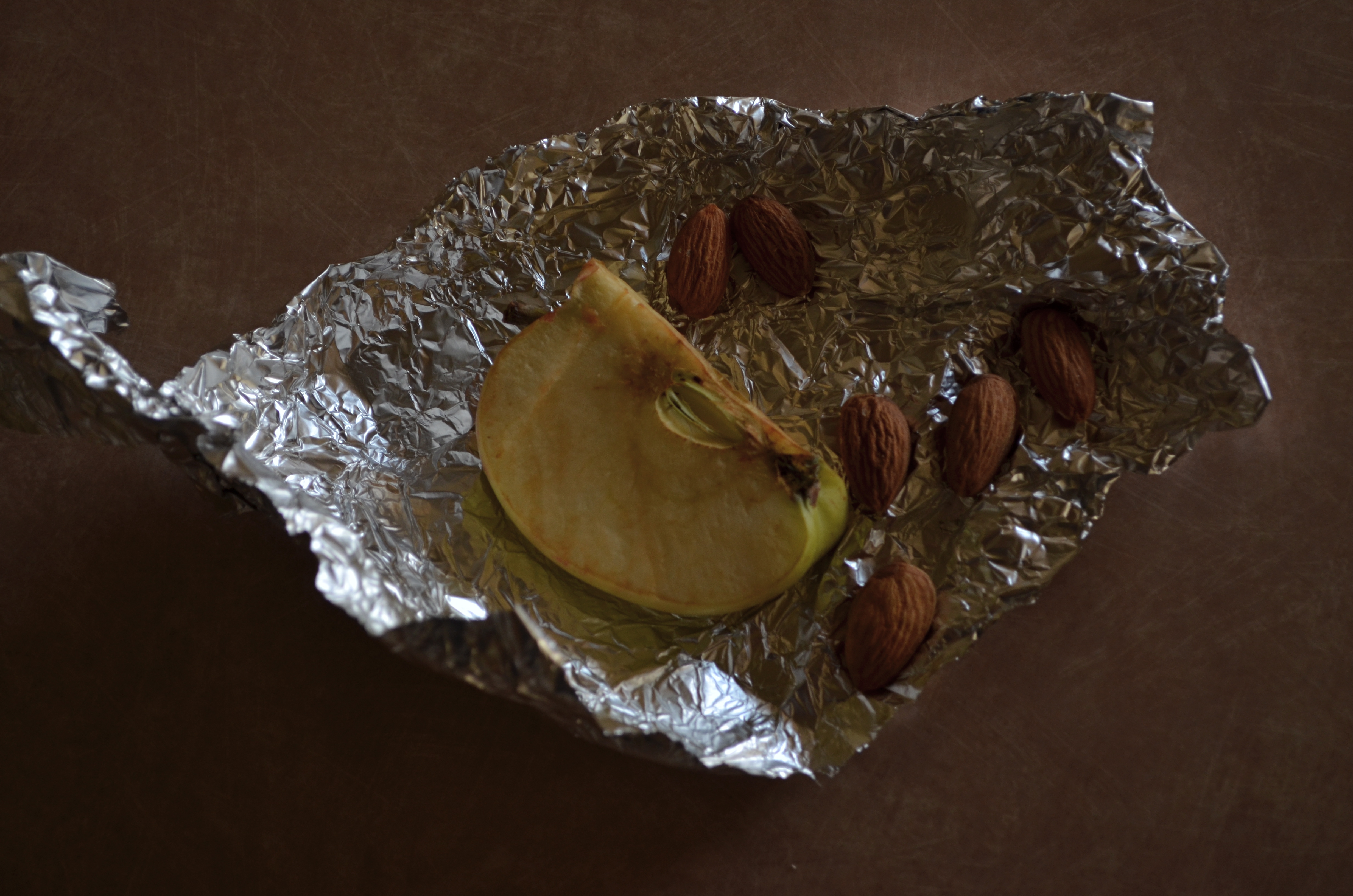
Saved from the trash can, long enough to satisfy my curiosity. 1/50 sec., f/5.3, ISO 200, 40mm.
By MICHAEL PERKINS
YOU NO DOUBT HAVE YOUR OWN “RULES” as to when a humble object becomes a noble one to the camera, that strange transference of energy from ordinary to compelling that allows an image to do more than record the thing itself. A million scattered fragments of daily life have been morphed into, if not art, something more than mundane, and it happens in an altogether mysterious way somewhere between picking it and clicking it. I don’t so much have a list of rules as I do a sequence of instincts. I know when I might have stumbled across something, something that, if poked, prodded or teased out in some way, might give me pleasure on the back end. It’s a little more advanced than a crap shoot and a far cry from science.
With still life subjects, unlike portraits or documentary work. there isn’t an argument about the ethics or “purity” of manipulating the material….rearranging it, changing the emphasis, tweaking the light. In fact, still lifes are the only kinds of pictures where “working it” is the main objective. You know you’re molding the material. You want to see what other qualities or aspects you can reveal by, well, kind of playing with your food. It’s like Richard Dreyfuss shaping mashed potatoes into the Devil’s Tower.
If I have any hard and fast rule about still lifes, it may be to throw out my trash a little slower. I can recall several instances in which I was on my way the garbage can with something, only to save it from oblivion at the last minute, turn it over on a table, and then try to tell myself something new about it from this angle or that. The above image, taken a few months ago, was such a salvage job, and, for reasons only important to myself, I like what resulted. Hey, Rauschenburg glued egg cartons on canvas. This ain’t new.
My wife had packed a quick fruit and nut snack into a piece of aluminum foil, forgot to eat it, and brought it back home in her lunch sack. In cleaning out the sack, I figured she would not want to take it a second day and started to throw it out. Re-wrapped several times, the foil now had a refractive quality which, in conjunction with window light from our patio, seemed to amp up the color of the apple slice and the almonds. Better yet, by playing with the crinkle factor of the foil, I could turn it into a combination reflector pan and bounce card. Five or six shots worth of work, and suddenly the afternoon seemed worthwhile.
I know, nuts.
Fruits and nuts, to be exact. Hey, if we don’t play, how will we learn to work? Get out on the playground. Make the playground.
And inspect your trash as you roll it to the curb.
Hey, you never know.
Thoughts?
 thenormaleye