AND NOW, BACK TO OUR ORIGINAL PROGRAM
By MICHAEL PERKINS
YOUR FIRST YEAR IN A NEW PLACE, as far as your photography goes, is a lot like being on vacation, in that a firehose of sensory information is coming on so quickly that, in an effort to not miss anything, you shoot very much on instinct. Everything is new, and therefore fascinating in a way that it won’t be after you’ve logged enough time to regard your new world as your standard environment, instead of just the latest stop on the tour bus. And that changes the way you make pictures.
Snapshots, by their nature, are reactive, and they make perfect sense when you feel like something very fleeting is whipping by you, never to be recovered if you don’t act (snap) immediately. You are not slowing yourself down to make a shot do all that it can do; you’re just making sure you get something in the can, now. And so, in my first year in California, I’ve been shooting like a tourist, as if I soon have to rejoin the rest of the group back at the ruins, so we can move on to the next attraction. I haven’t been approaching scenes or situations with any intent or contemplation. Instead, I’m shooting largely as if I’ll never be here again, or. as if I have to fly home in five days.
I have to rein it in.
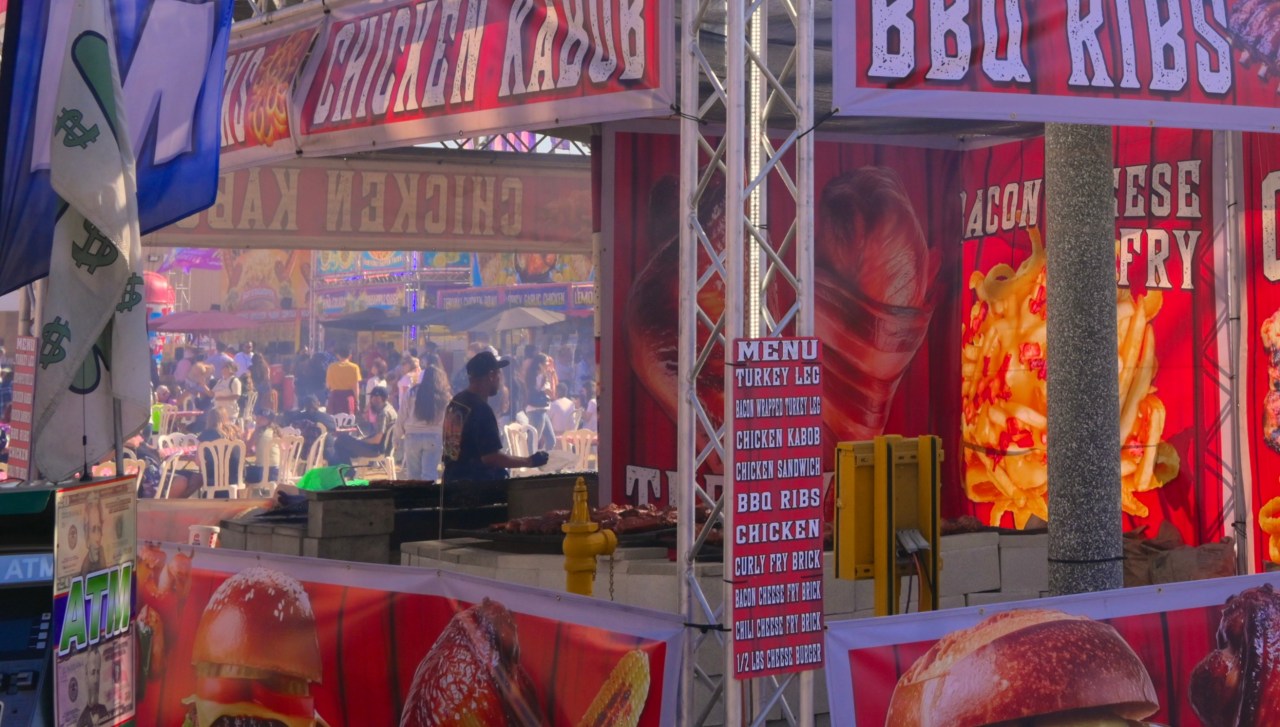
I’ve now been to a few locales out here enough times that I am reverting back to my regular program of slowing things down, seeing them from different angles, wondering if I have the right idea for a picture, or, most importantly, whether a thing is even worth a picture in the first place. One such case that I noticed in particular is the Ventura County Fair, which I attended last year in the heat of my first summer along the central coast. The pictures are colorful and bright, but they are merely pictures of masses of people walking by funnel cake and burger stands, and not much more.
This year, in returning to the midway, I stole away from my wife, who had accompanied me for last year’s visit, and started looking for stories, things that might reveal or imply other things. After a ton of walking and waiting, I finally got several images that I felt had been approached with at least a modicum of forethought. Masterpieces? No, but a kind of proof-of-theory revelation. I have to reclaim a more investigative method of framing images. I have to get off the tour bus, and back to real life.
FAKE IT ‘TIL YOU TAKE IT (OR EVEN LATER)
By MICHAEL PERKINS
THERE ARE SO MANY VARIABLES IN STREET PHOTOGRAPHY, from composition to exposure and everything in between, that it’s a minor miracle that any useful pictures ever get made, by anyone, anywhere. Being that street work is even more subject to hazard or random accident than any other kind of shot, the shooter must negotiate dozens of factors before squeezing off a frame. Contrary to popular terminology, this process produces the very opposite of a “snap shot”, in that nothing is completely controlled, and most everything is unanticipated.
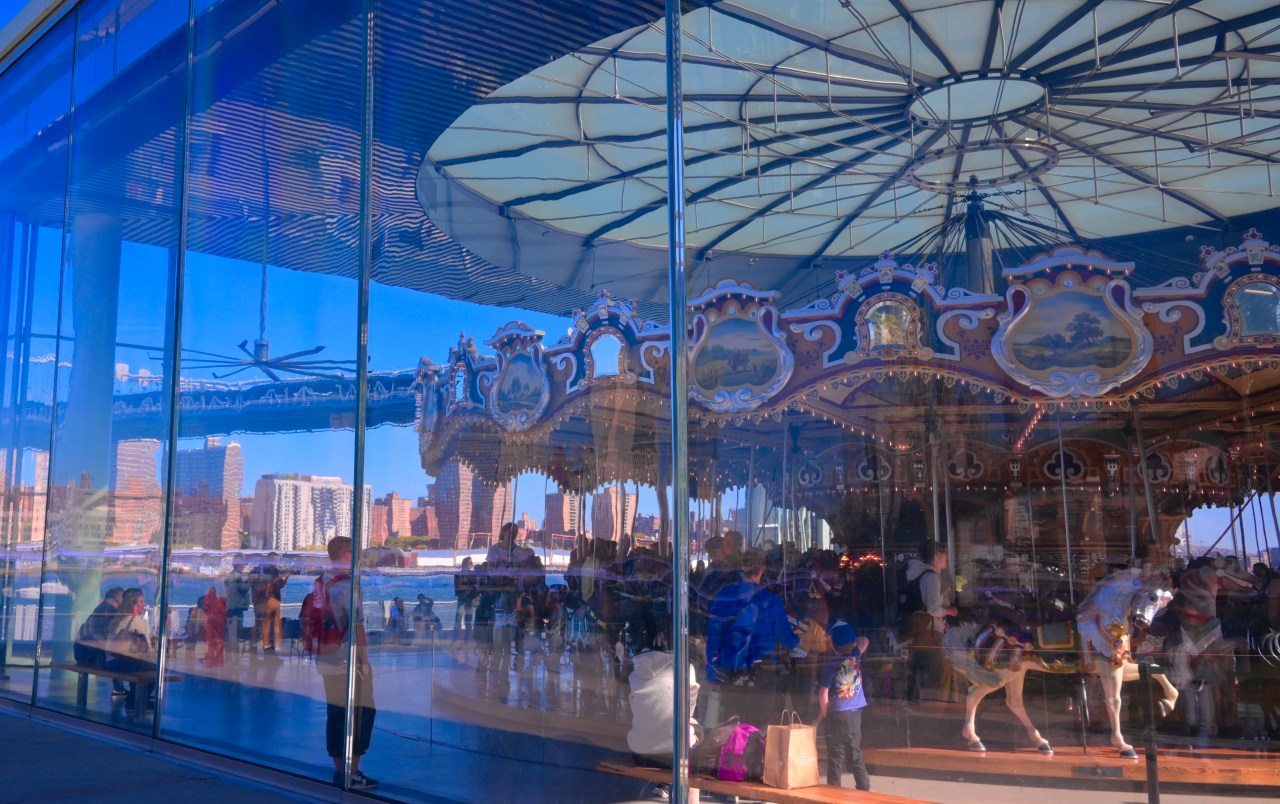
Frequently, when I first sort through images back home, I discover that Nature or Chance gave me a bit of a boost in making a picture work slightly better. On the day I took this shot of Jane’s Carousel) in Brooklyn Bridge Park opposite lower Manhattan, I was mostly concentrating on the interactions of parents and kids as they queued up for the ride, and occasionally trying to frame to include the bridge, which is very close by. I typically don’t try to convey motion in such shots, snapping at a quicker shutter speed to keep everything frozen for the sake of faces. In the case of this carousel, exposure was also a bit tricky, since it sits inside a glass enclosure topped by an overhanging roof which also includes atrium-like cutouts. That’s a lot to handle at one time.
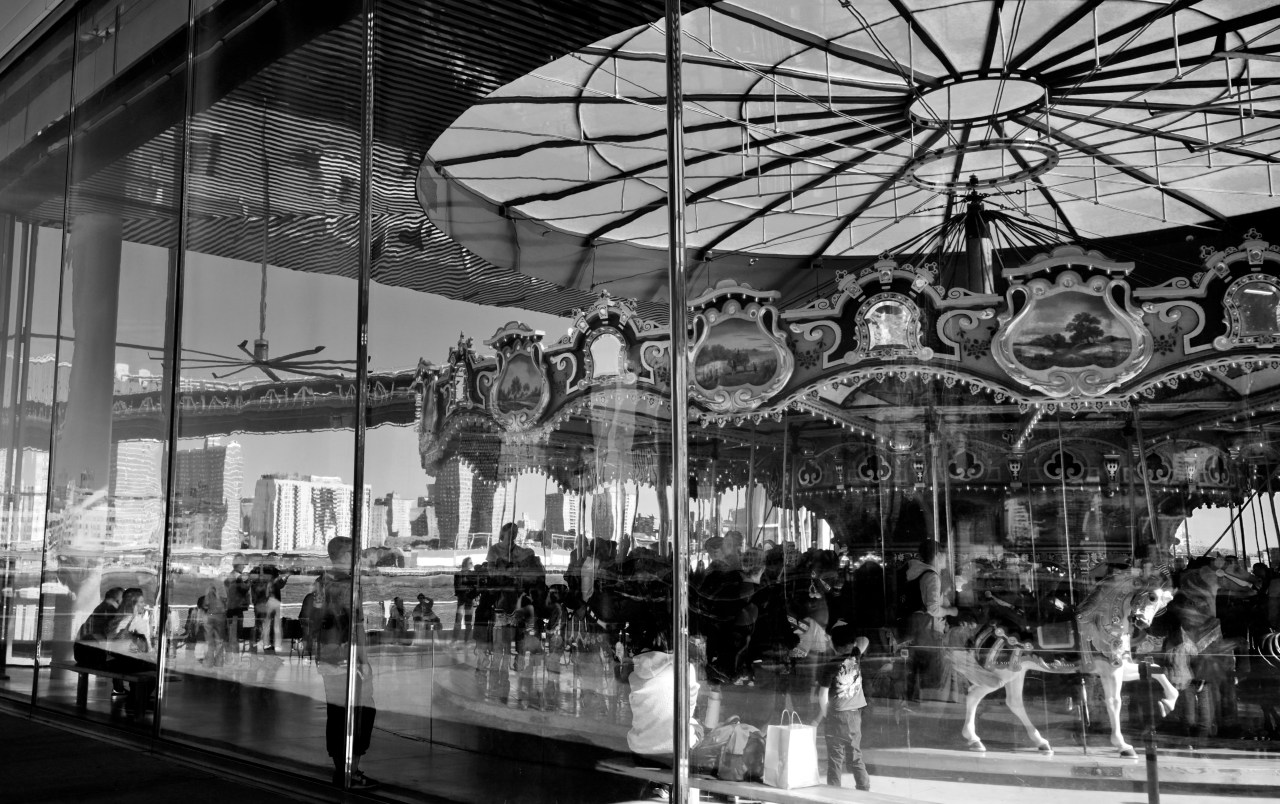
So much, in fact, that it wasn’t until days later that I realized that shooting through a closed side of the carousel’s glass box would, in effect, filter the carousel through a wiggly warp of sorts, creating the sensation of whirling or spinning. In fact, close examination reveals that most of the details are, in, fact, in fairly sharp, normal focus, but the slight distortion lent a dreamy quality to both the original shot at the mono conversion, both of which I submit here.
Whatever “plan” you try to make in advance, street work places you at the mercy of prevailing conditions, and so it’s better to be gracious/grateful for the odd bits of luck that are thrown your way. As soon as you become cool with the knowledge that you’re not actually in charge, you can just get out of the way of the entire process and chalk up an occasional win.
INVISIBLE BUT NOT UNSEEN
Carousels are wonderful, but can fall, pictorially, into the “done to death” category
By MICHAEL PERKINS
CENTURIES AGO, WHEN THE ROMAN WRITER PUBLILIUS COINED THE PHRASE “Familiarity breeds contempt” he was speaking about how human relations go sour based on an overdose of closeness or a lack of variety. But he also unwittingly described the challenge of photographing an exhaustively recognizable subject. The more a thing has been shot, the more we feel challenged to say something fresh about it, and the more we grow disgusted with how utterly, ugh, familiar it is.
I have been shooting carousels my entire life, with a wiiiiiiide variance in result. Most of my attempts just fall into the technically-challenged category: blurs, underexposures, tilted horizons, lousy compositions, etc. Others are okay, specs-wise, but ho-hum in effect. I keep trying to make pictures that export the grand visual ballet of romance that I carry in my brain, a rich, gauzy collective memory dipped in gaudy colour and memory. The problem, of course, is that what comes out of the camera is…just another picture of a carousel.
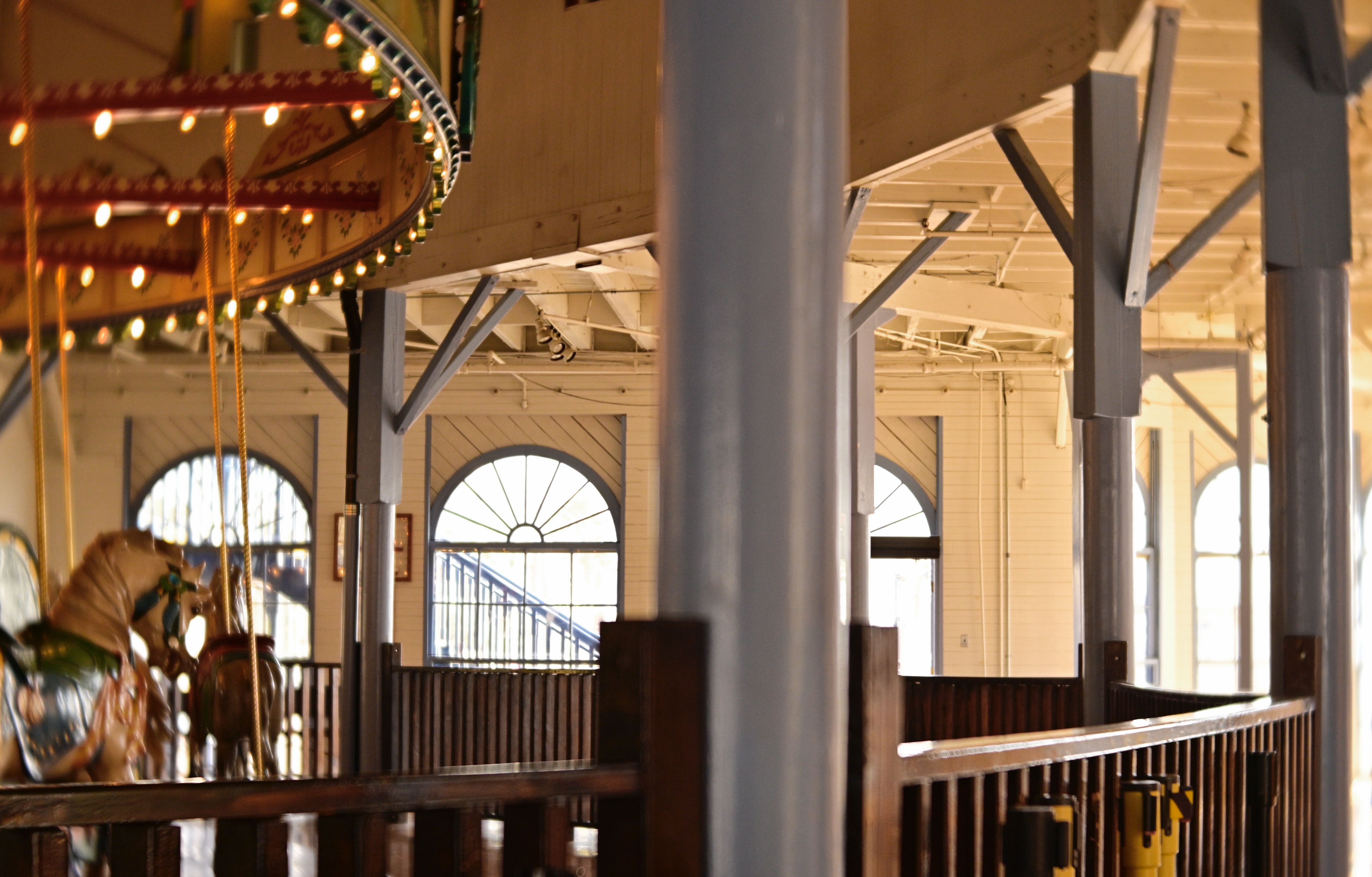
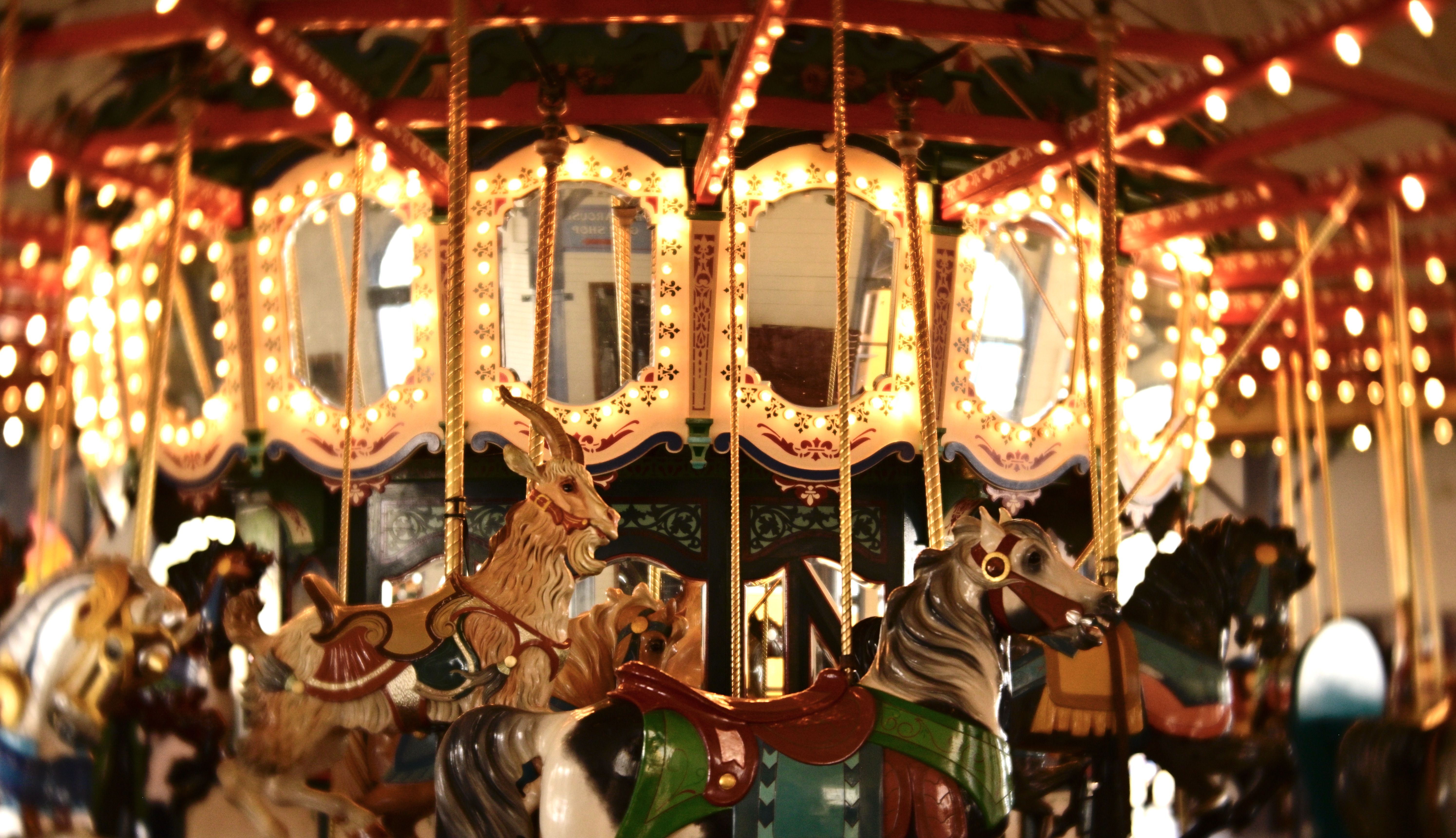
The housings and surrounds for classic carousels add context and a little more mystery.
Recently I realized that the carousel itself is part of the problem, since it contains too much information that, through millions of attempts, we all have taken for granted. Nothing new can be suggested by just continuing to click away at the thing, while, if one backs off a bit, nearly backing the thing out of the frame entirely to show more of its surrounding context, something fresher may actually emerge.
As seen above, the carousel inside the 1916 Looff Hippodrome building on the Santa Monica pier in California, the very rig that Paul Newman’s character in The Sting used to entertain his bevy of, ahem, tarts, is beautiful not only in its own right, but for the immense octagonal wooden barn that houses it…so much so that shooting an image that primarily highlights the structure with just a hint of racing horses (seen directly above) at least lets a little fresh air into the process. The barn’s high arched windows look directly out to the Pacific and bathe the interior with warm, comforting light, which also softens the deeper hues of the ride itself. I shot about a dozen conventional lights-and-horses frames, but once I got home I found I liked this better. Sometimes when something has been talked to death in pictures, it’s at least a relief to change the conversation a bit, if only by pivoting ninety degrees.
STEP RIGHT UP
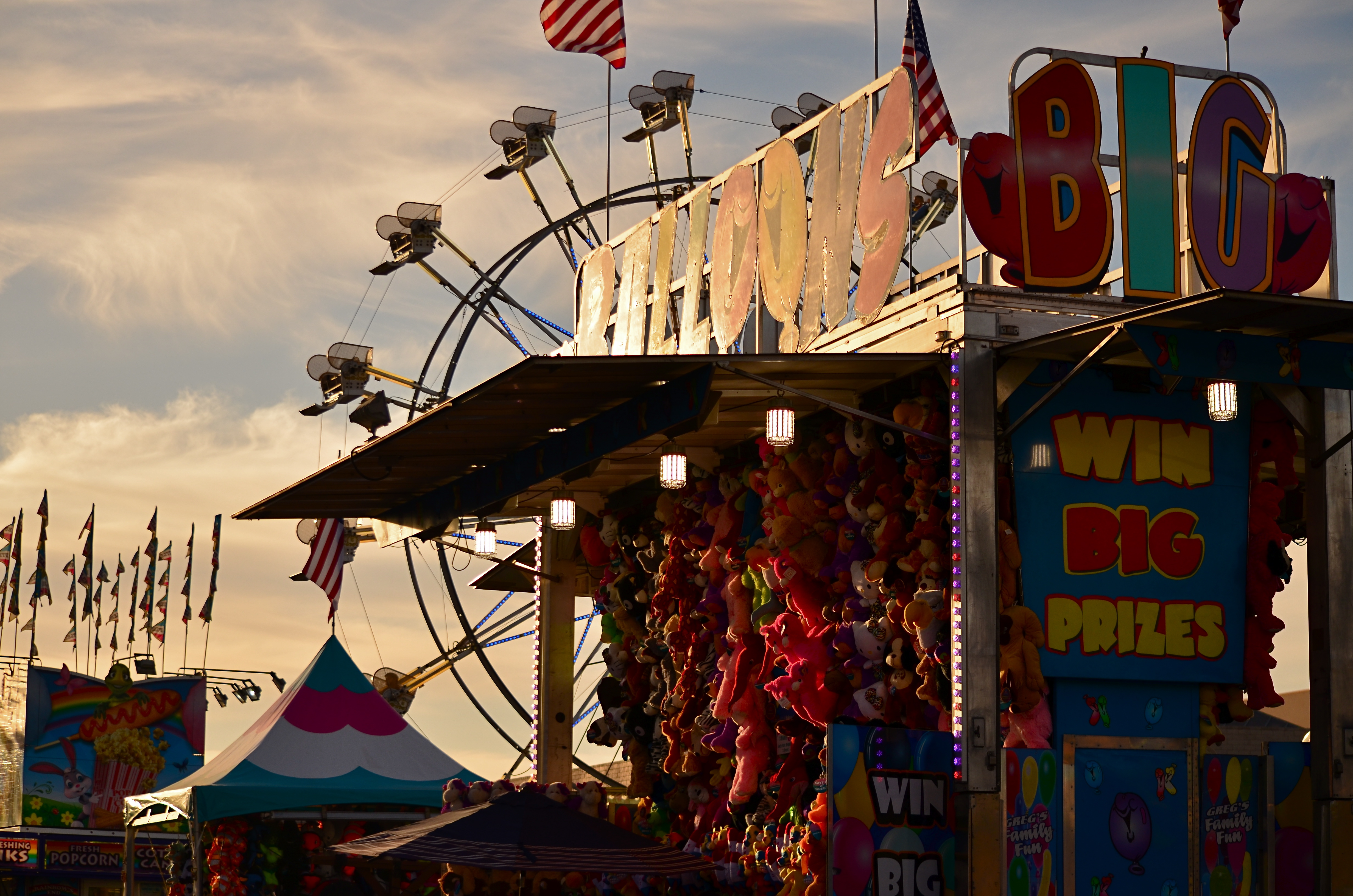
1/1250 sec., f/5, ISO 100, 55mm.
By MICHAEL PERKINS
PHOTOGRAPHY SHOULD ALWAYS OPERATE, at least to some extent, as a cultural mile marker, a chronicle of what time has taken away, a scrapbook of vanishings and extinctions. We make records. We bear witness. We take pictures of the comings and the goings.
One of the things that has been going, since the coming of the permanent, Disneyeque theme parks, those sanitized domains of well-regulated recreation, is the great American carnival, in all its gaudy and ever so slightly dodgy glory. Loud, crude and exotically disreputable, these neon and canvas gypsy camps of guilty pleasure once sprang up in fields and vacant lots across the nation, laden with the delicious allure of original sin, that is, if the first apple of Eden had been dipped in shiny red candy. We came, we saw, whe rode, we ate, we clicked off millions of snapshots on our Kodak Brownies.
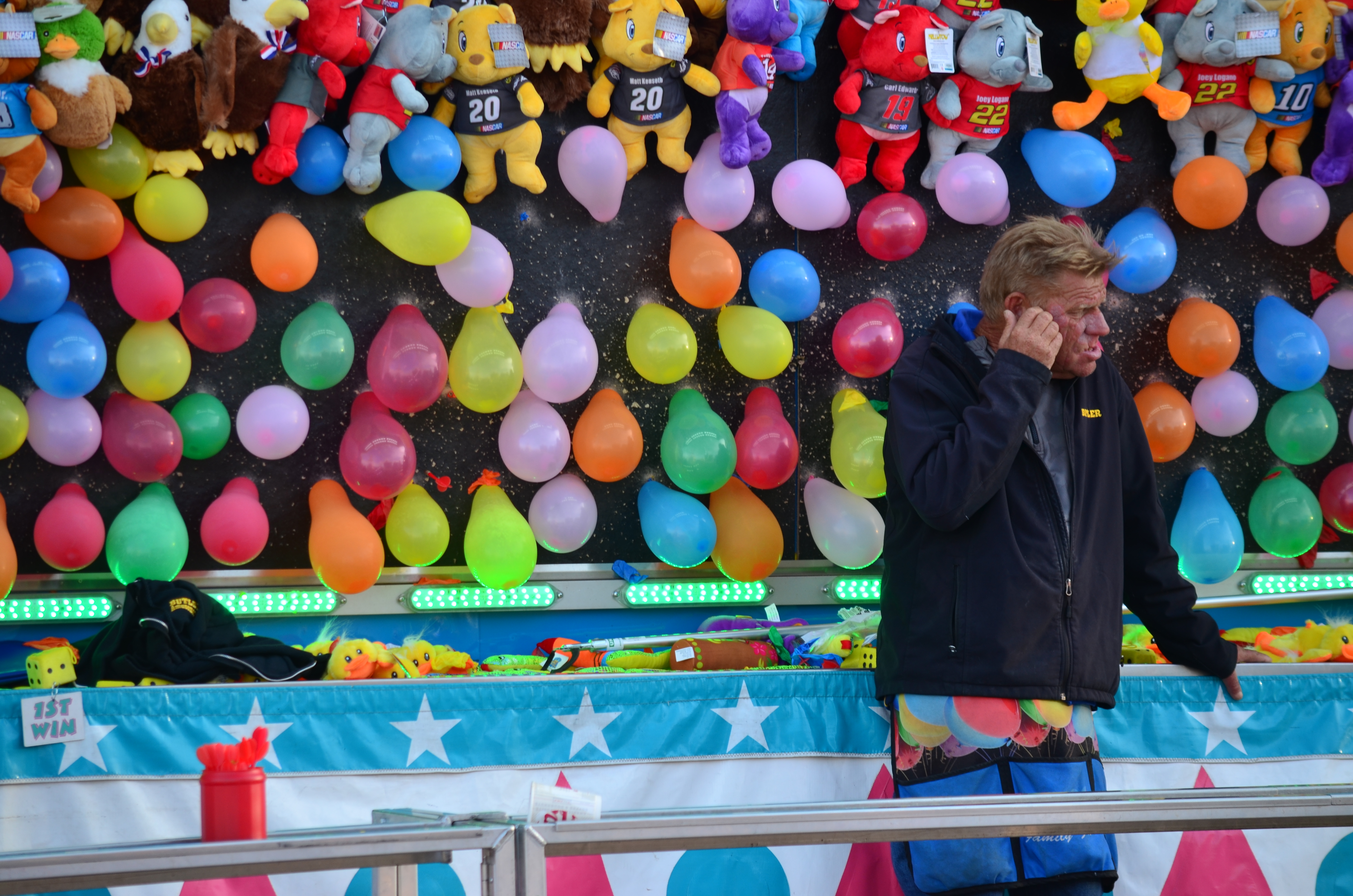
1/125 sec., f/5, ISO 100, 165mm.
The thing that made it all so magical was geography. Unlike Seven Flags or Cedar Point, the carnival came to us. Like the circus, the carnival was coming to your town, just down your block. That meant that your drab streets were transformed into wonderlands in the few hours it took for the roustabouts to assemble their gigantic erector sets into rickety Ferris wheels and Tilt-a-Whirls. And then there was the faint whiff of danger, with rides that made dads ask “is this thing safe?” and crews that made moms repeat horrific tales of what happens to Little Children Who Talk To Strangers.
It was heaven.
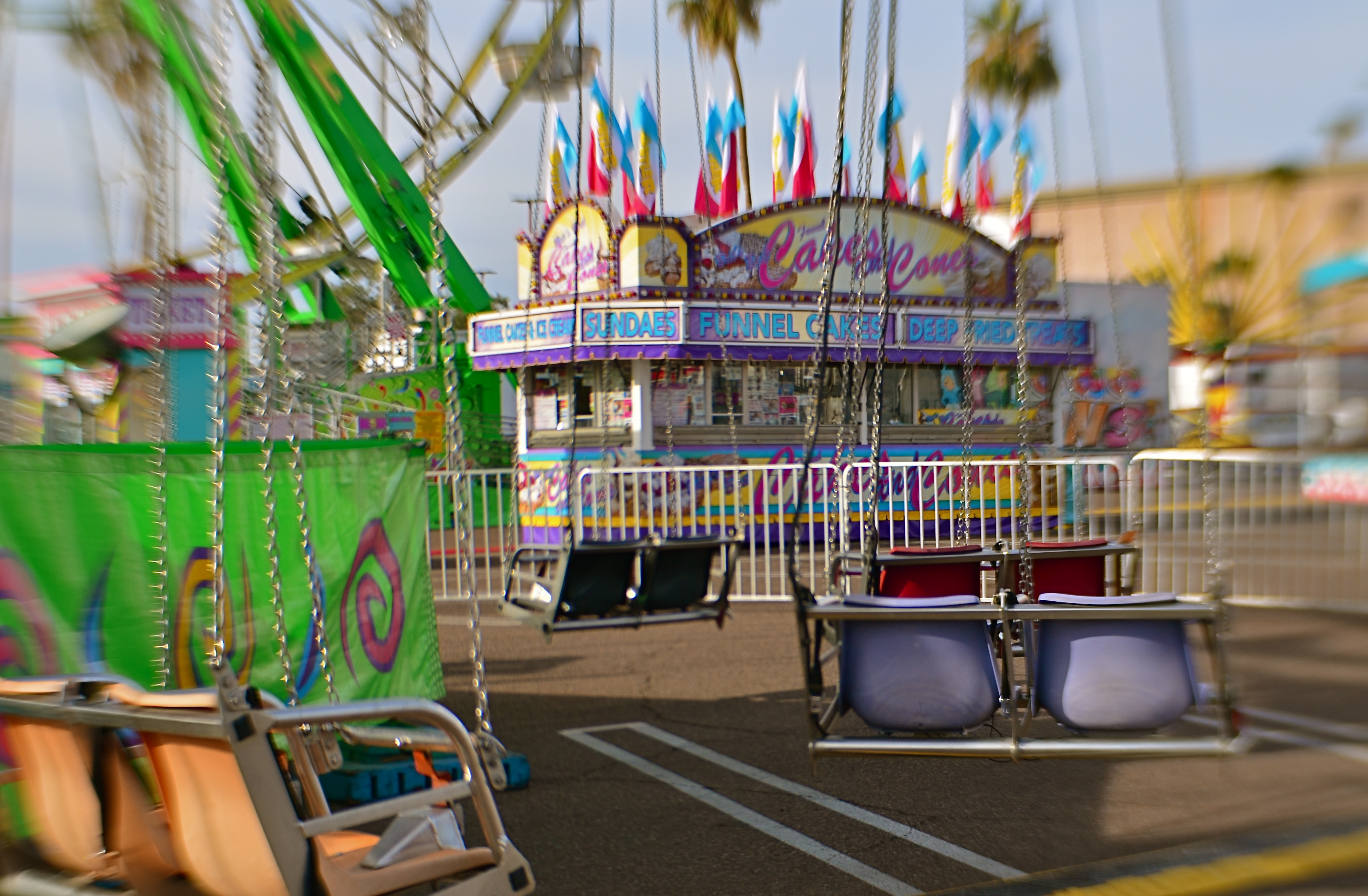
1/250 sec., f/5.6, ISO 100, 35mm.
The images seen here are a partial return to that sketchy paradise, with the arrival in my neighborhood, this week of a carnival in an area that hasn’t hosted one in well over a decade. It’s almost as if Professor Marvel just ballooned in from Oz, or Doc and Marty had suddenly materialized in the DeLorean. It’s that weird. Four days in, and I’m there with a different lens each time, sopping up as much trashy delight as I can before the entire mirage folds and all our lives return to, God help us, normal. Photographs are never a substitute for reality, any more than a hoof print is a horse. But when dreams re-appear, however fleetingly, well past their historical sell-by date, well, I’ll settle for a few swiftly stolen souvenirs.
TRY A DIFFERENT DOOR
By MICHAEL PERKINS
PUBLIC PLACES, ESPECIALLY RECREATION SPACES, ARE A REAL STUDY IN IMAGE CONTROL. The world’s playgrounds and theme parks are, of course, in the business of razzle-dazzle, and their marquees, grand courts and official entrances are carefully crafted facades designed to delight. For photographers, that usually means we all take the same pictures of the same Magic Gate or Super Coaster or whatever. Great for convenience: not so great for photography.
I’m not saying that it’s impossible to improvise a different way to frame something new in shooting something overly familiar. But I am saying that sneaking around to the service entrance can have its points, too, offering a flavor of things that are a little funkier, a little less polished, a little less ready for prime time. I recall my dad, who, years ago, dreamed of taking the ultimate “real” shots of the circus, trolling around near some of the lesser-traveled entrances and halls, trying to catch the clowns and acrobats either just before or just after their time in the ring. I still pursue that strategy sometimes.
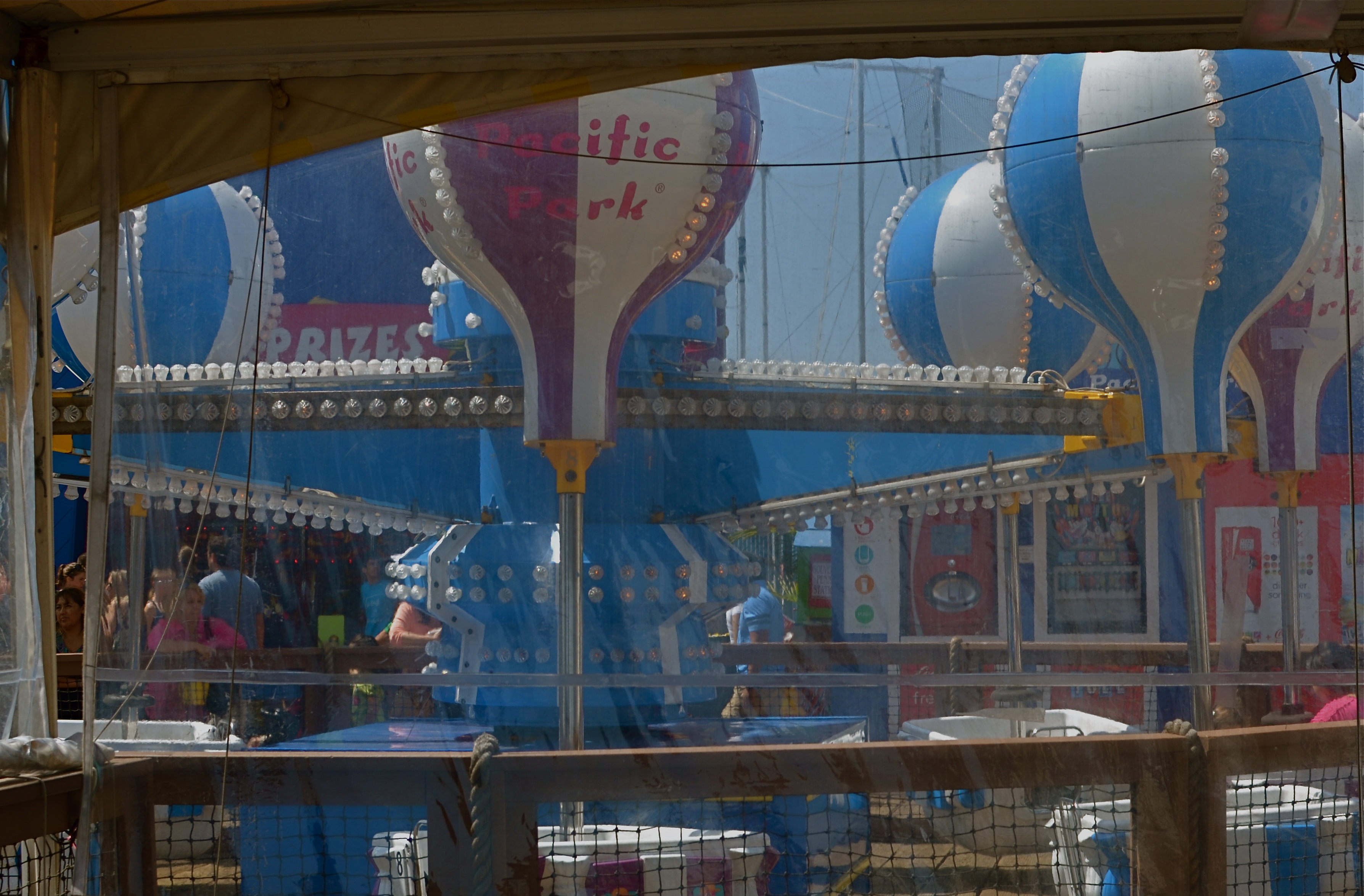
All the fun of the fair, just seen from backstage.
Pacific Park, the amusement center along the boardwalk at the Santa Monica pier, is a predictably colorful, semi-cheesy mix of carny sights and smells. The main foot traffic is straight down the pier to the fishing lookout, but there are alternate ways to get there along the back of the ride and games section. This shot is rather gauzy, as it’s taken through some sun-flecked netting, softening the color (and the appearance of reality) for some gaming areas. I took a lot of standard stuff on this day, but I keep coming back to this frame. It’s not a work of art, by any means, but I like the feeling that I’m not supposed to be there.
Of course, where I’m not supposed to be is, photographically, exactly where I want to be.
You never know when you might spy a clown without his rubber nose.
 thenormaleye