OPEN WIDE AND SAY AHHHH

Handheld inside St. Patrick’s Cathedral, NYC. f/2.8, 28mm, ISO 1000, 1/50 sec.
By MICHAEL PERKINS
1960’s COMMERCIALS FOR THE SWINGER, Polaroid’s first entry-level instant camera, marketed mostly to teens, showed how easy it was to achieve good exposures, simply by twisting the knob that supported the shutter button. Too dark, and the word “NO” would appear in the viewfinder. Twist to tweak, and the display turned to “YES”. Many flubbed fotos later, we all learned (at substantial expense) that it really ain’t that simple. And in the years that followed, with better and better cameras, we still seemed to be getting a “YES” from our gear, only to find that the resulting image was definitely a “NO”.
The reason for all this reminiscing is the completely different experiences I’ve had in recent years taking shots that, just a while ago, were almost guaranteed to fail, but which now succeed, and amazingly well. You know the kind I mean; those extreme pockets of darkness and gloom where light goes to hide and pictures go to die. In my early DLSR days I did my best to harvest a higher percentage of them, working with that format’s smaller sensors, the fastest prime lenses I could afford, and higher ISO settings. Working on a tripod made even more of such shots possible, but those were always in the minority of overall frames. Let’s face it; unlike Ansel Adams, who could work all day waiting for the right shadow to hit the side of El Capitan, we largely live in a hand-held world. I got a lot of “NOs”.
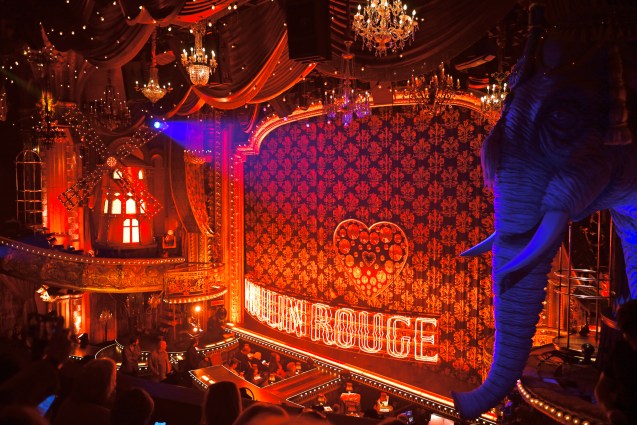
Just before curtain at Broadway’s Herschfeld Theatre. Hand-held at f/2.8, 28mm, ISO 2000, 1/100 sec.
After switching to a full-frame sensor and allowing for the tech to catch up in terms of more evenly rendering high-contrast subjects, even straight out of the camera, I find that the list of “undoables” is a lot shorter than it used to be, as witness the two shots in this article. Both are done with a 28mm lens wide open to f/2.8; both are handheld; both are taken inside locales (a cathedral and a Broadway theatre) known for harboring deep, deep pockets of shadow, often leading to dark patches that swallow detail or light areas that tend to blow out. Amazingly, minus a few minor color corrections, neither shot has been corrected in post.
In the days of our first cameras, we largely shot on an “if come” basis. If we did everything right to second-guess every technical tiger trap that was part of the process of calculating the shot, the picture might “come”. Maybe. And now, the carefree joy of picture-making which Polaroid promised back in the days of mini-skirts and paisley, a real closing of the gap between the imagining and the realizing of an image, might finally be imminent.
It’s enough to make you feel like a Swinger.
SOOC / SOOB
By MICHAEL PERKINS
AFTER ALL THESE YEARS, ONE OF THE ONLY TIMES THAT I SHOOT AT FULL AUTO, that is, literally just pointing and delegating all of my upper brain functions to the camera, is when a brand-new lens comes into my life. Because just as I love the romance behind the idea of SOOC (or “straight out of the camera”, a state I aspire to but seldom attain), I also flirt with the concept that automatic focusing and exposure systems might eventually progress to the point where I could concentrate on nothing more than subject and composition. This second ideal I call shooting “SOOB”, or Straight Outta The Box. It’s a little like hoping that the four millionth horse you see in a corral will somehow, also, be a unicorn. And just as likely.
I admit it; I’m incurably curious about what a fresh piece of kit will do simply by being snapped in place and turned on, and I will usually spend a few days or even weeks after a new purchase taking a near hands-off approach to shooting with it. I know that technology is inching ever closer to intelligent machines that can nearly, nearly second-guess my intentions, that operate with their own pseudo-intuition. And yet, after this honeymoon period, I predictably revert back to my personal comfort zone, which is shooting on nearly 100% manual settings, minus the occasional crutching on auto-focus. Why is this?
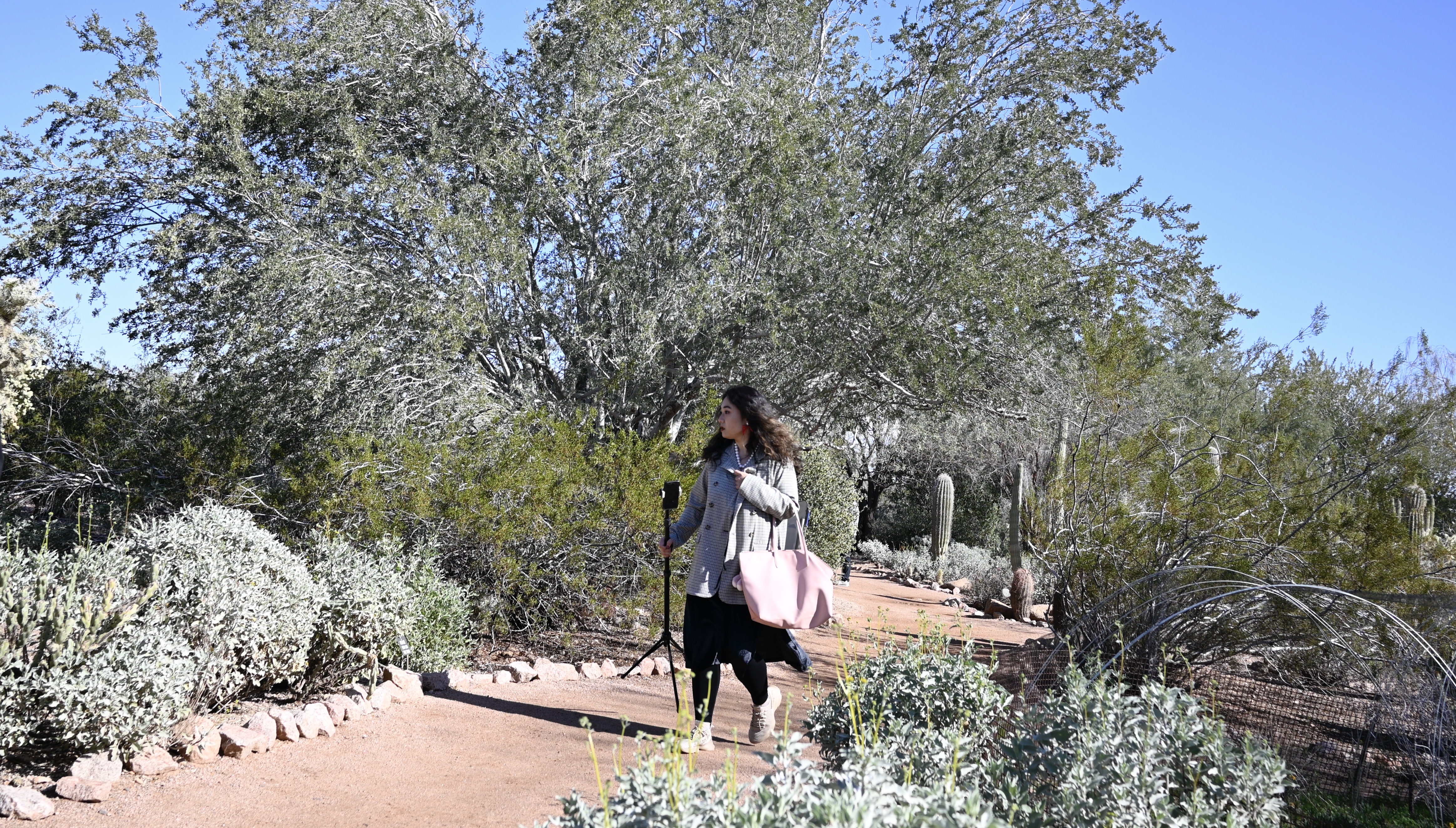
Another new lens, another try at full auto shooting. Certainly acceptable, but I still feel the need to intervene…
It’s just a fact that a significant number of photographers the world over are perfectly fine with letting their cameras make nearly every exposure decision for them (as in the fully automatic exposure seen here), with millions more at least clicking on full auto and fixing the faults later, either in-camera or with software or apps. Most importantly, the manufacturers of cell phone cameras have staked their amazing success on making their devices sweat the details of making a picture so that users can sweat it that much less. The trend line over time in camera tech has always run toward easier execution, with each succeeding generation of features making it more and more tempting to let the camera assume greater control, all with the promise of better results.
But better according to whom? There is a line, in the minds of many photographers, between removing technical obstacles to acting on your picture-making instincts and relying on the tech to, in effect, execute those instincts for you without your active participation. SOOC still means that you are personally shaping your decisions, as best you can, ahead of the click, trying to get things so right that modifications after the fact can be minimal. SOOB, at least for me, is asking me to relinquish all creative control because a device can maybe guess what I would have wanted anyway, and I’m not ready to go there yet. Like anything else in this racket, it’s a matter of degree, a game of inches. But those inches matter more than anything in the pictures that emerges from the process.
S.O.O.C….and S.O.W.H.A.T.
By MICHAEL PERKINS
IF YOU REGULARLY POST IMAGES TO PHOTO SHARING SITES, you will no doubt have come upon groups or albums labeled S.O.O.C., or Straight Out Of The Camera, pictures that purport to have transitioned seamlessly from shutter click to social post without being further touched by human hands. The fact that such a designation even exists says something about how we see the creative process, or what we deem as “pure” about it.
The raw math of photography dictates that only a micro-percentage of your total work will actually come fully formed from your camera, emerging, as Athena did, intact from the forehead of Zeus. Rather, the majority of what we shoot is re-shot, re-thought, shaped, edited, and re-combined before we put a gold frame around it, which only makes sense. Photography is a process, not just a recording product. We grow into a better understanding of our best shots no less than our worst ones. That means that clinging to “straight out of the camera” as some kind of badge of excellence or ideal is counter-intuitive to the idea of photography as an organic art.

Yes, this shot delivered almost everything I was aiming at, but that don’t mean it’s “Straight Out Of The Camera.” Read on….
More simply, any so-called “perfect” pictures we create in the moment are a mixture of luck as well as talent, of chance as well as design. To slap a collective S.O.O.C. label on all such fortunate convergences of cosmic fortune is to think of that “flawlessness” as an end unto itself. Does the fact that you didn’t further mold an image after shooting it render it better, more authentic somehow, than one which was later manipulated or massaged? What gets the gold star, the best complete realization of a picture, regardless of the number of intermediate steps, or the bragging rights associated with blind luck? Case in point: in the above image, I did, indeed, get nearly everything I wanted out of the picture, but it was also the 15th frame I shot of the subject before I was even partly satisfied, so how “straight out” is that??
And what of the photographs that are less than “perfect” (according to whom?) from a technical standpoint? Can’t an underexposed or ill-focused shot contain real impact? Aren’t there a number of “balanced” exposures that are also as dull as dishwater? Moreover, can’t a shot be improved in its power after being re-interpreted in processing? The straight-out-of-the-camera designation is either meaningless, or sends completely the wrong message. Creativity seldom moves in a straight line, and almost never comes fully realized in its first form. Photography’s aim should never be to aim for an easy lay-up from mid-court, and labels that suggest that lucky is the same as eloquent do the art a disservice.
 thenormaleye